A Side-by-Side Look at Cognitive Profiles
To understand these breeds, The Cosmic Pet Pet IQ Lab employs a five-dimensional cognitive framework: Problem Solving, Training Speed, Social Intelligence, Instinctive Drive, and Memory. These dimensions help us map how a dog perceives, processes, and interacts with its environment and human companions.
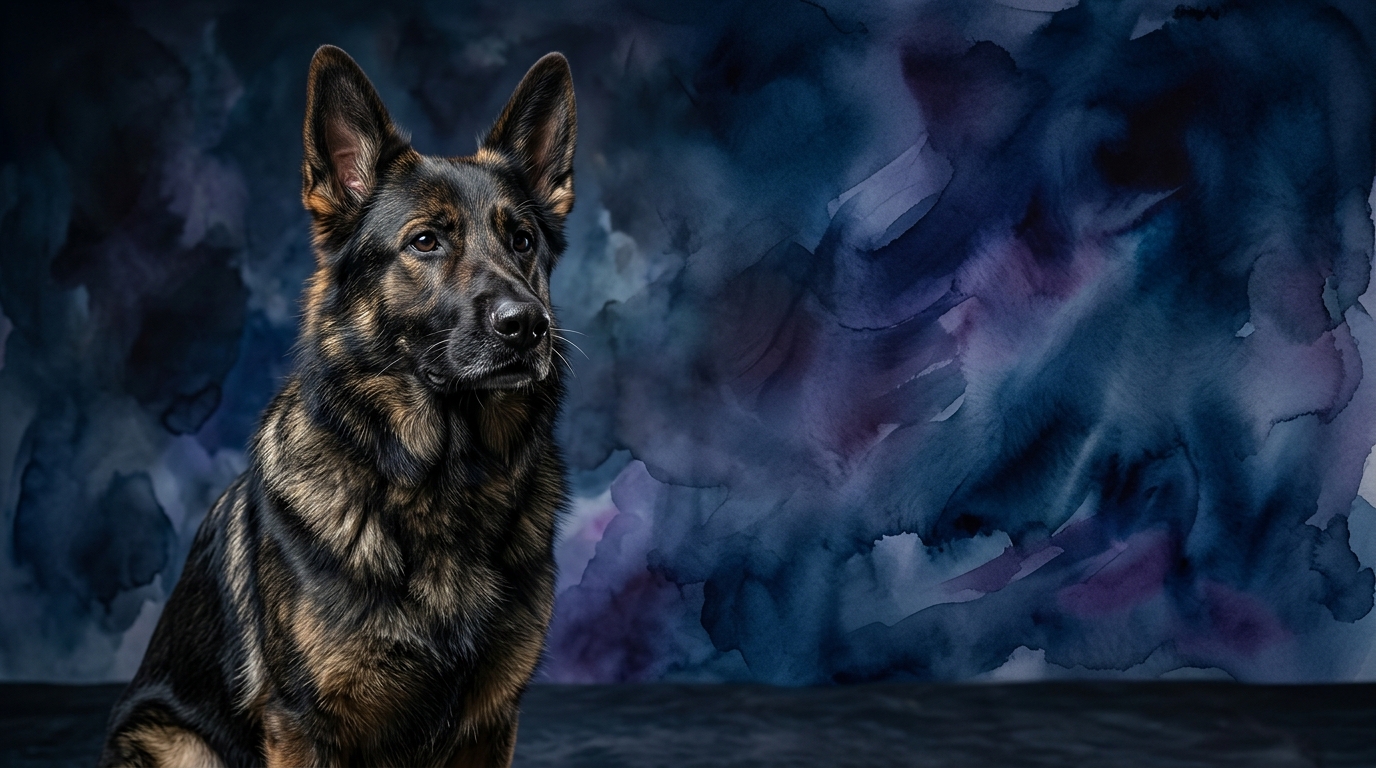
The German Shepherd exhibits a remarkable uniformity across these metrics, scoring 5/5 in Problem Solving, Training Speed, Social Intelligence, Instinctive Drive, and Memory. This consistent peak performance aligns with its Coren ranking of #3 among all dog breeds, signifying an exceptional capacity for rapid learning, complex task execution, and deep comprehension of human communication. They are dogs engineered for intricate work, capable of anticipating needs and adapting to novel situations with striking efficiency.
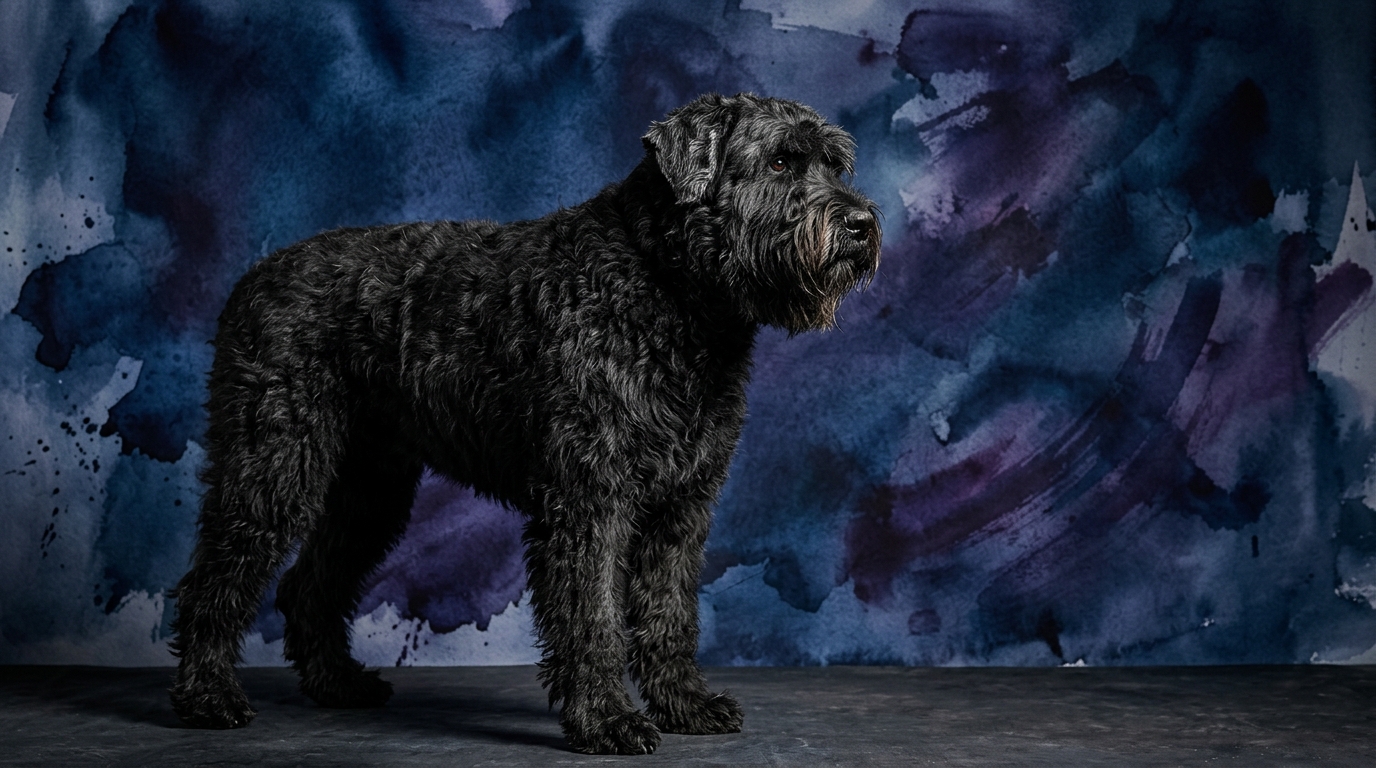
In contrast, the Bouvier des Flandres presents a different cognitive signature, with scores of 3/5 across all five dimensions: Problem Solving, Training Speed, Social Intelligence, Instinctive Drive, and Memory. While not Coren-ranked, this doesn't imply a lack of mental capacity; rather, it indicates a distinct approach to learning and interaction. Bouviers are more deliberate learners, often taking time to process information and make independent judgments, which stems from their historical role as robust, self-reliant cattle drivers and guardians in the challenging Flemish terrain.
Where the German Shepherd's Cognition Excels
The German Shepherd's cognitive strengths are evident in its exceptional capacity for abstract reasoning and rapid task acquisition. Their 5/5 Problem Solving score means they don't just follow commands; they understand the *intent* behind them, enabling them to navigate novel scenarios like tracking a complex scent trail or strategizing during protection work. This isn't mere rote learning; it's a proactive application of knowledge.
Their 5/5 Training Speed is perhaps their most defining cognitive advantage. They forge connections between commands and actions with astonishing rapidity, often requiring fewer repetitions than many other breeds to master intricate routines. This translates into a willingness and ability to absorb vast repertoires of commands, making them prime candidates for advanced obedience, agility, and specialized service roles. Coupled with their 5/5 Social Intelligence, they keenly interpret subtle human cues – a shift in tone, a glance, a posture – allowing for fluid, responsive communication and a deep partnership in tasks.
Furthermore, the German Shepherd's 5/5 Instinctive Drive fuels their unwavering focus and persistence, enabling them to sustain effort through challenging tasks, whether it's extended search and rescue operations or intricate scent detection. This drive, combined with their 5/5 Memory, ensures that once a skill is learned, it is retained with impressive fidelity over long periods, allowing for consistent performance and dependable recall of even complex sequences.
Cognitive Strengths of the Bouvier des Flandres
While the Bouvier des Flandres scores 3/5 across the board, their cognitive profile offers unique advantages, particularly for owners who value discernment and independence. Their 3/5 Problem Solving isn't a deficit; it reflects a more deliberate, practical approach. They may not devise complex multi-step solutions as quickly as a German Shepherd, but they excel at robust, reliable judgment in real-world scenarios, particularly those involving livestock or property protection, where a measured response is often preferred over immediate, high-energy action.
The Bouvier's 3/5 Social Intelligence means they are less prone to being overly sensitive to every nuanced human emotion. This can be a cognitive 'win' in environments where a dog needs to remain stoic and focused, rather than becoming anxious or overstimulated by subtle shifts in human mood or complex social dynamics. They form deep bonds, but their connection is often built on mutual respect and clear communication rather than constant eagerness to please, which can lead to a more stable and less demanding emotional presence.
Their 3/5 Instinctive Drive, while lower than a German Shepherd's, means their working ethic is strong and consistent without often tipping into obsessive territory. They are driven to perform their duties but are also content to settle and observe once a task is complete. This balanced drive, combined with their 3/5 Memory, ensures that once a Bouvier learns a skill through patient, consistent teaching, it is deeply ingrained and reliable, often showing a steadfastness that is highly valued in guardian roles where predictability and reliability are paramount.
Trainability: German Shepherd vs. Bouvier des Flandres
When it comes to ease of training, the German Shepherd generally presents a more straightforward path. Their 5/5 Training Speed and Memory mean they absorb new commands and routines with impressive efficiency, often generalizing lessons quickly to new environments. They are inherently biddable, eager to engage, and highly motivated by interactive training sessions, making them responsive partners in almost any discipline. Their high social intelligence also means they readily pick up on handler intentions and body language, streamlining the communication process.
The Bouvier des Flandres, with its 3/5 Training Speed and Memory, requires a different approach: patience, consistency, and positive reinforcement are paramount. They are not 'difficult' to train, but they are deliberate thinkers who process information at their own pace. A Bouvier might take more repetitions to solidify a command, but once learned, it is typically retained with great reliability. Their independent herding background means they often question the 'why' behind a command or prefer to use their own judgment in certain situations, requiring an owner who can build a strong, respectful partnership rather than expecting blind obedience. Behavioral differences include the GSD's rapid association and desire to please versus the Bouvier's thoughtful processing and self-reliance.
Matching Breeds to Lifestyles: Active vs. Relaxed Owners
The German Shepherd thrives with active, engaged owners who are prepared to channel their formidable cognitive and physical energies. Their 5/5 instinctive drive and problem-solving capacities demand consistent mental stimulation through training, dog sports like agility orschutzhund, scent work, or a 'job' around the home. Owners who enjoy frequent, challenging activities and are willing to invest significant time in training and interaction will find the German Shepherd an unparalleled partner. They are not suited for owners seeking a purely decorative companion or those with a truly relaxed, low-activity lifestyle, as their unmet cognitive and physical needs can lead to frustration and behavioral issues.
The Bouvier des Flandres suits owners who are active but perhaps not intensely so, appreciating a dog that combines robust outdoor enthusiasm with a calm, discerning indoor presence. While they require regular exercise and mental engagement – daily walks, thoughtful training sessions, and opportunities for purposeful activity – their 3/5 instinctive drive means they are generally less 'on' and demanding than a German Shepherd. They can be content with a good daily outing and some brain games, then settle quietly indoors. They are ideal for owners who value a dog's independent thought and don't require constant, high-octane interaction, but still provide consistent structure and engagement.
The Verdict: When to Choose Each Breed
Choosing between these two magnificent herding breeds hinges on an honest assessment of your lifestyle, training philosophy, and what you seek in a canine companion. Each offers a distinct, yet equally rewarding, experience for the right owner.
The Verdict
Choose the German Shepherd if you are an active, experienced owner seeking a highly biddable, intensely focused working partner for advanced training, dog sports, or specialized roles, thriving on constant mental and physical engagement. Their exceptional cognitive abilities make them unparalleled in complex tasks.
Opt for the Bouvier des Flandres if you are a patient, consistent owner who appreciates a dog with independent thought, a robust nature, and a discerning temperament, offering a steadfast companionship that balances activity with a calm, watchful presence. They are rewarding for those who value a dog that processes deliberately and acts with purpose.
🧠 Find Your Pet's IQ Score
Our Pet IQ Lab assessment covers 25+ tests across 5 cognitive dimensions — personalized to your breed.
Take the Full IQ Test →Frequently Asked Questions
Are Bouvier des Flandres dogs difficult to train?
Bouvier des Flandres are not 'difficult' to train, but they require a patient, consistent approach due to their deliberate processing and independent nature. Unlike the rapid learning of a German Shepherd, Bouviers often need more repetitions to solidify commands, but once learned, their knowledge is typically very reliable.
Which breed is better for first-time dog owners?
Neither breed is typically recommended for truly novice owners without significant commitment to learning. German Shepherds demand high levels of consistent training and mental stimulation, while Bouvier des Flandres require patience and an understanding of their independent streak. Both benefit from experienced guidance.
Do German Shepherds suffer from overthinking or anxiety due to their high intelligence?
German Shepherds, with their high social intelligence and problem-solving capacity, can indeed become anxious or develop neurotic behaviors if their cognitive and physical needs are not adequately met. Providing consistent training, mental enrichment, and a clear 'job' helps channel their considerable mental energy constructively, preventing overthinking from manifesting as stress.