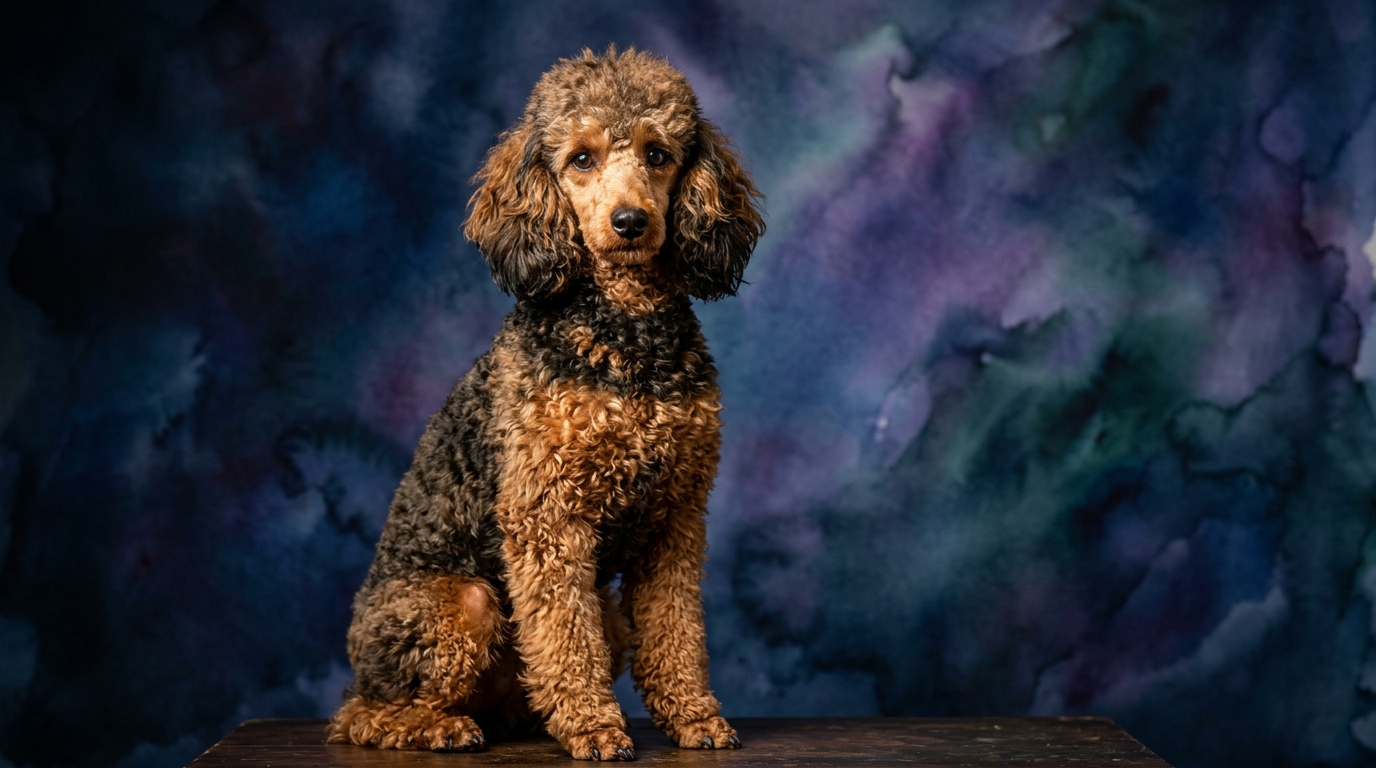
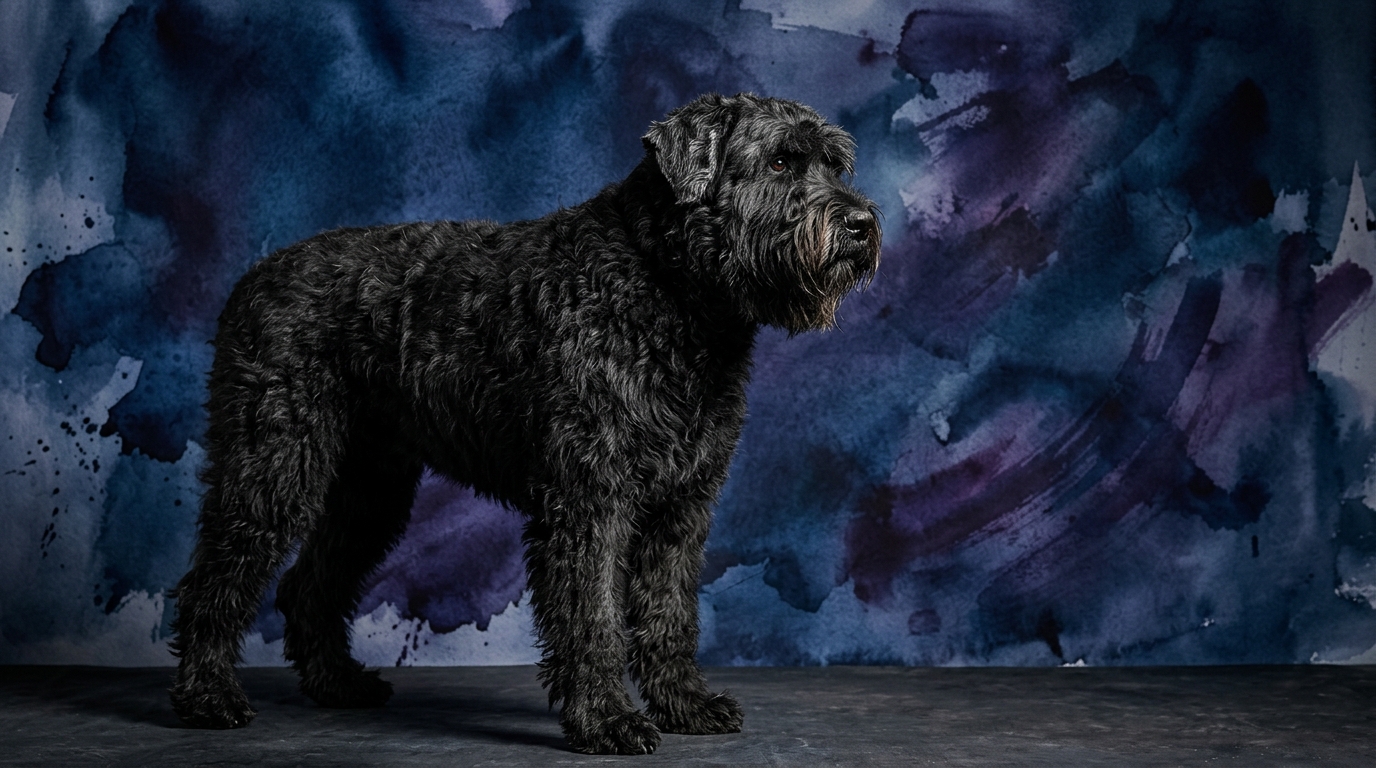
Side-by-Side IQ Profile: Poodle (Standard) vs Bouvier des Flandres
The Poodle (Standard) presents a cognitive blueprint optimized for interaction and adaptability. Its Problem Solving is rated 5/5, indicating a remarkable capacity to quickly analyze and devise solutions for complex tasks, often displaying strategic thinking. Training Speed also stands at 5/5, reflecting an eagerness and aptitude for assimilating new commands and behaviors with minimal repetition. Social Intelligence, at 5/5, highlights a profound attunement to human emotions and social cues, allowing them to navigate varied interpersonal dynamics with grace. While not a primary working breed in the traditional sense, their Instinctive Drive is a robust 4/5, often channeled into retrieving, agility, or other interactive pursuits. Finally, their Memory is an impressive 5/5, ensuring excellent recall of learned behaviors, routines, and experiences over extensive periods.
In contrast, the Bouvier des Flandres, a breed forged for demanding agricultural work, exhibits a different set of cognitive strengths. Its Problem Solving is rated 3/5, suggesting a practical, methodical approach to challenges, perhaps less about rapid innovation and more about persistent, grounded solutions. Training Speed also scores 3/5, indicating that while capable of learning, they typically require consistent, patient repetition and clear motivation to solidify new commands. Social Intelligence, at 3/5, points to a more reserved nature; they are observant of their family but may be less outwardly expressive or immediately receptive to the nuances of stranger interactions. Their Instinctive Drive is 3/5, primarily focused on guarding and herding, which often manifests as independent decision-making rather than eager compliance. Memory, also at 3/5, allows them to retain learned behaviors and experiences, though perhaps not with the immediate precision or long-term detail seen in the Poodle.
Where the Poodle (Standard) Wins Cognitively
The Poodle (Standard) consistently demonstrates superior cognitive performance across several key dimensions. Its 5/5 Problem Solving score means it excels at tasks requiring abstract thought and novel solutions, such as intricate puzzle toys or complex obedience routines that demand sequences of actions. This breed can often anticipate human intentions or environmental changes, adjusting its behavior proactively. The 5/5 Training Speed is unparalleled, allowing Poodles to master advanced commands and multi-step tasks with remarkable efficiency; they often learn a new trick in just a few repetitions. This rapid acquisition makes them exceptional candidates for competitive obedience, agility, and even service dog roles where quick learning is paramount. Furthermore, their 5/5 Social Intelligence gives them an acute sensitivity to human moods and subtle cues, enabling them to form deep, responsive bonds and adapt seamlessly to various social settings, understanding unspoken expectations. Their 5/5 Memory ensures that these learned skills and social understandings are retained for extended periods, making retraining rarely necessary and reinforcing their reliability.
Where the Bouvier des Flandres' Cognitive Profile Shines Uniquely
While the Poodle excels in rapid processing and social attunement, the Bouvier des Flandres' cognitive profile shines in areas demanding independent judgment and steadfast resolve, reflecting its herding and guarding origins. Its 3/5 Problem Solving, though not as swift, emphasizes practical, real-world solutions. A Bouvier might take longer to figure out a new gate latch, but once understood, its method will be robust and reliable, rooted in a tangible understanding of its environment rather than abstract deduction. The 3/5 Instinctive Drive, geared towards protecting and managing livestock, fosters a capacity for autonomous decision-making in the absence of direct commands. This means a Bouvier can assess a situation and act on its own initiative, a trait invaluable in a working capacity where human direction might be delayed. Their 3/5 Social Intelligence, while more reserved, translates into a watchful, discerning nature; they are less prone to being swayed by external stimuli or strangers, providing a focused, unwavering presence. This grounded cognitive approach, combined with a memory that retains practical experience, makes them exceptionally reliable in their designated roles, prioritizing duty and self-reliance over immediate human validation.
Which is Easier to Train and Why
Based on their IQ profiles, the Poodle (Standard) is unequivocally easier to train than the Bouvier des Flandres. The Poodle's 5/5 Training Speed means it grasps new commands and concepts with minimal repetition, often eager to please its handler. Their 5/5 Social Intelligence makes them highly responsive to verbal cues, body language, and even subtle shifts in human emotion, allowing for nuanced communication during training sessions. A Poodle's strong memory ensures that learned behaviors are retained effectively, making training sessions productive and long-lasting. For instance, teaching a Poodle to 'stay' will likely involve quick understanding and consistent execution, as they are motivated by interaction and positive reinforcement.
Conversely, the Bouvier des Flandres, with a 3/5 Training Speed, requires a more patient, consistent, and often firmer approach. Their lower social intelligence means they may not be as immediately attuned to a handler's subtle cues, necessitating clearer, more direct communication. Their instinctive drive for independent action, rooted in guarding and herding, can sometimes translate into a perceived stubbornness; they might question a command if they don't immediately see its practical purpose. For a Bouvier, teaching a 'stay' might require more repetitions, a stronger motivator, and a handler who understands their inherent need to make decisions. Consistency is paramount, as lapses in training can quickly lead to a Bouvier reverting to independent judgment.
Which Suits Active Owners vs. Relaxed Owners
The Poodle (Standard) is highly adaptable and can suit a range of owners, though they thrive best with those who can provide consistent mental engagement. While they certainly enjoy physical activity, their high problem-solving and social intelligence mean they require intellectual challenges—such as learning new tricks, puzzle toys, or participating in dog sports—to prevent boredom. They can be excellent companions for active owners who enjoy activities like hiking, running, or dog sports, but also for owners who prefer more relaxed companionship, provided their cognitive needs are met through regular training and interactive play. A Poodle can comfortably transition between an active outing and a quiet evening at home, as long as their day has included sufficient mental stimulation.
The Bouvier des Flandres, with its strong working heritage and independent drive, is decidedly better suited for active, experienced owners who can provide structure, purpose, and consistent physical and mental exercise. Their 3/5 instinctive drive for herding and guarding means they are not content to be mere couch potatoes; they need a job or a consistent outlet for their energy and decision-making capabilities. Relaxed owners who cannot commit to daily rigorous exercise, structured training, and opportunities for purposeful engagement will likely find a Bouvier des Flandres challenging, potentially leading to boredom-induced behaviors like excessive barking, destructive chewing, or territorial tendencies. They excel with owners who appreciate and can channel their robust work ethic into activities like obedience, protection sports, or even actual farm work.
The Verdict
Choose a Poodle (Standard) if you seek a highly interactive, quick-learning companion capable of mastering complex tasks and forming deep, nuanced bonds, thriving in environments that offer consistent mental and social engagement.
Choose a Bouvier des Flandres if you are an experienced, active owner seeking a steadfast, resilient working partner who values independent judgment, requiring patient, consistent leadership and a clear sense of purpose.
🧠 Find Your Pet's IQ Score
Our Pet IQ Lab assessment covers 25+ tests across 5 cognitive dimensions — personalized to your breed.
Take the Full IQ Test →Frequently Asked Questions
Is a Bouvier des Flandres suitable for a first-time dog owner?
A Bouvier des Flandres is generally not recommended for first-time dog owners. Their independent nature, strong protective instincts, and need for consistent, experienced training require a confident handler who understands working breeds.
How much mental stimulation does a Standard Poodle need daily?
A Standard Poodle benefits from at least 30-60 minutes of dedicated mental stimulation daily, such as training sessions, puzzle toys, or interactive games. This is in addition to their physical exercise requirements, crucial for their 5/5 problem-solving and social intelligence.
Can a Bouvier des Flandres be a good family dog?
Yes, a Bouvier des Flandres can be a devoted family dog, especially with proper socialization from a young age and consistent training. They are typically protective of their family but can be reserved with strangers, requiring supervision in new social situations.