
Side-by-Side IQ Profile
The Cosmic Pet Pet IQ Lab assesses canine cognition across five key dimensions, each scored from 1 to 5. Interestingly, both the robust Bouvier des Flandres and the nimble Toy Fox Terrier achieve a consistent 3 out of 5 across all metrics. However, these identical scores manifest through distinct behavioral patterns rooted in their breed histories.
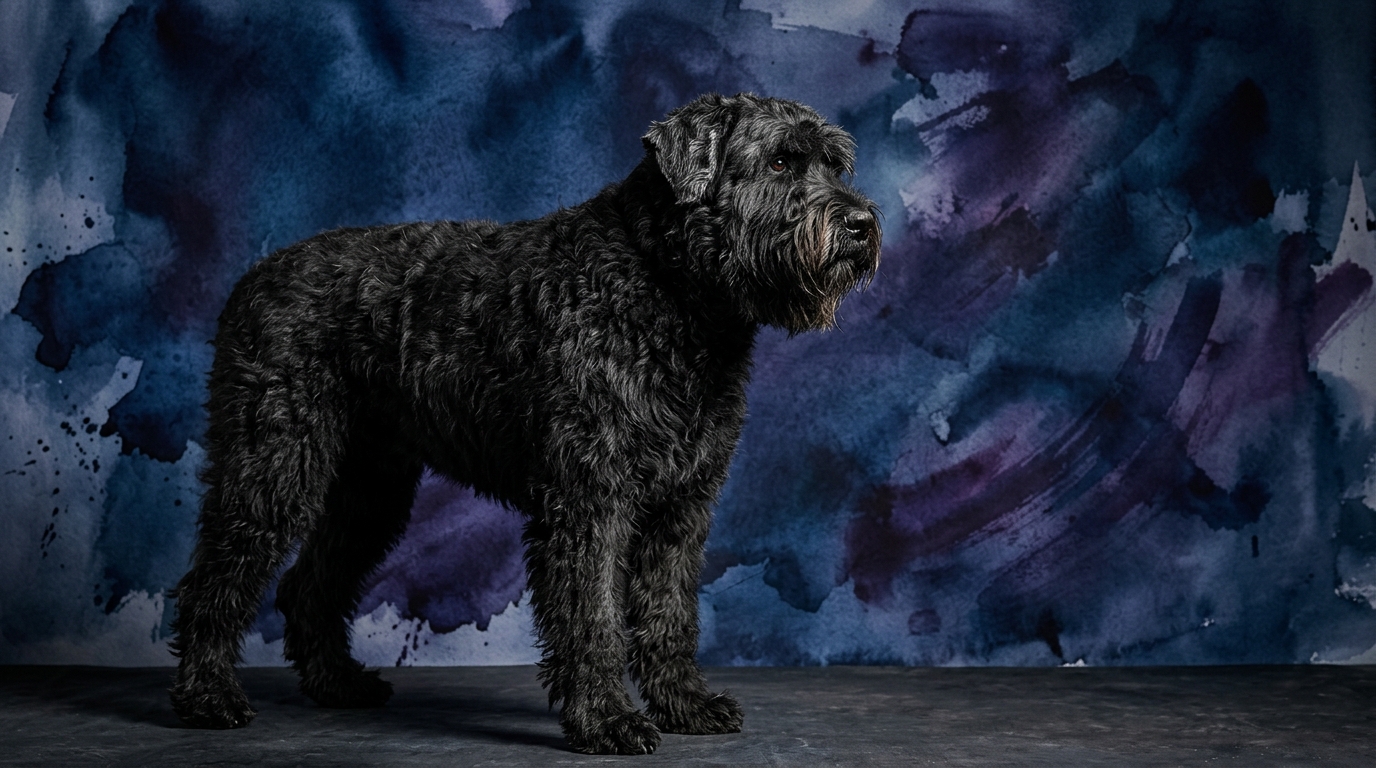
The Bouvier des Flandres, a Herding breed, demonstrates its cognitive profile as follows: Problem Solving (3/5): This breed excels at practical, task-oriented problem-solving, particularly in scenarios requiring methodical thought and persistence. Their solutions often involve careful observation and a robust, step-by-step approach, reflecting their historical role in managing livestock and navigating complex farm environments. Training Speed (3/5): Bouviers grasp new commands at a moderate pace, thriving on consistency and clear instruction. Once a concept is understood, they typically retain it well, which contributes to their reliability in working roles. Social Intelligence (3/5): They possess a discerning social awareness, understanding pack dynamics and human intentions deeply. While often reserved with strangers, their loyalty to their chosen family is profound, indicating a selective but strong grasp of social bonds and hierarchies. Instinctive Drive (3/5): A significant herding and guarding drive is foundational to their cognitive makeup, manifesting as a strong desire to oversee and protect their family and territory. This drive provides a powerful internal motivation for their actions and focus. Memory (3/5): Bouviers exhibit good long-term recall for routines, learned commands, and past experiences. This strong memory aids in their ability to perform complex sequences of tasks and contributes to their consistent behavior over time.
The Toy Fox Terrier, a Toy breed, interprets the same cognitive scores through a different lens: Problem Solving (3/5): This breed showcases clever, often opportunistic problem-solving, adept at figuring out how to access desired items or overcome small physical barriers. Their solutions are frequently quick, sometimes mischievous, and designed for immediate gratification or advantage. Training Speed (3/5): Toy Fox Terriers learn commands at a moderate pace, but their independent and spirited nature means training benefits from engaging and varied methods to maintain their focus. Repetition without novelty might lead to disinterest. Social Intelligence (3/5): Highly attuned to human emotions and the subtle dynamics within a household, they often use their charm and quick wits to influence interactions. Their ability to "read the room" and adapt their behavior to gain attention or affection is a hallmark of their social acumen. Instinctive Drive (3/5): Their terrier heritage endows them with a notable prey drive, manifesting as an intense interest in small, fast-moving objects or creatures. This drive fuels their bursts of energy and can make them highly focused on a chase or game. Memory (3/5): Toy Fox Terriers possess a solid memory for commands, household routines, and the individuals they interact with. They recall successful strategies for obtaining treats or play, influencing their future clever attempts.
Where Bouvier des Flandres Wins Cognitively
The Bouvier des Flandres demonstrates distinct cognitive advantages in areas demanding sustained mental effort, methodical execution, and a deep sense of responsibility. Their problem-solving, while scored at 3/5, is particularly suited to complex, multi-step tasks that require endurance and deliberate thought rather than quick, impulsive actions. Consider their historical role in herding; they needed to strategize how to move a flock across varied terrain, anticipating multiple variables over time. This translates to a superior capacity for intricate obedience routines or tasks involving spatial awareness over larger areas, where their robust memory helps them retain long sequences of actions. Furthermore, their social intelligence, while presenting as reserved, is geared towards discerning loyalty and understanding hierarchical structures, making them exceptional at evaluating new individuals and serving as steadfast, protective guardians of their family unit. Their instinctive drive is not just about action, but about oversight and care, providing a profound internal motivation for their duties.
Where Toy Fox Terrier Wins Cognitively
Conversely, the Toy Fox Terrier's cognitive strengths lie in agility of thought, rapid assessment, and creative, often opportunistic, problem-solving within immediate contexts. While also scoring 3/5 for problem-solving, their approach is characterized by quick thinking and finding clever shortcuts or novel solutions to achieve a desired outcome, such as navigating an agility course with speed or figuring out how to open a treat container. Their social intelligence is adept at charming and "managing" their human companions, using their small stature and expressive nature to their advantage in social interactions, often successfully influencing outcomes. The Toy Fox Terrier’s instinctive drive, rooted in their terrier background, translates into a keen alertness and a readiness for quick bursts of action, making them exceptionally responsive to sudden movements or changes in their environment. This combination of swift problem-solving, social charm, and responsive drive allows them to shine in tasks requiring rapid adaptation and an engaging, playful approach to learning.
Which is Easier to Train and Why
Both breeds are rated 3/5 for training speed, suggesting they learn at a moderate pace. However, the ease of training hinges significantly on the handler's approach and understanding of each breed's underlying motivations. The Bouvier des Flandres, with its herding background, often possesses a strong desire to work with its handler, but also a degree of independent decision-making inherent to managing livestock. Training a Bouvier requires clear, consistent leadership, patience, and making the handler's role unequivocal. They respond well to structure and appreciate understanding the 'why' behind a command, often exhibiting intense focus once engaged. Their solid memory ensures that once a command is mastered, it tends to be retained reliably.
The Toy Fox Terrier, on the other hand, embodies the independent spirit of terriers. While quick to grasp concepts, their training can be made challenging by a shorter attention span for repetitive drills and a tendency to get bored or distracted if the learning isn't engaging. Their social intelligence might lead them to test boundaries or try to charm their way out of tasks they deem uninteresting. Effective training for a Toy Fox Terrier demands variety, a fun approach, and abundant positive reinforcement to keep them motivated and focused. They excel when tasks are presented as games, tapping into their playful nature and quick, opportunistic problem-solving. Neither breed is inherently "easier" across the board; rather, the Bouvier thrives under a confident, consistent leader, while the Toy Fox Terrier blossoms with an imaginative trainer who can make learning a joyful, varied experience.
Which Suits Active Owners vs Relaxed Owners
The suitability of each breed for active versus relaxed owners is largely dictated by their physical needs and how their cognitive profiles influence their daily energy expenditure. The Bouvier des Flandres is undeniably better suited for active owners. Their substantial size, coupled with their herding and guarding drives, means they require consistent, purposeful physical and mental engagement. An owner who enjoys long walks, hiking, or participating in dog sports such as obedience, agility, or herding trials will find the Bouvier a willing and capable partner. Their problem-solving and memory are geared towards sustained tasks, making them thrive when given a "job" to do, which directly translates to a need for robust activity to prevent boredom and potential behavioral issues.
The Toy Fox Terrier, while energetic and spirited, is generally a better fit for owners who might be described as "relaxed" in terms of physical activity requirements, but are still committed to mental engagement. Due to their small size, their exercise needs are more easily met with shorter, brisk walks, vigorous indoor play sessions, and interactive puzzle toys. Their quick problem-solving and social intelligence make them engaging companions for owners who enjoy frequent, interactive play and mental stimulation without necessarily needing extensive outdoor excursions. A relaxed owner for a Toy Fox Terrier doesn't mean a sedentary one, but rather someone whose lifestyle aligns with a smaller dog's activity level, providing ample opportunities for clever games and close companionship.
The Verdict
For owners seeking a steadfast, protective companion who thrives on structured tasks, consistent training, and substantial physical activity, offering a deep, discerning bond, the Bouvier des Flandres is an excellent choice.
Conversely, for owners who appreciate a lively, quick-witted companion adaptable to smaller living spaces, enjoying interactive play, and requiring moderate physical activity with plenty of mental engagement, the Toy Fox Terrier will be a delightful addition.
🧠 Find Your Pet's IQ Score
Our Pet IQ Lab assessment covers 25+ tests across 5 cognitive dimensions — personalized to your breed.
Take the Full IQ Test →Frequently Asked Questions
Do Bouvier des Flandres and Toy Fox Terriers learn at the same rate?
While both score 3/5 for training speed, their learning styles differ. Bouviers respond best to consistent, clear direction and structure, while Toy Fox Terriers benefit from varied, engaging, and positive reinforcement methods to maintain their interest.
Which breed is better at adapting to new situations?
The Toy Fox Terrier often displays more immediate adaptability, using quick problem-solving to navigate novel scenarios. The Bouvier, while capable, tends to approach new situations with more deliberation and observation, relying on their memory and discerning social intelligence.
How do their instinctive drives impact their daily life?
The Bouvier's herding and guarding drives mean they often seek to oversee their family and territory, requiring clear leadership. The Toy Fox Terrier's prey drive manifests as enthusiasm for chasing and exploring, needing outlets for this energy in a safe environment.