Side-by-Side Cognitive Profile
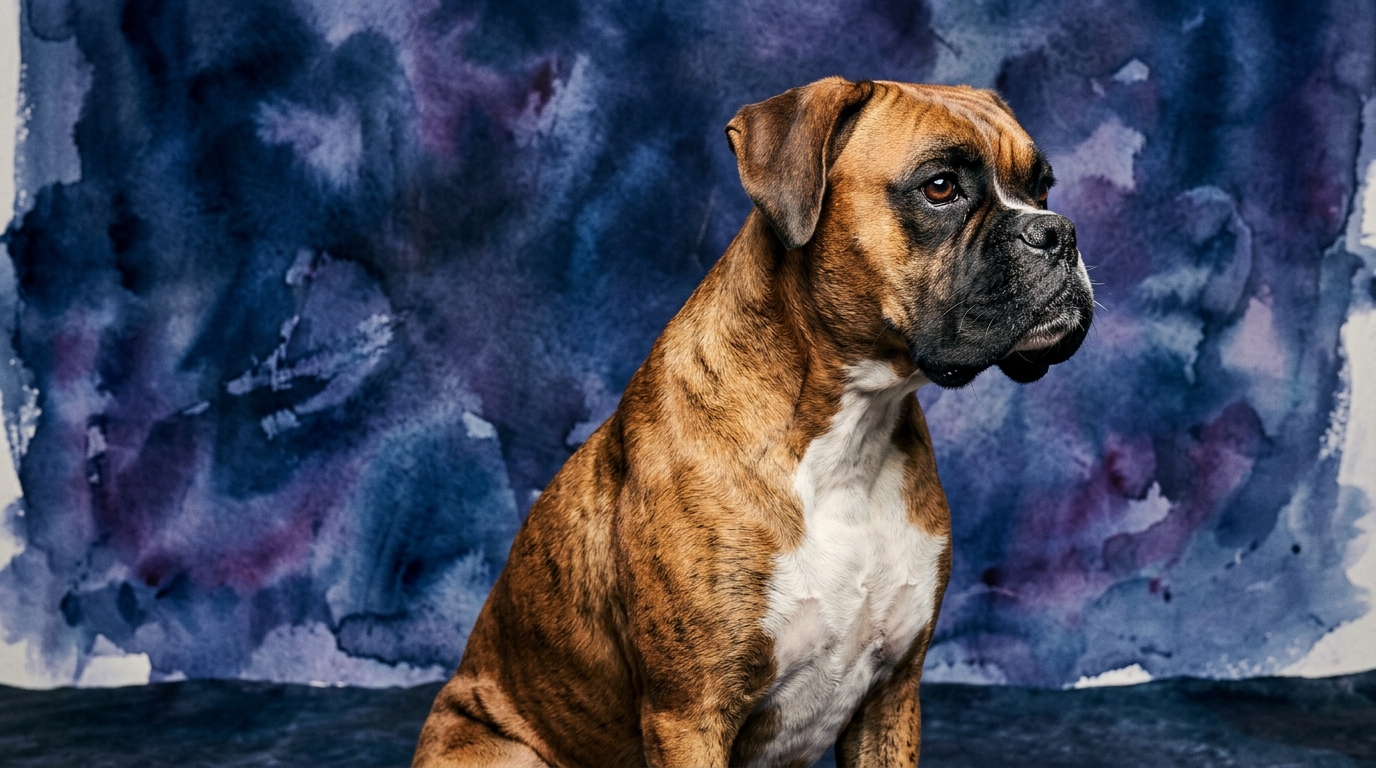
The Cosmic Pet Pet IQ Lab employs five key dimensions to evaluate canine intelligence, offering a granular view of each breed's cognitive strengths. For the Boxer, we observe a problem-solving capacity rated at 3/5, indicating a moderate ability to independently navigate novel challenges. Their training speed also registers at 3/5, suggesting they benefit from patient, consistent instruction to solidify new commands. Where the Boxer truly shines is in social intelligence, scoring an exceptional 5/5, reflecting their profound ability to interpret human cues and bond. Their instinctive drive is strong at 4/5, often manifesting as a desire for play and protection, while memory stands at 3/5, adequate for daily life but not exceptional for long-term recall without reinforcement.
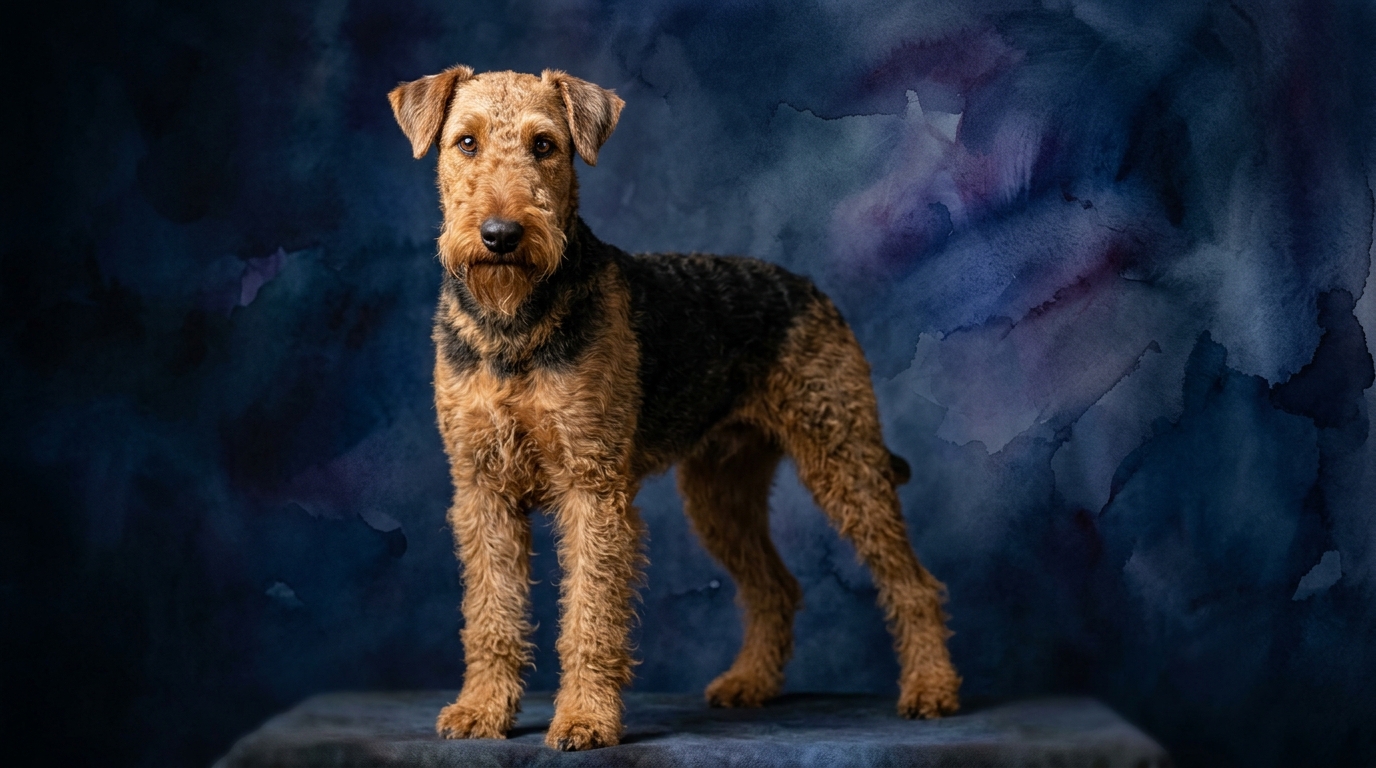
In contrast, the Airedale Terrier presents a different cognitive blueprint. Their problem-solving ability is notably higher at 4/5, demonstrating a greater propensity for independent strategizing and overcoming obstacles. This is complemented by a training speed of 4/5, meaning they typically grasp new concepts with fewer repetitions. The Airedale's social intelligence, at 3/5, is functional but less acutely attuned to human emotional subtleties than the Boxer. Their instinctive drive is moderate at 3/5, often expressed through exploration and a historical hunting heritage, and they boast a strong memory at 4/5, indicating good retention of learned behaviors and experiences over time.
Where the Boxer Excels Cognitively
The Boxer's primary cognitive strength lies in its profound connection with humans, largely driven by its exceptional social intelligence (5/5). This breed possesses an innate ability to read and respond to human emotions, often anticipating an owner's mood or offering comfort during distress. This perceptive quality makes them remarkably adaptable within a family unit, understanding subtle household dynamics and integrating as intuitive companions. Their strong instinctive drive (4/5) further supports this, manifesting as a deep desire to be involved in family activities and to act as a gentle, yet vigilant, protector of their loved ones. While they might not be the quickest to solve a complex puzzle box independently, their responsiveness to human interaction and their capacity for empathy make them particularly adept at tasks requiring close partnership and emotional awareness, such as therapy work or simply being a deeply understanding presence in a home. Their cognitive prowess here is not about raw intellect, but about relational intelligence.
Where the Airedale Terrier Shines Cognitively
The Airedale Terrier demonstrates cognitive superiority in areas demanding independent thought and efficient learning. Their problem-solving ability, rated at 4/5, means they are more inclined to devise creative solutions to practical challenges, whether it's figuring out how to bypass a barrier or mastering a new trick. This analytical approach is paired with a commendable training speed (4/5), allowing them to absorb new commands and complex sequences with relative ease and fewer repetitions than many other breeds. Furthermore, their strong memory (4/5) ensures consistent recall of learned behaviors and spatial information over extended periods, making them reliable partners for advanced obedience, agility, or working roles that require a broad and retained skill set. While perhaps less overtly focused on human emotional states, the Airedale's cognitive strengths make them highly capable and enthusiastic students, particularly when engaged with tasks that stimulate their intellect and allow them to apply their learned knowledge. They are the strategists, capable of remembering intricate patterns and applying them to new situations with a keen sense of purpose.
Which is Easier to Train and Why
When evaluating ease of training, the Airedale Terrier generally holds an advantage in command acquisition and retention. Their higher training speed score (4/5) and superior memory (4/5) indicate a quicker grasp of new concepts and more reliable recall over time. This often translates to fewer repetitions needed during training sessions and a more consistent performance of learned behaviors, making them suitable for owners who enjoy progressing through advanced obedience or competitive dog sports. However, their moderate social intelligence (3/5) can mean they are less motivated by purely social praise and may require more varied, stimulating, and task-oriented reinforcement to maintain focus, occasionally exhibiting the independent streak characteristic of terriers if not properly engaged.
The Boxer, with a training speed of 3/5, typically requires a more patient and consistent approach. They might take longer to fully internalize commands and may need more frequent reinforcement to maintain proficiency. However, their exceptional social intelligence (5/5) means they are profoundly motivated by human interaction, praise, and approval. A Boxer often thrives on positive reinforcement methods that emphasize connection and shared activity, making them highly responsive to an owner who understands their deep need for social engagement. While their problem-solving might be moderate, their strong desire to please and bond can make them very willing participants in training, even if the learning curve is slightly longer. Therefore, 'easier' is subjective; the Airedale offers quicker learning for specific tasks, while the Boxer offers a more socially driven, perhaps slower, but deeply rewarding training partnership.
Active Owners vs. Relaxed Owners: A Cognitive Match
Both the Boxer and Airedale Terrier are energetic breeds that benefit significantly from active engagement, but their preferred modes of interaction during activity differ based on their cognitive profiles. The Boxer, with an instinctive drive of 4/5, is a physically robust companion that thrives on consistent, vigorous exercise. Their high social intelligence means they genuinely prefer these activities to be shared experiences with their human family, whether it's a long walk, a spirited game of fetch, or structured playtime. They are less suited for owners who prefer a purely relaxed, sedentary lifestyle, as their mental and physical well-being relies on regular outlets for their energy and a strong sense of inclusion. A Boxer wants to be 'doing' with you, benefiting greatly from consistent interaction and a clear sense of purpose within the family unit.
The Airedale Terrier, while also requiring regular exercise, has a slightly lower instinctive drive score (3/5). This doesn't imply inactivity; rather, their drive is often channeled into exploration, scent work, or more independent forms of play. An active owner who enjoys activities like hiking, agility, or engaging in mentally stimulating tasks would find an Airedale a keen partner. However, due to their moderate social intelligence compared to the Boxer, they might be more content with periods of independent exploration or training exercises that focus on tasks rather than constant human interaction. They are not necessarily 'relaxed' in their energy needs, but perhaps more self-sufficient in their engagement. Owners looking for a dog to join them on adventures, but who might also appreciate a dog with a strong independent streak, could find the Airedale a good fit. They are partners in activity, but perhaps less emotionally intertwined with every movement.
The Verdict
Choose a Boxer if you prioritize a deeply empathetic, socially attuned companion who thrives on close human connection and shared activity, even if it means a slightly longer training curve.
Opt for an Airedale Terrier if you value a clever, independent problem-solver with a quick grasp of commands and strong memory, suitable for engaging in diverse, stimulating tasks.
🧠 Find Your Pet's IQ Score
Our Pet IQ Lab assessment covers 25+ tests across 5 cognitive dimensions — personalized to your breed.
Take the Full IQ Test →Frequently Asked Questions
Are Boxers difficult to train due to their moderate training speed?
Boxers aren't inherently difficult, but their training requires patience and consistency. Their strong social intelligence means they respond well to positive reinforcement and methods that emphasize bond-building, even if they take more repetitions to master commands. Focus on making training a fun, interactive experience.
Do Airedale Terriers require a lot of mental stimulation?
Absolutely. With their superior problem-solving skills and good memory, Airedale Terriers thrive on mental challenges. Engaging them in puzzle toys, advanced obedience, agility, or scent work is crucial to prevent boredom and channel their natural intellectual drive productively.
Which breed is better for a first-time dog owner?
Neither breed is typically recommended as an 'easy' first dog, but for different reasons. Boxers need owners who can manage their energy and provide consistent, positive training. Airedales require owners who understand terrier independence and can provide consistent mental and physical challenges. An experienced owner who understands breed-specific traits will likely have an easier time with either.