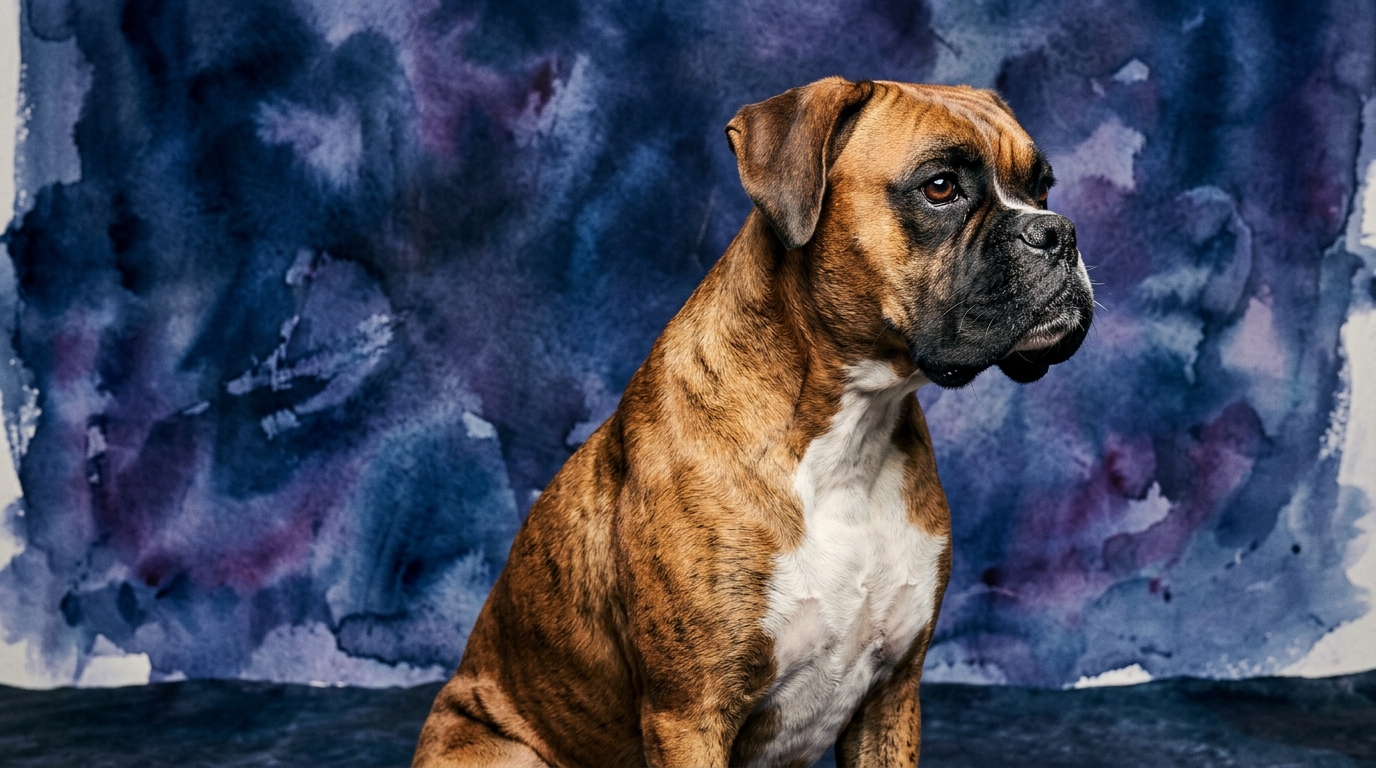
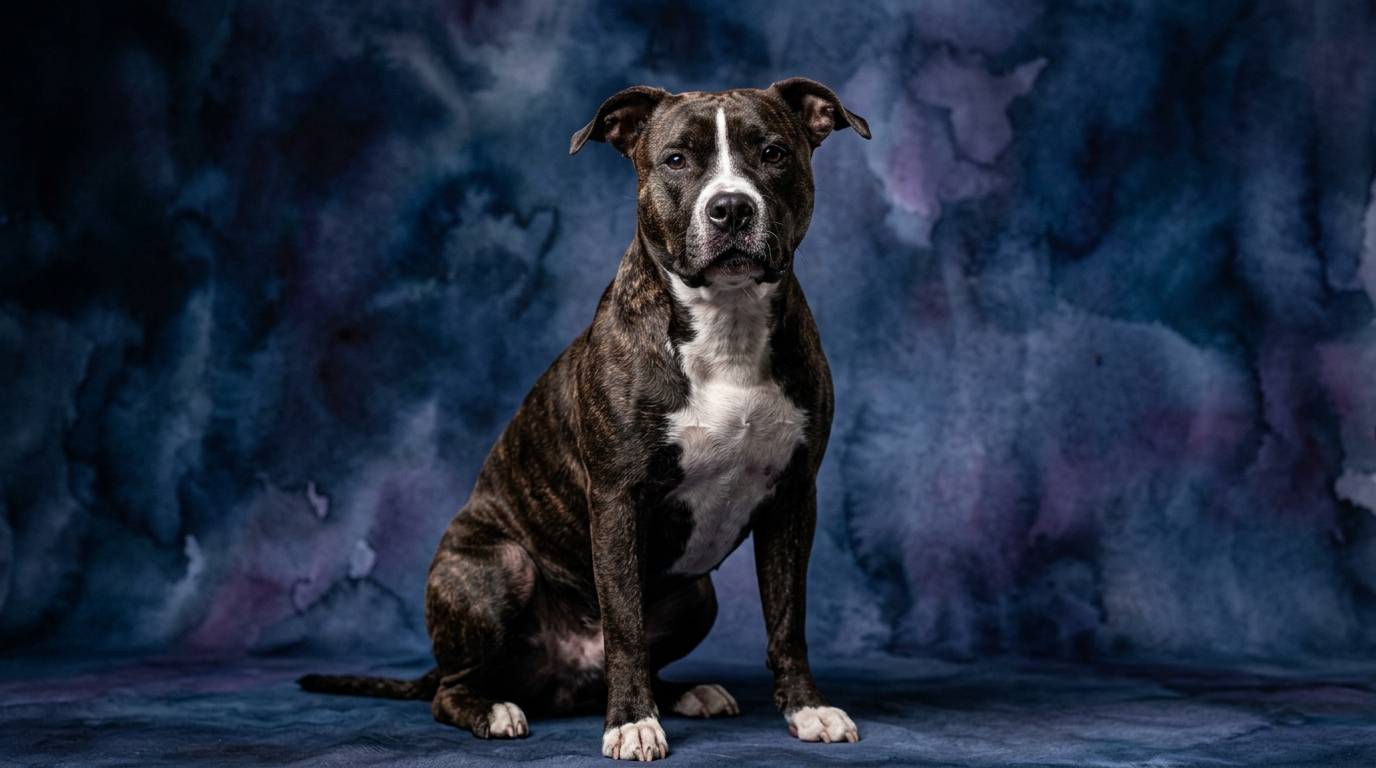
Side-by-Side IQ Profile: Boxer vs. American Staffordshire Terrier
At a glance, both the Boxer and the American Staffordshire Terrier (AmStaff) share a Coren rank of #48, suggesting a similar baseline for working obedience and adaptive intelligence. However, our Cosmic Pet Pet IQ Lab's granular analysis uncovers specific cognitive strengths and areas for development that differentiate these two remarkable breeds across five key dimensions.
The Boxer, a member of the Working Group, presents a balanced cognitive profile with distinct social strengths. Their Problem Solving is rated 3/5, indicating a moderate capacity for independent thought in navigating simple puzzles or retrieving desired items through trial and error, often relying on energetic persistence. Training Speed is also 3/5; while eager to please, their playful nature and occasional stubbornness necessitate consistent, engaging sessions to maintain focus and ensure retention. Where Boxers truly shine is in Social Intelligence, scoring a perfect 5/5; they exhibit an exceptional ability to interpret human cues, body language, and emotional states, fostering deep, empathetic connections. Their Instinctive Drive, at 4/5, manifests as a strong inclination for interactive play, chasing, and protective vigilance, channeling their energy into engaging tasks. Memory for the Boxer is 3/5, meaning they retain familiar routines and frequently practiced commands well, but less common instructions might require reminders.
The American Staffordshire Terrier, from the Terrier Group, shares some cognitive scores with the Boxer but possesses unique strengths. Their Problem Solving is 3/5, demonstrating a moderate ability to tackle challenges with a determined, direct approach, often relying on physical manipulation rather than intricate strategy. Training Speed is also 3/5; AmStaffs learn at a moderate pace, responding well to clear, consistent methods, though their strong-willed nature requires patient and firm guidance. Social Intelligence for the AmStaff is 3/5; they form deep bonds with their immediate family but may require more structured introductions to new people or animals compared to breeds with higher social scores, expressing their loyalty directly within their trusted circle. Their Instinctive Drive is 3/5, often manifesting as a desire to chew, dig, and engage in vigorous play, showcasing a tenacious spirit. The AmStaff's standout cognitive trait is Memory, rated 4/5; they possess a strong capacity to retain learned commands, routines, and experiences consistently over time, aiding in the long-term reinforcement of behaviors.
Where the Boxer Wins Cognitively
The Boxer's cognitive strengths distinctly shine in the realm of social intelligence, where they score a perfect 5/5. This means they possess an exceptional ability to read and respond to human emotions, body language, and social cues, fostering a profound connection with their human companions. Their empathetic nature allows them to anticipate needs and react appropriately to the family's mood, making them highly attuned and responsive members of a household. This contrasts with the AmStaff's moderate social intelligence, suggesting a Boxer might offer a more intuitive and emotionally integrated companionship. Furthermore, the Boxer's instinctive drive, rated at 4/5, is geared towards interactive play and protective vigilance, a drive that is often easily channeled into family activities and companionship roles, compared to the AmStaff's more generalized, moderate drive.
Where the American Staffordshire Terrier Wins Cognitively
The American Staffordshire Terrier holds a clear cognitive advantage in memory, earning a 4/5 compared to the Boxer's 3/5. This superior memory means that once an AmStaff learns a command, a routine, or a specific positive or negative association, they are likely to retain it for an extended period, even with less frequent reinforcement. This robust recall can be a significant asset in maintaining consistent training outcomes and behavioral expectations over their lifetime. While both breeds share similar scores in problem-solving and training speed, the AmStaff's stronger memory provides a foundation for more enduring learned behaviors, requiring less remedial work in the long run.
Which Is Easier to Train and Why
Both Boxers and American Staffordshire Terriers are rated with a 3/5 for training speed, indicating they learn at a moderate pace. However, the *ease* of training can differ based on their other cognitive attributes. The Boxer's exceptional social intelligence (5/5) means they are generally more motivated by human interaction and praise, making them eager to please and responsive to their handler's cues. Their strong desire for connection often translates into a willingness to cooperate, provided training is kept engaging and positive. In contrast, while AmStaffs also learn well with consistency, their moderate social intelligence (3/5) and stronger memory (4/5) suggest they might respond best to very clear, consistent rules and highly motivating rewards. Their tenacious terrier spirit can sometimes manifest as a stubborn streak, requiring a more assertive and patient trainer to maintain focus. The Boxer's intuitive social understanding might make them feel 'easier' to work with for owners who prefer a more collaborative training style driven by connection, whereas the AmStaff benefits from a structured approach that leverages their memory for enduring results.
Which Suits Active Owners vs. Relaxed Owners
For owners with an active lifestyle, the Boxer, with its 4/5 instinctive drive, is an excellent match. This breed thrives on regular, vigorous exercise, interactive play, and opportunities to channel its energy into activities like fetch, agility, or long runs. Their strong social intelligence also means they enjoy participating in family activities and being an integral part of an energetic household. A Boxer's physical and mental well-being is deeply tied to consistent engagement and activity. Conversely, while AmStaffs also appreciate activity and have a moderate instinctive drive (3/5), their needs can be slightly more adaptable. They enjoy robust play sessions and structured exercise, but their energy levels can often be satisfied with focused daily walks and mental stimulation. They can adjust to more relaxed periods, provided their core exercise and training needs are met. Therefore, an AmStaff might suit an owner who is active but also appreciates downtime, whereas a Boxer genuinely requires an owner committed to a consistently energetic routine.
The Verdict
Choose a Boxer if you desire a deeply connected, empathetic companion who thrives on social interaction and energetic play, and you are prepared to channel their strong instinctive drives into family activities and consistent physical engagement.
Opt for an American Staffordshire Terrier if you value a loyal, steadfast companion with an impressive memory, and you are ready to provide consistent, structured training to harness their tenacious spirit and ensure well-behaved, enduring habits.
🧠 Find Your Pet's IQ Score
Our Pet IQ Lab assessment covers 25+ tests across 5 cognitive dimensions — personalized to your breed.
Take the Full IQ Test →Frequently Asked Questions
Do Boxers and AmStaffs have similar problem-solving abilities?
Yes, both Boxers and American Staffordshire Terriers are rated 3/5 for problem-solving. They demonstrate a moderate capacity for navigating simple challenges, often relying on persistence and direct action rather than complex strategic thinking.
Which breed is more attuned to human emotions?
The Boxer, with a social intelligence score of 5/5, is significantly more attuned to human emotions and social cues. They are highly empathetic and responsive to their family's moods, making them very intuitive companions compared to the AmStaff's 3/5 social intelligence.
Is one breed generally healthier than the other?
While not directly related to intelligence, both breeds can be prone to certain health issues, with Boxers often facing concerns like cancer and heart conditions, and AmStaffs being susceptible to hip and elbow dysplasia. Prospective owners should research breed-specific health screenings and choose reputable breeders.