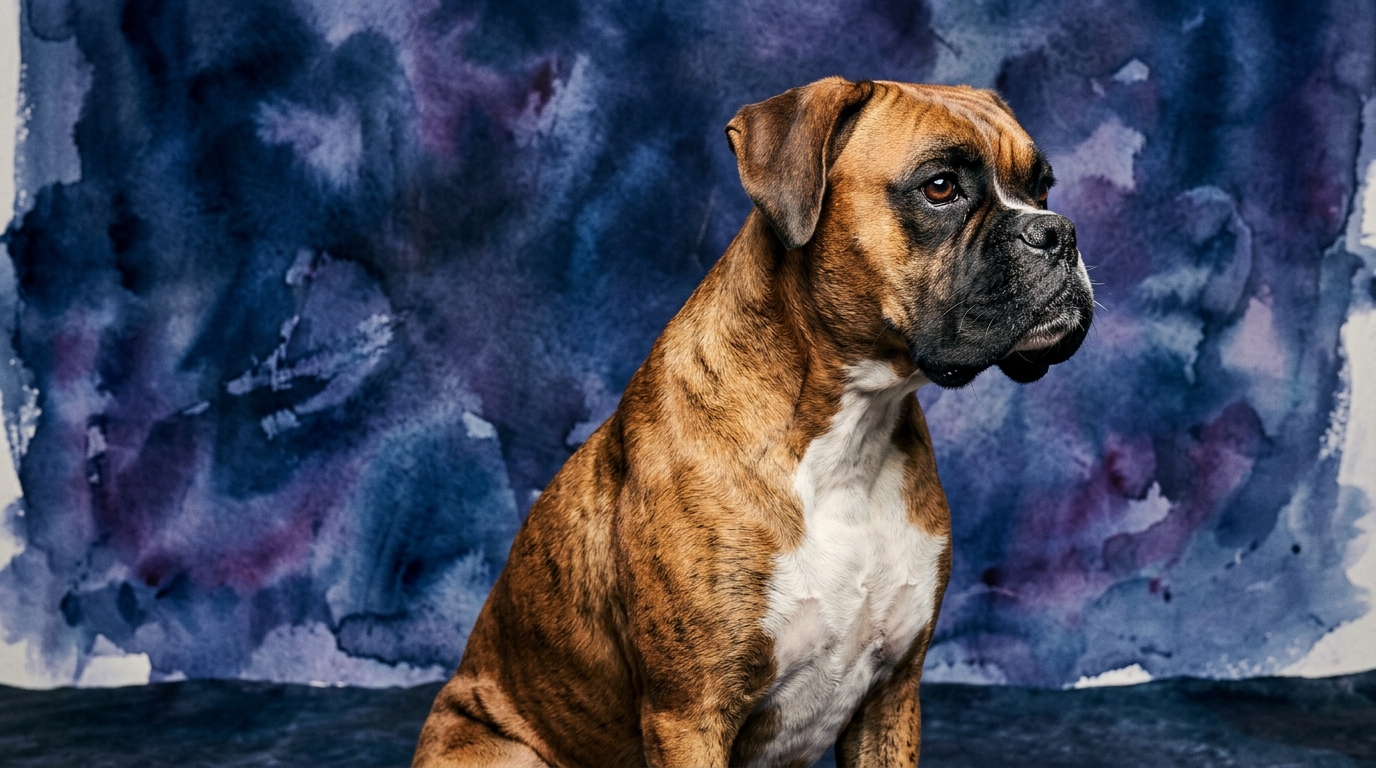
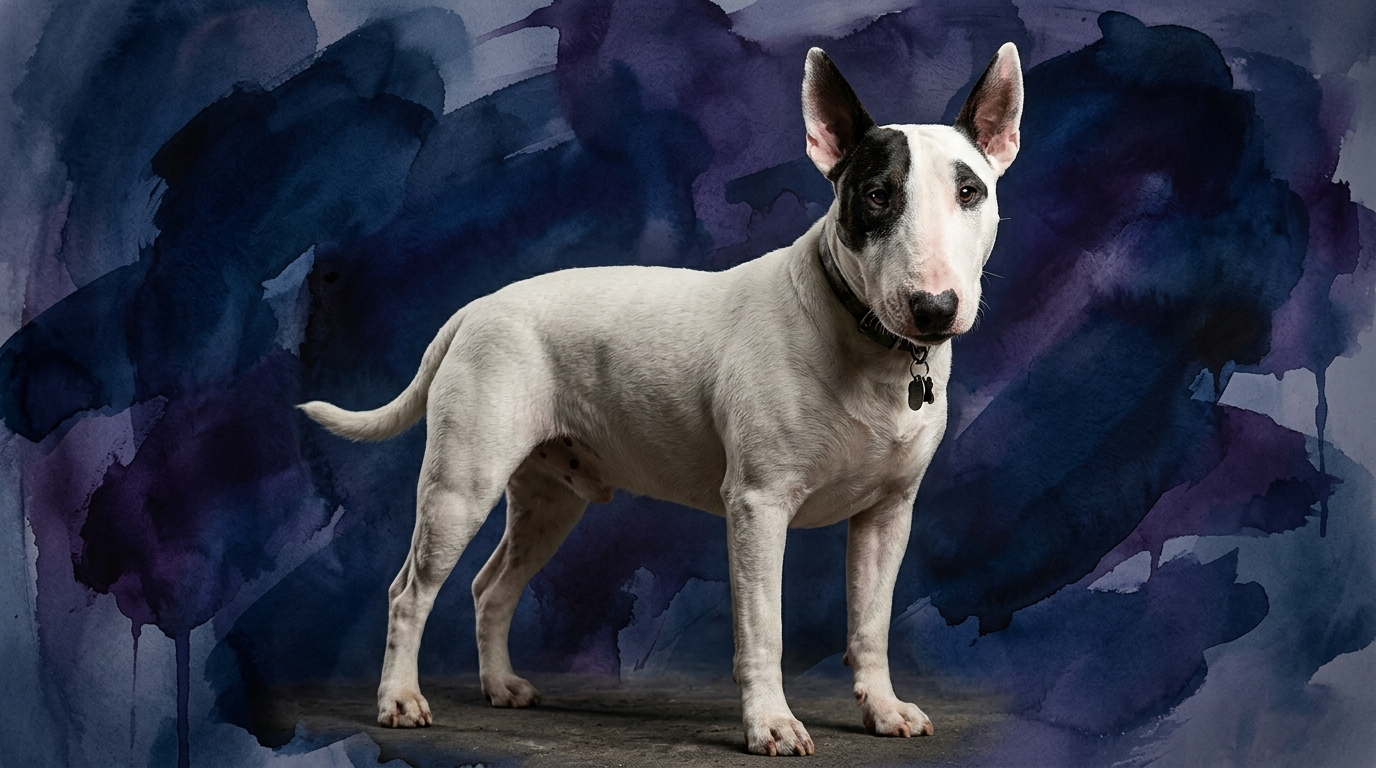
Side-by-Side Cognitive Profiles: Boxer vs. Bull Terrier
Delving into the Cosmic Pet Pet IQ Lab data, we see that the Boxer, ranking #48 on Coren's scale, presents a cognitive tapestry woven with strong social threads. Their Problem Solving and Training Speed both score 3/5, indicating a moderate ability to tackle novel challenges and absorb new commands at an average pace. Where the Boxer truly shines is in Social Intelligence, earning a perfect 5/5, reflecting a profound capacity to understand and engage with human emotions and cues. Their Instinctive Drive is a robust 4/5, hinting at a natural inclination towards purpose-driven activities inherent to their working heritage, while Memory stands at a solid 3/5, suggesting they retain learned behaviors effectively but might not recall complex sequences with exceptional speed.
The Bull Terrier, positioned at #66 on Coren's scale, exhibits a more consistent, albeit moderate, cognitive profile across the board. Their Problem Solving, Training Speed, Social Intelligence, Instinctive Drive, and Memory all register a 3/5. This suggests a balanced, yet independent, cognitive approach. While capable of learning and adapting, their social engagement might be less overt than a Boxer's, and their problem-solving could lean more towards persistent trial-and-error rather than rapid insight. Their instinctive drive, while present, may manifest as a focused determination typical of terriers, rather than the collaborative drive seen in many working breeds.
Where the Boxer Excels Cognitively
The Boxer's exceptional Social Intelligence (5/5) is their standout cognitive advantage. This means they possess an innate ability to read human body language, tone of voice, and emotional states with remarkable accuracy, making them highly attuned to their family's needs and moods. This deep social awareness fosters a strong bond, enabling them to anticipate commands and respond to subtle cues, often before they are explicitly given. For instance, a Boxer is more likely to comfort a crying child or sense a handler's frustration during training, adjusting their behavior accordingly. Their 4/5 Instinctive Drive further supports their working heritage, allowing them to channel their energy into structured tasks like obedience, agility, or even protection work with focused determination and a desire to partner with their human.
This combination of high social acumen and purposeful drive makes Boxers particularly adept at roles requiring close human-animal partnership. They thrive on collaborative activities and are motivated by interaction, making them highly responsive to praise and social reinforcement during learning. While their Problem Solving and Training Speed are moderate, their eagerness to engage and please their human companion often compensates, allowing them to overcome challenges through persistent, socially-driven effort. They excel in environments where their empathetic nature and desire to be part of the 'pack' are valued and utilized.
Where the Bull Terrier Demonstrates Unique Cognitive Strengths
While the Bull Terrier's scores are consistently moderate, their specific cognitive strengths lie in their balanced independence and tenacity, traits deeply rooted in their terrier lineage. Their 3/5 Social Intelligence, while lower than the Boxer's, doesn't imply a lack of affection but rather a more self-reliant approach to interaction; they are less likely to be overly dependent on constant human validation and can be content with their own company for periods. This can translate into a cognitive resilience, where they are less prone to anxiety solely driven by human emotional fluctuations and can maintain focus on a task even without continuous encouragement.
Their 3/5 Instinctive Drive, combined with 3/5 Problem Solving, manifests as a persistent, sometimes stubborn, determination. Rather than seeking human guidance immediately, a Bull Terrier might methodically explore different solutions to a puzzle or obstacle, relying on their own internal drive to succeed. This self-directed cognitive persistence means they can be remarkably single-minded once they fixate on an objective, whether it's retrieving a toy or digging in the yard. This tenacity, while potentially challenging in training if not properly channeled, highlights a robust internal motivation that does not always require external social cues to initiate or sustain action.
Training Aptitude: Boxer vs. Bull Terrier
When it comes to training, the Boxer generally presents an easier path for most owners due to their superior Social Intelligence (5/5) and strong Instinctive Drive (4/5). Boxers are naturally inclined to form close partnerships and are highly motivated by pleasing their human companions. They are receptive to verbal praise, physical affection, and the opportunity to work alongside their owner. Their ability to quickly read human cues means they often pick up on subtle training signals, making the learning process feel more collaborative. While their Training Speed is 3/5, their willingness to engage and inherent desire to cooperate often translates into faster progress in obedience and trick training, especially when positive reinforcement methods are used consistently.
The Bull Terrier, with a 3/5 in both Social Intelligence and Training Speed, requires a different training approach. They are not as inherently driven to please or as attuned to human emotional states as Boxers. This means trainers must be more creative and persistent, finding what truly motivates the individual Bull Terrier, whether it's specific treats, toys, or play. Their independence can sometimes be misinterpreted as stubbornness; they may require more repetition and clearer, more consistent commands to grasp a concept. However, once a Bull Terrier understands what is expected and is motivated to comply, their 3/5 Instinctive Drive, coupled with their tenacity, means they will execute tasks with focused determination. Training a Bull Terrier demands patience, consistency, and a deep understanding of their unique terrier mindset, focusing on making training fun and rewarding on their terms.
Lifestyle Match: Active vs. Relaxed Owners
For active owners seeking a highly engaged and collaborative canine partner, the Boxer is often the more suitable choice. Their 4/5 Instinctive Drive and energetic nature, combined with their 5/5 Social Intelligence, mean they thrive on structured activities that involve their human. They are excellent companions for jogging, hiking, dog sports like agility or flyball, and even protection work, requiring significant daily physical exercise and mental stimulation to prevent boredom. Boxers need owners who are committed to providing consistent training, socialization, and ample opportunities for interaction, as their social nature means they do not do well with prolonged solitude. They are at their best when they feel like an integral part of the family's daily life and activities.
The Bull Terrier can also be an active companion, but their needs are slightly different, making them adaptable to owners who might have a more varied activity level, though certainly not 'relaxed' in the sedentary sense. While they possess good energy, their 3/5 Instinctive Drive and more independent nature mean they might be content with a substantial daily walk or vigorous play sessions without needing the same level of constant, human-directed 'work' as a Boxer. They still require consistent exercise to prevent destructive behaviors and maintain health, but they might be more self-sufficient in occupying themselves with toys or exploring their environment. Bull Terriers suit owners who appreciate a dog with a robust personality and are prepared to engage them with mental challenges and structured play, but perhaps with less emphasis on constant collaborative tasks, making them a good fit for active individuals who also value some independent downtime.
The Verdict
Choose a Boxer if you desire a deeply socially intelligent, highly collaborative companion eager to engage in activities with you and thrives on being an integral part of your family's daily life.
Opt for a Bull Terrier if you appreciate a resilient, independent, and tenacious dog that will bond deeply but also enjoys self-directed activities and requires an owner who can consistently motivate their unique terrier spirit.
🧠 Find Your Pet's IQ Score
Our Pet IQ Lab assessment covers 25+ tests across 5 cognitive dimensions — personalized to your breed.
Take the Full IQ Test →Frequently Asked Questions
Are Boxers good family dogs?
Yes, Boxers are generally excellent family dogs, largely due to their 5/5 Social Intelligence. They form strong bonds with family members, are often patient with children, and thrive on being included in household activities, making them highly adaptable and affectionate companions.
Do Bull Terriers get along with other pets?
Bull Terriers can coexist with other pets, but their 3/5 Social Intelligence and tenacious terrier nature often mean they require careful, early socialization. Supervision and a clear understanding of their individual temperament are crucial for harmonious multi-pet households, as their independence can sometimes lead to dominance issues.
Which breed is better for first-time dog owners?
The Boxer is generally a more forgiving choice for first-time dog owners due to their higher social intelligence and eagerness to please, which simplifies training and bonding. Bull Terriers, while wonderful companions, require more experience due to their independent nature and the need for consistent, creative training methods.