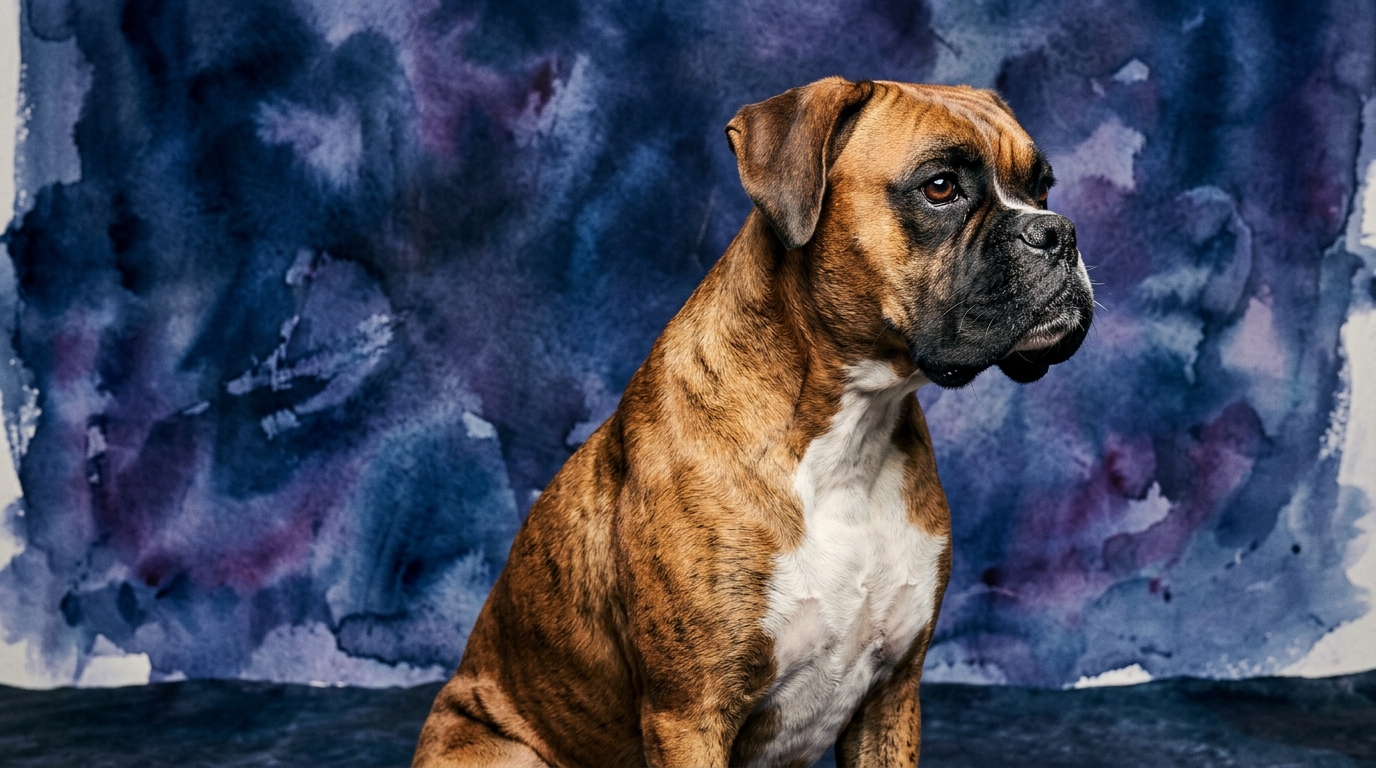
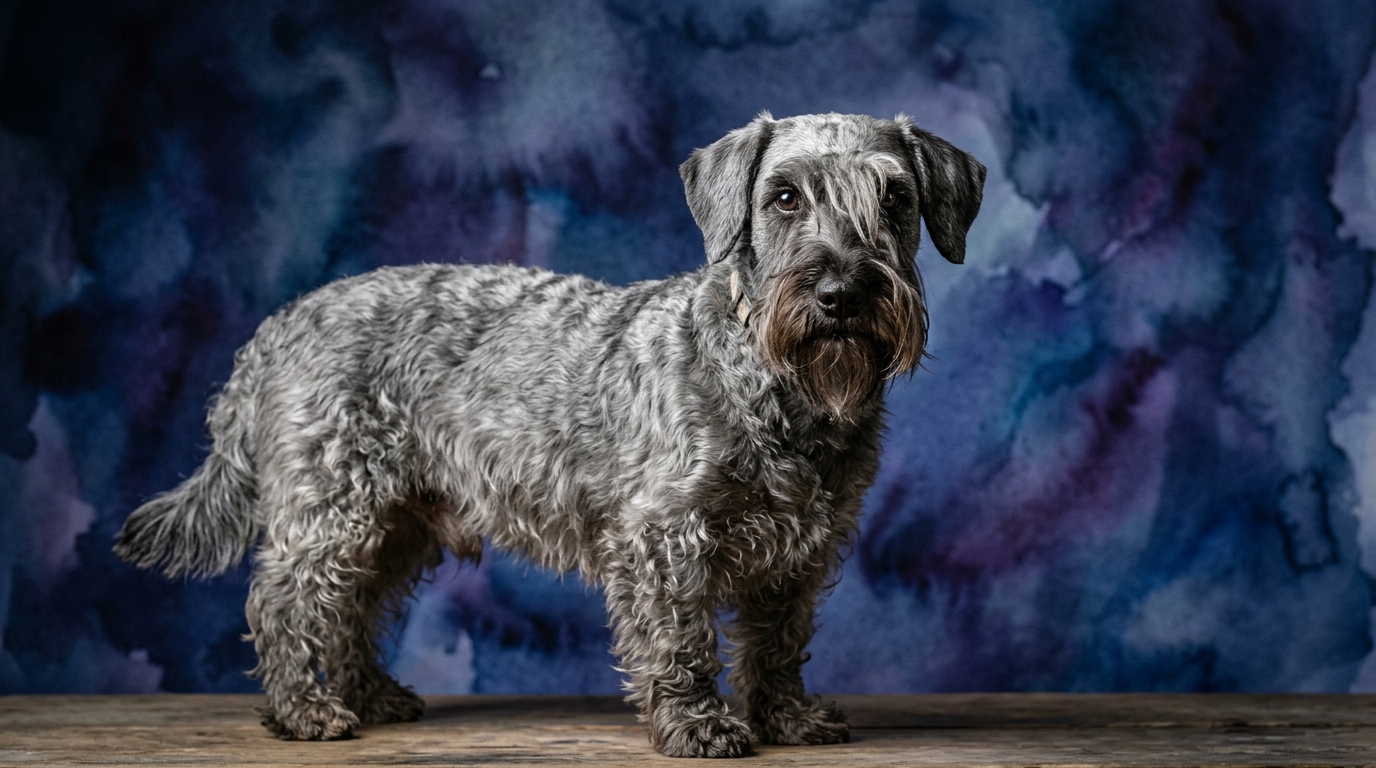
Side-by-Side IQ Profile: Boxer vs. Cesky Terrier
The Cosmic Pet Pet IQ Lab assesses five key cognitive dimensions. For the Boxer, we observe a problem-solving ability of 3/5, indicating a capacity to figure out challenges with some guidance, and a training speed of 3/5, suggesting they learn at a steady pace with consistent effort. Their social intelligence truly shines at 5/5, reflecting an exceptional attunement to human emotions and social cues, complemented by an instinctive drive of 4/5, often channeled into protection or vigorous play. Memory stands at a solid 3/5, allowing them to retain commands and routines effectively.
The Cesky Terrier, while not Coren-ranked, presents a unique cognitive blueprint. Their problem-solving is rated 3/5, demonstrating a knack for independent navigation and overcoming obstacles, sometimes with a stubborn streak. Training speed is also 3/5, meaning they require patience and consistency, learning effectively but not always with immediate enthusiasm. Their social intelligence is 3/5, indicating a friendly but more independent nature, less intensely focused on human social dynamics than the Boxer. An instinctive drive of 3/5 points to a moderate prey drive and enjoyment of exploration, with memory also at 3/5, enabling them to recall learned behaviors but perhaps selectively.
Where the Boxer Cognitively Excels
The Boxer's most significant cognitive advantage lies in their exceptional social intelligence, scoring a perfect 5/5 compared to the Cesky Terrier's 3/5. This means Boxers possess a profound capacity to understand and respond to human emotions, intentions, and communication nuances. They are highly empathetic companions, often anticipating their owner's needs and reacting with remarkable sensitivity, making them exceptionally cooperative and eager to engage in joint activities.
Furthermore, the Boxer's higher instinctive drive (4/5 versus 3/5) provides a robust internal motivation that, when properly channeled, can be a cognitive asset. This drive often translates into a keen enthusiasm for structured activities like obedience, agility, or scent work, where their energy and focus can be directed. Their strong desire to participate and engage with their human counterparts, fueled by both drive and social intelligence, gives them an edge in collaborative problem-solving tasks.
Where the Cesky Terrier Cognitively Shines
While both breeds score 3/5 in problem-solving, the Cesky Terrier often applies this ability with a distinctive self-reliance. Their terrier heritage fosters an independent approach to challenges, meaning they are adept at finding their own solutions to environmental puzzles or perceived obstacles, sometimes without seeking human input. This can manifest as cleverness in navigating complex spaces or outsmarting barriers, a testament to their innate ingenuity.
The Cesky Terrier's moderate social intelligence (3/5) also contributes to a unique cognitive strength: self-sufficiency. Unlike the highly people-centric Boxer, the Cesky is often content to explore, investigate, or simply exist independently for periods. This allows them to thrive in situations where they might need to occupy themselves or adapt to new environments without constant human reassurance or direction, showcasing a resilient and autonomous cognitive framework.
Training Dynamics: Boxer vs. Cesky Terrier
When it comes to training, the Boxer's superior social intelligence (5/5) typically makes them more amenable and responsive. They possess a deep desire to please their humans and are highly attuned to feedback, which can smooth the training process considerably. While their training speed is 3/5, requiring consistency, their innate responsiveness and eagerness to participate in a shared activity mean they generally pick up commands effectively, especially with positive reinforcement methods that leverage their strong bond.
The Cesky Terrier, with a 3/5 training speed and 3/5 social intelligence, presents a different training dynamic. They are capable learners, but their independent terrier spirit means they might question the necessity of a command or choose to prioritize their own interests over immediate compliance. Consistency is not just important but absolutely critical, and owners often need to make training engaging and intrinsically rewarding, appealing to their instinctive drives like scent work or digging games, rather than solely relying on a desire to please.
Matching Lifestyles: Active vs. Relaxed Owners
For active owners, the Boxer is often an ideal match. Their 4/5 instinctive drive translates into significant energy levels and a need for vigorous physical activity and consistent mental engagement. Boxers thrive in households that can provide daily opportunities for structured exercise, such as long runs, agility training, or interactive play sessions. Their high social intelligence means they not only need activity but want to share that experience with their human companions, making them excellent partners for an on-the-go lifestyle.
The Cesky Terrier, while not a sedentary breed, can be a more suitable companion for moderately active or relaxed owners. Their 3/5 instinctive drive and moderate energy levels mean they enjoy regular walks, exploring their surroundings, and engaging in short bursts of play or scent work, but they are also content to settle down indoors. Their more self-reliant nature means they don't demand constant human interaction for their cognitive fulfillment, making them adaptable to quieter periods or less intensely scheduled households.
The Verdict
Choose the Boxer if you seek a deeply bonded companion who thrives on social interaction and a structured, active lifestyle, eager to engage in shared cognitive challenges.
Opt for the Cesky Terrier if you appreciate a clever, self-reliant companion who enjoys independent exploration and offers a charming, albeit sometimes stubborn, intellectual challenge.
🧠 Find Your Pet's IQ Score
Our Pet IQ Lab assessment covers 25+ tests across 5 cognitive dimensions — personalized to your breed.
Take the Full IQ Test →Frequently Asked Questions
Are Boxers prone to separation anxiety?
Boxers, given their exceptional social intelligence and strong bond with their families, can be more susceptible to separation anxiety if not properly socialized or if left alone for extended periods. Their deep need for companionship means they thrive when integrated into daily family life.
Do Cesky Terriers get along with other pets?
Cesky Terriers generally get along with other pets, especially if introduced thoughtfully and socialized from a young age. However, their moderate instinctive drive and terrier heritage mean they might have a higher prey drive towards smaller, fast-moving animals, requiring careful supervision.
How do their memory scores impact daily life?
Both breeds have a 3/5 memory score, meaning they generally remember commands and routines but aren't infallible. Consistent reinforcement and clear communication are important for both, ensuring learned behaviors remain strong and accessible over time and preventing 'selective hearing'.