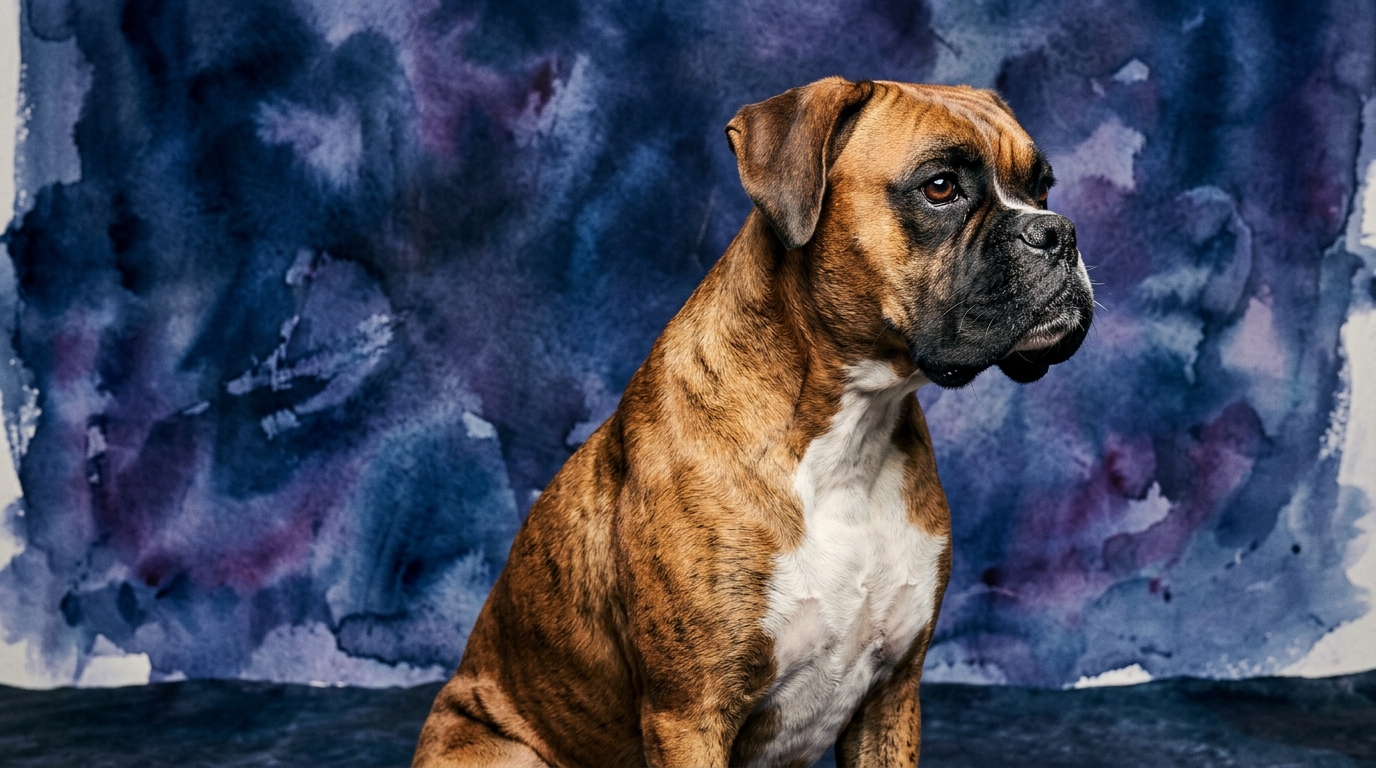
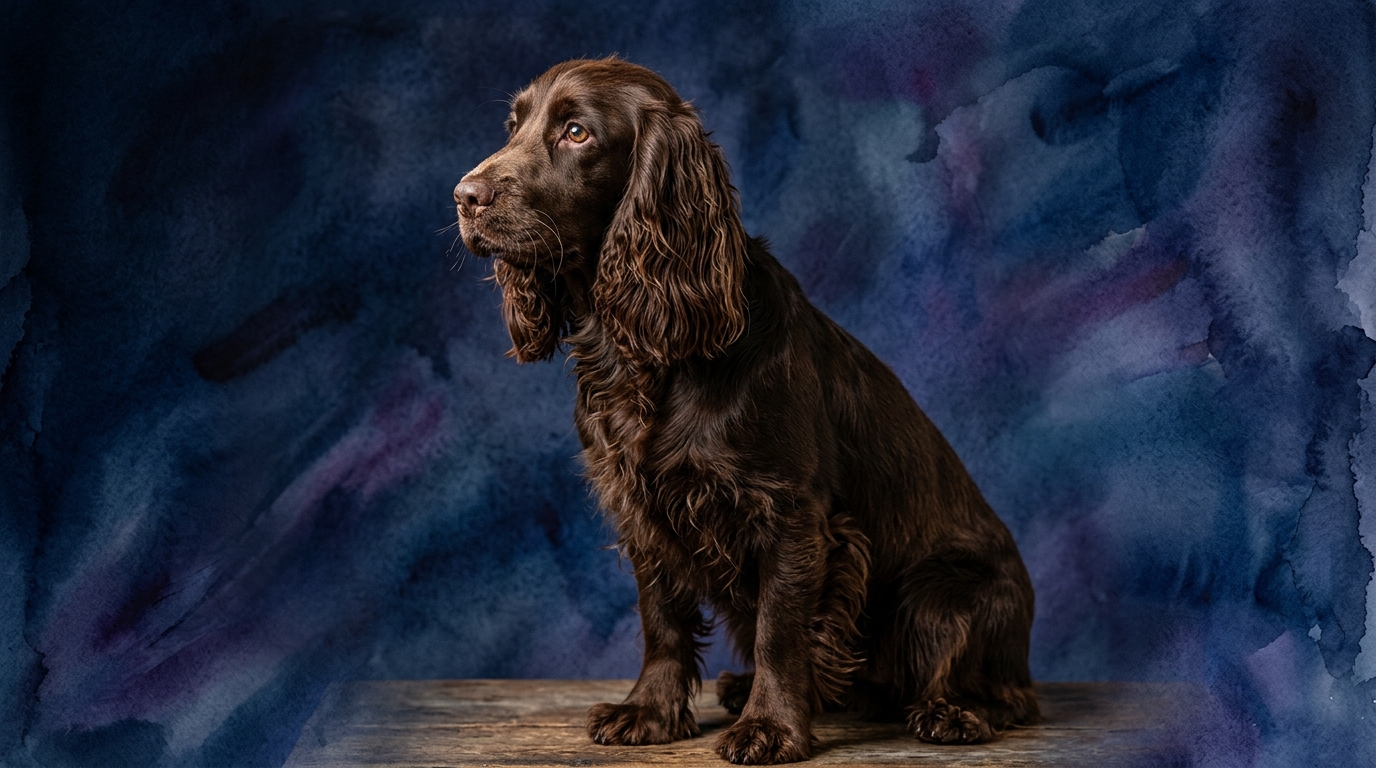
Side-by-Side Cognitive Profiles: Boxer vs. Field Spaniel
From the Working Group, Boxers register a Coren rank of #48, reflecting solid understanding. Their problem-solving (3/5) indicates they navigate moderate challenges and learn from experience without always seeking novel solutions. Training speed (3/5) suggests they grasp new commands steadily with consistent instruction. Boxers truly shine in social intelligence (5/5), demonstrating an exceptional ability to read human emotions, respond to cues, and form strong, interactive bonds, making them highly attuned companions. Their instinctive drive (4/5) embodies their guardian roles, manifesting as alertness and a drive for purposeful activity. Memory is a solid 3/5, retaining learned behaviors reliably.
As Sporting Group members, Field Spaniels are not Coren-ranked, but our Pet IQ Lab details their cognition. Problem-solving (3/5) mirrors the Boxer, demonstrating comparable capacity to adapt to situations without constantly seeking challenges. Training speed (3/5) means they learn new tasks at a similar moderate pace, thriving on positive reinforcement. Their social intelligence (3/5) indicates they form affectionate bonds and respond to human interaction, though with less overt emotional expression or intense focus than a Boxer. Instinctive drive (3/5) reflects their gundog heritage with a desire to retrieve and explore, but generally with less intensity. Memory (3/5), like the Boxer, is 3/5, ensuring they remember commands and routines.
Where the Boxer's Cognition Excels
The Boxer's standout cognitive strength is their social intelligence, rated 5/5. This signifies an extraordinary capacity to interpret human body language, vocal tones, and emotional states, allowing them to forge exceptionally deep, intuitive connections. They often seem to anticipate their owner's needs or moods, responding with nuanced understanding. This profound social awareness makes them highly interactive partners, often initiating play or offering comfort with a clear grasp of household social dynamics.
Furthermore, the Boxer's instinctive drive (4/5) provides a significant cognitive edge in specific contexts. This drive manifests as keen awareness of surroundings and a strong protective instinct, making them alert and dedicated guardians. This isn't just brute force; it's a cognitive readiness to assess potential threats and respond decisively. Their drive also fuels a desire for engaging, purposeful activity, meaning they thrive when given tasks that stimulate both body and mind, channeling natural inclinations into constructive outlets.
Where the Field Spaniel's Balanced Cognition Shines
While the Field Spaniel doesn't boast scores higher than the Boxer, their balanced cognitive profile, particularly 3/5 in problem-solving and training speed, positions them as uniquely adaptable. Their problem-solving abilities are sufficient for navigating household challenges and learning complex sequences, but without the intense, demanding drive for constant mental stimulation seen in some higher-scoring breeds. This means they are capable learners who can handle new information and adjust to routines without becoming easily bored or destructive if not continuously challenged with novel puzzles.
The Field Spaniel's moderate instinctive drive (3/5) is also a distinct advantage for certain lifestyles. While they retain their sporting heritage, enjoying scent work and retrieving, this drive is typically less overwhelming than a Boxer's protective instincts. This allows them to be content with regular walks and interactive play without the constant need for a “job” or the intense vigilance of a guardian breed. Their cognitive makeup allows them to be inquisitive and engaged with their environment without the same level of intensity, making them excellent companions for owners who appreciate a more relaxed yet still capable canine partner.
Training Ease: Boxer vs. Field Spaniel
Both breeds score 3/5 in training speed, suggesting similar foundational learning paces. However, real-world behavioral differences, influenced by other cognitive dimensions, paint a clearer picture. The Boxer's exceptional social intelligence (5/5) means they are often intensely focused on humans, eager to please, and highly responsive to cues. This strong desire for connection and collaboration makes them rewarding to train, as they actively seek to understand and comply, turning sessions into a bonding experience. Their higher instinctive drive (4/5) can be harnessed, making them receptive to purposeful training, though it requires consistent direction to channel energy constructively.
The Field Spaniel, with 3/5 social intelligence and instinctive drive, presents a different dynamic. They are trainable and eager to please loved ones, but their spaniel independence means they might not always offer the same intense focus or immediate compliance. They can be more easily distracted by scents or exploration, requiring patience, consistency, and highly engaging methods. While they learn steadily, their training might need more creativity to maintain attention and reinforce their desire to work alongside their human rather than independently. Early socialization and positive reinforcement are crucial for a strong working relationship.
Suiting Active vs. Relaxed Owners
The Boxer's cognitive profile, particularly 5/5 social intelligence and 4/5 instinctive drive, strongly aligns with active owners seeking an engaged, interactive companion. Their deep connection to humans means they thrive on shared activities, be it obedience, agility, or vigorous play. Their robust drive necessitates regular mental and physical stimulation; owners providing consistent training, purposeful activities, and plenty of interactive time will find a joyful, well-adjusted partner. They are not content to be wallflowers and actively seek engagement, making them less suited for truly relaxed or sedentary lifestyles.
In contrast, the Field Spaniel, with moderate scores across the board, suits owners appreciating a dog with balanced energy and less intense need for constant human-directed engagement. While sporting dogs enjoying activity—especially walks, scent games, and retrieving—their energy is typically more manageable than a Boxer's. They are affectionate and enjoy companionship but might be more content to settle quietly after an outing, rather than constantly seeking interaction or a “job.” This makes them a good fit for owners active but also enjoying periods of calm relaxation at home, appreciating a dog with a charmingly independent streak.
The Verdict
Choose a Boxer if you desire an exceptionally socially intelligent, highly interactive companion eager for purposeful activity and deep connection, thriving with consistent engagement and training.
Opt for a Field Spaniel if you seek a balanced, adaptable companion with a moderate drive, who enjoys outdoor activities but also appreciates calm relaxation and a degree of charming independence.
🧠 Find Your Pet's IQ Score
Our Pet IQ Lab assessment covers 25+ tests across 5 cognitive dimensions — personalized to your breed.
Take the Full IQ Test →Frequently Asked Questions
Do Boxers need a lot of mental stimulation?
Yes, Boxers benefit significantly from mental stimulation due to their high social intelligence and instinctive drive. Engaging them in training, puzzle toys, and interactive play keeps their minds sharp and prevents boredom-related behaviors, channeling their energy constructively.
Are Field Spaniels good with children?
Field Spaniels are generally good with children, thanks to their affectionate and gentle nature. Their moderate social intelligence means they form strong family bonds, though supervision is always recommended, especially with very young children, to ensure respectful interaction from both sides.
Which breed is more prone to separation anxiety?
Given their 5/5 social intelligence and deep bonding capacity, Boxers can be more prone to separation anxiety if not properly conditioned to alone time. Field Spaniels, while affectionate, tend to have a slightly more independent streak, which might make them less susceptible, but any dog can develop it.