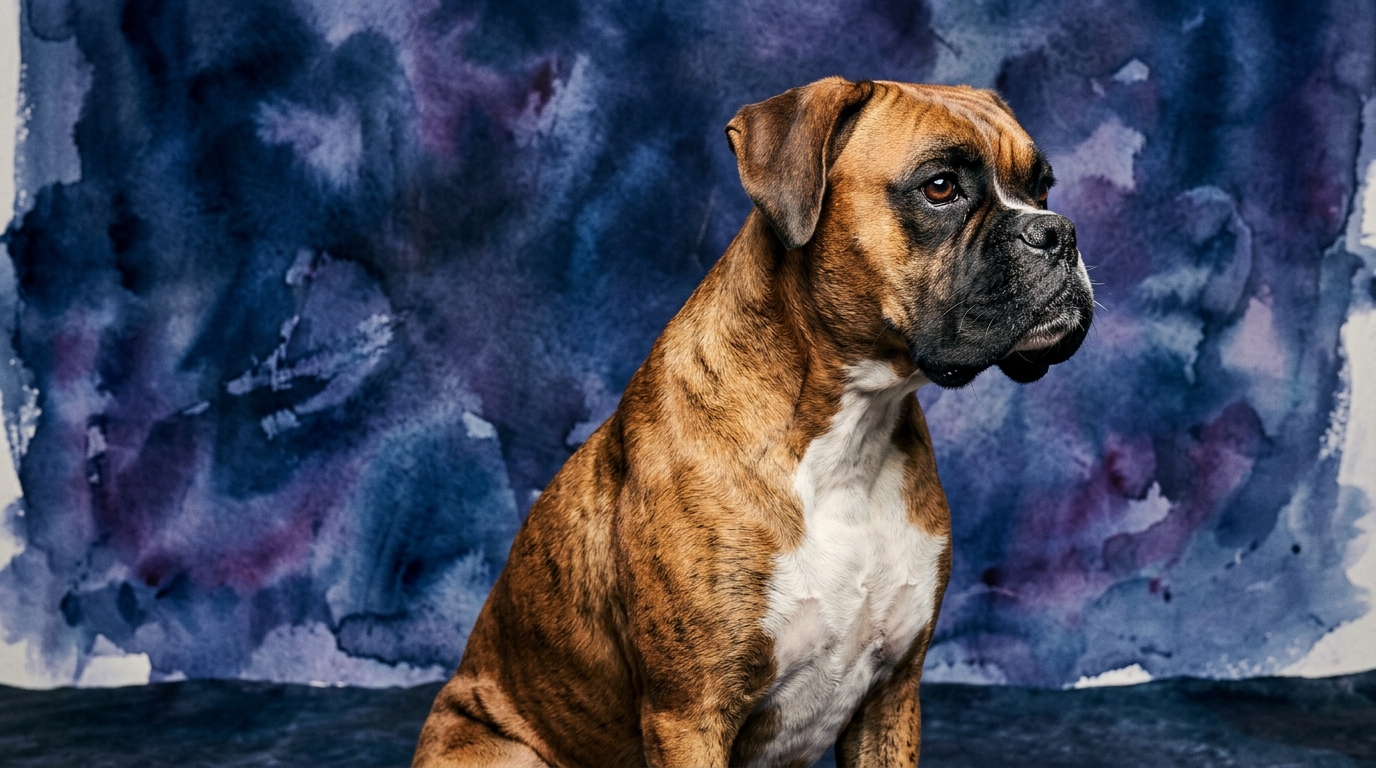
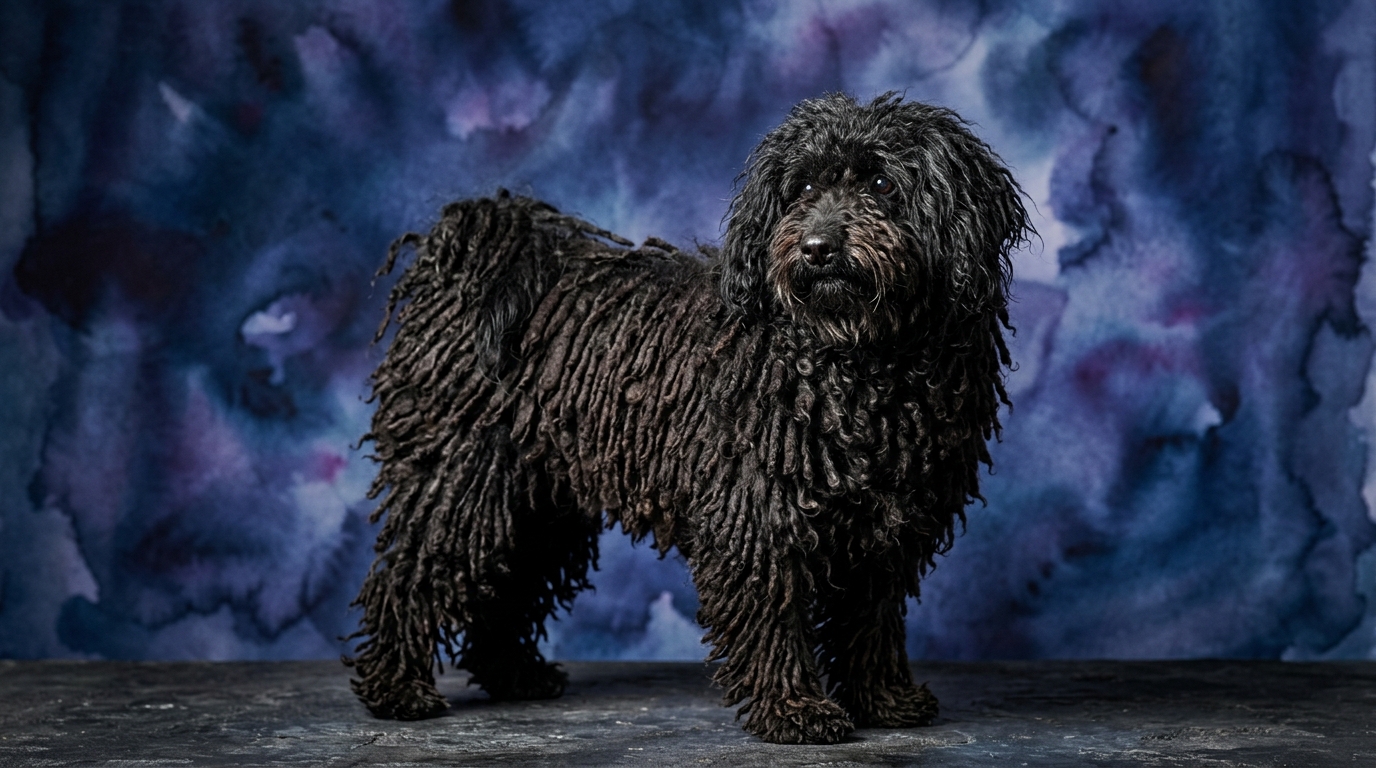
Side-by-Side IQ Profile: Boxer vs. Puli
**Boxer:** These members of the Working group, ranking #48 on the Coren scale, exhibit a blend of cognitive strengths geared towards companionship and protection. Their **Problem Solving (3/5)** typically involves enthusiasm but might rely on trial-and-error or human guidance rather than independent strategizing. **Training Speed (3/5)** is moderate; they absorb commands but their exuberance can necessitate consistent reinforcement. Their **Social Intelligence (5/5)** is outstanding, reflecting a remarkable ability to read human emotions and non-verbal cues, making them exceptionally empathetic. **Instinctive Drive (4/5)** leans towards guarding, play, and deep interaction with their family. Their **Memory (3/5)** is solid for routines and commands, though perhaps not with intricate, long-term detail.
**Puli:** As Herding group dogs, Pulis, ranking #25 on the Coren scale, possess a cognitive makeup honed for independent work. Their **Problem Solving (4/5)** demonstrates a higher aptitude for independent assessment and adaptation, capable of devising effective strategies in dynamic situations. **Training Speed (4/5)** is quick; they often pick up new commands and complex sequences with fewer repetitions due to their eager-to-work temperament. **Social Intelligence (3/5)**, while present, manifests as more independent; they understand human intent but are less driven by constant emotional mirroring. Their **Instinctive Drive (3/5)** is primarily herding, a powerful, focused urge to gather and control. **Memory (4/5)** is excellent, crucial for recalling intricate patterns, specific locations, and a vast array of commands, enabling accurate, consistent task execution.
Where the Boxer Wins Cognitively
The Boxer's unparalleled social intelligence, a perfect 5/5 against the Puli's 3/5, is a significant cognitive advantage. This reflects a profound ability to interpret human emotions, intentions, and subtle non-verbal cues. A Boxer frequently acts as an intuitive mirror, anticipating needs or reacting empathetically to a family member's mood, offering comfort or initiating play at just the right moment. This makes them exceptional emotional support animals and deeply integrated companions, capable of forming bonds beyond simple obedience. Their strong instinctive drive, rated 4/5, further complements this, as their natural inclination for guarding and enthusiastic, interactive play is often directed entirely towards their human family. This drive ensures they are highly engaged partners, always eager to participate in family activities and protect their loved ones.
Where the Puli Wins Cognitively
The Puli exhibits a distinct cognitive edge in areas critical for its traditional herding role. Their problem-solving capacity, rated 4/5 against the Boxer's 3/5, allows them to independently assess and adapt to dynamic, complex situations. A Puli can strategize how to move livestock or navigate challenging terrain, demonstrating a resourceful and analytical mind. This isn't about simple learned responses but genuine cognitive flexibility. Complementing this is their superior training speed (4/5 versus Boxer's 3/5) and memory (4/5 versus Boxer's 3/5). Pulis typically grasp new commands and multi-step tasks with remarkable efficiency, often requiring fewer repetitions. Their robust memory ensures they retain these intricate sequences and spatial awareness over long periods, allowing them to execute precise, complex work with consistent accuracy, whether on a farm or in advanced canine sports.
Which is Easier to Train and Why
Determining which breed is 'easier' to train depends on the owner's goals and style. The Puli, with its 4/5 training speed, 4/5 problem-solving, and 4/5 memory, generally excels in formal obedience and complex task learning. Their inherent drive to work means they often pick up new commands with impressive speed and retain them. They thrive on having a 'job' and respond well to clear instruction that channels their herding instincts. However, their independence (3/5 social intelligence) means they might question commands or seek their own solutions if not properly motivated or engaged. The Boxer, while having a moderate training speed of 3/5, counters this with exceptional social intelligence (5/5). They possess an intense desire to please their human companions, making them highly receptive to positive reinforcement and eager for interactive training. Their exuberance sometimes requires more patience and consistency to manage distractions, but their deep bond makes the training journey rewarding. For advanced obedience, the Puli might offer a quicker learning curve. For a deeply engaged, cooperative partner attuned to emotions, the Boxer's social aptitude can make them a joy to guide.
Which Suits Active Owners vs. Relaxed Owners
Neither the Boxer nor the Puli are suited for genuinely relaxed, sedentary owners; both require significant physical and mental engagement. However, their ideal activity profiles differ. The Boxer, with its high instinctive drive (4/5) for play and strong social intelligence, thrives with active owners who enjoy incorporating their dog into daily family life, whether it's vigorous games or long walks. They need consistent physical outlets but also crave constant human companionship. For owners who view their dog as an integral part of their active lifestyle and enjoy a playful, attentive companion, the Boxer is an excellent fit. The Puli, while equally active, demands more specific mental engagement due to its problem-solving abilities and herding instincts. Owners who can provide a 'job' – be it dog sports like agility, herding trials, or complex obedience – will find the Puli truly flourishes. They need an owner who understands their independent, task-oriented mind and can provide structured challenges beyond just physical exercise. Thus, the Puli is better suited for highly engaged, active owners prepared to channel their dog's working drive into mentally stimulating activities.
The Verdict
Choose the Boxer if you seek an intensely social, emotionally intuitive companion who thrives on deep family bonds and exuberant, interactive play.
Opt for the Puli if you desire a resourceful, quick-learning partner who excels at complex tasks and requires consistent mental stimulation to channel their working drive.
🧠 Find Your Pet's IQ Score
Our Pet IQ Lab assessment covers 25+ tests across 5 cognitive dimensions — personalized to your breed.
Take the Full IQ Test →Frequently Asked Questions
Do Boxers and Pulis get along with children?
Boxers, with their high social intelligence and playful nature, often form strong, gentle bonds with children, though supervision is always essential due to their exuberance. Pulis can be good family dogs but their independent herding instincts mean they might try to "herd" children, requiring early socialization and training to manage.
Which breed is more vocal, the Boxer or the Puli?
Both breeds can be vocal, but for different reasons. Boxers might bark more in excitement during play or as an alert, leveraging their guarding instincts. Pulis are known for their distinct, often loud, alarm barks and can be quite vocal when working or when their environment changes, reflecting their watchful herding nature.
How do their grooming needs compare?
Their grooming needs are vastly different. Boxers have short, low-maintenance coats requiring minimal brushing. Pulis, however, are famous for their corded coats, which demand significant and specialized grooming to prevent matting and maintain their unique appearance, making them a high-maintenance grooming commitment.