
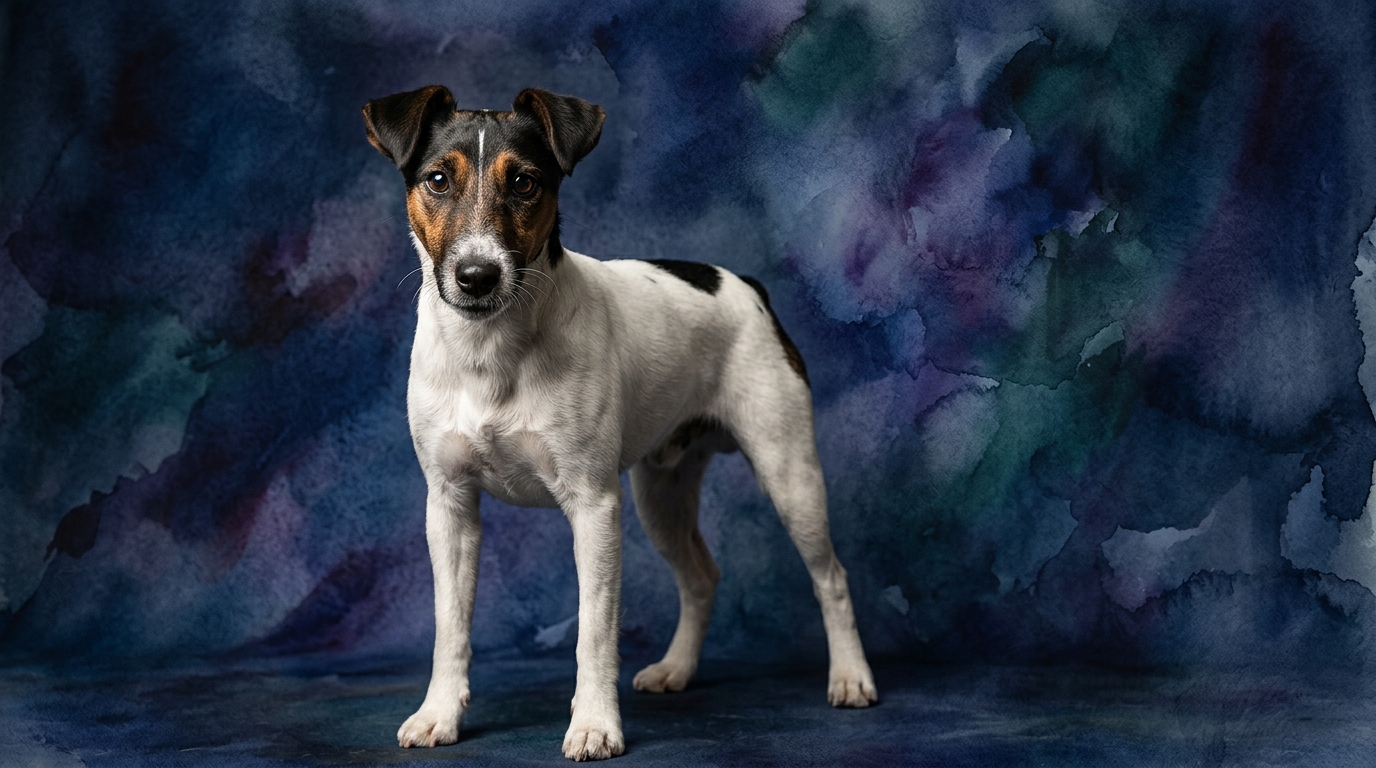
Side-by-Side IQ Profile: Boxer vs. Smooth Fox Terrier
The Cosmic Pet Pet IQ Lab provides a five-dimensional cognitive assessment, offering a nuanced view beyond simple rankings. For the Boxer, Coren-ranked #48, their Problem Solving at 3/5 suggests competence in moderately complex tasks, often relying on learned sequences or trial-and-error. Training Speed, also 3/5, indicates they learn new cues at an average pace with consistent instruction. Their standout is Social Intelligence (5/5), reflecting exceptional attunement to human emotions and intentions, making them highly responsive companions. Instinctive Drive (4/5) points to a strong internal motivation for activity and interaction, often channeled into cooperative play or protective roles. Memory at 3/5 indicates reliable retention of learned information over time.
The Smooth Fox Terrier, while not Coren-ranked, presents a distinct cognitive profile. Their Problem Solving at 3/5 shows capacity for figuring out challenges, often with characteristic terrier tenacity and independent thought. Training Speed at 3/5 implies a moderate learning rate, though their motivation might differ from a Boxer's. Social Intelligence at 3/5 suggests they are aware of human cues, but they may prioritize their own interests over constant human approval. Instinctive Drive (3/5) reflects their heritage as hunters, manifesting as energy for exploring, digging, and chasing, though with a slightly lower overall drive score than the Boxer. Memory at 3/5 indicates a reliable capacity to recall past experiences and learned behaviors.
Where the Boxer Wins Cognitively
The Boxer's cognitive edge is their superior Social Intelligence (5/5), enabling a profound understanding of human emotions and subtle cues. This capacity fosters deep, intuitive bonds, making them exceptional therapy animals and family protectors who often anticipate needs without explicit commands. This isn't merely friendliness; it's a deep cognitive processing of social information. Additionally, their Instinctive Drive (4/5) is frequently directed towards cooperative activities and structured play, making them eager participants in games and training exercises that reinforce human partnership, rather than purely independent pursuits. Their drive is inherently collaborative, seeking human involvement in their activities.
Where the Smooth Fox Terrier Wins Cognitively
While numerically similar or lower in some metrics, the Smooth Fox Terrier's unique cognitive strength lies in their tenacious independence, rooted in their terrier heritage. Their Problem Solving (3/5) combined with their Instinctive Drive (3/5) manifests as a self-reliant approach to tasks. Unlike the Boxer's cooperative drive, the Smooth Fox Terrier's is geared towards self-directed exploration and the pursuit of perceived "prey," whether a squirrel or a hidden toy. This translates into a remarkable ability to work autonomously, think on their feet, and persist in a task without constant human guidance. Their cognitive win is their self-sufficiency and determined focus on individual objectives, valuable in activities like earthdog trials or agility where independent decision-making is key.
Which is Easier to Train and Why?
Despite both breeds having a Training Speed of 3/5, the Boxer typically proves easier for cooperative tasks due to their significantly higher Social Intelligence (5/5). A Boxer's deep desire to engage with and please their human makes them inherently motivated by praise, attention, and the satisfaction of a shared activity. They are more likely to offer behaviors proactively and to adjust their actions based on subtle human feedback, making the training process feel like a collaborative effort. Their responsiveness to human emotional states facilitates smoother communication and learning.
The Smooth Fox Terrier, with 3/5 Social Intelligence, learns at the same pace but requires different motivation. Their independent nature and strong instinctive drives mean they are less inclined to simply "obey" for the sake of it, often prioritizing their own investigations. Training a Smooth Fox Terrier involves creatively making desired behaviors more rewarding than their self-appointed tasks, demanding a handler adept at understanding and redirecting their tenacity. Their training might be more of a negotiation, requiring consistency and a sense of humor to channel their independent spirit effectively.
Which Suits Active Owners vs. Relaxed Owners?
Both Boxers and Smooth Fox Terriers are active breeds, but their needs suit different active owner profiles. The Boxer, with their 4/5 Instinctive Drive and 5/5 Social Intelligence, flourishes with owners who enjoy interactive, structured physical activity and constant companionship. They require daily exercise that integrates their human, such as vigorous games of fetch, long runs, or participation in dog sports like agility or obedience. Their high social drive means they need to be central to family activities, making them ideal for owners who integrate their dog into their active lifestyle. A truly sedentary or "relaxed" owner, in the sense of someone preferring minimal engagement, would find a Boxer's energy and need for interaction challenging.
The Smooth Fox Terrier, while also requiring significant activity, suits owners who appreciate independence and a need for mental stimulation tapping into terrier instincts. Their 3/5 Instinctive Drive, though numerically lower, is intensely focused on exploring, chasing, and digging. They require outlets for these innate behaviors, like secure digging areas, earthdog sports, or long walks where they can investigate scents. They might tolerate independent play in a secure environment more readily than a Boxer, but still need substantial daily exercise to prevent boredom and destructive behaviors. An owner who enjoys outdoor adventures where the dog can explore, or who is willing to provide structured "work" for their terrier, is a good match; a truly relaxed owner would struggle with their persistent energy and need for mental engagement.
The Verdict
Choose a Boxer if you desire a highly socially attuned companion eager to participate in family activities and structured training, thriving on deep human connection and cooperative engagement.
Opt for a Smooth Fox Terrier if you appreciate an independent, tenacious companion with a strong drive for self-directed exploration and problem-solving, and you are prepared to channel their energetic terrier spirit.
🧠 Find Your Pet's IQ Score
Our Pet IQ Lab assessment covers 25+ tests across 5 cognitive dimensions — personalized to your breed.
Take the Full IQ Test →Frequently Asked Questions
Is a Boxer or a Smooth Fox Terrier better for a first-time dog owner?
A Boxer's higher social intelligence and eagerness to please generally make them a more forgiving and easier choice for a first-time owner willing to commit to their exercise needs. Smooth Fox Terriers, with their independent and tenacious nature, often require an owner with prior experience or a deep understanding of terrier specific traits and motivations.
Do both breeds require a lot of exercise?
Yes, both breeds are active and require substantial daily exercise, though the nature of that exercise differs. Boxers thrive on interactive play and structured activities with their humans, while Smooth Fox Terriers need outlets for their hunting instincts, such as exploring, digging, and chasing, in addition to general physical activity.
Which breed is more likely to excel in dog sports?
Both breeds can excel in dog sports, but often in different disciplines. Boxers frequently shine in obedience, rally, and protection sports due to their social intelligence and cooperative nature. Smooth Fox Terriers, with their agility and independent problem-solving, frequently excel in earthdog trials, agility, and lure coursing where their tenacity is an asset.