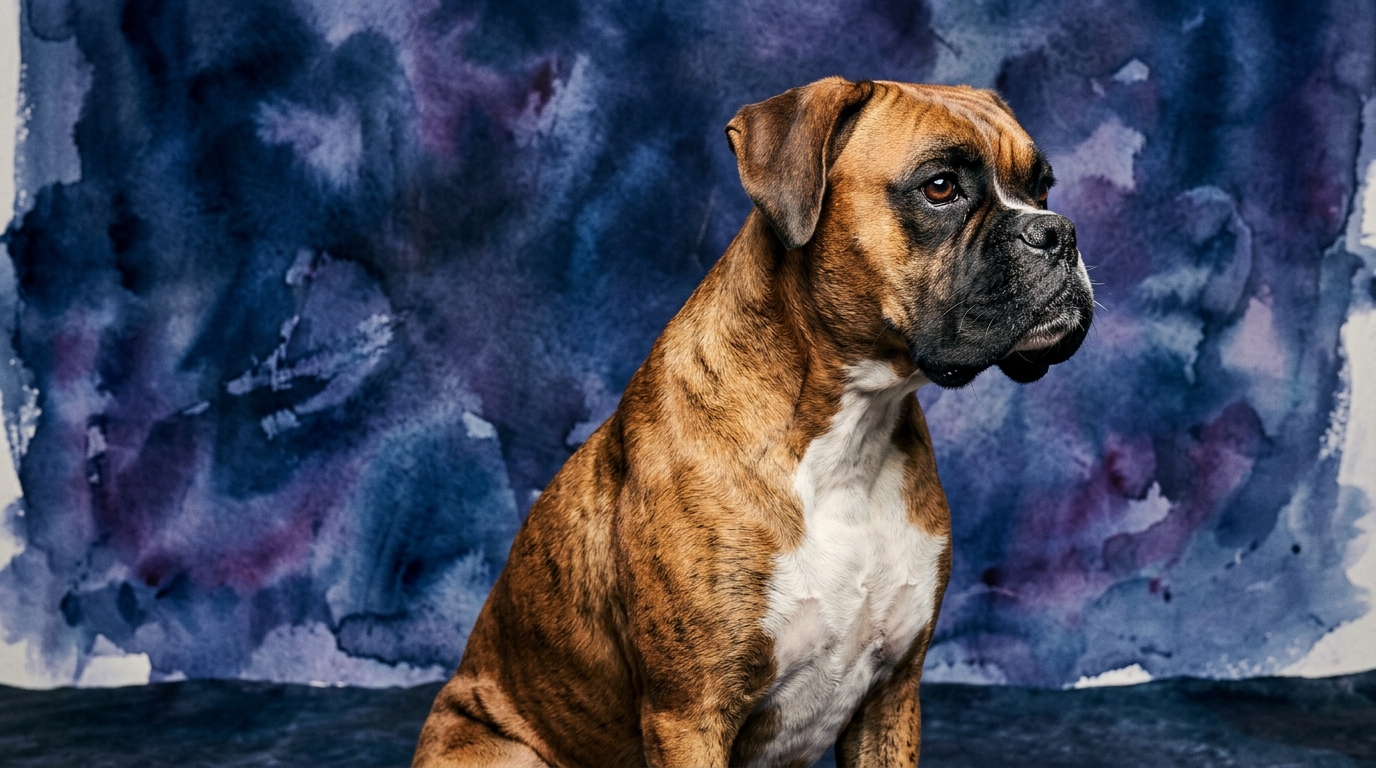
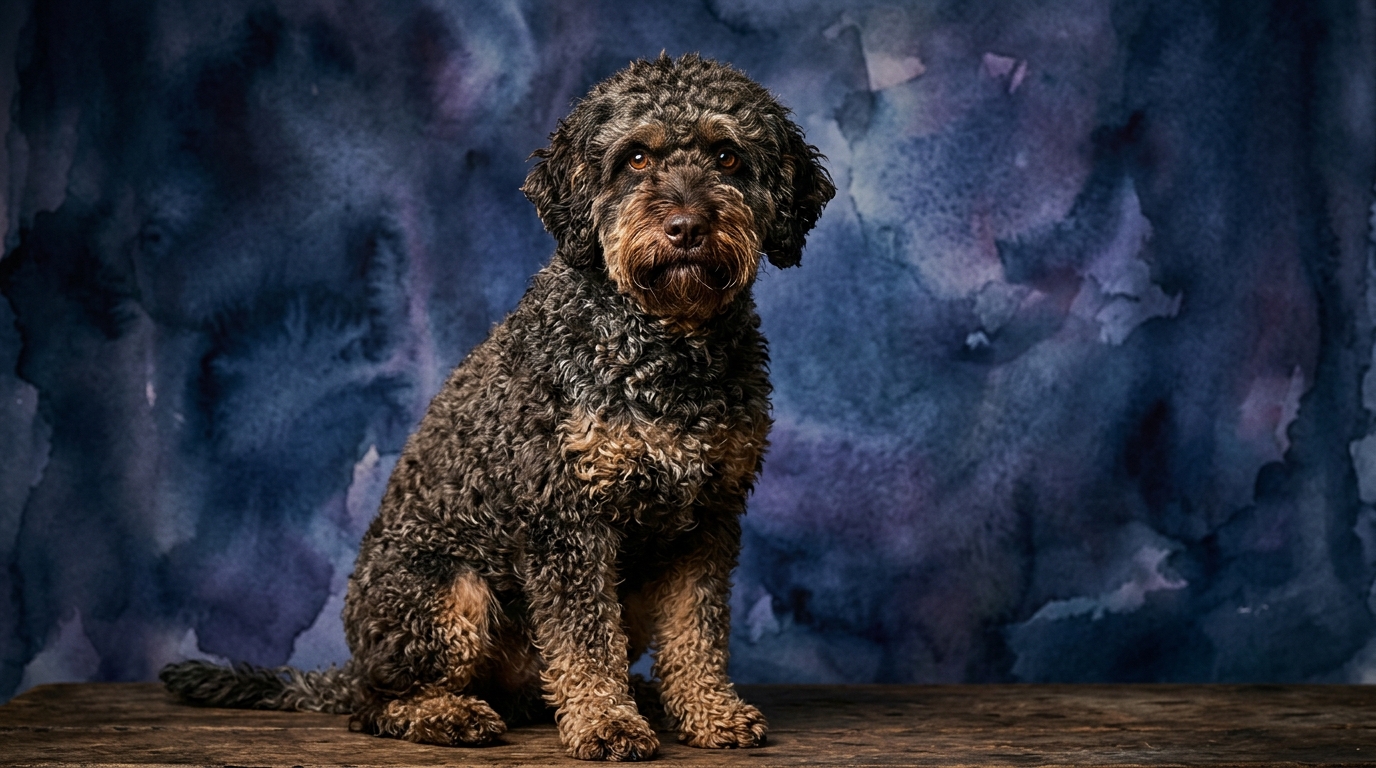
Side-by-Side Cognitive Profiles: Boxer vs. Spanish Water Dog
At The Cosmic Pet Pet IQ Lab, we evaluate canine cognition across five key dimensions. Let's delve into how the Boxer (Working Group, Coren rank #48) and the Spanish Water Dog (Herding Group, not Coren-ranked) stack up.
The Boxer's cognitive profile paints a picture of an engaged and physically capable companion. Their Problem Solving is rated at 3/5, indicating a practical approach to challenges; they often rely on their physical capabilities and enthusiasm rather than intricate planning. They can figure out how to get to a favorite toy behind an obstacle or manipulate latches with persistence, but complex multi-step puzzles might require more guidance. Their solutions are often direct and energetic. Training Speed is 3/5, meaning they learn new commands and routines at a consistent pace, typically requiring repetition and positive reinforcement. While enthusiastic, their playful energy can sometimes lead to momentary distractions, meaning consistency is paramount to solidify new behaviors. Social Intelligence is a standout 5/5; Boxers possess an exceptional ability to interpret human emotions, body language, and vocal tones, leading to highly empathetic and responsive interactions. They intuitively understand social cues, making them remarkably attuned to their family's moods and needs. Instinctive Drive sits at 4/5, with strong protective instincts alongside a significant drive for play and physical activity. They often exhibit a pronounced prey drive towards small, fast-moving objects, and their innate desire for interaction fuels their energetic nature. Finally, their Memory is 3/5, demonstrating a reliable retention of learned commands, routines, and experiences; once a behavior is ingrained, they tend to retain it well, though infrequent practice might necessitate occasional reminders.
The Spanish Water Dog presents a profile of a focused and independent worker. Their Problem Solving is also 3/5; they approach novel situations with a practical and often self-reliant mindset. They are capable of figuring out moderate environmental challenges, such as navigating complex terrain or finding lost objects, often using their keen senses and independent judgment rather than seeking human direction immediately. Training Speed is 3/5; they learn new tasks and commands effectively with clear, consistent methods. However, their independent nature means they can sometimes appear to have 'selective hearing' if they don't perceive the immediate value or purpose of a command, requiring engaging and purposeful training sessions. Social Intelligence is 3/5; while deeply loyal and affectionate with their core family, their social intelligence is more reserved compared to the Boxer. They form strong bonds but are often more discerning with strangers, taking time to assess new individuals and situations rather than offering immediate, effusive greetings. Instinctive Drive is 3/5; rooted in their herding and water-retrieving background, their drive is often directed towards managing, organizing, and working. This can manifest as an urge to 'herd' family members or toys, and a strong affinity for water activities. Their prey drive is generally present but typically less intense than some other working breeds. Their Memory is 3/5; they possess a good memory for training, routines, and the layout of their environment. Once a task or command is learned, they tend to retain it reliably, making them consistent performers in familiar situations.
Where the Boxer Excels Cognitively
The Boxer's most notable cognitive strength lies in their exceptional Social Intelligence, rated at a perfect 5/5 compared to the Spanish Water Dog's 3/5. This isn't merely about being friendly; it reflects a sophisticated capacity to read and respond to human emotions and social cues. Boxers are incredibly attuned to subtle shifts in vocal tone, body language, and mood, allowing them to anticipate their human companions' needs and offer empathetic responses. This deep social understanding fosters an intuitive connection, making them highly responsive to praise and interaction, and enabling them to integrate seamlessly into complex family dynamics. Their cognitive architecture prioritizes understanding and engaging with their social world, making them masters of emotional reciprocity within a human household.
Where the Spanish Water Dog Shows Distinct Cognitive Advantage
While the Spanish Water Dog's problem-solving and memory scores mirror the Boxer's, their cognitive strength often manifests in a different application: focused, independent task execution rooted in their herding heritage. This breed exhibits a particular aptitude for self-directed work, demonstrating initiative in managing situations or objects without constant human oversight. Their cognitive profile, though similar in raw scores to the Boxer in some areas, lends itself to a more autonomous approach to practical challenges. This translates into an ability to make independent judgments and follow through on tasks, a distinct cognitive advantage for roles requiring self-reliance and purposeful action rather than constant human direction. They are adept at figuring out 'how' to complete a job on their own terms, leveraging their senses and practical intelligence.
Training Dynamics: Which Breed is Easier and Why?
Despite both breeds having a 'Training Speed' rating of 3/5, the Boxer generally presents as easier to train for the average owner due to their exceptional social intelligence. Boxers are inherently eager to engage with and please their human companions, making them highly receptive to positive reinforcement and social praise. Their deep understanding of human cues and desire for connection means they are often more compliant and forgiving of handler errors, responding well to enthusiastic feedback. Their exuberance can be channeled effectively with consistent, upbeat training.
In contrast, the Spanish Water Dog, with a social intelligence score of 3/5, tends to be more independent and less overtly driven by social approval. While equally capable of learning, their training requires a more consistent, clear, and task-oriented approach to bypass their occasional self-reliance and potential for selective attention, especially if they perceive a command as unnecessary to their 'job.' They respond best to training that provides a clear purpose or challenge, rather than solely relying on social accolades. Owners must be patient and firm, leveraging their innate working drive to make training a collaborative, goal-oriented activity rather than a purely social one.
Matching Lifestyles: Active Owners vs. Relaxed Owners
For owners seeking an active, highly interactive companion, the Boxer stands out. Their robust instinctive drive (4/5) and boundless social intelligence make them thrive on vigorous play, long walks, and constant family engagement. They are ideal for active individuals or families who can provide daily structured exercise, like fetch or running, and integrate their dog fully into their social lives, appreciating a dog that is always 'in the mix' and ready for action. Boxers require significant outlets for their physical energy and benefit immensely from being central to household activities; a sedentary lifestyle would quickly lead to boredom and potential behavioral issues.
Conversely, the Spanish Water Dog, while also requiring regular exercise, appeals more to owners who appreciate a dog with a purpose and a more independent approach to activity. Their herding background means they excel in activities like agility, herding trials, or long, exploratory hikes where they can engage their minds with a task or manage their environment. While they enjoy family time, their social intelligence (3/5) suggests they might be content with less overt 'cuddling' and more with shared, purposeful activities. This makes them suitable for active owners who value a diligent, self-sufficient companion over a constant shadow, and who can provide outlets for their working instincts, such as advanced obedience or dog sports. They thrive when given a 'job' to do, even if it's just a structured walk or puzzle play, and can be more independent in their downtime compared to the Boxer's constant need for social interaction.
The Verdict
Choose a Boxer if you prioritize a deeply empathetic, highly social companion that thrives on being the emotional heart of your family and can be integrated into a very active, interactive lifestyle.
Opt for a Spanish Water Dog if you seek a diligent, purpose-driven companion capable of independent thought and task execution, and if you can provide consistent outlets for their working instincts through structured activities.
🧠 Find Your Pet's IQ Score
Our Pet IQ Lab assessment covers 25+ tests across 5 cognitive dimensions — personalized to your breed.
Take the Full IQ Test →Frequently Asked Questions
Is a Boxer or Spanish Water Dog better for families with young children?
A Boxer's high social intelligence and tolerant nature often make them excellent family dogs, particularly good with children, provided they are well-socialized and trained from a young age due to their exuberance. The Spanish Water Dog, while loyal, can be more reserved and might prefer older, more respectful children who understand their need for personal space.
Do either of these breeds require significant mental stimulation?
Absolutely. Both breeds possess cognitive profiles that necessitate regular mental engagement to prevent boredom and destructive behaviors. Boxers benefit from interactive play and puzzle toys that leverage their social drive, while Spanish Water Dogs thrive on training, agility, or tasks that engage their herding instincts and problem-solving abilities.
How do their grooming needs compare?
Their grooming needs are quite different. The Boxer has a short, low-maintenance coat requiring minimal brushing. The Spanish Water Dog, with its unique corded or curly coat, requires specific grooming to prevent matting, often needing professional attention or dedicated owner care to maintain its characteristic appearance.