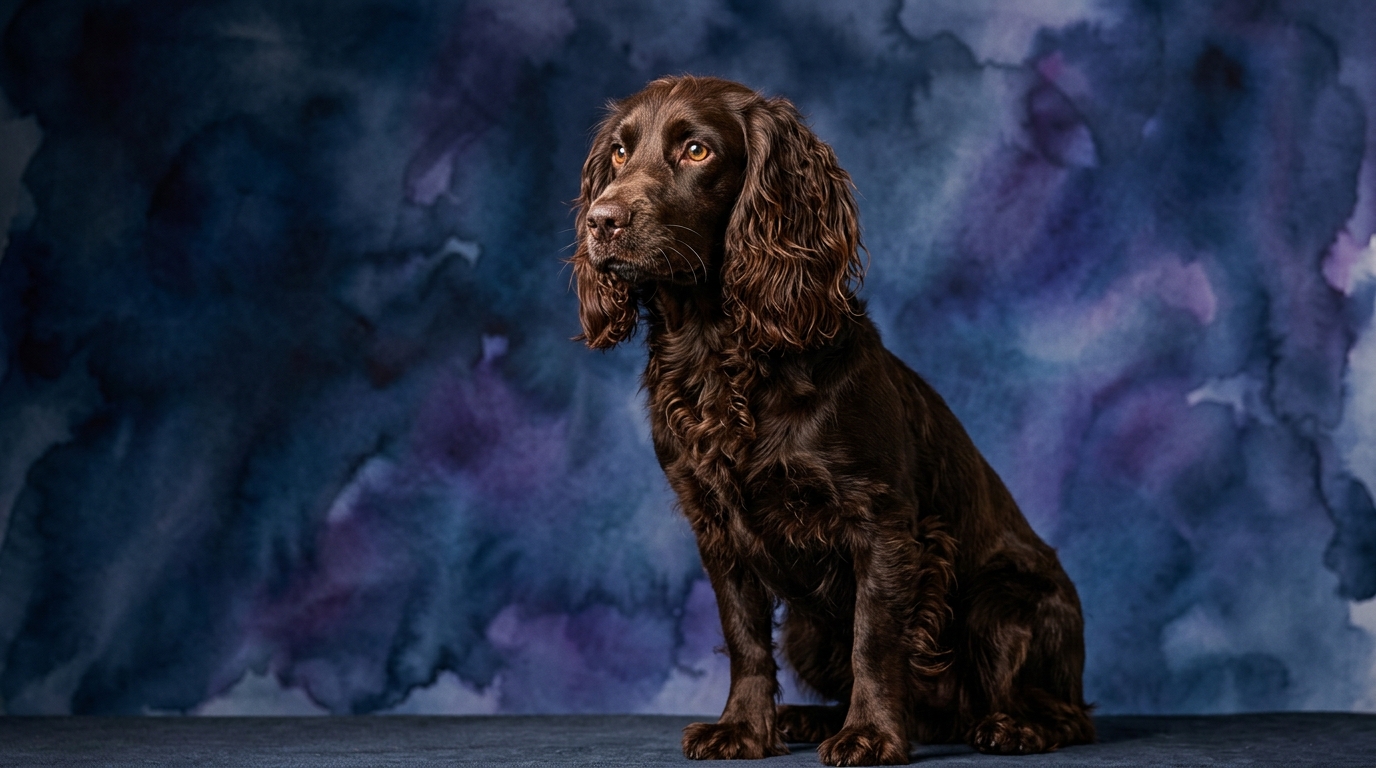
Side-by-Side IQ Profile: Boykin Spaniel
The Boykin Spaniel, a devoted gundog from the Sporting Group, displays a functional intelligence tailored to its role as a versatile retriever and flusher. Their Problem Solving, rated at 3 out of 5, manifests in their ability to efficiently navigate dense cover, locate fallen game, and adapt to varying field conditions under handler direction; they are adept at practical, real-time adjustments during a hunt. Their Training Speed, also 3/5, reflects a moderate learning curve for commands, often bolstered by their innate desire to please and cooperative nature, though they can exhibit a spaniel's independent streak requiring consistent reinforcement. Social Intelligence, at 3/5, indicates they are generally amiable and capable of forming strong bonds with their human companions, understanding social cues within a working team. An Instinctive Drive of 3/5 underscores their strong prey drive, enthusiasm for retrieving, and affinity for water work, making them focused and persistent in their designated tasks. Finally, their Memory, rated 3/5, is sufficient for recalling learned commands, marking the location of game, and remembering established hunting patterns.
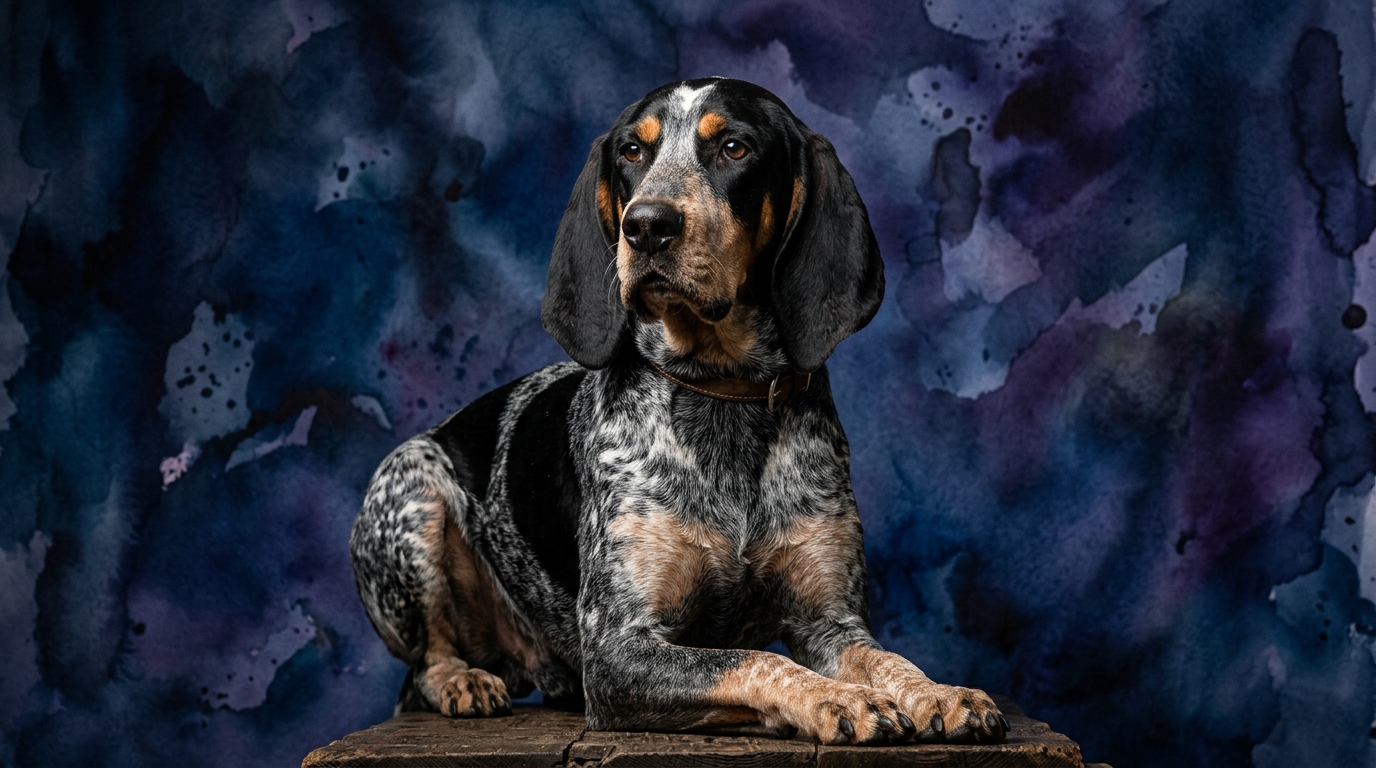
Side-by-Side IQ Profile: Bluetick Coonhound
The Bluetick Coonhound, a quintessential member of the Hound Group, possesses a specialized intelligence refined for the demanding task of scent tracking. Their Problem Solving, rated 3 out of 5, is profoundly rooted in their olfactory prowess; they excel at deciphering complex scent trails, navigating challenging terrain, and independently solving the puzzle of locating quarry, often over long distances and extended periods. Their Training Speed, also 3/5, is characterized by a moderate pace of learning, but it is often influenced by their powerful independent nature and overwhelming drive to follow a scent, meaning consistency and patience are paramount to achieve compliance. Social Intelligence, at 3/5, suggests they are generally good-natured and tolerant, capable of interacting well within a pack or family, though their primary focus during a hunt is often their quarry rather than direct handler interaction. An Instinctive Drive of 3/5 highlights their relentless pursuit of scent, their characteristic baying, and their unwavering persistence in tracking. Their Memory, rated 3/5, is crucial for retaining knowledge of scent patterns, successful hunting grounds, and commands directly associated with their tracking work.
Where the Boykin Spaniel Wins Cognitively
Despite both breeds scoring 3/5 across our cognitive dimensions, the Boykin Spaniel demonstrates distinct cognitive advantages in specific scenarios, primarily due to its breed role as a cooperative gundog. Its functional intelligence shines in situations demanding a dynamic interplay between handler direction and independent action. For instance, while both breeds possess a 3/5 Problem Solving capacity, the Boykin's manifests as a more integrated ability to adapt quickly to handler commands while flushing game or retrieving from water, requiring less independent, single-minded pursuit and more collaborative problem-solving. Their 3/5 Training Speed, combined with a strong desire to please, often translates into a more responsive and pliable learner in structured obedience or field commands, making them generally quicker to grasp and execute new tasks when the handler is the focal point. This isn't to say they are 'smarter' overall, but rather that their cognitive wiring makes them more amenable to directed, multi-faceted tasks where handler communication is paramount. Furthermore, their Social Intelligence, also 3/5, often allows for a more seamless integration into diverse family dynamics and a greater willingness to engage in varied activities beyond their primary working function, reflecting a broader application of their social understanding in a domestic setting.
Where the Bluetick Coonhound Wins Cognitively
Conversely, the Bluetick Coonhound's cognitive strengths are profoundly specialized, making them unparalleled in their specific domain, even with identical 3/5 scores. Their Problem Solving, while rated 3/5, is a masterclass in olfactory deduction and persistent tracking. Unlike the Boykin's real-time adaptability to a handler, the Bluetick's problem-solving involves independently unraveling complex scent puzzles over vast distances and challenging terrains, demonstrating an enduring mental fortitude and an ability to hold a 'mental map' of scent trails. This relentless focus on a single, prolonged task is a unique cognitive strength; they will often ignore external stimuli, including handler commands, if a compelling scent is present, which is a testament to their unwavering instinctive drive (3/5). Their Memory (3/5) is particularly adept at recalling intricate scent patterns and successful hunting routes, showcasing a specialized form of spatial and olfactory recall. While their Training Speed is 3/5, their learning style is often more about internalizing the 'why' of a task in relation to their drive rather than simply obeying for the sake of it. This independence, often perceived as stubbornness, is actually a cognitive asset in their field, allowing them to make critical decisions based on scent without constant human intervention.
Which is Easier to Train and Why
When evaluating ease of training, the practical application of their identical 3/5 Training Speed scores reveals a clear difference between these two breeds. The Boykin Spaniel is generally considered easier to train for a wider range of tasks, primarily due to its Sporting Group heritage emphasizing cooperation with a human handler. Their 3/5 Training Speed is often paired with an inherent eagerness to please, meaning they are typically motivated by praise, play, and positive reinforcement, and more inclined to maintain focus on their handler during training sessions. While they possess an independent streak, it is usually manageable within a structured training environment. They are designed to work in close partnership, responding to signals and commands in a dynamic field setting, which translates well to general obedience and advanced training. In contrast, the Bluetick Coonhound, despite also having a 3/5 Training Speed, often presents more challenges in traditional obedience training. Their formidable 3/5 Instinctive Drive for scent work is so powerful that it can override other motivations. Once a Bluetick catches an interesting scent, their focus becomes almost singular, making it difficult to redirect their attention with commands. Training a Bluetick requires immense patience, creativity, and a deep understanding of their hound nature, often needing to leverage their scent drive to motivate learning rather than attempting to suppress it. Their independence, a cognitive asset in tracking, can be perceived as stubbornness in a classroom setting, requiring trainers to adapt their methods significantly.
Which Suits Active Owners vs. Relaxed Owners
Neither the Boykin Spaniel nor the Bluetick Coonhound are suitable for relaxed or sedentary owners; both breeds demand significant physical and mental engagement to thrive. The Boykin Spaniel, with its 3/5 Instinctive Drive for retrieving and water work, requires consistent, vigorous exercise that ideally includes opportunities for running, swimming, and engaging in 'work' like fetch or agility. Their cognitive profile benefits immensely from directed activities that challenge their problem-solving and memory in a cooperative context, such as scent games, obedience trials, or field work. An owner who enjoys outdoor adventures, thrives on having an interactive canine partner, and can provide structured mental stimulation will find a Boykin Spaniel a rewarding companion. The Bluetick Coonhound, however, presents a different type of activity requirement. Their 3/5 Instinctive Drive is singularly focused on scent, necessitating extensive exercise that allows them to use their nose. Long, leashed walks or runs where they can explore scents are crucial, as is a securely fenced yard to prevent them from following a compelling trail off into the distance. Their mental stimulation comes from the challenge of tracking, even if it's just a scent trail laid for fun. Owners must appreciate their independent nature and be prepared for their characteristic vocalizations. A relaxed owner would quickly find themselves overwhelmed by the unmet needs and potential behavioral issues arising from insufficient outlets for either breed's inherent drives.
The Verdict
Choose the Boykin Spaniel if you seek a highly cooperative, versatile gundog companion for active family life, who thrives on directed activities like retrieving and water sports, and responds well to consistent, positive training.
Opt for the Bluetick Coonhound if you are a dedicated owner who appreciates an independent, persistent scent hound, willing to provide ample opportunities for tracking and scent work, and prepared to accommodate their unique vocalizations and unwavering drive.
🧠 Find Your Pet's IQ Score
Our Pet IQ Lab assessment covers 25+ tests across 5 cognitive dimensions — personalized to your breed.
Take the Full IQ Test →Frequently Asked Questions
Are Boykin Spaniels good with children?
Boykin Spaniels, with their 3/5 Social Intelligence, are generally good-natured and eager to please, making them typically excellent family dogs. They are playful and affectionate but require proper socialization and supervision with children, like any active breed.
Do Bluetick Coonhounds bark a lot?
Yes, Bluetick Coonhounds are known for their distinctive baying, which is a key part of their 3/5 Instinctive Drive for tracking. This vocalization is a natural part of their communication and work, and prospective owners should be prepared for a vocal companion.
Can either breed live in an apartment?
Neither breed is ideally suited for apartment living due to their high exercise requirements and 3/5 Instinctive Drives. While possible with extreme dedication to daily rigorous exercise and mental stimulation, both thrive in homes with secure yards and ample space to run and explore.