
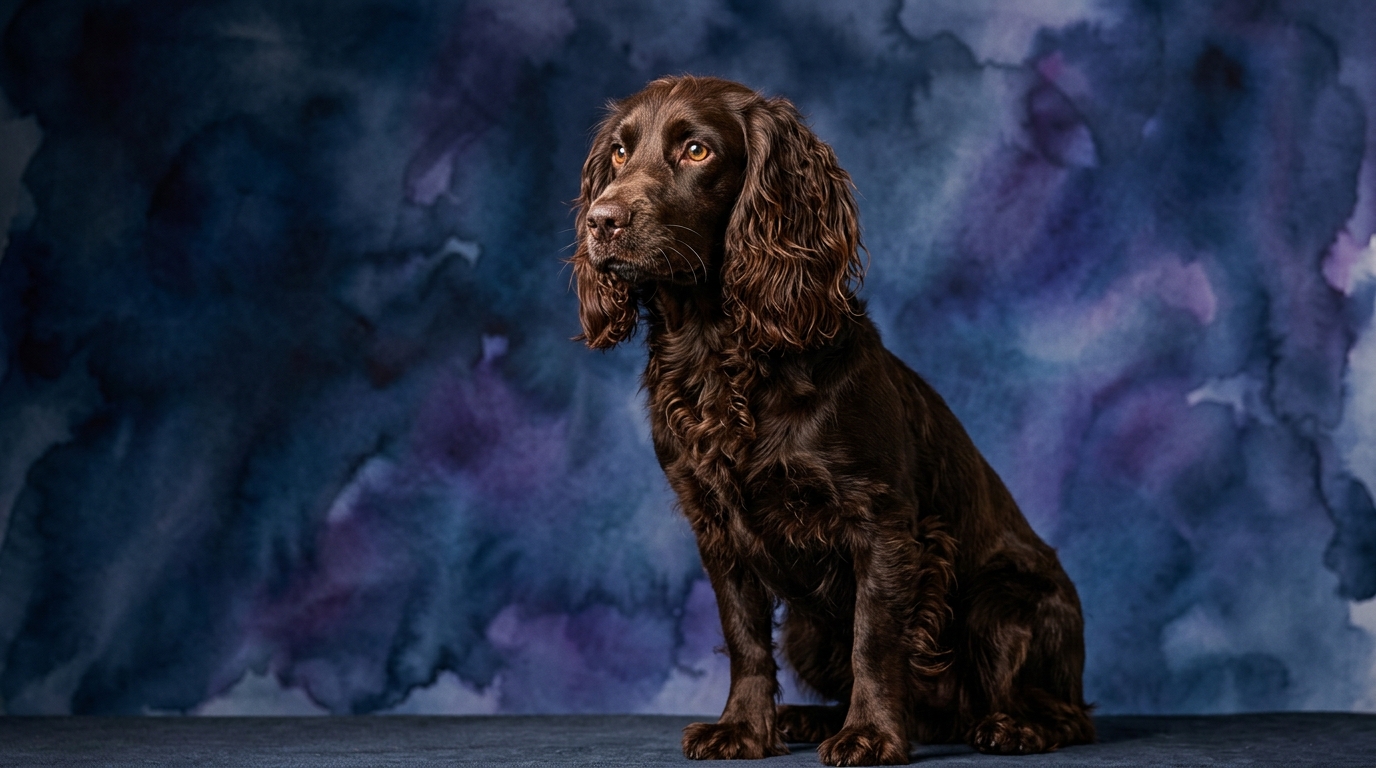
Side-by-Side Cognitive Profiles: German Shepherd vs. Boykin Spaniel
The German Shepherd, often recognized for its broad utility, boasts a remarkable 5/5 across all five IQ dimensions. Their Problem Solving at 5/5 means they can rapidly analyze novel situations, devise solutions, and adapt strategies, making them adept at complex tasks like search and rescue or protection work. A 5/5 in Training Speed indicates an exceptionally quick grasp of new commands and concepts, often requiring minimal repetition. Their Social Intelligence, also 5/5, allows them to keenly interpret human cues, intentions, and even emotional states, fostering deep cooperative bonds. The 5/5 Instinctive Drive translates into a powerful, adaptable motivation to work, whether herding, guarding, or pursuing specific goals. Finally, a 5/5 Memory ensures they retain learned behaviors and experiences with exceptional fidelity, building a vast repertoire of skills over time.
In contrast, the Boykin Spaniel, a breed developed for specialized hunting tasks, registers a consistent 3/5 across the board. Their Problem Solving at 3/5 suggests competence in familiar scenarios but less inclination for abstract or novel challenges, excelling primarily in tasks related to their retrieving heritage. A 3/5 in Training Speed means they learn at a steady, moderate pace, requiring consistent positive reinforcement and more repetitions than their German Shepherd counterparts to solidify new commands. Their Social Intelligence, also 3/5, indicates good cooperativeness within a defined working relationship, responding well to direct cues but perhaps less attuned to subtle human emotional nuances. The 3/5 Instinctive Drive is strong within their specific prey and retrieve context, driving them to perform their hunting duties with enthusiasm, though less broadly applicable than the GSD's drive. A 3/5 Memory allows them to retain learned skills and routines adequately, sufficient for their specialized roles without the vast recall capacity of a 5/5 score.
Where the German Shepherd Excels Cognitively
The German Shepherd's cognitive architecture truly shines in its unparalleled versatility and depth. Their 5/5 Problem Solving isn't just about figuring things out; it’s about strategic thinking, anticipating outcomes, and adapting on the fly in dynamic environments, a critical asset in roles from police work to service assistance. This breed demonstrates an exceptional capacity for 'working memory,' holding multiple pieces of information in mind to complete sequential tasks without losing focus. Their advanced Social Intelligence (5/5) allows them to form incredibly nuanced partnerships, discerning subtle shifts in handler body language, voice inflection, and even mood, which is crucial for precision work under pressure. The combination of high training speed and memory means they don't just learn commands; they internalize complex protocols and can generalize learned behaviors to new situations with minimal prompting, showcasing a robust capacity for abstract reasoning unmatched by many breeds. Their instinctive drive is not merely strong but highly moldable, readily directed towards a vast array of tasks beyond their original herding purpose, from scent detection to competitive obedience.
Where the Boykin Spaniel's Cognition Shines
While the Boykin Spaniel's scores of 3/5 across the board might suggest a more modest cognitive profile, it's crucial to understand these scores within the context of their specialized purpose: retrieving game from land and water. Their cognitive strengths lie in focused, task-specific application and a cheerful persistence that makes them excellent at their job. The 3/5 Problem Solving, while not broad, is highly effective for the challenges of flushing and retrieving, such as navigating dense cover or marking fallen birds. Their 3/5 Instinctive Drive is not just about general motivation; it's a finely tuned, unwavering prey drive coupled with a strong desire to please their handler during a hunt, making them incredibly reliable in their specific domain. This focused drive, combined with their adequate memory (3/5), allows them to consistently execute learned retrieve patterns and remember specific hunting locations or cues. Their 3/5 Social Intelligence contributes to their reputation as agreeable and biddable partners in the field, readily accepting direction and working cooperatively without the need for complex emotional or situational analysis that a GSD might engage in. For owners seeking a dog whose intellect is perfectly aligned with a dedicated sporting lifestyle, the Boykin's focused cognitive strengths are a distinct advantage.
Trainability: A Tale of Two Approaches
Training a German Shepherd versus a Boykin Spaniel presents a fascinating contrast rooted in their fundamental cognitive differences. With a 5/5 in Training Speed, Social Intelligence, and Memory, the German Shepherd is often described as an eager student who picks up new concepts with astonishing rapidity. They thrive on complex, multi-step commands and can learn intricate sequences in just a few repetitions, often anticipating the next step. Their exceptional social intelligence means they are highly attuned to their handler's instructions and feedback, making them extremely responsive to subtle cues and corrections. They excel in advanced obedience, protection sports, and service work precisely because they can process, remember, and execute a vast array of commands reliably, even under distracting conditions.
The Boykin Spaniel, with its 3/5 scores, requires a different training methodology. While capable and willing, their training speed dictates more patience and repetition. They benefit from shorter, more frequent training sessions and clear, consistent commands. Their social intelligence, while adequate for cooperation, means they might not pick up on nuanced cues as quickly as a GSD, necessitating more explicit instruction. Their instinctive drive is strong for retrieving, which can be leveraged for motivation, but it might also mean they are more easily distracted by environmental stimuli unrelated to their immediate task. Training a Boykin often focuses on reinforcing specific behaviors related to hunting or general companionship, requiring a consistent, positive, and sometimes more game-oriented approach to maintain engagement and solidify learning.
Lifestyle Fit: Active Engagement vs. Focused Pursuit
The cognitive profiles of these breeds directly influence their suitability for different owner lifestyles. A German Shepherd demands an owner who is not only active physically but also deeply committed to providing consistent, challenging mental stimulation. Their 5/5 Problem Solving and Instinctive Drive mean they require complex tasks, puzzle toys, advanced training, and a 'job' to do, whether it's agility, competitive obedience, or even just daily problem-solving games. A relaxed owner who cannot meet these mental demands will likely find their GSD exhibiting boredom-driven behaviors, as their powerful intellect needs constant engagement. They thrive in homes where learning is an ongoing process and their cognitive abilities are regularly exercised.
The Boykin Spaniel, while certainly an active breed, presents a different kind of energetic demand. Their 3/5 Instinctive Drive is primarily channeled towards their sporting heritage, meaning they excel with owners who can provide outlets for retrieving, swimming, and outdoor adventures. They are not necessarily looking for the same level of complex mental puzzle-solving as a GSD, but rather opportunities to fulfill their natural hunting instincts. A Boykin owner needs to be active in ways that allow the dog to run, fetch, and explore, but once those physical and instinctual needs are met, they can be more relaxed companions indoors, content with family interaction rather than constant mental challenges. They are a good fit for active families or individuals who enjoy outdoor pursuits but might not be seeking a dog for advanced, high-stakes working roles.
The Verdict
Opt for a German Shepherd if you are an experienced owner seeking an exceptionally capable, versatile working partner eager for advanced training, constant mental challenges, and a deep, cooperative bond built on nuanced communication.
Select a Boykin Spaniel if you desire a cheerful, dedicated hunting companion or an active family dog that thrives on consistent outdoor adventures, focused retrieving tasks, and a more straightforward, affectionate partnership.
🧠 Find Your Pet's IQ Score
Our Pet IQ Lab assessment covers 25+ tests across 5 cognitive dimensions — personalized to your breed.
Take the Full IQ Test →Frequently Asked Questions
Is a Boykin Spaniel difficult to train because of its 3/5 scores?
Not difficult, but different. Their 3/5 training speed means they require more repetition and patience than a German Shepherd, benefiting from consistent, positive reinforcement and shorter, engaging sessions, especially when focusing on their natural retrieving instincts.
Do German Shepherds require a lot of mental stimulation?
Absolutely. With 5/5 scores in problem-solving and instinctive drive, German Shepherds need constant mental engagement through advanced training, puzzle toys, and complex tasks to prevent boredom and channel their considerable intellect constructively.
Can a Boykin Spaniel excel in dog sports beyond hunting?
Yes, Boykin Spaniels can certainly excel in dog sports like agility, obedience, and dock diving, especially those that leverage their natural athleticism, retrieve drive, and biddable nature, though they might require more consistent training effort than some higher-ranked breeds.