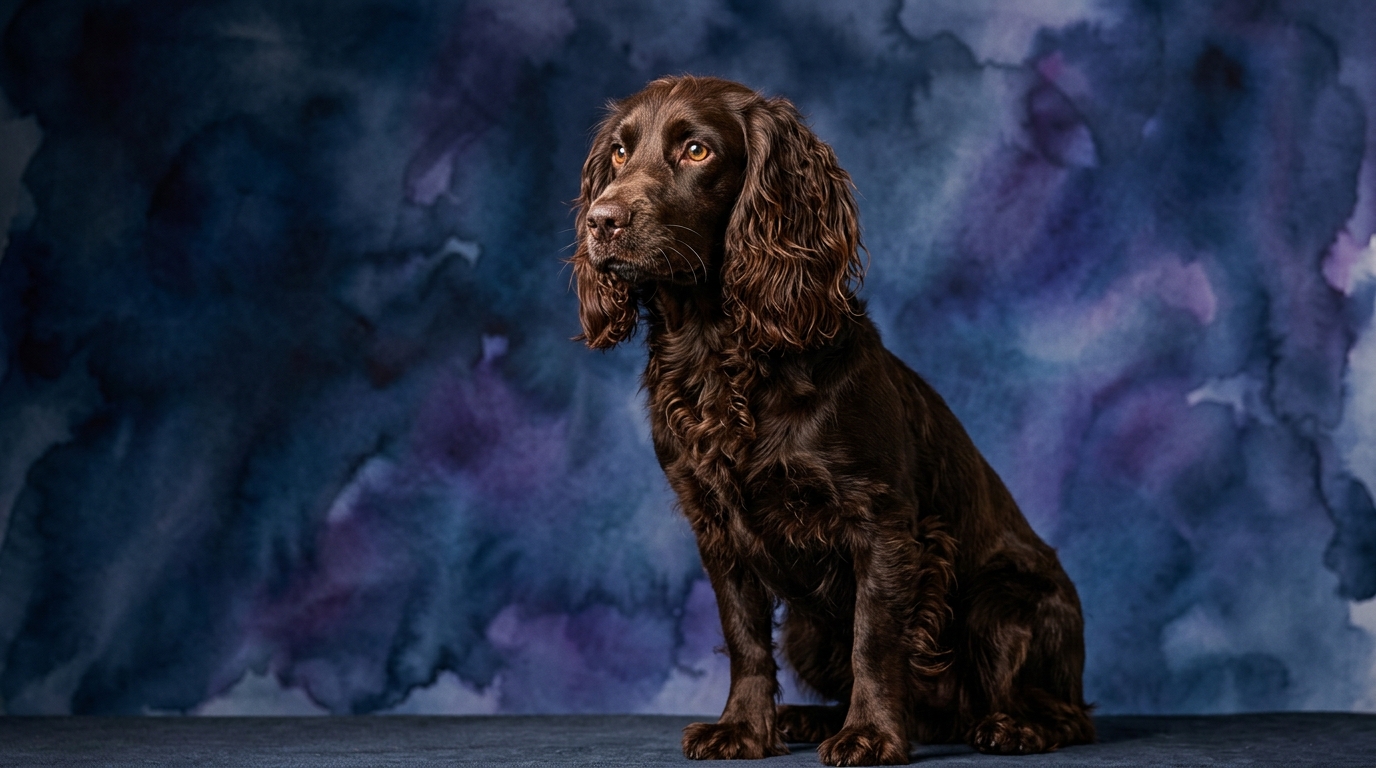
Boykin Spaniel at a glance
| IQ Rank / Score | 16/25 |
|---|---|
| Trainability | ★★★★☆ (4/5) |
| Social Intelligence | ★★★★☆ (4/5) |
| Lifespan | 11-14 years |
| Shedding | Low to moderate |
| Exercise Needs | Moderate (30-45 min/day) |
| Origin | USA (South Carolina) |
The Boykin Spaniel's Primary Cognitive Angle: Adaptive Water Retriever & Companion with Acute Sensory Integration
The Boykin Spaniel’s intelligence is best understood through the lens of its dual-purpose heritage: an exceptional retriever in challenging aquatic environments and a devoted, sensitive family member. Their primary cognitive angle revolves around their remarkable ability for adaptive water retrieval combined with highly acute sensory integration. This isn't just about fetching; it's about processing complex environmental cues – scent, sound, sight, and even water currents – to locate fallen game in dense cover, navigate treacherous swamps, and return with unwavering focus.
Unlike breeds developed for broad field work, the Boykin was specifically bred for the tight quarters of small boats and the dense, often hot and humid, environments of South Carolina's river systems, particularly for hunting wild turkeys and waterfowl. This specialization demanded a dog capable of independent problem-solving in dynamic situations, yet utterly biddable and responsive to its handler. Their acute sensory integration allows them to filter out distractions and pinpoint targets, making them incredibly efficient and resilient workers.
Furthermore, their role as a companion cannot be understated. This breed thrives on human connection, demonstrating a high degree of social intelligence and an eagerness to please that makes them highly trainable and adaptable to family life. This cognitive flexibility, balancing intense work drive with tender companionship, truly defines their unique mental makeup, enabling them to transition seamlessly from a high-energy hunter to a calm, affectionate household member.
A Glimpse into History: The Origin of the Little Brown Dog's Brains
The story of the Boykin Spaniel’s development is as unique as its cognitive strengths. Originating in the early 20th century in South Carolina, the breed owes its existence to a fortunate accident and the vision of L. Whitaker Boykin, a local sportsman. The foundation sire, a stray named "Dumpy," was found by a friend of Boykin's outside a Spartanburg church. Recognizing the dog's innate talent for retrieving, particularly its enthusiasm for water, Boykin took the dog under his wing, breeding him with various spaniels and retrievers.
The aim was to create a compact, adaptable retriever perfect for hunting wild turkeys and waterfowl in the Wateree River swamps – a dog that could fit into a small canoe or skiff with ease, unlike larger retrievers. This specific environmental pressure directly influenced the selection of traits that highlight their intelligence: their ability to work closely with a handler in confined spaces, their exceptional water prowess, and their problem-solving skills in dense, often disorienting, swampy terrain. The breed’s inherent adaptability and biddability were paramount, fostering a cooperative intelligence essential for such specialized hunting.
This unique historical context underscores why Boykins possess such a strong instinctive drive, coupled with a keen intelligence to utilize those drives effectively. Their lineage is not just about physical traits, but about generations of dogs selected for their mental fortitude, keen senses, and unwavering dedication to their task, making them truly purpose-bred intellects.
Boykin Spaniel IQ Breakdown: A Profile of Purposeful Intelligence
The Boykin Spaniel’s cognitive abilities are finely tuned for both the field and the home. Our Pet IQ Lab assessment scores reflect a breed that is not only smart but also highly intuitive and driven by strong natural instincts. Here’s a detailed look at their intelligence profile:
**Problem Solving: 4/5** Boykin Spaniels are excellent problem-solvers, especially when faced with real-world challenges in their environment. In the field, they quickly learn to navigate dense cover, retrieve game from complex situations, and adapt to changing conditions. At home, they can figure out puzzle toys, open latches, or devise clever ways to get what they want, though their problem-solving is often channeled towards achieving a goal rather than abstract thought.
**Training Speed: 4/5** Eager to please and highly food-motivated, Boykin Spaniels are generally quick learners. They pick up new commands and tricks rapidly, especially with consistent, positive reinforcement. Their biddability and focus make them a joy to train, though their high energy means training sessions should be engaging and relatively short to maintain their attention.
**Social Intelligence: 4/5** Boykins are incredibly people-oriented dogs, demonstrating high social intelligence. They are sensitive to their handler's moods, responsive to cues, and form strong bonds with their families. They thrive on companionship and active participation in family life, often seeking interaction and exhibiting a clear understanding of social hierarchies within the household. This social acumen extends to appropriate behavior around children and other pets when properly socialized.
**Instinctive Drive: 5/5** This is where the Boykin Spaniel truly shines. Their instinctive drive for retrieving, scenting, and water work is exceptional. Bred specifically for these tasks, they possess an unwavering focus on their prey drive and an inherent joy in working. This strong drive means they require outlets for these instincts, or they may find their own (potentially destructive) ways to engage them. It's the engine that powers much of their cognitive function.
**Memory: 4/5** Boykin Spaniels possess a strong memory, retaining commands, routines, and experiences over long periods. They remember hunting locations, the scent of specific game, and the layout of their home environment. Their ability to recall past training and apply it to new situations is a testament to their robust long-term and working memory, which is crucial for their success in various activities.
The Unsung Genius: Beyond the Hunt
While the Boykin Spaniel's hunting prowess is legendary, their intelligence extends far beyond the field. Their innate curiosity and desire to engage make them highly trainable for a myriad of dog sports and activities. From agility and obedience to scent work and dock diving, Boykins demonstrate a remarkable capacity to excel.
Their keen observational skills and ability to quickly understand human intentions contribute to their versatility. They are adept at learning complex sequences of commands and performing intricate tasks, often with a joyful enthusiasm that is infectious. This versatility stems from their foundation as cooperative hunting partners who needed to understand subtle cues from their handlers.
Moreover, their emotional intelligence is notable. Boykins are often used as therapy dogs due to their gentle nature and ability to pick up on human emotions. This showcases a deeper cognitive empathy, allowing them to provide comfort and companionship effectively. Their capacity for loyalty and affection, combined with their sharp minds, makes them truly well-rounded canine companions.
Cognitive Testing for the Boykin Spaniel: Tailored Challenges
To truly understand the Boykin Spaniel's unique cognitive strengths, we propose three specialized tests designed to highlight their natural aptitudes. These tests move beyond generic measures, focusing instead on their innate drives, learning speed, and problem-solving skills in contexts relevant to their breed history and personality. They aim to quantify aspects of their intelligence that make them such capable hunters and delightful companions.
3 At-Home Tests to Measure Your Boykin Spaniel's IQ
These tests are adapted from peer-reviewed ethology research. No equipment is needed beyond items you have at home. Run each test 5–10 times for reliable results.
The Myth: "Boykin Spaniels are only good for hunting."
✅ While Boykins excel in hunting, they are incredibly versatile and intelligent companions, thriving in various dog sports, obedience, therapy work, and as loving family pets, demonstrating their keen minds and adaptability far beyond the wetlands.
Boykin Spaniel vs. Similar Breeds
🧠 What's Your Dog's IQ Score?
Our full Pet IQ Lab assessment includes 12+ tests across 5 cognitive dimensions, calibrated for Boykin Spaniels specifically.
Take the Full IQ Test →Frequently Asked Questions
How smart is a Boykin Spaniel?
Our Pet IQ Lab framework scores cognition across five dimensions (max 25). The Boykin Spaniel totals 16/25 — high for a domestic dog. The full article breaks down each dimension with at-home tests.
Are Boykin Spaniels easy to train?
Boykin Spaniels are generally easy to train when you use consistent, reward-based sessions. They score 4/5 on Training Speed in our breed profile.
Are Boykin Spaniels good with children and other pets?
Yes — their Social Intelligence rates 4/5 in our Pet IQ Lab framework. With early socialization and supervised play, most Boykin Spaniels integrate well into families with respectful children and other pets.
Do Boykin Spaniels need a lot of mental stimulation?
Boykin Spaniels benefit from 10-15 minutes of focused enrichment a day: food puzzles, short training drills, or novel toys rotated weekly.
How much exercise does a Boykin Spaniel need?
Boykin Spaniels do well with 20-40 minutes of daily walks and play plus a few short training moments.
How good is a Boykin Spaniel's memory?
Boykin Spaniels score 3/5 on memory. They remember high-value associations well; less-used cues fade without refresher sessions.
What is the typical lifespan of a Boykin Spaniel?
Expect a lifespan of 11-14 years for a healthy Boykin Spaniel.
The Boykin Spaniel's intelligence is a compelling blend of instinctive drive, adaptive problem-solving, and profound social acumen, shaped by its unique heritage and cherished companionship. Understanding their cognitive profile is key to unlocking their full potential as both a tireless working partner and a beloved family member.