Side-by-Side IQ Profile
At The Cosmic Pet Pet IQ Lab, we evaluate canine intelligence across five key dimensions. While both the Briard and Puli demonstrate commendable cognitive abilities, their specific strengths lie in the nuances of how these scores manifest.
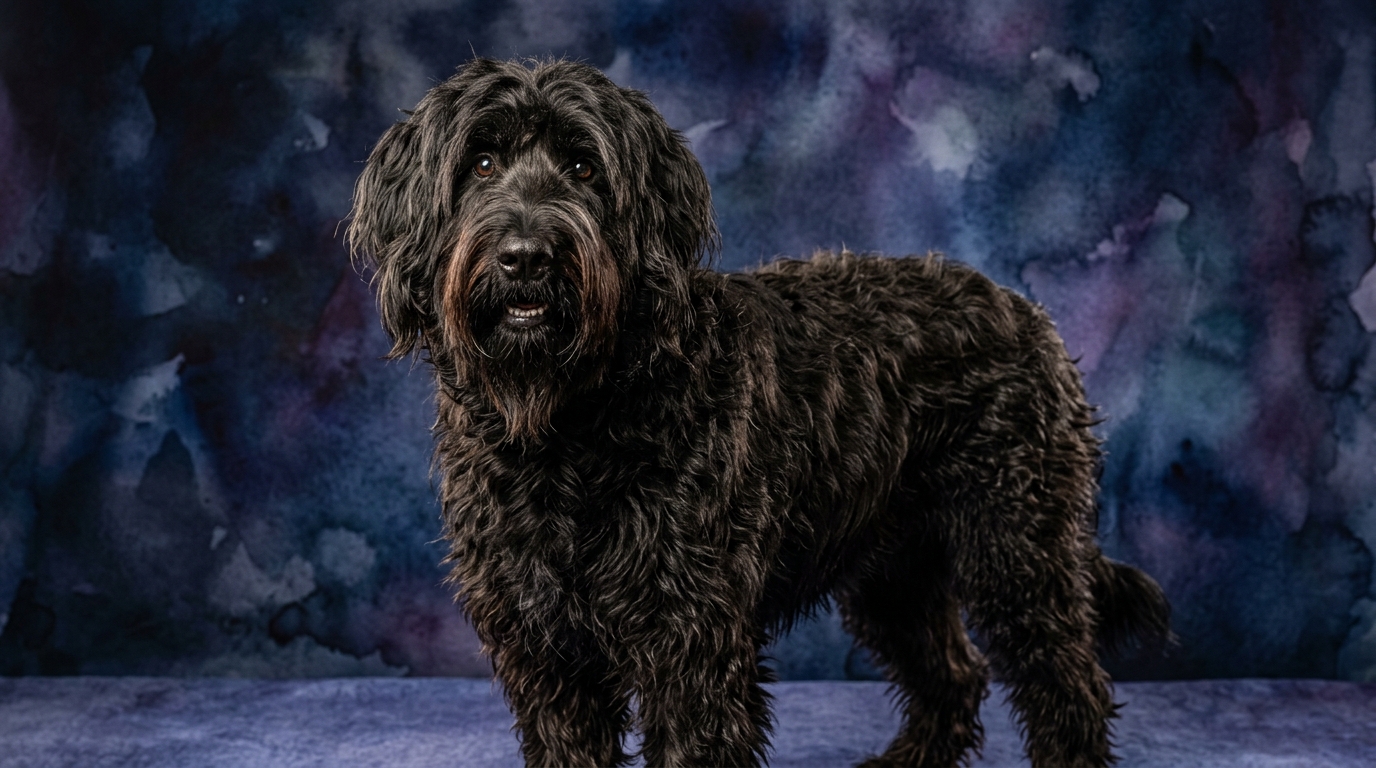
The **Briard**, ranked #30 by Coren, presents a profile of robust, thoughtful intelligence. Its Problem Solving score of 4/5 indicates a capacity for methodical, sometimes exploratory, approaches to novel challenges, often leading to creative solutions. Training Speed at 4/5 means it quickly grasps new commands and routines, capable of retaining complex sequences once the purpose is clear. Social Intelligence, rated 3/5, reflects its ability to understand human cues and group dynamics, though often with a discerning, independent assessment. Its Instinctive Drive of 3/5 manifests as a strong, protective herding aptitude, adaptable to various tasks, while Memory at 4/5 ensures excellent recall for learned behaviors and familiar environments.
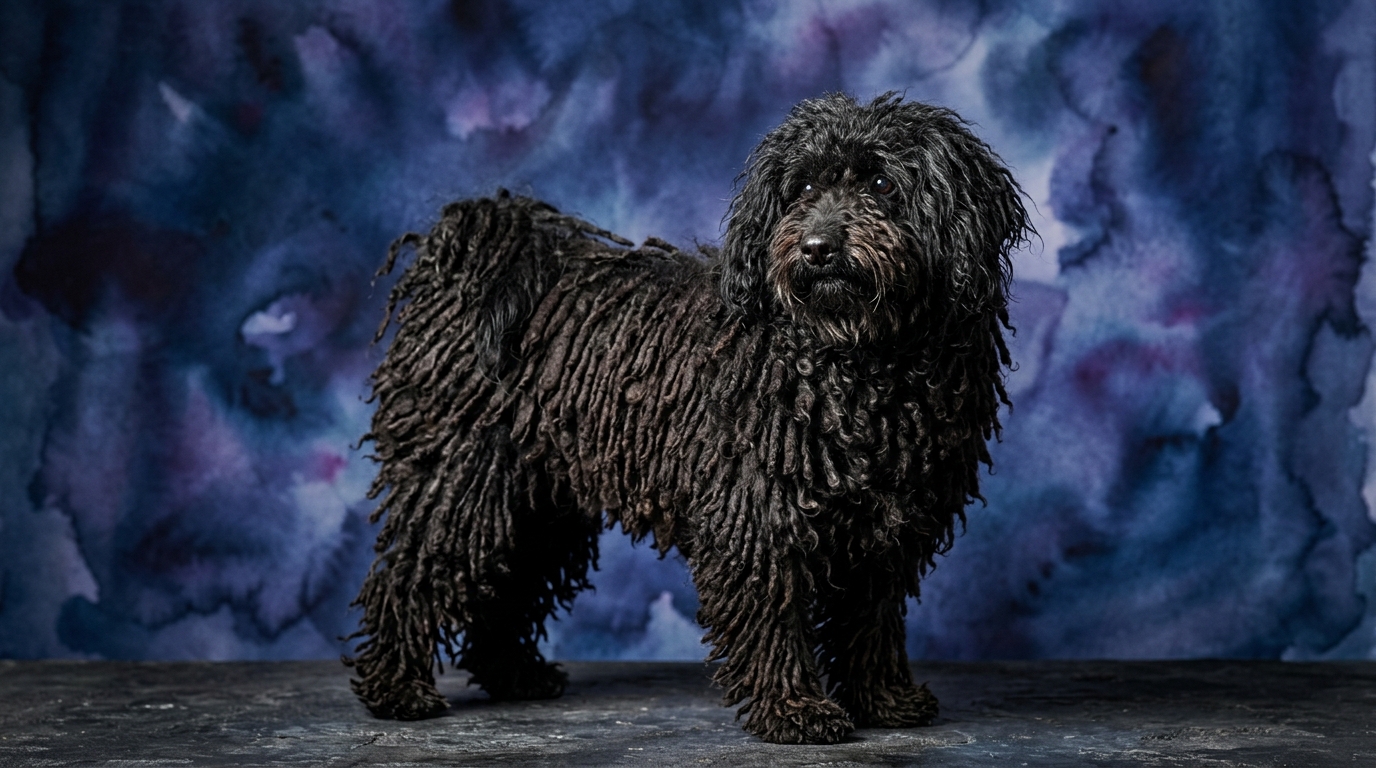
The **Puli**, with a slightly higher Coren rank of #25, showcases an intelligence characterized by efficiency and responsiveness. Its Problem Solving at 4/5 indicates sharp analytical skills, often applying learned solutions to new scenarios with impressive speed and precision. Training Speed, also 4/5, highlights its rapid learning capability and enjoyment of the process, quickly forming associations between actions and outcomes. A Social Intelligence score of 3/5 signifies its attunement to its family's emotional states and intentions, integrating well into household routines. Instinctive Drive at 3/5 reflects a lively, agile herding aptitude, showing focus and determination in directed work, and its Memory of 4/5 ensures excellent long-term retention for commands, people, and experiences.
Where Briard Wins Cognitively
While both breeds excel, the Briard often demonstrates a particular cognitive advantage in situations demanding independent thought and varied problem-solving. Its 4/5 Problem Solving isn't just about finding answers; it's about the *process*—the Briard can be more inclined to experiment with different strategies when faced with a truly novel puzzle, rather than relying solely on previously learned patterns. This exploratory nature can lead to innovative solutions that a more pattern-focused dog might overlook. Its combination of strong memory and a directed instinctive drive allows it to adapt its herding strategies to different flocks or environments, demonstrating a flexible application of its cognitive skills rather than a rigid adherence to routine. Furthermore, the Briard's social intelligence, while not its highest score, manifests as a discerning loyalty, making it excellent at guarding and independently assessing threats, often acting decisively without constant human direction in protective roles.
Where Puli Wins Cognitively
The Puli, while equally capable, often shines in areas requiring quick processing, precision, and a highly cooperative mindset. Its 4/5 Problem Solving often involves a rapid assessment of information, allowing it to apply known solutions or develop new ones with impressive efficiency. This speed and precision make it particularly adept at tasks requiring rapid decision-making in dynamic environments. The Puli's training speed, also a 4/5, is frequently complemented by a keen desire to please and an intense focus, making it exceptionally responsive to clear guidance and eager to master new tasks. Its social intelligence, rated 3/5, particularly shines in its ability to predict and react to its owner's moods and intentions, fostering a deeply connected working relationship. This attunement allows for seamless communication and an almost intuitive understanding between dog and handler, making it a highly responsive partner in activities requiring tight coordination.
Which is Easier to Train and Why
Both the Briard and Puli boast a 4/5 in Training Speed, indicating that both are highly capable learners. However, the *approach* to training and the *experience* of training them can differ. The Puli often presents as slightly 'easier' to train due to its inherent eagerness to please and its quick processing of commands, making it exceptionally responsive to positive reinforcement and clear cues. Its focus during training sessions can be intense and sustained, allowing for rapid mastery of complex tasks and a fluid progression through learning stages. The Puli's cognitive style leans towards efficiently absorbing and applying information, making it a joy for trainers who appreciate a dog that quickly 'gets it.'
The Briard, while equally capable of learning quickly, sometimes exhibits a more independent and thoughtful streak. It may require a trainer who appreciates its tendency to ponder tasks or even question the necessity of a command, thriving on clarity and purpose rather than sheer repetition. This doesn't mean it's stubborn, but rather that it learns best when the 'why' behind the command is implicitly understood or consistently demonstrated. Consistency, patience, and engaging training methods that stimulate its problem-solving abilities are key to unlocking the Briard's full training potential. So, while both learn quickly, the Puli's natural responsiveness often makes the training journey feel more straightforward for many owners.
Which Suits Active Owners vs. Relaxed Owners
Neither the Briard nor the Puli are suited for truly 'relaxed' owners in the sense of minimal activity. Both are working herding breeds with significant mental and physical exercise requirements. However, their ideal types of 'active' engagement differ subtly.
The **Briard**, with its robust build, thoughtful nature, and moderate instinctive drive, thrives with owners who can provide consistent, varied mental and physical challenges. This might include advanced obedience, agility, tracking, or even search and rescue work, where its independent problem-solving and strong memory are put to good use. Briard owners should be prepared for daily, vigorous exercise and engaging mental tasks that allow this breed to think for itself, making them excellent companions for active families who enjoy outdoor adventures and structured dog sports. They need a job, and without one, their intelligence can lead to less desirable behaviors.
The **Puli**, with its agile body, sharp focus, and responsive nature, is exceptionally well-suited for owners interested in fast-paced, high-intensity dog sports such as competitive agility, flyball, or advanced herding trials. Its quick decision-making, responsiveness, and desire to work closely with its handler make it an outstanding partner in these types of activities. Pulis require regular, intense bursts of physical activity combined with mentally stimulating tasks that leverage their rapid learning and problem-solving skills. An owner who enjoys a deeply connected, cooperative working relationship and participates in dog sports will find the Puli an unparalleled companion.
The Verdict
Choose the Briard if you value a thoughtful, independent problem-solver capable of varied, complex work, and appreciate a discerning loyalty that comes with a dog who thinks for itself.
Choose the Puli if you seek a highly responsive, agile partner for fast-paced activities and a deeply attuned, cooperative working relationship that thrives on close communication and efficiency.
🧠 Find Your Pet's IQ Score
Our Pet IQ Lab assessment covers 25+ tests across 5 cognitive dimensions — personalized to your breed.
Take the Full IQ Test →Frequently Asked Questions
Are Briards and Pulis good with children?
Both breeds can be excellent with children when properly socialized from a young age and raised in a household that teaches respect for animals. Their herding instincts mean they might try to 'herd' children, so supervision and training are crucial to ensure gentle interactions.
Do Briards or Pulis require extensive grooming?
Yes, both breeds require significant grooming. The Briard has a long, shaggy double coat that needs regular brushing to prevent mats. The Puli's unique corded coat requires specialized care to develop and maintain its distinctive cords, which is a time-consuming commitment.
What are the primary differences in their herding styles?
The Briard often employs a more 'guardian' style of herding, using its size and presence to move livestock, often working independently with a watchful eye. The Puli, in contrast, typically uses a more agile, 'gathering' style, darting and barking to control its flock, often working in close communication with its handler.