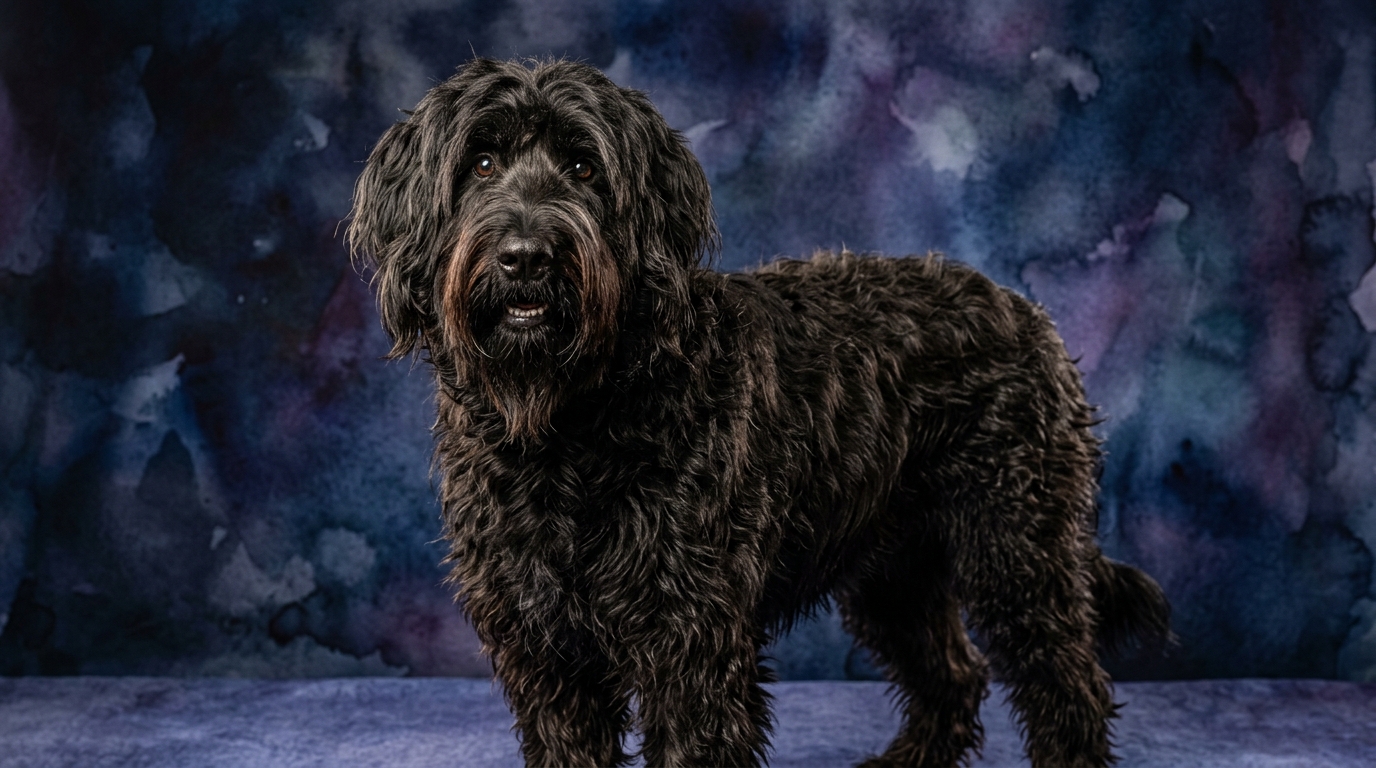
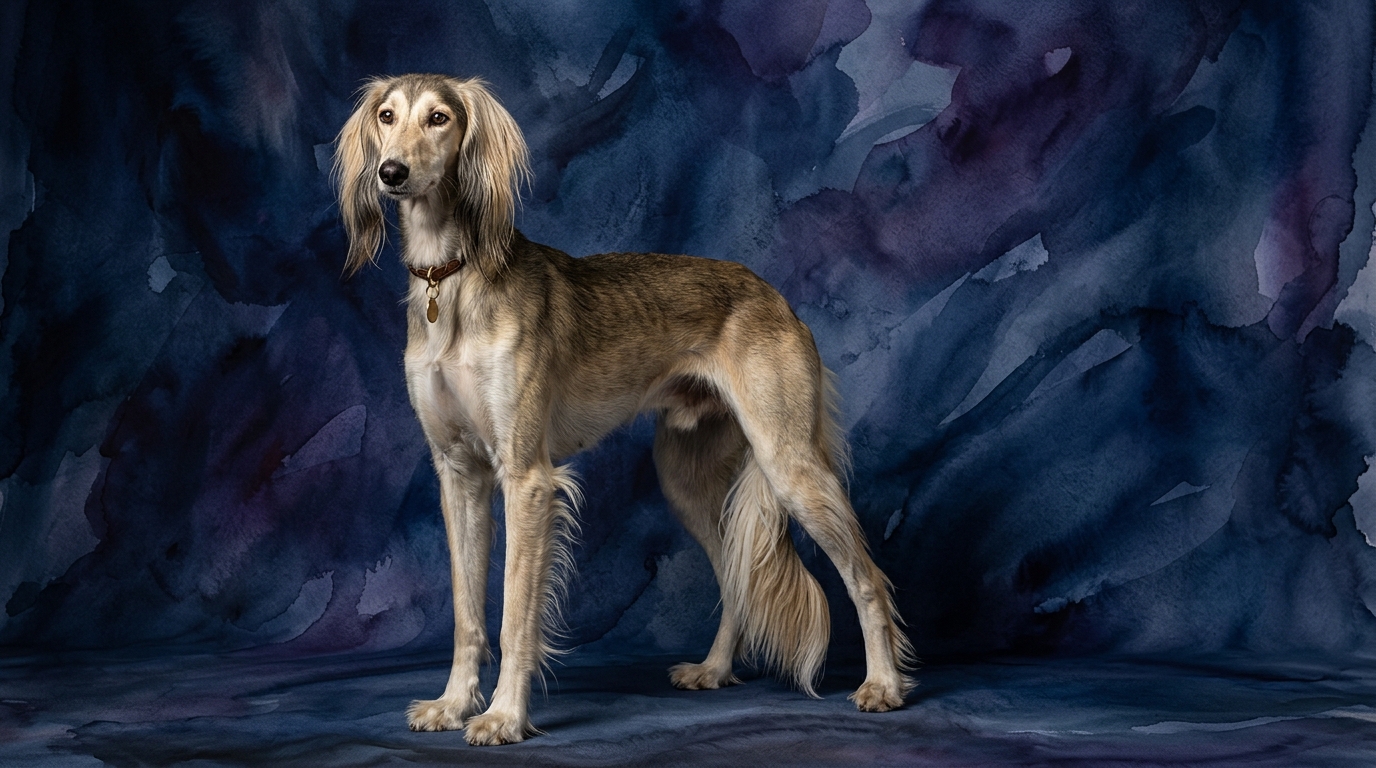
Side-by-Side Cognitive Profile: Briard vs. Saluki
The Cosmic Pet Pet IQ Lab employs a five-dimensional framework to assess canine cognition, providing a nuanced understanding of each breed's mental landscape. Let's examine how the Briard and Saluki measure up in problem-solving, training speed, social intelligence, instinctive drive, and memory, alongside their Coren rankings where available.
The Briard, a robust French herding dog, holds a Coren rank of #30, signifying a significant capacity for obedience and working intelligence. Their Problem Solving is rated at 4/5, indicating a strong ability to navigate complex situations and adapt strategies. Training Speed scores 4/5, reflecting their eagerness and aptitude for learning and retaining commands. Social Intelligence stands at 3/5, meaning they possess a solid understanding of human cues and pack dynamics, often forming deep bonds with their family. Instinctive Drive is 3/5, primarily manifesting as a protective and herding impulse. Finally, their Memory is rated 4/5, suggesting excellent recall of learned behaviors and experiences.
The Saluki, an ancient sighthound from the Middle East, is not ranked on the Coren scale, which primarily assesses obedience-based working intelligence. Their cognitive strengths lie in areas unique to their hunting heritage. Problem Solving is rated 3/5, focusing on independent decision-making during pursuit and navigating complex environments at speed. Training Speed is 3/5, indicating they can learn, but often with a more independent approach than biddable working breeds. Social Intelligence is 3/5, characterized by discerning bonds with family members and often a reserved demeanor with strangers. Instinctive Drive is 3/5, dominated by a powerful prey drive and keen visual hunting skills. Their Memory is 3/5, sufficient for retaining routines and learned cues, though perhaps less focused on complex, multi-step human directives.
Where the Briard Excels Cognitively
The Briard's cognitive architecture shines in areas demanding collaboration, adaptability, and retention of complex sequences. With a Problem Solving score of 4/5, they demonstrate a superior capacity for analytical thought when confronted with novel challenges. This manifests in their ability to understand cause-and-effect relationships, devising strategies to herd livestock or protect their flock, which translates well to diverse tasks in a domestic setting.
Their Training Speed, also rated 4/5, highlights a pronounced desire to engage with human instruction and a quick grasp of new commands. This responsiveness stems from generations bred to work closely with shepherds, requiring them to learn and execute intricate directives reliably. A Briard can quickly form associations between actions and desired outcomes, making them highly receptive to structured learning environments and various dog sports.
Furthermore, the Briard's Memory, scoring 4/5, underpins their proficiency in training and problem-solving. They reliably recall a vast array of commands, routines, and past experiences, allowing them to build upon previous learning. This robust memory ensures consistency in their behavior and makes them dependable partners in tasks requiring sequential execution or long-term recall of safety protocols.
Where the Saluki Excels Cognitively
While the Saluki's scores might appear numerically lower in some general cognitive dimensions, their true cognitive strengths lie in specialized, ancient aptitudes honed for survival in demanding environments. Their Problem Solving (3/5) is not about obeying complex human commands, but rather about independent, rapid decision-making crucial for high-speed pursuit. This involves instant assessment of terrain, predicting prey movements, and choosing the most efficient path in a chase, often without human intervention.
The Saluki's Instinctive Drive (3/5), though shared with many breeds, manifests as an exceptionally acute visual perception and an unparalleled drive for chase. This isn't just raw instinct; it's a finely tuned cognitive process involving spatial reasoning, object tracking, and the ability to maintain focus on a moving target over vast distances. Their minds are wired for efficiency in this specific, high-stakes context.
Their Social Intelligence (3/5), while sometimes interpreted as aloofness, represents a discerning and independent social strategy. Salukis form deep, often reserved, bonds with their chosen family, demonstrating a subtle understanding of their intimate circle's moods and intentions. This isn't a lack of social acumen, but a preference for selective, profound connections over broad, eager engagement, reflecting a cognitive independence that served them well as solitary hunters or in small, close family units.
Training Dynamics: Briard's Cooperation vs. Saluki's Independence
When it comes to ease of training, the Briard generally presents a more straightforward experience for most owners, largely due to their higher Training Speed (4/5) and historical role. Briards were bred to work in close collaboration with humans, requiring them to be attentive, responsive, and eager to please their handler. Their herding background instilled a strong desire to understand and execute commands, making them highly receptive to traditional positive reinforcement methods and structured training sessions. They find satisfaction in mastering new skills and working alongside their human companions, translating into a more biddable and cooperative training partner.
The Saluki, with a Training Speed of 3/5, offers a different training journey, one that requires patience, understanding, and creativity. As sighthounds, their primary motivation is often internal, driven by their keen senses and inherent chase instinct, rather than a strong desire to please. They are intelligent and capable of learning, but their independence means they may assess a command's utility before complying, or their focus might be instantly diverted by a distant movement. Effective training for a Saluki often involves making sessions engaging, short, and highly rewarding, understanding that their cognitive strengths lie in independent action rather than constant human deference. Owners must acknowledge their deep-seated prey drive and work with it, rather than against it, to achieve reliable results.
Lifestyle Suitability: Active Engagement vs. Focused Outlets
The Briard's cognitive and physical needs align well with active owners who enjoy structured engagement and purposeful activities. Their herding heritage means they thrive on mental stimulation and physical exercise that gives them a job to do. Owners who participate in dog sports like agility, obedience, or herding trials, or who enjoy long, vigorous hikes and training sessions, will find the Briard a fulfilling companion. Their problem-solving abilities and strong memory mean they benefit from consistent challenges, making them less suitable for purely relaxed owners who cannot commit to daily mental and physical exertion.
The Saluki, conversely, can surprise owners with their dual nature. While they demand bursts of intense physical activity, requiring secure, spacious areas for high-speed running to satisfy their instinctive drive, they are often remarkably calm and relaxed indoors. Owners who appreciate this elegance and are prepared to provide dedicated outlets for their sighthound instincts—such as lure coursing or carefully managed off-leash runs—will find a Saluki to be a serene indoor companion. They are not typically suited for owners seeking a constantly 'on' partner for endless activities, but rather someone who understands their need for focused, high-intensity exercise balanced with significant periods of quiet repose.
The Verdict: Choosing Your Canine Companion
The Verdict
Choose a Briard if you seek an engaged, cooperative partner for diverse training, dog sports, and an active family life, valuing a dog that readily channels its problem-solving and memory into collaborative tasks.
Opt for a Saluki if you appreciate an independent, elegant companion, understanding their need for specific, high-intensity outlets for their chase drive, and valuing a quiet, reserved presence within the home.
🧠 Find Your Pet's IQ Score
Our Pet IQ Lab assessment covers 25+ tests across 5 cognitive dimensions — personalized to your breed.
Take the Full IQ Test →Frequently Asked Questions
Are Salukis generally harder to train than Briards?
Yes, generally. Briards have a higher training speed and a pronounced desire to work cooperatively with humans, making them more receptive to traditional methods. Salukis possess an independent sighthound nature, requiring patient, consistent, and highly positive reinforcement-based training that respects their self-directed motivations.
Which breed is typically better suited for families with young children?
Both breeds can be good with children with proper socialization and supervision. Briards are often protective and watchful over their family 'flock,' while Salukis tend to be gentle but may be more reserved or easily startled by boisterous child play. Always ensure responsible interaction and early exposure.
Do Salukis require a lot of daily exercise?
Salukis need regular opportunities for intense, high-speed running in a safe, enclosed area to satisfy their sighthound instincts, typically for 30-60 minutes daily. However, they are often very calm and quiet indoors, content to rest extensively, contrasting with the more consistent activity needs of a Briard.