
Side-by-Side Cognitive Profile
The Cosmic Pet Pet IQ Lab employs five key dimensions to evaluate canine intelligence, offering a nuanced understanding beyond simple obedience. Let's examine how the Briard and Smooth Fox Terrier measure up in each area, revealing their inherent aptitudes.
The Briard, a member of the Herding Group and Coren-ranked #30, exhibits a cognitive makeup tailored for thoughtful oversight and cooperative work. Their Problem Solving is rated 4/5, indicating a robust capacity for independent thought and strategic thinking, often devising solutions to challenges without constant human prompting. This is typical of a herding breed needing to adapt to varied flock behaviors and terrain. Their Training Speed, also 4/5, reflects their commendable rapidity in absorbing new commands and routines, making them generally responsive to consistent guidance due to their eagerness to engage and work. Social Intelligence for the Briard stands at 3/5; while capable of forming deep bonds, their social acumen often leans towards a discerning nature, sometimes exhibiting initial reserve with strangers, though they understand pack dynamics well. An Instinctive Drive of 3/5 means their herding heritage grants them a moderate yet focused drive to gather and manage, manifesting as a desire to keep family members together or 'patrol' their territory. Finally, their Memory is strong at 4/5, indicating an impressive recall for past experiences, commands, and routines, aiding significantly in complex training and long-term behavioral consistency.
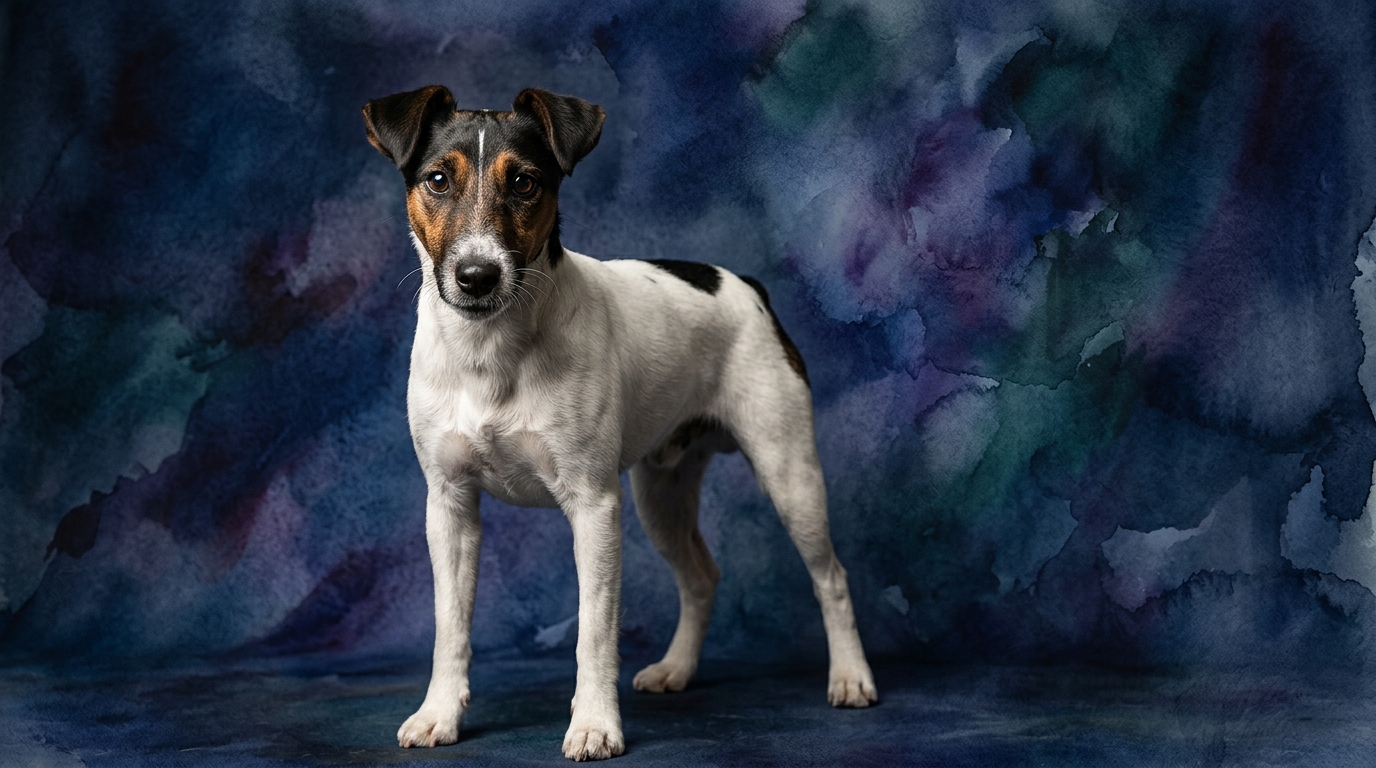
In contrast, the Smooth Fox Terrier, a spirited member of the Terrier Group and not Coren-ranked, possesses a cognitive profile reflecting its tenacious, independent heritage. Their Problem Solving is rated 3/5; these dogs approach problems with tenacity and a direct, often physical, method, rather than intricate strategic planning. Their solutions are frequently born from persistence and a keen understanding of their immediate environment, particularly concerning prey. Training Speed for the Smooth Fox Terrier is 3/5; while capable of learning, their progress is often influenced by their independent streak and occasional distractibility, requiring engaging and varied methods to maintain focus. Their Social Intelligence also registers at 3/5; generally affable, their social interactions are often tempered by a spirited independence and sometimes a desire to be the center of attention. The Instinctive Drive of a Smooth Fox Terrier is 3/5, rooted deeply in their terrier purpose to chase, dig, and explore, particularly small, fast-moving objects, influencing many behaviors and requiring appropriate outlets. Their Memory, rated 3/5, is functional for commands and routines, though it can be somewhat selective, especially when their instinctive drives are heavily engaged, remembering what serves their interests or has been consistently reinforced.
Where the Briard Wins Cognitively
The Briard's cognitive profile distinctly outpaces the Smooth Fox Terrier in areas demanding more complex, sustained mental effort and cooperation. Their Problem Solving score of 4/5 indicates a superior capacity for analytical thought and independent decision-making, a trait honed by centuries of managing livestock. This manifests as an ability to navigate novel situations with thoughtful consideration, rather than simply reacting impulsively. For instance, a Briard might systematically figure out how to open a complex gate or untangle a leash, demonstrating a methodical approach. Similarly, their Training Speed of 4/5 reflects a greater eagerness to learn and retain new commands, making them more pliable and consistent in structured learning environments. This isn't just about quick comprehension; it's about a sustained willingness to cooperate and embed new information into their behavioral repertoire. Furthermore, the Briard's Memory, also rated 4/5, suggests a more reliable long-term retention of routines and experiences. This means they are less likely to "forget" past training or behavioral expectations, contributing to a more predictable and well-behaved companion over time, especially when faced with infrequent commands or situations. These combined strengths mean the Briard often requires less repetition and can adapt to more intricate tasks.
Where the Smooth Fox Terrier Wins Cognitively
While the Briard shines in methodical problem-solving and training compliance, the Smooth Fox Terrier's cognitive strengths lie in areas demanding quick, decisive action and a focused intensity, particularly when their core instincts are engaged. Though their individual IQ scores are generally lower than the Briard's, it's essential to understand the *nature* of their intelligence. Their Problem Solving at 3/5, while numerically lower, is highly effective for their breed purpose; they excel at figuring out how to get to something they want, often through persistent physical effort or clever manipulation of their immediate environment. This isn't about grand strategy, but about immediate, practical solutions to "terrier problems" like locating a scent or navigating tight spaces. Their Instinctive Drive, also 3/5, is a powerful cognitive engine, making them exceptionally focused and relentless when pursuing a perceived "prey" or engaging in activities that satisfy their innate urges, such as digging or chasing. This drive, while potentially challenging for owners, fuels a profound determination and a specific type of environmental awareness that the Briard, with its different heritage, doesn't prioritize in the same way. The Smooth Fox Terrier's cognitive advantage is in its spirited, often unyielding pursuit of its interests, a sharp, quick-witted focus on the immediate, tangible world.
Which is Easier to Train and Why
Based on their respective cognitive profiles, the Briard generally presents as an easier dog to train compared to the Smooth Fox Terrier. The Briard's Training Speed of 4/5 and Problem Solving of 4/5 indicate a greater aptitude for understanding and executing commands efficiently. Their Herding background instills a natural desire to work cooperatively with humans, leading to a higher intrinsic motivation for structured learning. They are often eager to please and respond well to positive reinforcement, quickly forming associations between actions and rewards. Their strong Memory (4/5) further enhances this, ensuring that once a command is learned, it is retained consistently. They tend to anticipate owner cues and adapt to new situations with a cooperative mindset, making them highly receptive to consistent direction.
In contrast, the Smooth Fox Terrier's Training Speed of 3/5, combined with their strong Instinctive Drive (3/5) and independent spirit, means training can be a more nuanced dance. While they are certainly capable of learning, their attention can be more fleeting, and their terrier instincts may often override a desire for compliance, especially in distracting environments. They might understand a command but choose to ignore it if something more exciting, like a squirrel, crosses their path. Real behavioral differences include the Briard's tendency to watch and anticipate owner cues, whereas a Smooth Fox Terrier might be more inclined to explore independently, requiring more creative and persistent engagement from the trainer. Consistency, patience, and making training feel like a fun game are crucial for the Smooth Fox Terrier, while the Briard often thrives on clear direction and purpose. The Smooth Fox Terrier's selective memory can also mean a command needs more frequent reinforcement to compete with their innate drives.
Which Suits Active Owners vs. Relaxed Owners
The choice between a Briard and a Smooth Fox Terrier often hinges significantly on an owner's lifestyle and energy levels. Active owners seeking a dedicated partner for strenuous, sustained activities will find a strong match in the Briard. Their Herding background means they possess substantial stamina and require significant mental and physical engagement to prevent boredom and destructive behaviors. Long hikes, agility courses, advanced obedience trials, or even simply vigorous, extended play sessions are ideal for channeling their energy and satisfying their Problem Solving and Instinctive Drive. A Briard thrives when given a job or a consistent, challenging activity schedule that taps into their cognitive abilities and physical prowess, making them excellent companions for outdoor enthusiasts and those involved in dog sports.
For more relaxed owners, the Smooth Fox Terrier, despite its spirited nature, can sometimes be a better fit, provided their specific needs are met with focused attention. While they are certainly energetic and require regular exercise, their needs can often be satisfied with intense bursts of activity, such as chasing a ball in a secure yard, rather than the sustained endurance required by a Briard. A Smooth Fox Terrier's independent streak means they can be content with shorter, high-intensity play sessions and then settle down, whereas a Briard might continuously seek engagement if its needs aren't fully met. However, "relaxed" for a Smooth Fox Terrier owner still means committing to consistent mental stimulation to curb their digging and chasing instincts, perhaps through puzzle toys, engaging scent work, or short, sharp training sessions. Neglecting their mental and physical needs can lead to a bored, destructive terrier, emphasizing that while their exercise might be different in duration, its intensity and consistency are equally important.
The Verdict
Choose a Briard if you desire a highly trainable, thoughtful companion for active pursuits, valuing a dog that learns quickly and retains complex commands with impressive recall. Their cooperative nature and independent problem-solving make them suitable for owners ready to provide consistent mental and physical engagement and who appreciate a loyal, protective presence.
Opt for a Smooth Fox Terrier if you appreciate a spirited, tenacious dog with an independent streak, suited for owners who enjoy engaging their pet's natural instincts through short, intense play and clever mental challenges. Be prepared for their specific brand of determination and a need for consistent, engaging training methods that make learning feel like a fun game.
🧠 Find Your Pet's IQ Score
Our Pet IQ Lab assessment covers 25+ tests across 5 cognitive dimensions — personalized to your breed.
Take the Full IQ Test →Frequently Asked Questions
Are Briards good with children?
Briards can be wonderful family dogs, often displaying a protective and gentle nature towards children, especially those within their 'flock.' Early socialization and training are key to ensuring they understand appropriate interactions and channel their herding instincts positively, making them attentive guardians.
Do Smooth Fox Terriers bark a lot?
Smooth Fox Terriers can be vocal, often using their bark to alert to perceived threats, express excitement, or simply to communicate their desires. Consistent training from a young age can help manage excessive barking, but their alert and spirited nature means some vocalization is inherent to the breed.
Which breed requires more grooming?
The Briard, with its long, shaggy double coat, requires significantly more grooming to prevent matting and maintain coat health, often needing daily brushing and regular professional attention. The Smooth Fox Terrier's short, dense coat is much lower maintenance, requiring only occasional brushing and bathing to keep it tidy.