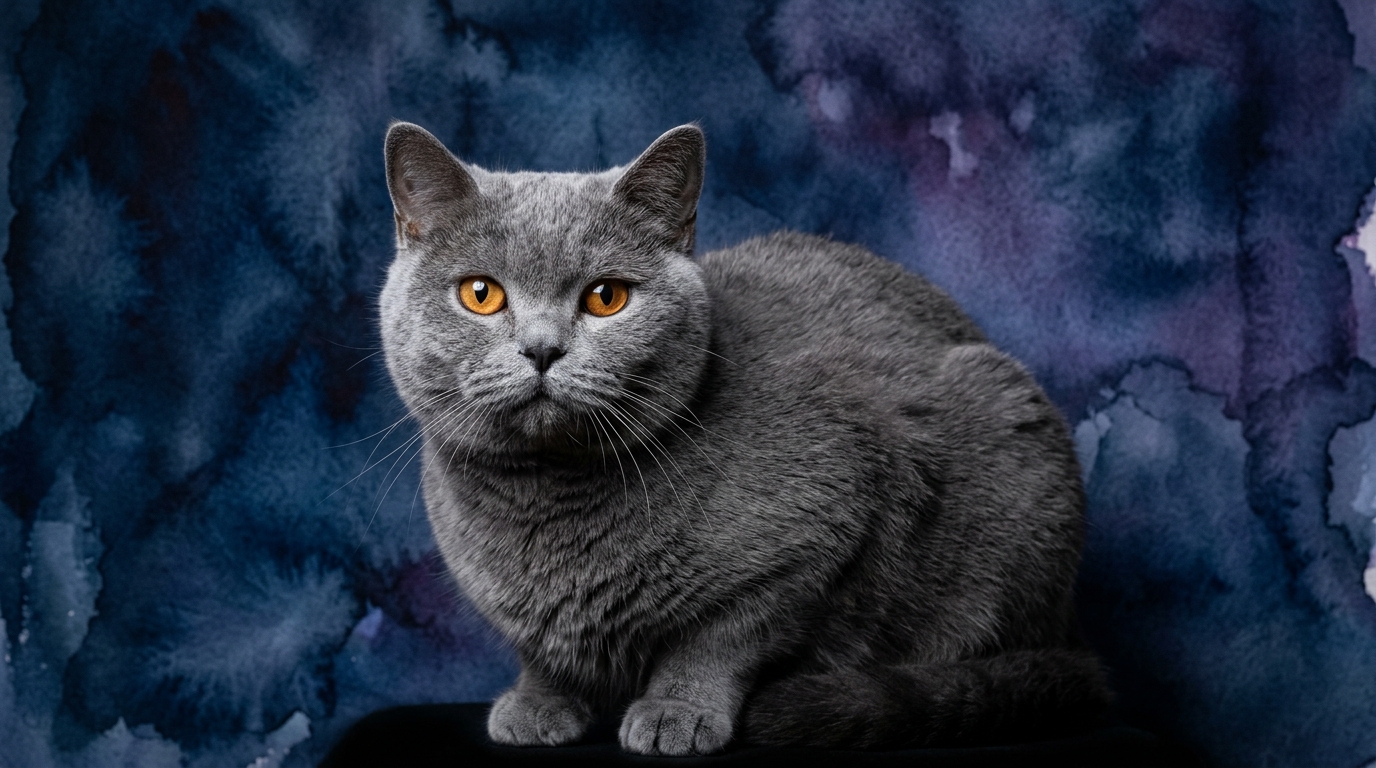
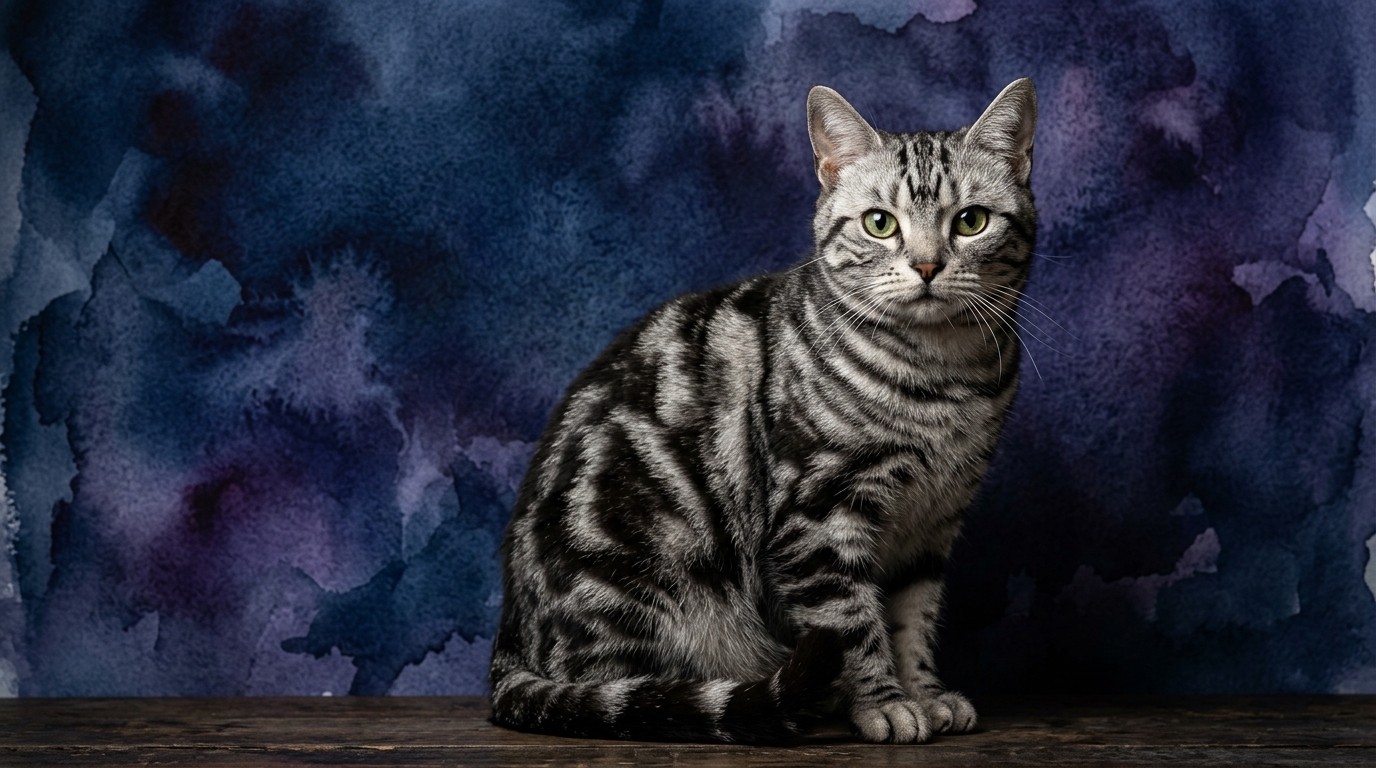
Side-by-Side Cognitive Profiles
The Cosmic Pet Pet IQ Lab assigns both the British Shorthair and the American Shorthair identical scores across five crucial intelligence dimensions, reflecting their generally competent and adaptable feline minds. Understanding how these 3/5 scores translate into observable traits requires delving into each breed's typical demeanor and historical context. This side-by-side analysis helps clarify the practical implications of their similar cognitive capacities.
For the **British Shorthair**, a **Problem Solving** score of 3/5 often translates to a methodical, observant approach; they might assess a situation quietly before acting, preferring efficiency over frantic trial-and-error to achieve their goals, such as accessing a preferred high perch. Their **Training Speed** at 3/5 indicates they respond well to calm, consistent reinforcement, particularly for routines and boundaries, though they may not be the quickest to learn complex tricks. **Social Intelligence** at 3/5 means they form deep, albeit often subtle, bonds with their chosen humans, reading moods and offering quiet companionship rather than demanding attention. Their **Instinctive Drive** (3/5) is present but typically expressed in controlled, solitary play with toys rather than overt hunting. Finally, a **Memory** score of 3/5 ensures they recall routines, preferred spots, and consistent human interactions reliably.
The **American Shorthair**, also scoring 3/5 in **Problem Solving**, tends to exhibit this through more active exploration and hands-on investigation, readily trying different approaches to solve puzzles or navigate new environments. Their **Training Speed** of 3/5 suggests they are generally amenable to learning, often enjoying interactive training sessions, especially when motivated by play or treats, and can adapt to new commands with relative ease. With a **Social Intelligence** of 3/5, they are typically more overtly outgoing, enjoying interaction with family members and guests, and are adept at reading cues for play or cuddle time. Their **Instinctive Drive** (3/5) is robust and often expressed through enthusiastic interactive hunting games with toys, reflecting their history as working mousers. Their **Memory** score of 3/5 means they possess good recall for people, places, and learned behaviors, remembering where their favorite toys are hidden or the source of treats.
Where British Shorthair's Cognitive Strengths Shine
Despite sharing identical scores, the British Shorthair's cognitive profile particularly shines in scenarios demanding calm observation and a measured approach. Their 3/5 problem-solving ability often manifests as an elegant efficiency; a British Shorthair might spend time surveying a situation, calculating the simplest route to a desired outcome rather than engaging in energetic experimentation. This can be seen when they strategically find the warmest sunbeam or the most comfortable, quiet spot in a busy home with minimal fuss.
Their 3/5 social intelligence is expressed through a profound, yet undemanding, companionship. They excel at providing a comforting, stable presence, often observing family dynamics from a nearby perch and offering quiet solace without needing constant interaction. This makes them particularly adept at understanding the nuances of a calm household and adjusting their presence accordingly, demonstrating a sophisticated awareness of their social environment through subtle cues.
Where American Shorthair's Cognitive Strengths Shine
The American Shorthair's cognitive abilities, while scoring the same 3/5, tend to shine in areas requiring adaptability, active engagement, and playful curiosity. Their problem-solving (3/5) is often characterized by a willingness to experiment and explore, making them adept at figuring out new puzzle toys or navigating changes in their environment with enthusiasm. They are more likely to actively manipulate objects or try different angles to achieve a goal, showcasing a practical, hands-on intellect.
Their 3/5 social intelligence is evident in their generally outgoing and friendly disposition, allowing them to integrate seamlessly into diverse family structures and interact playfully with various individuals, including children and other pets. This adaptability, combined with their strong instinctive drive (3/5) for interactive play, means they are particularly adept at engaging in reciprocal games, demonstrating a clear understanding of social play cues and turn-taking.
Training: Patience vs. Playfulness
When it comes to training, both breeds score a 3/5 for Training Speed, but their distinct temperaments influence the *experience* of training. The British Shorthair, with its placid nature, responds best to consistent, patient reinforcement, particularly for establishing routines like litter box habits or accepting harness walking. They may take longer to grasp complex tricks, but once a behavior is learned, their excellent memory (3/5) ensures strong retention, making them quite reliable if the training is calm and positive. Owners should avoid harsh methods, as their dignified nature can lead to stubbornness.
The American Shorthair, on the other hand, often appears 'easier' to train for interactive commands or tricks due to their inherent curiosity and playful energy. Their adaptability and eagerness to engage make them receptive to positive reinforcement methods involving treats and toys. They enjoy the mental stimulation that training provides, and their robust instinctive drive (3/5) can be harnessed for activities like fetch. While they pick up new things readily, their adventurous spirit might also lead them to test boundaries more frequently, requiring consistent reinforcement to maintain desired behaviors.
Suitability for Active vs. Relaxed Owners
Understanding how their 3/5 cognitive scores manifest behaviorally is key to matching these breeds with the right lifestyle. For **active owners** who enjoy interactive play, puzzle feeders, and perhaps even leash training, the American Shorthair is often an excellent fit. Their problem-solving curiosity, combined with a strong instinctive drive and social intelligence, means they thrive on engagement and mental stimulation. They appreciate owners who can dedicate time to playful interaction and provide a dynamic environment.
Conversely, for **relaxed owners** who appreciate a calm, independent presence, the British Shorthair often proves ideal. Their more observational problem-solving, subtle social intelligence, and preference for serene environments mean they are content with quiet companionship and less demanding interaction. They are generally self-sufficient, finding their own entertainment through observation or solitary play, making them a wonderful companion for those who enjoy a dignified, low-key feline presence in their home.
The Verdict
Choose a British Shorthair if you value a calm, observant companion who offers quiet affection and thrives in a predictable, serene environment.
Opt for an American Shorthair if you seek an adaptable, playful cat who enjoys interactive engagement and thrives with active mental and physical stimulation.
🧠 Find Your Pet's IQ Score
Our Pet IQ Lab assessment covers 25+ tests across 5 cognitive dimensions — personalized to your breed.
Take the Full IQ Test →Frequently Asked Questions
Do British Shorthairs and American Shorthairs get along well with other pets?
Both breeds possess a 3/5 social intelligence, meaning they can adapt to living with other pets. British Shorthairs tend to be more tolerant and reserved, observing from a distance, while American Shorthairs are typically more outgoing and may actively seek playful interaction with other animals, given proper introductions.
How do their 3/5 instinctive drives impact their need for enrichment?
With a 3/5 instinctive drive, both breeds benefit from enrichment, but it manifests differently. British Shorthairs appreciate solitary puzzle toys and observation points, satisfying their quiet hunting instincts. American Shorthairs, with their more robust and interactive drive, thrive on varied interactive play, chase games, and opportunities to 'hunt' and retrieve toys, requiring more active participation from owners.
Are there specific games that highlight their problem-solving abilities?
For British Shorthairs, games that involve observation and finding hidden treats with minimal physical exertion, like snuffle mats or simple treat-dispensing toys, highlight their methodical 3/5 problem-solving. American Shorthairs, with their more hands-on 3/5 problem-solving, enjoy complex puzzle feeders, agility games, or interactive toys that require manipulation and active engagement to 'solve'.