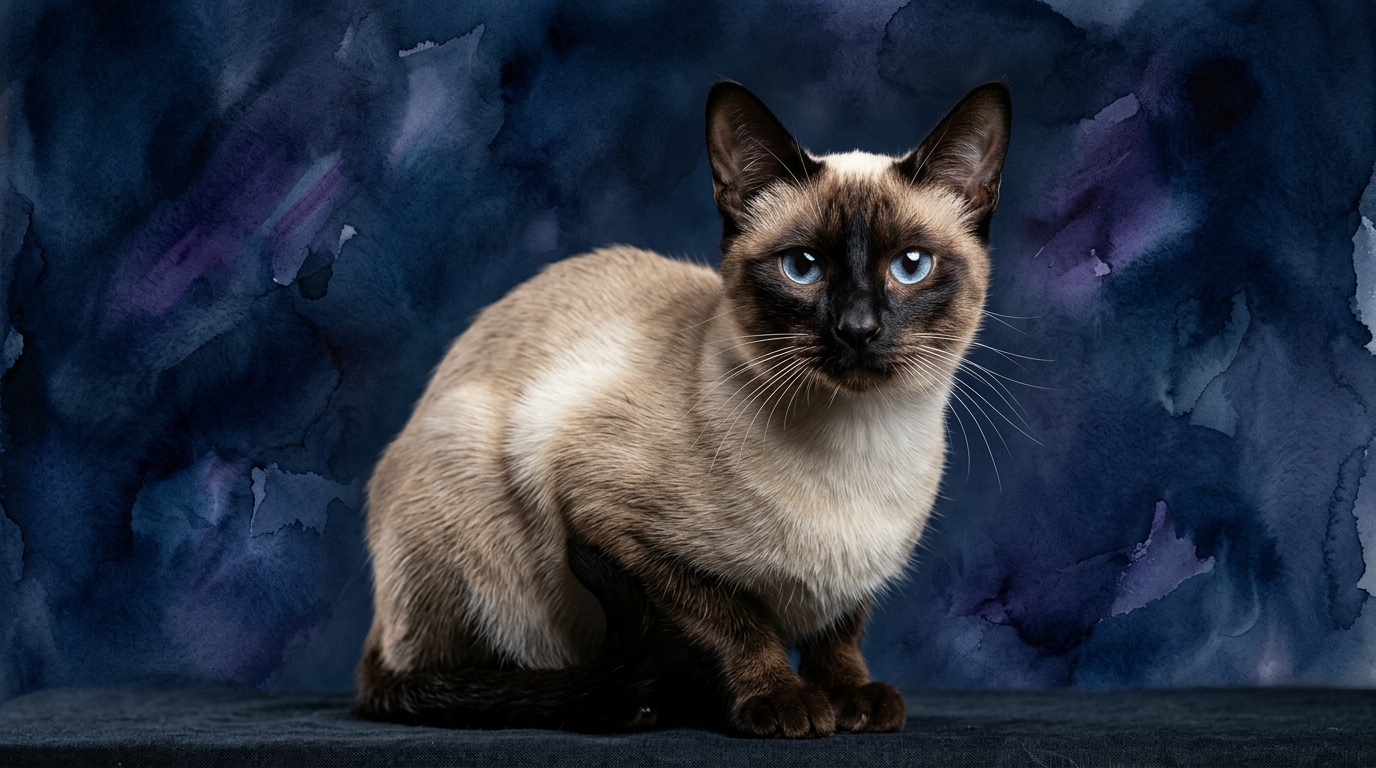
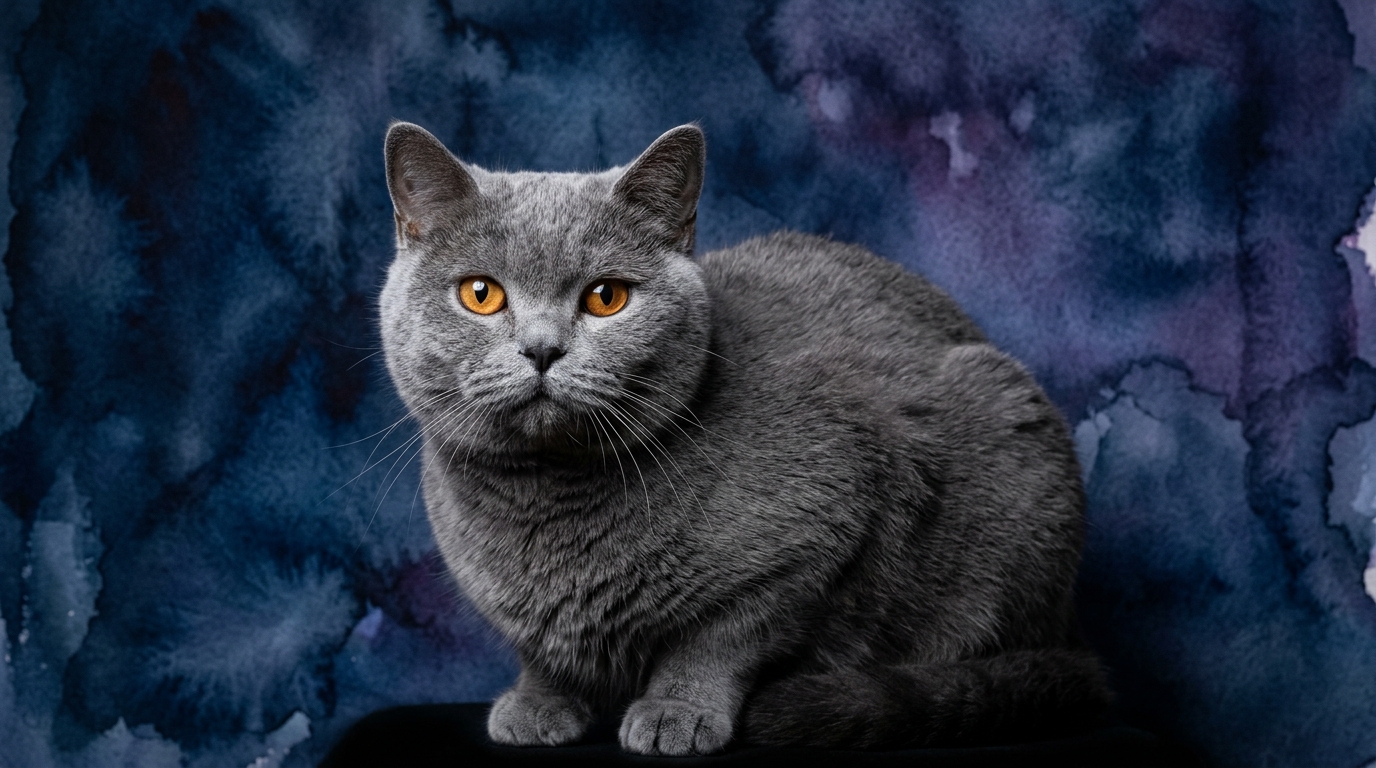
Side-by-Side IQ Profile: Siamese vs. British Shorthair
At The Cosmic Pet Pet IQ Lab, we evaluate feline intelligence across five key dimensions, providing a nuanced understanding of each breed's cognitive strengths. Here’s how the Siamese and British Shorthair compare:
**Problem Solving:** The Siamese, with a remarkable 5/5, exhibits exceptional ingenuity when faced with obstacles or novel situations. This breed might systematically try different approaches to open a cupboard, figure out how to access a forbidden treat, or even manipulate levers on a puzzle toy with surprising persistence, reflecting a proactive, experimental approach to understanding their world. In contrast, the British Shorthair, scoring 3/5, generally displays a more conservative approach. While capable of learning through observation and repetition, they are less inclined to initiate complex exploratory behaviors or engage in extensive trial-and-error to overcome a challenge, often preferring simpler solutions or human assistance.
**Training Speed:** Scoring 4/5, Siamese cats, with their keen observational skills and strong desire for interaction, often pick up new commands or tricks at an impressive pace. Their responsiveness to positive reinforcement, combined with a natural curiosity, makes them eager participants in training sessions, quickly associating actions with rewards and verbal cues. The British Shorthair, at 3/5, learns at a steady rate, but their training speed is typically more moderate. They can be taught basic commands and litter box etiquette effectively, but their motivation often stems more from comfort and routine than from an innate drive to please or engage in complex learning tasks, requiring more patience and consistency.
**Social Intelligence:** Renowned for their profound connection with humans, Siamese cats possess an extraordinary capacity for social intelligence, earning a 5/5. They are acutely attuned to their owners' moods, vocal inflections, and routines, often anticipating needs or responding with comforting presence. Their communicative nature, expressed through a wide range of vocalizations and body language, underscores their deep desire for reciprocal social engagement. British Shorthairs, with a 3/5 score, exhibit a more independent and reserved form of social intelligence. While they enjoy companionship and form strong bonds, their expression of affection tends to be less demonstrative, appreciating a calm presence and comfortable proximity without demanding constant interaction.
**Instinctive Drive:** The Siamese retains a robust set of ancestral instincts, manifesting in a pronounced predatory drive and a natural inclination for exploration, scoring 4/5. This breed often demonstrates a keen interest in hunting games, chasing toys with intense focus, and exploring every nook and cranny of their environment, reflecting a strong inner drive to stalk, pounce, and investigate. British Shorthairs, at 3/5, generally have a more moderated instinctive drive. While they certainly enjoy play and occasional bursts of activity, their predatory instincts are typically less intense and sustained, content with shorter play sessions and less compelled to constantly patrol or 'hunt' their territory.
**Memory:** Siamese cats possess an excellent memory, allowing them to recall specific events, routines, and individuals with remarkable clarity, reflected in their 5/5 score. They remember where favorite toys are stored, the sequence of daily events, and even past interactions, both positive and negative, contributing to their complex understanding of their world and their human companions. The British Shorthair, with a 3/5, has a functional memory that serves their daily needs well, remembering their food bowls, litter box locations, and familiar faces. However, their memory is generally less detailed or long-lasting for complex sequences or nuanced social interactions compared to the Siamese, thriving on routine that reinforces learned patterns.
Where the Siamese Wins Cognitively
The Siamese's cognitive strengths lie in their dynamic engagement with the world and their deep relational capacities. Their 5/5 score in problem-solving means they are consistently devising novel ways to interact with their environment, whether it's figuring out how to open a door or master a complex interactive feeder. This breed also excels in social intelligence (5/5), demonstrating an uncanny ability to read human emotions and communicate their own needs, fostering an exceptionally reciprocal bond. Furthermore, their superior memory (5/5) allows them to retain intricate details about routines, past events, and specific human behaviors, making them highly responsive and adaptable within a stable home environment. These traits combine to create a cat that is not merely present but actively participates in and shapes its domestic world.
Where the British Shorthair Wins Cognitively
While the British Shorthair's cognitive profile (3/5 across the board) might suggest a less 'active' mind, their strengths manifest in areas that prioritize calm and self-sufficiency, which can be a significant 'win' for certain lifestyles. Their moderated instinctive drive means they are less prone to destructive behaviors born from boredom or unmet predatory urges, making them naturally serene companions. Their less demanding social intelligence allows them to be content with comfortable proximity rather than constant interaction, providing a peaceful presence without requiring continuous engagement. This cognitive disposition means they excel in creating a tranquil home environment, perfectly suited for owners who appreciate a self-contained and undemanding feline companion who finds contentment in quiet observation rather than constant mental stimulation.
Which is Easier to Train and Why
Comparing training aptitude, the Siamese (Training Speed 4/5) clearly holds an advantage over the British Shorthair (Training Speed 3/5). The Siamese's higher problem-solving ability allows them to grasp concepts quickly, while their superior social intelligence means they are often motivated by the interactive aspect of training and the desire for human attention. They are more likely to enjoy learning tricks, walking on a leash, or responding to complex commands, viewing training as a stimulating game. The British Shorthair, while trainable for basic behaviors like litter box use and coming when called, requires a more patient, consistent approach. Their training is often more about establishing routines than engaging in complex, reciprocal learning sessions, as their motivation is generally less tied to human interaction for its own sake, demanding a different style of engagement from their trainers.
Which Suits Active Owners vs. Relaxed Owners
For active owners seeking a feline partner in crime, the Siamese is an ideal match. Their high problem-solving, social intelligence, and instinctive drive demand regular mental stimulation, interactive play, and consistent human engagement. They thrive in environments where they can explore, 'converse,' and participate in daily activities, making them excellent companions for those who enjoy an energetic, involved pet who needs their mind exercised daily. Conversely, the British Shorthair is perfectly suited for relaxed owners. Their lower scores across all cognitive dimensions translate to a more placid and independent demeanor. They are content with quiet companionship, minimal fuss, and predictable routines, providing a comforting, low-maintenance presence without requiring constant activity or intense interaction, fitting seamlessly into a calm household.
The Verdict
Choose a Siamese if you desire an interactive, communicative, and highly engaging feline companion who thrives on mental challenges and deep social bonds.
Opt for a British Shorthair if you prefer a calm, independent, and undemanding cat that offers a serene presence without requiring constant attention or intricate stimulation.
🧠 Find Your Pet's IQ Score
Our Pet IQ Lab assessment covers 25+ tests across 5 cognitive dimensions — personalized to your breed.
Take the Full IQ Test →Frequently Asked Questions
Are Siamese cats truly more vocal than British Shorthairs?
Yes, the Siamese's high social intelligence (5/5) is often expressed through a wide range of vocalizations, from chirps to distinct 'meows,' as they actively communicate with their humans. British Shorthairs, with their more reserved social intelligence (3/5), tend to be much quieter, using soft purrs or occasional polite meows when they have something to convey.
Do British Shorthairs require less playtime due to their cognitive profile?
Their moderated instinctive drive (3/5) means British Shorthairs generally have less intense and sustained play needs compared to the Siamese (4/5). While they still enjoy play, they are often content with shorter, less vigorous sessions and are less prone to boredom if left to their own devices for longer periods.
Can a British Shorthair learn tricks, or are they too 'stubborn'?
British Shorthairs can certainly learn tricks, though their training speed (3/5) is slower than a Siamese (4/5), and they are not 'stubborn' but rather less intrinsically motivated by complex interaction. Success requires patience, consistent positive reinforcement, and understanding that their learning is often rooted in routine rather than a desire for elaborate engagement.