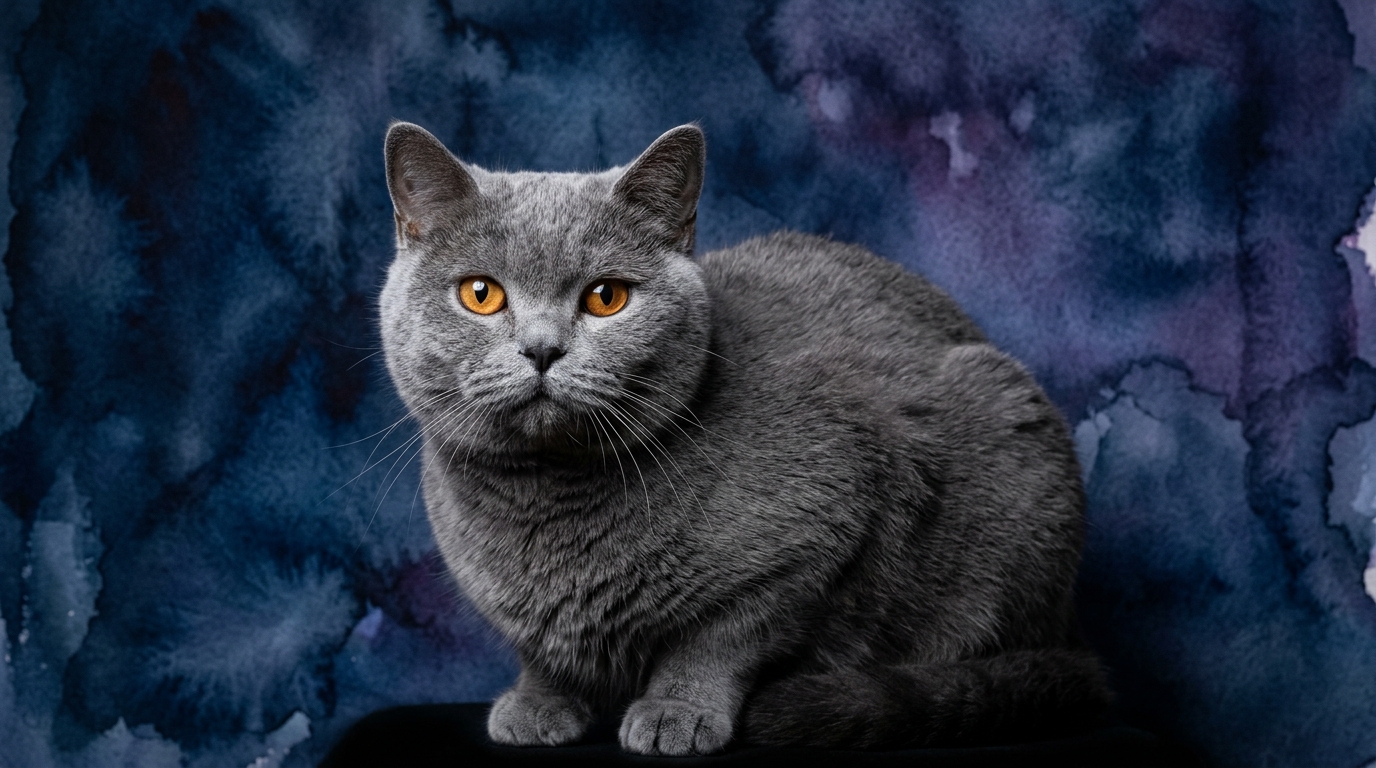
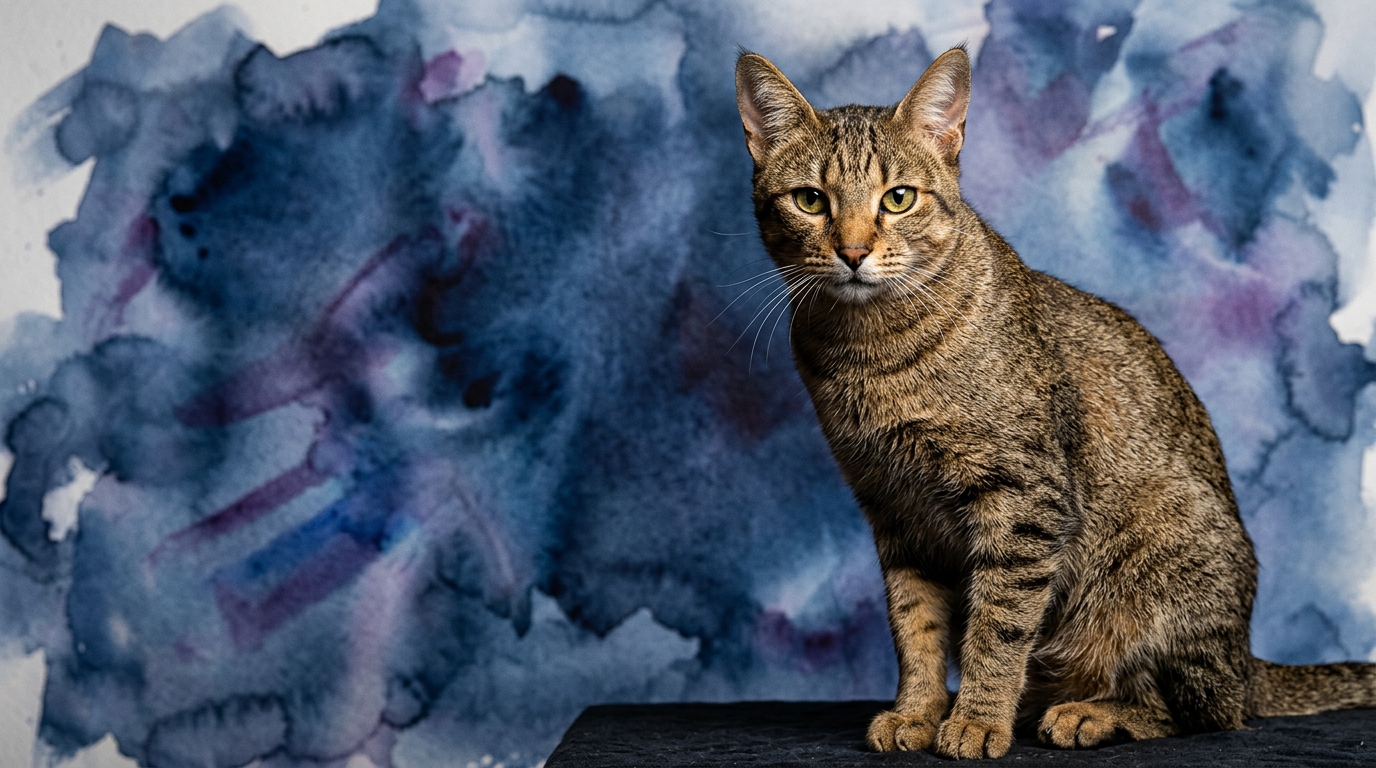
Side-by-Side IQ Profile
The Cosmic Pet Pet IQ Lab assigns both British Shorthairs and Chausies a consistent 3/5 across all five cognitive dimensions, indicating a solid, well-rounded intelligence without extreme peaks or valleys. However, how these scores manifest in daily behavior and cognitive application varies significantly between the breeds.
For the British Shorthair, Problem Solving (3/5) typically involves a thoughtful, often methodical demeanor. They can figure out how to access hidden treats or navigate simple obstacles, preferring to observe and consider rather than rush into solutions. Their problem-solving often benefits from a calm environment where they can concentrate without distraction. Training Speed (3/5) means they respond well to consistent, positive reinforcement, particularly when the training aligns with their desire for comfort and routine. While they may not pick up complex commands instantly, their willingness to cooperate and form strong associations with rewards allows for steady progress in basic obedience and house rules. Social Intelligence (3/5) in British Shorthairs exhibits as a gentle, observant form of connection. They are adept at reading human moods and preferences, often choosing to interact on their own terms but appreciating quiet companionship. Their understanding of social cues is more about coexistence and subtle affection than boisterous engagement. Their Instinctive Drive (3/5) is present but typically expressed in a refined, less intense manner. They enjoy engaging with toys that mimic prey, but their hunting drive is often satisfied with short, focused play sessions rather than prolonged, vigorous pursuits, well-integrated into their calm lifestyle. Finally, their Memory (3/5) is robust for routines, favored people, and preferred resting spots. They quickly learn household schedules, remembering meal times, play rituals, and the locations of their cherished possessions, contributing to their sense of security and predictability.
The Chausie, while sharing identical numerical scores, demonstrates these cognitive traits through a distinct lens, often reflecting their active and curious nature. Their Problem Solving (3/5) is tackled with an energetic and often experimental approach, whether it's figuring out how to open a cupboard or reach a high perch. They enjoy mental stimulation and are persistent in overcoming challenges that pique their interest, often involving exploration and physical agility. Training Speed (3/5) in Chausies benefits from novel approaches and consistent, rewarding sessions that prevent boredom and tap into their natural athleticism and curiosity. With their active minds and desire for engagement, they can be quite receptive to training, especially when it involves interactive games or agility challenges. Chausies display an engaged and often demonstrative Social Intelligence (3/5). They form strong bonds with their chosen humans, often seeking interaction and participating actively in household life. They are responsive to social cues and thrive in environments where they receive ample attention and companionship. Reflecting their wilder lineage, Chausies possess a strong and often intense Instinctive Drive (3/5). Their predatory behaviors are pronounced, manifesting in enthusiastic hunting of toys, climbing, and exploring, requiring regular outlets through play and environmental enrichment. Their Memory (3/5) is excellent for complex environments, play patterns, and the location of favored interactive toys. They remember intricate routes, successful hunting strategies, and the specific humans who provide the most engaging activities, allowing them to navigate their world with confidence and purpose.
Where British Shorthair Wins Cognitively
While both breeds share a 3/5 rating across all cognitive dimensions, the British Shorthair's cognitive strengths often shine in environments prioritizing calm observation and predictable routines. Their problem-solving, though not rapid, benefits from a deliberate approach, making them adept at puzzle toys that require patience rather than brute force or quick reactions. Their memory is particularly effective for establishing and adhering to household schedules, which contributes to a harmonious and stable home life, distinguishing their application of memory from a more exploratory breed. The British Shorthair’s social intelligence allows them to subtly gauge the mood of their companions, offering quiet comfort without demanding constant interaction, which can be a distinct advantage in a peaceful home.
Where Chausie Wins Cognitively
The Chausie's cognitive profile, while numerically similar, lends itself to a more dynamic and interactive engagement with their surroundings. Their problem-solving often involves a robust physical component, such as figuring out how to scale tall furniture or open latching doors, demonstrating a blend of mental agility and physical prowess. The Chausie's instinctive drive is channeled into complex play scenarios, where their keen memory helps them refine hunting strategies and anticipate prey movements, offering a more intense and fulfilling expression of their natural behaviors. Their social intelligence thrives on active participation, making them particularly good at engaging in interactive games and responding to complex human cues during play, favoring a more "conversational" relationship.
Which is Easier to Train and Why
When considering ease of training, the British Shorthair often presents a more straightforward experience for owners seeking compliance with basic household rules. Their placid nature means they are generally less prone to destructive behaviors born of boredom and are more content with a consistent routine, making them easier to teach boundaries and manners through positive reinforcement. Their training speed of 3/5 is best utilized with calm, repetitive sessions focusing on desired behaviors like using a scratching post or coming when called, leveraging their memory for routine and preference for comfort. This consistency and their lower demand for constant novelty contribute to a perception of easier manageability in a typical home setting.
Conversely, the Chausie, also rated 3/5 for training speed, requires a different approach. Their energetic nature and higher instinctive drive mean training must be engaging, varied, and incorporate their need for physical and mental stimulation. While they can learn complex tricks and agility courses readily, their training might feel more demanding as it needs to constantly challenge their problem-solving and memory, preventing boredom that could lead to undesirable behaviors. Training a Chausie is often about channeling their abundant energy and curiosity into productive outlets rather than simply teaching compliance, which demands a more creative and dedicated trainer.
Which Suits Active Owners vs Relaxed Owners
The British Shorthair, with their balanced instinctive drive and thoughtful problem-solving, is an ideal companion for relaxed owners who appreciate a calm, independent, yet affectionate presence. Their 3/5 scores across the board mean they enjoy regular, but not excessive, play sessions and mental engagement, fitting seamlessly into a quieter household. They are content to observe and participate in gentle interactions, making them perfect for those who enjoy a predictable routine and a companion that doesn't demand constant, high-energy entertainment. Their social intelligence allows them to be present without being intrusive, offering a comforting companionship.
The Chausie, conversely, with its equally rated but distinctly expressed cognitive dimensions, is best suited for active owners who can provide ample stimulation and engagement. Their robust instinctive drive and energetic problem-solving mean they thrive on interactive play, puzzle toys, and opportunities for climbing and exploration. Owners who enjoy training, playing fetch, or even leash walking their cat will find a Chausie a rewarding and engaging companion. Their social intelligence also means they crave active companionship, making them a poor fit for owners unable to dedicate significant time to interaction, as boredom can lead to frustration and unwanted behaviors.
The Verdict
Opt for the British Shorthair if you seek a calm, observant companion who thrives on predictable routines and offers subtle affection, appreciating their methodical approach to life.
Select the Chausie if you are an active owner prepared to provide extensive mental and physical enrichment, enjoying a highly interactive and energetic feline companion.
🧠 Find Your Pet's IQ Score
Our Pet IQ Lab assessment covers 25+ tests across 5 cognitive dimensions — personalized to your breed.
Take the Full IQ Test →Frequently Asked Questions
Do British Shorthairs enjoy interactive toys?
Yes, British Shorthairs enjoy interactive toys that encourage thoughtful engagement, particularly puzzle feeders or toys that simulate gentle hunting, aligning with their problem-solving and instinctive drive. They prefer activities that allow for observation and methodical play rather than frantic, high-energy pursuits.
How do Chausies express their social intelligence?
Chausies express their social intelligence through active participation and clear engagement with their human companions. They often seek out interaction, respond enthusiastically to play invitations, and can be quite vocal in communicating their desires, forming strong and demonstrative bonds.
Are either of these breeds prone to destructive behavior?
While both breeds have a 3/5 instinctive drive, British Shorthairs are generally less prone to destructive behaviors due to their calmer nature and lower energy demands. Chausies, with their high energy and strong predatory instincts, can become destructive if not provided with sufficient mental and physical stimulation, requiring dedicated enrichment to channel their drive appropriately.