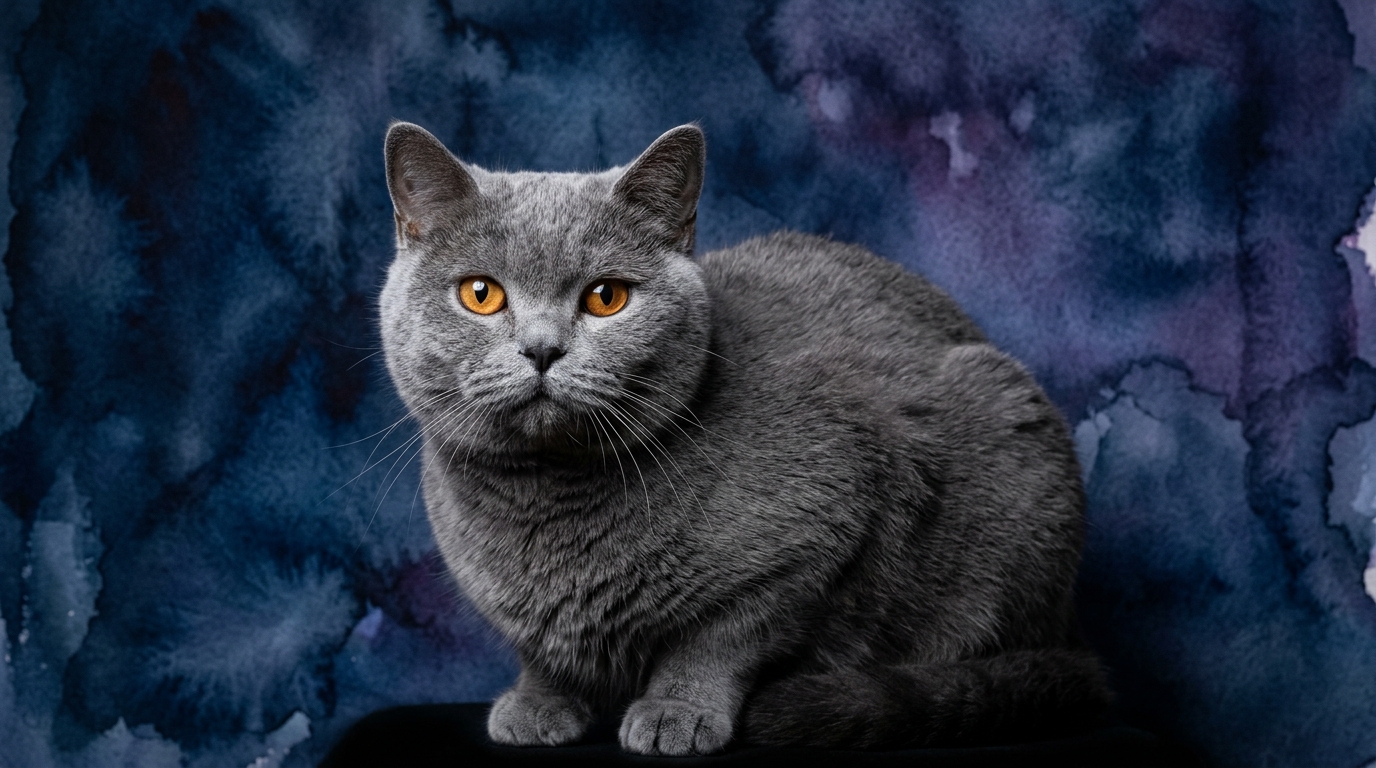
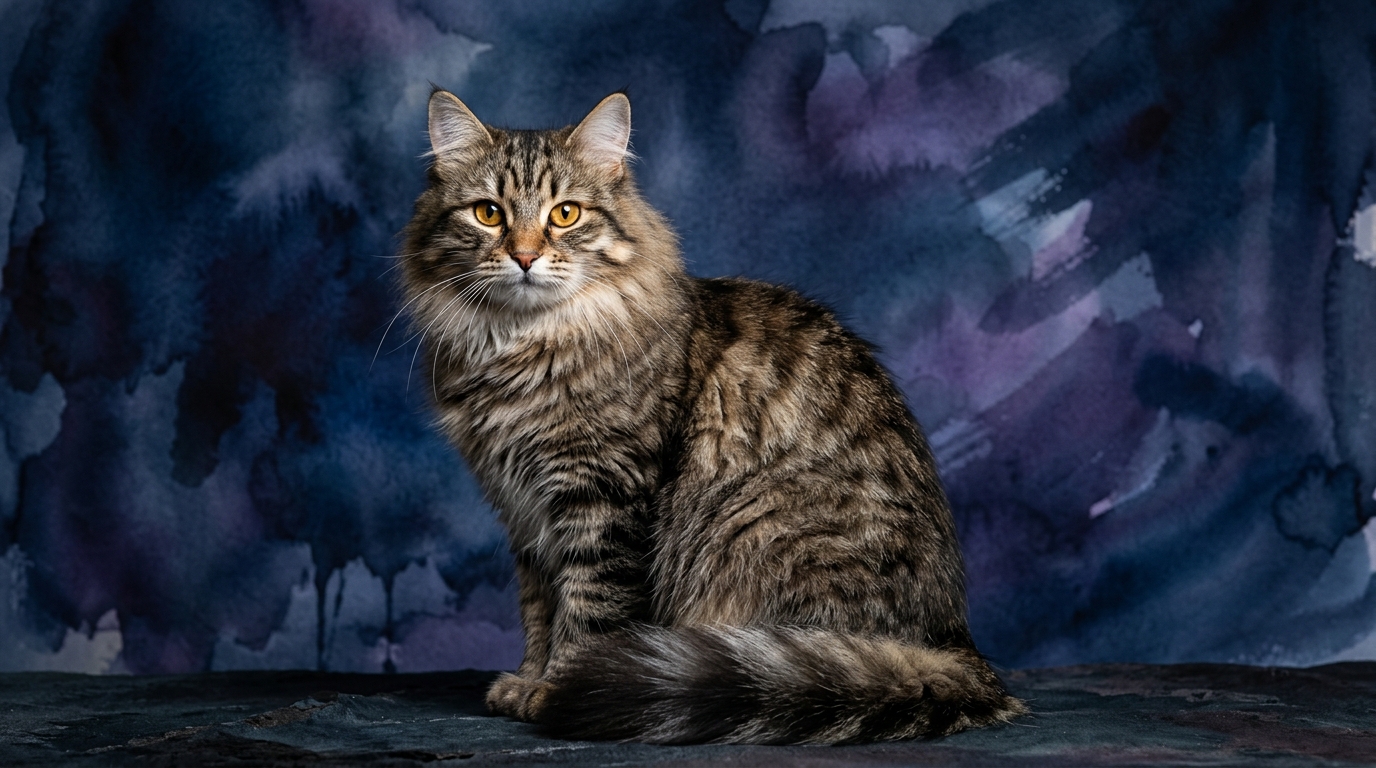
Side-by-Side IQ Profile: British Shorthair vs. Siberian
At The Cosmic Pet Pet IQ Lab, we assess feline intelligence across five key dimensions, each rated on a scale of 1 to 5. Interestingly, both the British Shorthair and the Siberian achieve a consistent 3/5 across all categories, suggesting a fundamental parity in their cognitive capacities. However, the manifestation of these scores differs remarkably between the two breeds, shaped by their distinct temperaments and evolutionary backgrounds.
For **Problem Solving (3/5)**, the British Shorthair approaches challenges with a measured, observant disposition. They are not typically prone to frantic trial-and-error but rather prefer to assess a situation from a distance, often waiting for an opportune moment or a clear path to a solution. This manifests as a thoughtful persistence, rather than immediate, energetic engagement with puzzles. The Siberian, also scoring 3/5, tends to be more hands-on and exploratory. Their innate curiosity often drives them to physically investigate new objects or obstacles, using their paws and mouths to manipulate items. They exhibit a playful determination, frequently returning to a puzzle with renewed vigor after a short break, rather than simply observing.
In **Training Speed (3/5)**, the British Shorthair's score indicates a capacity to learn new behaviors and routines, though often at their own pace. Their independent nature means they may require consistent, positive reinforcement and an understanding of their motivations. They are capable of mastering tricks or house rules, but their engagement is often predicated on their interest and the perceived value of the reward, rather than a strong desire to please. Siberians, also at 3/5, often appear more receptive to training due to their social inclination and eagerness to interact with their human companions. While their learning curve is similar, their higher motivation for companionship and play can make training sessions feel more engaging and productive. They respond well to reward-based methods, particularly those that involve interactive play.
Regarding **Social Intelligence (3/5)**, the British Shorthair's score manifests as a calm, affectionate presence. They are adept at reading human moods and often offer quiet companionship, choosing to be near their favored people without being overly demanding. Their social interactions are typically gentle and reserved, indicating an understanding of social cues without the need for constant engagement. Siberians share the 3/5 social intelligence score, but their expression is often more demonstrative and interactive. They form strong bonds with their families, frequently seeking out interaction, purring, and 'talking' in trills and chirps. Their social acumen allows them to integrate well into busy households, often participating in family activities and showing empathy towards their human counterparts.
The **Instinctive Drive (3/5)** for the British Shorthair exhibits a moderate level of natural predatory behaviors. While they enjoy play that simulates hunting, their focus is often on stalk-and-pounce rather than sustained, energetic pursuit. Their instincts are present but typically tempered by their calm demeanor, leading to bursts of activity interspersed with long periods of rest and observation. The Siberian's 3/5 instinctive drive is often channeled into more vigorous and extended play sessions. Their heritage as skilled hunters in harsh environments means they possess a robust prey drive, even if domesticated. This manifests as enthusiastic chasing, climbing, and exploring, making interactive toys that mimic prey particularly appealing and stimulating for their cognitive engagement.
Finally, for **Memory (3/5)**, the British Shorthair's score allows them to recall routines, preferred resting spots, and the locations of their favorite toys or food sources. They remember positive and negative interactions, influencing their future behavior. Their memory is reliable for day-to-day life, contributing to their predictable and stable temperament within a familiar environment. Siberians, also scoring 3/5 in memory, demonstrate a strong recall for complex pathways, social interactions, and learned behaviors. Their memory supports their exploratory nature, allowing them to navigate new territories and remember where interesting scents or objects were found. They also retain social cues and training commands effectively, reinforcing their capacity for interactive learning.
Where the British Shorthair Wins Cognitively
While both breeds share identical scores, the British Shorthair's unique expression of its cognitive traits offers distinct advantages in specific scenarios. Their 3/5 problem-solving, coupled with their calm, observant nature, means they excel in environments that reward patience and careful consideration. They might not immediately pounce on a puzzle feeder but will often devise a more efficient, less energetic solution after a period of quiet assessment. This thoughtful approach can lead to consistently accurate outcomes in familiar tasks, where their memory of past successful strategies guides their actions. Their 3/5 social intelligence, expressed as dignified companionship, also makes them particularly adept at perceiving subtle shifts in household dynamics, providing quiet comfort without demanding attention. They are masters of the 'quiet presence,' often seeming to absorb and respond to their environment with a subtle, yet profound, understanding.
Where the Siberian Wins Cognitively
Conversely, the Siberian's interpretation of its 3/5 cognitive profile gives it an edge in different contexts. Their problem-solving, though numerically identical, is characterized by a more active and tenacious exploration. This means they are often quicker to engage with new challenges, willing to experiment with various approaches to unlock a puzzle or reach a high perch. Their robust 3/5 instinctive drive fuels this curiosity, making them persistent in their endeavors, often outlasting a more reserved feline in a stimulating environment. Furthermore, their demonstrative 3/5 social intelligence allows them to quickly pick up on human intentions and cues, often seeming to anticipate their owner's next move. This makes them particularly adept at interactive games and activities, where their quick processing of social feedback enhances their participation and enjoyment.
Which is Easier to Train and Why
Evaluating ease of training when both breeds score 3/5 for training speed requires looking beyond raw learning capacity to their motivational drivers. The Siberian often presents as more amenable to training, not because they learn faster, but because their 3/5 social intelligence and desire for interaction drive them to engage more readily with their human companions. They often view training as a form of shared activity and play, making them more enthusiastic participants in sessions involving positive reinforcement and interactive rewards. Their active 3/5 instinctive drive also means they are highly motivated by play-based training or tasks that tap into their natural hunting behaviors. In contrast, the British Shorthair, despite an identical 3/5 training speed, often requires a more patient and nuanced approach. Their independent nature means they may require stronger, more consistent motivators, and training sessions might need to be shorter, catering to their preference for quiet observation over sustained, energetic engagement. While capable of learning, their cooperation is often based on their own perceived benefit rather than a strong 'people-pleasing' impulse.
Which Suits Active Owners vs. Relaxed Owners
When considering lifestyle compatibility, the nuances of their identical 3/5 instinctive drives become apparent. The Siberian, with its robust and exploratory expression of this drive, is a better fit for active owners. Their need for vigorous play, climbing, and mental stimulation means they thrive in environments where they can engage in extended interactive games, explore cat trees, or even participate in harness training and outdoor adventures. Their active 3/5 problem-solving and social intelligence mean they enjoy being involved in household activities and appreciate owners who provide ample opportunities for physical and mental enrichment. Conversely, the British Shorthair, whose 3/5 instinctive drive is more tempered and focused on observational play, is an ideal match for relaxed owners. They are content with bursts of activity followed by long periods of quiet contemplation, appreciating a calm home environment where they can leisurely survey their surroundings from a comfortable perch. Their 3/5 social intelligence makes them a comforting, undemanding companion, perfectly suited for those who appreciate a serene presence rather than constant interaction.
The Verdict
Choose the British Shorthair if you seek a calm, thoughtful companion who offers quiet affection and thrives in a serene home environment, appreciating their measured approach to life's puzzles and their dignified presence.
Opt for the Siberian if you desire an interactive, playful, and adventurous feline partner who enjoys engaging in stimulating activities and forms strong, demonstrative bonds with their family, bringing a lively energy to the household.
🧠 Find Your Pet's IQ Score
Our Pet IQ Lab assessment covers 25+ tests across 5 cognitive dimensions — personalized to your breed.
Take the Full IQ Test →Frequently Asked Questions
Do British Shorthairs enjoy interactive toys?
Yes, British Shorthairs with their 3/5 instinctive drive appreciate interactive toys that stimulate their natural hunting behaviors, especially those that involve stalking and pouncing. They often prefer short, focused play sessions over extended, vigorous activity, enjoying the mental engagement without excessive physical exertion.
Are Siberians good with other pets?
With their 3/5 social intelligence, Siberians generally adapt well to living with other pets, often forming amicable relationships due to their friendly and tolerant nature. Their playful disposition can make them particularly good companions for other active animals, provided introductions are managed carefully.
How do these breeds show affection?
Both breeds score 3/5 in social intelligence but express affection differently. British Shorthairs typically show affection through quiet presence, gentle head rubs, and sitting nearby, while Siberians are more demonstrative, often purring loudly, "talking" with trills, and actively seeking physical interaction and play with their favored humans.