
Side-by-Side Cognitive Profiles
The Cosmic Pet Pet IQ Lab employs a five-dimensional framework to assess canine cognition, offering a granular view of each breed's mental makeup. For the Brittany, a Sporting group member with a Coren rank of #19, their profile is marked by notable strengths: Problem Solving scores 4/5, Training Speed is 4/5, Social Intelligence registers 3/5, Instinctive Drive is 3/5, and Memory shines at an impressive 5/5. This paints a picture of a capable, quick-learning companion with excellent recall.
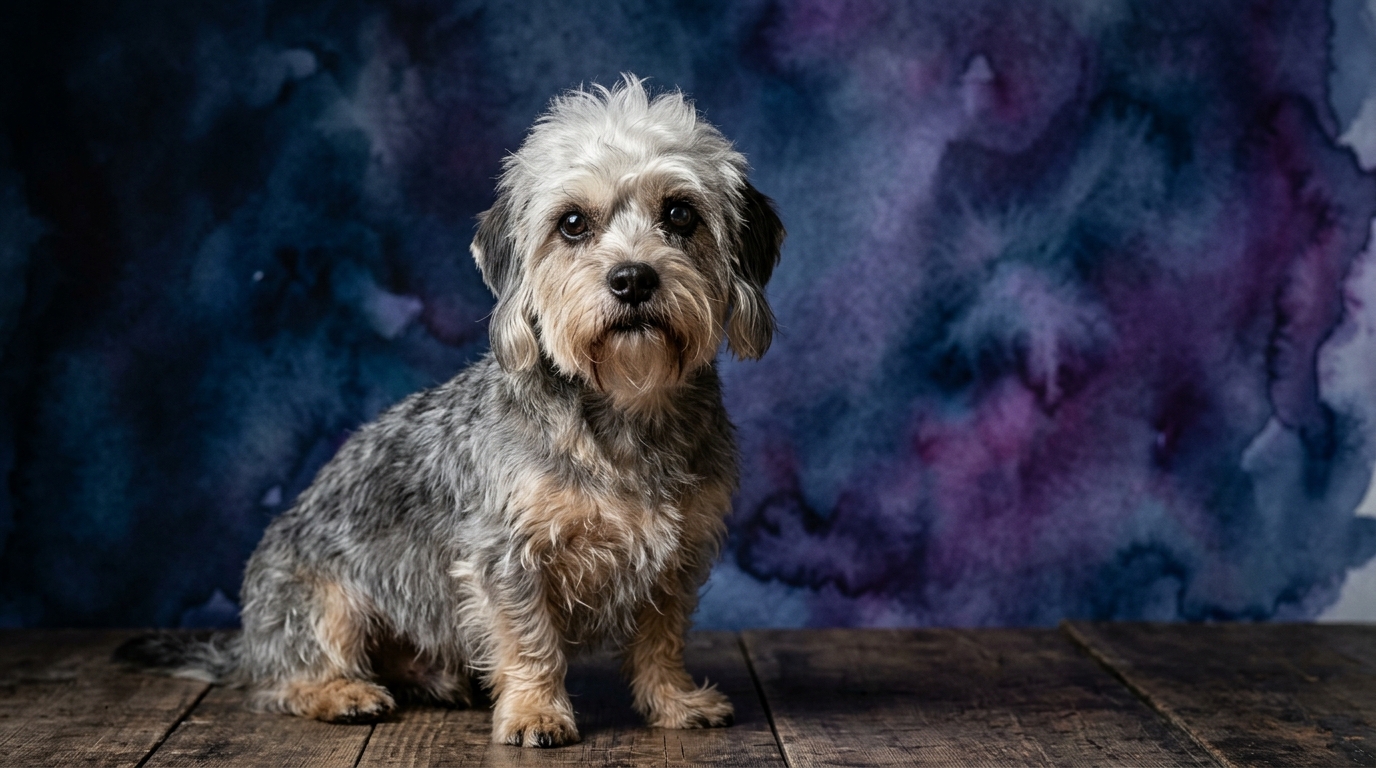
In contrast, the Dandie Dinmont Terrier, a member of the Terrier group and not Coren-ranked, presents a more balanced, albeit generally lower, cognitive profile across the board. Its Problem Solving ability is 3/5, Training Speed stands at 3/5, Social Intelligence is 3/5, Instinctive Drive is 3/5, and Memory is also 3/5. These scores suggest a dog that is competent but perhaps less naturally inclined towards complex tasks or rapid learning than its Brittany counterpart, embodying the independent spirit often associated with terriers.
Where the Brittany Excels Cognitively
The Brittany's cognitive strengths are particularly evident in its superior Problem Solving and exceptional Memory. With a 4/5 in Problem Solving, these dogs demonstrate a robust capacity to navigate novel situations and figure out solutions, whether it's locating a hidden toy or discerning the sequence of actions required to open a gate. This isn't just about following commands; it's about adaptive thinking and applying learned concepts to new challenges.
Perhaps the Brittany's most striking cognitive asset is its 5/5 Memory score. This isn't merely remembering basic commands, but rather retaining complex sequences of actions, spatial layouts, and specific scent profiles over extended periods. For a breed developed to hunt, this profound memory allows them to recall the location of fallen game, remember intricate field patterns, and associate specific environmental cues with desired outcomes, making them remarkably efficient and reliable working dogs in their traditional roles and highly adaptable in a home setting for routines and rules. This strong recall also contributes significantly to their training responsiveness, as they remember lessons quickly and durably.
Where the Dandie Dinmont Terrier Shines Cognitively
While the Dandie Dinmont Terrier’s individual cognitive scores are generally lower than the Brittany's, its profile of 3/5 across all dimensions speaks to a balanced and persistent intelligence, characteristic of its terrier heritage. Their 3/5 in Problem Solving indicates a practical, rather than purely analytical, approach to challenges. They might not quickly devise the most elegant solution, but they will often employ tenacity and a trial-and-error method until a resolution is found. This persistence, driven by a moderate instinctive drive (3/5), allows them to focus intensely on a task, especially if it involves digging or tracking, which were their original purposes.
The Dandie Dinmont’s 3/5 in Social Intelligence, while matching the Brittany, often manifests as a discerning and self-assured interaction style. They are capable of understanding human cues, but are less prone to being overly eager to please, preferring a relationship built on mutual respect. Their moderate scores across the board suggest a dog that is neither overly complex nor simplistic in its thinking, but rather one that is sufficiently capable and robustly independent, valuing self-reliance and purposeful action over constant instruction. Their cognitive profile supports a dog that is adaptable and resourceful within its own sphere, making them charmingly clever in their own unique way.
Training Dynamics: Brittany vs. Dandie Dinmont
When it comes to ease of training, the Brittany holds a distinct advantage, primarily due to its 4/5 Training Speed and exceptional 5/5 Memory. Brittanys absorb new commands and routines with remarkable alacrity, often grasping concepts in fewer repetitions than many other breeds. Their eagerness to engage and their ability to recall complex sequences of actions mean that consistency in training yields rapid and lasting results. They thrive on positive reinforcement and clear directives, quickly forming associations between actions and rewards. Their relatively moderate instinctive drive (3/5) is channelled effectively into cooperative tasks, making them highly trainable for advanced obedience, agility, or field work.
The Dandie Dinmont Terrier, with its 3/5 Training Speed and 3/5 Memory, presents a different training dynamic. They are capable of learning, but typically require more patience and consistency. Their learning curve is steadier, and while they will eventually master commands, the process might involve more repetition and creative motivation. A key behavioral difference lies in their inherent terrier independence; Dandies are less inclined to perform simply for human approval and might weigh their own perceived benefits. Training a Dandie often requires understanding their specific drives, like a desire to chase or dig, and channeling these into acceptable outlets rather than trying to suppress them entirely. Early socialization and consistent, positive reinforcement are crucial to building a cooperative relationship, acknowledging their self-assured nature.
Matching Breeds to Lifestyles: Active vs. Relaxed Owners
For active owners, especially those who enjoy outdoor pursuits, dog sports, or hunting, the Brittany is often an ideal match. Their high Problem Solving (4/5) and Memory (5/5) make them excellent candidates for advanced training in activities like agility, flyball, or scent work, where quick thinking and recall are paramount. Their moderate instinctive drive (3/5) means they are driven but also capable of focus, while their 3/5 social intelligence allows them to integrate well into family life after a vigorous day. They require significant physical exercise and mental stimulation to prevent boredom and channel their considerable energy positively, thriving in environments where they have a 'job' to do or plenty of opportunities for exploration and engagement.
The Dandie Dinmont Terrier, while not a sedentary breed, generally suits owners with a more relaxed yet consistent lifestyle. Their balanced cognitive profile (all 3/5 scores) suggests they are not as demanding in terms of high-intensity cognitive work or endless physical exertion as the Brittany. They enjoy regular walks and mental engagement, but their needs are typically met with moderate daily activity rather than intense, prolonged challenges. Their independent streak means they appreciate their own space and might be content observing rather than constantly participating. Owners who appreciate a dog with a distinctive personality, a bit of terrier tenacity, and who are prepared for consistent, patient training will find a rewarding companion in the Dandie Dinmont, particularly those who prefer a dog that is self-reliant but still affectionate.
The Verdict: When to Choose Each Breed
Choosing between a Brittany and a Dandie Dinmont Terrier ultimately depends on an owner's lifestyle, training philosophy, and expectations for a canine companion's cognitive engagement. Both breeds offer unique joys, but their mental makeups guide them towards different types of interactions and environments.
The Brittany is a superb choice for individuals or families seeking an energetic, highly trainable, and cognitively agile dog that excels in structured activities and outdoor adventures. Their superior memory and problem-solving skills make them adept learners and capable partners for advanced training, dog sports, or field work, demanding owners who can consistently provide both physical exertion and mental challenges. They flourish in environments where their sharp minds and athletic bodies are regularly put to good use, offering a dynamic and engaged companionship.
Conversely, the Dandie Dinmont Terrier is well-suited for owners who appreciate a dog with a distinct, self-possessed character and a more moderate energy level. While still requiring consistent training and regular activity, their balanced cognitive profile and terrier independence appeal to those who value a dog's resourcefulness and charming tenacity. They thrive with patient owners who understand their need for a degree of autonomy and can provide a stable, loving home where their unique personality can truly shine without the pressure of constant high-level performance.
The Verdict
Choose the Brittany if you're an active owner seeking a highly trainable, cognitively agile dog for sports, hunting, or complex tasks, valuing rapid learning and excellent memory.
Opt for the Dandie Dinmont Terrier if you prefer a self-assured, persistent companion with moderate energy, appreciating a distinct personality and a dog that thrives with consistent, patient guidance.
🧠 Find Your Pet's IQ Score
Our Pet IQ Lab assessment covers 25+ tests across 5 cognitive dimensions — personalized to your breed.
Take the Full IQ Test →Frequently Asked Questions
Is the Brittany difficult to live with due to its high cognitive scores?
Not necessarily. While Brittanys possess high cognitive abilities and energy, this translates to a desire for mental and physical engagement. With sufficient outlets for their intelligence and athleticism, they are typically well-adjusted and delightful companions, rather than being 'difficult'.
Do Dandie Dinmont Terriers require less training because their IQ scores are lower?
No, Dandie Dinmont Terriers still require consistent training and socialization. Their scores indicate a different learning style, often needing more patience and repetition, and a recognition of their independent terrier spirit, rather than a lack of need for training.
How does 'Instinctive Drive' differ between these two breeds?
Both breeds score 3/5 in Instinctive Drive, but it manifests differently; for the Brittany, it often aligns with retrieving and pointing, making them driven in field work. For the Dandie Dinmont, it typically translates to a strong drive for digging, chasing small prey, and independent exploration, characteristic of a terrier's historical role.