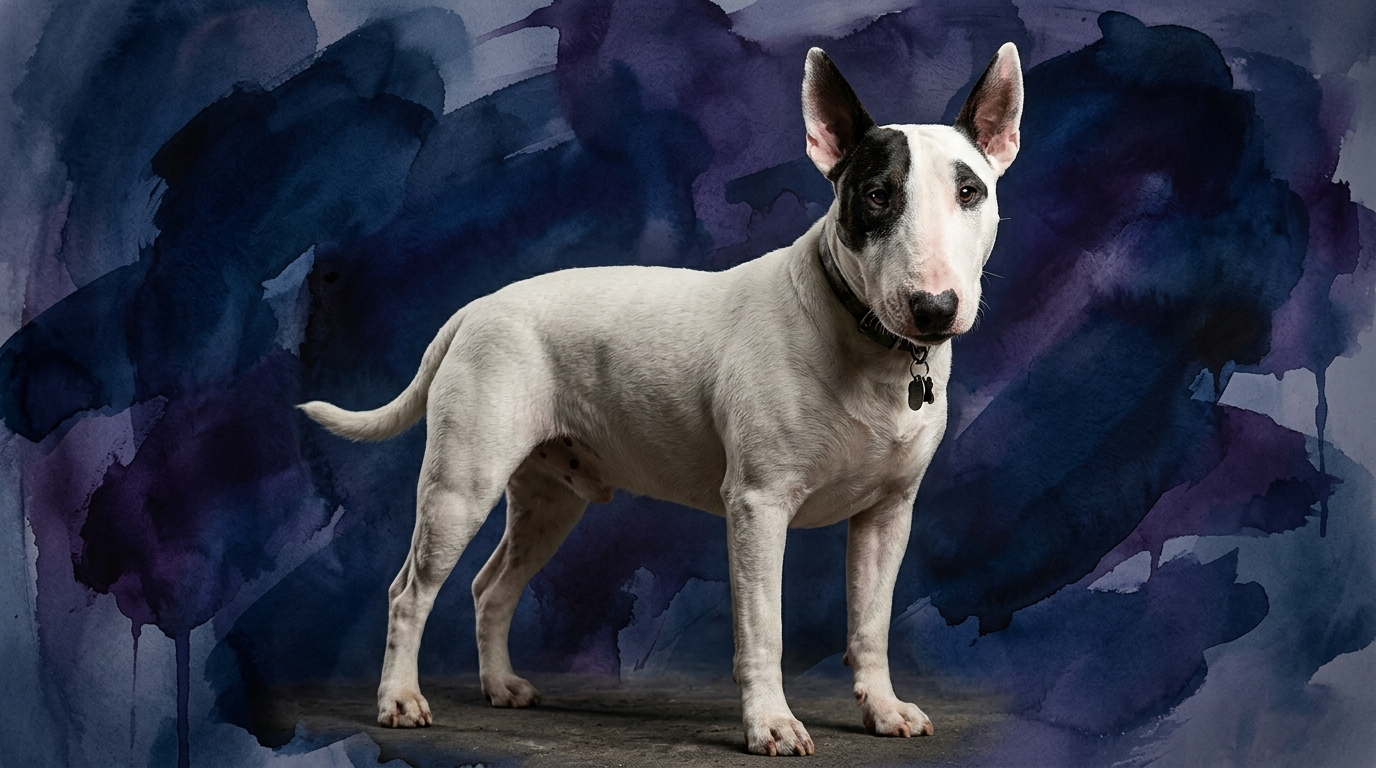

Side-by-side IQ profile
The Cosmic Pet Pet IQ Lab assesses canine intelligence across five critical dimensions, each scored on a 1-5 scale. For the Bull Terrier, our data indicates a Coren rank of #66, with Problem Solving at 3/5, Training Speed at 3/5, Social Intelligence at 3/5, Instinctive Drive at 3/5, and Memory at 3/5. A Bull Terrier often approaches challenges with a determined, sometimes brute-force persistence; their problem-solving isn't always about intricate planning but rather a steadfast resolve to achieve a goal, whether it's figuring out how to retrieve a toy from under furniture or navigating a complex yard. This score reflects their ability to learn from experience and adapt strategies, even if it takes a few attempts. They absorb new commands and routines at a moderate pace, exhibiting a clear capacity for learning, but their independent streak means consistent, positive reinforcement is crucial to maintain engagement and ensure rapid retention. These dogs demonstrate a solid understanding of social cues within their immediate family unit, often forming deep, affectionate bonds, and their social intelligence allows them to read moods and respond with comfort or play. The Bull Terrier carries a moderate but discernible instinctive drive, particularly a prey drive that can manifest as interest in small, fast-moving objects, also seen in their tenacity and determination when focused on a task. They possess good memory capabilities, retaining learned commands, routines, and experiences over time, contributing to their reliability in established home environments.
The Manchester Terrier, while not Coren-ranked, shows identical scores across our IQ dimensions: Problem Solving 3/5, Training Speed 3/5, Social Intelligence 3/5, Instinctive Drive 3/5, and Memory 3/5. Manchester Terriers display a keen, agile mind when faced with problems, often preferring quick, efficient solutions; their problem-solving is often tied to their observational skills, figuring out how to access a desired item or maneuver through tight spaces with a certain cleverness. This score indicates a good aptitude for navigating their environment thoughtfully. They generally pick up new commands and routines with moderate speed, often eager to please their primary handler, and their responsiveness can make them appear quick learners, especially with clear, engaging instruction, though a sensitive nature means harsh methods are counterproductive. These dogs exhibit a high degree of social awareness, finely attuned to the nuances of human emotion and intent, which allows them to integrate well into family dynamics, often becoming alert watchdogs who understand the difference between a friendly visitor and an intruder. The Manchester Terrier possesses a pronounced instinctive drive, rooted in their history as ratters, manifesting as a strong prey drive, an alert nature, and a focused determination when engaged in activities that mimic their historical roles. They have a robust memory for commands, routines, and the intricacies of their daily lives, quickly learning what is expected of them and retaining information about their environment.
Where Bull Terrier wins cognitively
While both breeds score identically across our IQ dimensions, the Bull Terrier often excels in the application of problem-solving that requires sheer persistence or overcoming physical obstacles. Their 3/5 problem-solving frequently manifests as an unwavering commitment to a task, even if it involves repeated attempts or a robust physical approach. For example, a Bull Terrier might methodically work at dislodging a deeply buried toy, rather than seeking an alternative. Their social intelligence, also rated 3/5, can translate into an intense, focused loyalty towards their core family, displaying a deep understanding of their specific human companions' needs and moods, sometimes with a clownish dedication that is unique to the breed. This isn't about general social grace, but a profound, almost stubborn devotion once a bond is formed, making them exceptional emotional anchors for their chosen people.
Where Manchester Terrier wins cognitively
The Manchester Terrier's cognitive strengths, while numerically similar, often lie in agility of thought and precision. Their 3/5 problem-solving often involves quick assessment and nimble execution, particularly in situations requiring spatial awareness or rapid decision-making, such as navigating a complex agility course or outsmarting a small critter. This breed's training speed, also 3/5, can be perceived as more immediate in certain contexts due to their inherent eagerness and desire to engage with their handler, making them highly responsive to well-timed cues and positive reinforcement. Their social intelligence (3/5) shines through their acute observational skills, allowing them to pick up on subtle changes in environment or human demeanor, often making them excellent, discerning watchdogs who understand context rather than simply reacting to noise. This quick cognitive processing and environmental awareness allow them to react with a nuanced understanding of their surroundings.
Which is easier to train and why
Determining which breed is 'easier' to train is less about raw cognitive speed—as both score 3/5 for Training Speed—and more about their inherent temperaments and how those interact with training methods. The Manchester Terrier, with its eager-to-please nature and sensitivity, often responds exceptionally well to positive reinforcement and clear, consistent commands. Their drive to engage with their handler can make them appear to learn quickly, particularly when the training is structured, fun, and avoids harsh corrections, which can make them withdraw. Their problem-solving (3/5) leans towards finding the 'right' answer to please. Conversely, the Bull Terrier, while equally capable of learning (Training Speed 3/5), possesses a renowned independent streak and strong will. This means that while they understand commands, they may choose to comply only when sufficiently motivated or if the task aligns with their own perceived interests. Training a Bull Terrier requires immense patience, consistency, and a highly rewarding approach to overcome their occasional stubbornness, leveraging their 3/5 problem-solving to figure out how to get the reward, rather than just solving the task itself. Therefore, while both are capable learners, the Manchester Terrier often presents a smoother, more immediately gratifying training experience for many owners due to their temperament, while the Bull Terrier demands a more dedicated and nuanced approach to harness its distinct personality.
Which suits active owners vs relaxed owners
The choice between a Bull Terrier and a Manchester Terrier also hinges significantly on an owner's lifestyle, despite their similar 3/5 Instinctive Drive scores. Manchester Terriers, with their heritage as swift ratters, inherently possess a higher baseline energy level and a constant need for mental and physical engagement. Their problem-solving (3/5) and instinctive drive manifest in a desire for regular, vigorous exercise, structured play, and activities like agility or earthdog trials that challenge both their bodies and minds. They thrive with active owners who enjoy daily walks, runs, and interactive games, channeling their keen intelligence and drive. A relaxed owner might find a Manchester Terrier's persistent need for activity overwhelming, potentially leading to boredom-induced behaviors. In contrast, while Bull Terriers are robust and enjoy activity, especially during their younger years, many can adapt to a more moderate exercise routine as adults. Their 3/5 instinctive drive is present, but it's often expressed through bursts of playful energy rather than a relentless need for constant motion. They still require daily walks and mental stimulation, but their social intelligence (3/5) often means they are equally content lounging with their family after a good play session. They suit owners who appreciate a strong, playful companion but might not be seeking a high-octane exercise partner every single day, as long as their need for companionship and mental engagement is met.
The Verdict
For those seeking a robust, deeply loyal companion with a unique, sometimes clownish personality, who are prepared to offer consistent, positive guidance to navigate a strong-willed yet affectionate nature, the Bull Terrier is an exceptional choice.
If you desire an agile, keen, and highly responsive partner for active pursuits like dog sports, appreciating a sensitive yet determined temperament that thrives on engagement and structure, the Manchester Terrier will be a rewarding addition to your life.
🧠 Find Your Pet's IQ Score
Our Pet IQ Lab assessment covers 25+ tests across 5 cognitive dimensions — personalized to your breed.
Take the Full IQ Test →Frequently Asked Questions
Are Bull Terriers stubborn to train?
While Bull Terriers possess a 3/5 training speed, their strong-willed nature can make them appear stubborn; consistent, positive reinforcement is key to engaging their 3/5 problem-solving skills effectively.
Do Manchester Terriers need a lot of exercise?
Yes, Manchester Terriers have a 3/5 instinctive drive and thrive on regular, vigorous exercise and mental stimulation, reflecting their active ratter heritage and agile problem-solving.
Which breed is better with children?
Both breeds, with proper socialization and training, can be good family dogs; the Bull Terrier's robust nature and the Manchester Terrier's sensitivity mean interactions should always be supervised, leveraging their 3/5 social intelligence to understand family dynamics.