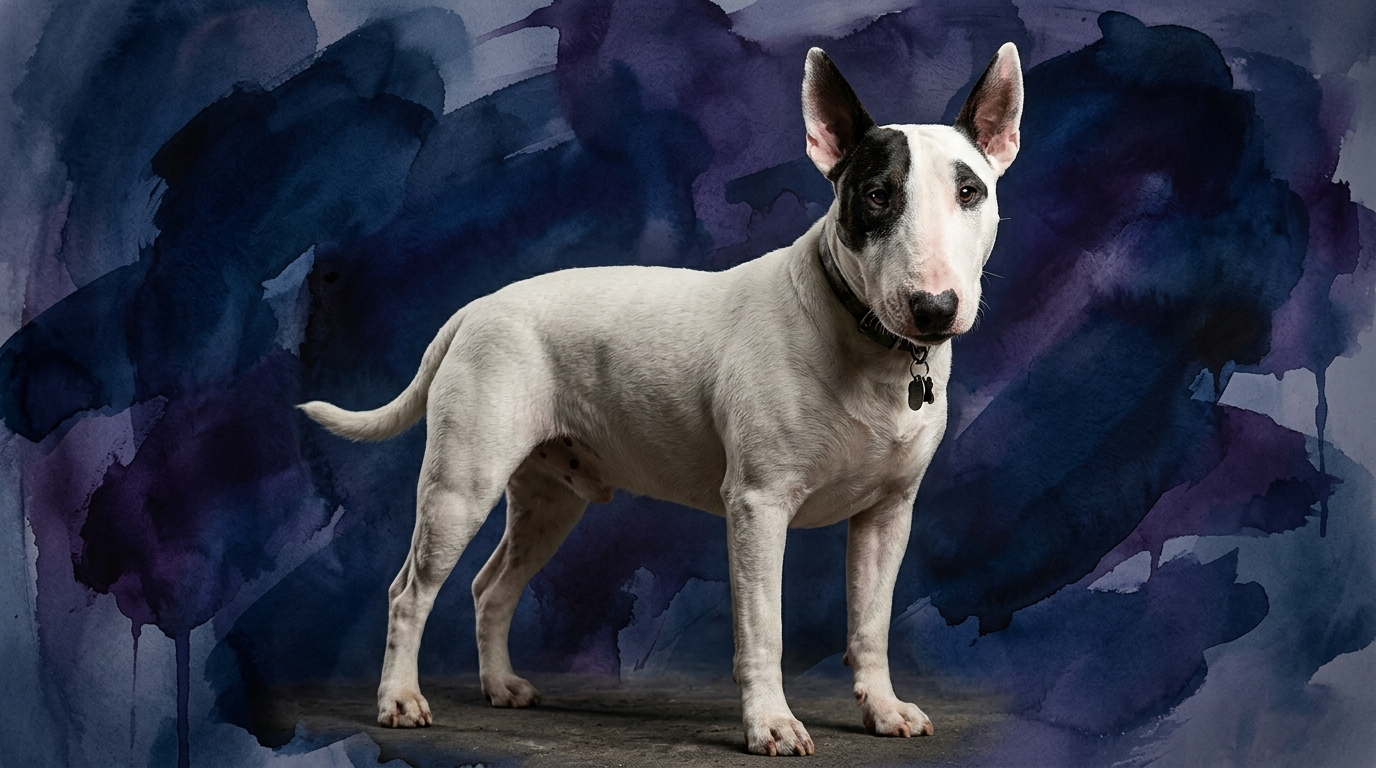

Side-by-Side Cognitive Profiles
The Cosmic Pet Pet IQ Lab assesses canine intelligence across five critical dimensions, providing a nuanced understanding beyond simple obedience. For both the Bull Terrier and the Norfolk Terrier, our data reveals consistent scores of 3/5 across the board, indicating capable but distinct cognitive approaches.
**Bull Terrier (Coren Rank #66)**: This breed demonstrates a Problem Solving score of 3/5, often tackling challenges with robust determination, sometimes relying on physical manipulation and sheer will. Their Training Speed, also 3/5, suggests they learn effectively with consistent, engaging methods that appeal to their independent streak. Social Intelligence at 3/5 means they form deep bonds and read their family's cues well, though they can be reserved with outsiders. An Instinctive Drive of 3/5 highlights their inherent terrier tenacity and prey drive, requiring appropriate outlets. Their Memory, rated 3/5, indicates good retention of learned behaviors and experiences.
**Norfolk Terrier (Not Coren-Ranked)**: The Norfolk Terrier also scores 3/5 in Problem Solving, often approaching puzzles with an agile mind, using quick assessment and cunning to navigate situations. Their Training Speed of 3/5 means they respond well to positive reinforcement and mental stimulation, picking up tasks at a steady pace. Social Intelligence at 3/5 allows them to adapt well to various social settings, interacting politely while maintaining their terrier confidence. Their Instinctive Drive, 3/5, manifests as classic terrier curiosity and a keen interest in exploring and chasing. A Memory score of 3/5 ensures they retain commands, routines, and boundaries effectively, contributing to their reliability.
Where the Bull Terrier Shines Cognitively
The Bull Terrier's cognitive strengths often lie in their formidable persistence and capacity for focused determination. Their 3/5 Problem Solving score, when combined with their physical prowess, means they are adept at tasks requiring sustained effort or overcoming physical barriers. For instance, a Bull Terrier might spend an impressive amount of time figuring out how to retrieve a toy from under furniture, not through subtle strategy but through persistent nudging, pushing, and perhaps a bit of brute force. Their social intelligence, while not overly effusive, translates into a profound loyalty and protective instinct for their inner circle; they excel at understanding the subtle emotional states of their chosen family members and responding with steadfast devotion. This breed's memory helps them retain complex routines, making them excellent companions for owners who establish clear, consistent structures and activities.
Where the Norfolk Terrier Excels Intellectually
The Norfolk Terrier's cognitive advantages often stem from their adaptability and keen observational skills. Their 3/5 Problem Solving score is frequently demonstrated through their ability to quickly assess and navigate complex environments, such as finding the quickest route through a cluttered room or figuring out how to open a slightly ajar cabinet door with nimble paws. Their social intelligence, also 3/5, allows them to blend seamlessly into various family dynamics and social situations, often making new friends with a confident yet charming demeanor. This adaptability makes them particularly good at picking up on subtle changes in household routines or anticipating human intentions. Their instinctive drive, while moderate, fuels a curious nature that makes them excellent explorers and quick learners when presented with novel stimuli, often remembering intricate scent trails or hidden toy locations with precision.
Ease of Training: Behavioral Differences in Focus
When considering ease of training, the identical 3/5 Training Speed scores for both breeds do not tell the whole story; their underlying temperaments drive distinct behavioral approaches. The Bull Terrier, with its powerful build and independent spirit, can present unique training challenges. While capable of learning, their stubborn streak means that training must be consistent, engaging, and always perceived as a rewarding endeavor from their perspective. They may test boundaries more frequently, requiring an owner who can maintain firm, fair leadership without resorting to harsh methods, focusing instead on positive reinforcement and channeling their strong will. Their physical strength also means early leash training and impulse control are paramount.
The Norfolk Terrier, while also possessing a classic terrier independence, often responds more readily to positive reinforcement and reward-based training due to their inherent curiosity and desire to engage. Their smaller size makes them physically easier to manage, but their intense prey drive and exploratory instincts mean they can be easily distracted by scents or movement. Training a Norfolk requires patience and creativity to keep them mentally stimulated and focused, especially on recall commands, as their natural inclination might be to follow an interesting trail rather than return immediately. Neither breed is inherently 'easier' in a passive sense; both demand thoughtful, consistent, and engaging training from their human companions.
Lifestyle Fit: Active Owners vs. Relaxed Owners
The distinction between these two terriers becomes clearer when considering owner lifestyle. The Bull Terrier, despite its moderate IQ scores, requires a significantly active and engaged owner. Their substantial energy levels and robust physique demand extensive daily exercise, including vigorous play, long walks, or structured activities like agility or obedience training. They thrive on mental stimulation and a clear routine, making them suitable for active individuals or families who enjoy outdoor adventures and can provide consistent leadership and training. A relaxed or sedentary owner might find a Bull Terrier's need for activity overwhelming, potentially leading to boredom-induced behaviors.
The Norfolk Terrier, while undeniably a spirited terrier, is more adaptable to a slightly less intensely active lifestyle, though still far from 'relaxed.' They require regular walks, engaging playtime, and mental challenges to prevent boredom, but their smaller size means they can often meet their exercise needs with robust indoor play combined with daily outdoor excursions. They are well-suited for owners who enjoy consistent, moderate activity and can provide plenty of interactive games and companionship. While they love to explore, they are also content to cuddle up after a good romp, making them a good fit for owners who appreciate a balance of activity and quiet companionship, provided their mental and physical needs are met daily.
The Verdict: Choosing Your Companion
The Verdict
Choose the Bull Terrier if you are an active, experienced owner ready to provide consistent training, robust exercise, and appreciate a powerful, loyal companion with a determined spirit and a strong will. They thrive with clear leadership and structured engagement.
Opt for the Norfolk Terrier if you seek a spirited, adaptable, and compact companion with a keen mind and an adventurous streak, suitable for owners who enjoy moderate daily activity and can provide consistent mental stimulation and positive reinforcement.
🧠 Find Your Pet's IQ Score
Our Pet IQ Lab assessment covers 25+ tests across 5 cognitive dimensions — personalized to your breed.
Take the Full IQ Test →Frequently Asked Questions
Do Bull Terriers and Norfolk Terriers get along with other pets?
Both breeds, with their moderate social intelligence and instinctive drives, can coexist with other pets, especially if introduced and socialized from an early age. However, their inherent terrier prey drive means supervision is always advisable, particularly with smaller animals.
Are Bull Terriers or Norfolk Terriers better for first-time dog owners?
Neither breed is typically recommended for first-time dog owners without a strong commitment to training and understanding terrier temperaments. Both require consistent leadership, early socialization, and an owner prepared to manage their independent and sometimes stubborn natures.
How much mental stimulation do these breeds need daily?
Both Bull Terriers and Norfolk Terriers, with their 3/5 IQ scores across dimensions, require significant daily mental stimulation to prevent boredom. This can include puzzle toys, training sessions, interactive games, and opportunities for exploration, complementing their physical exercise needs.