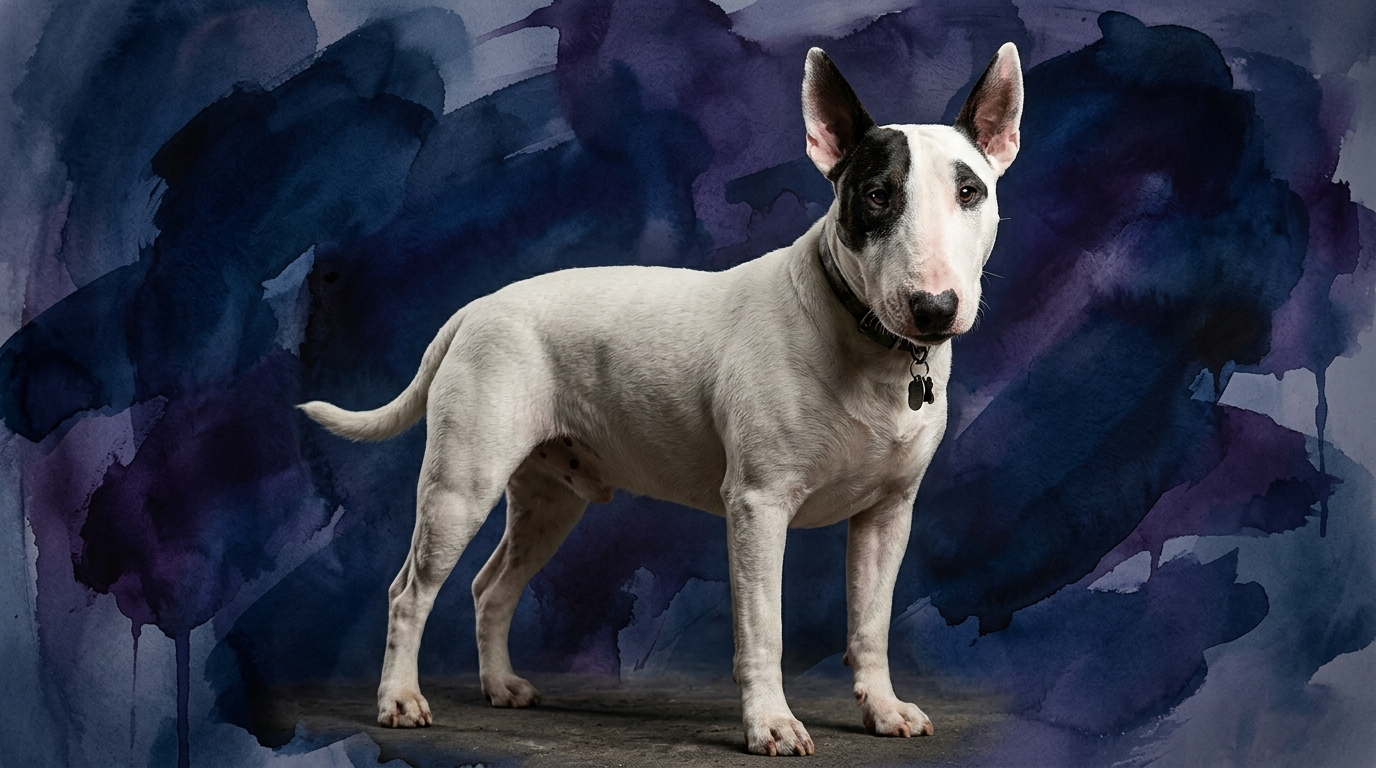
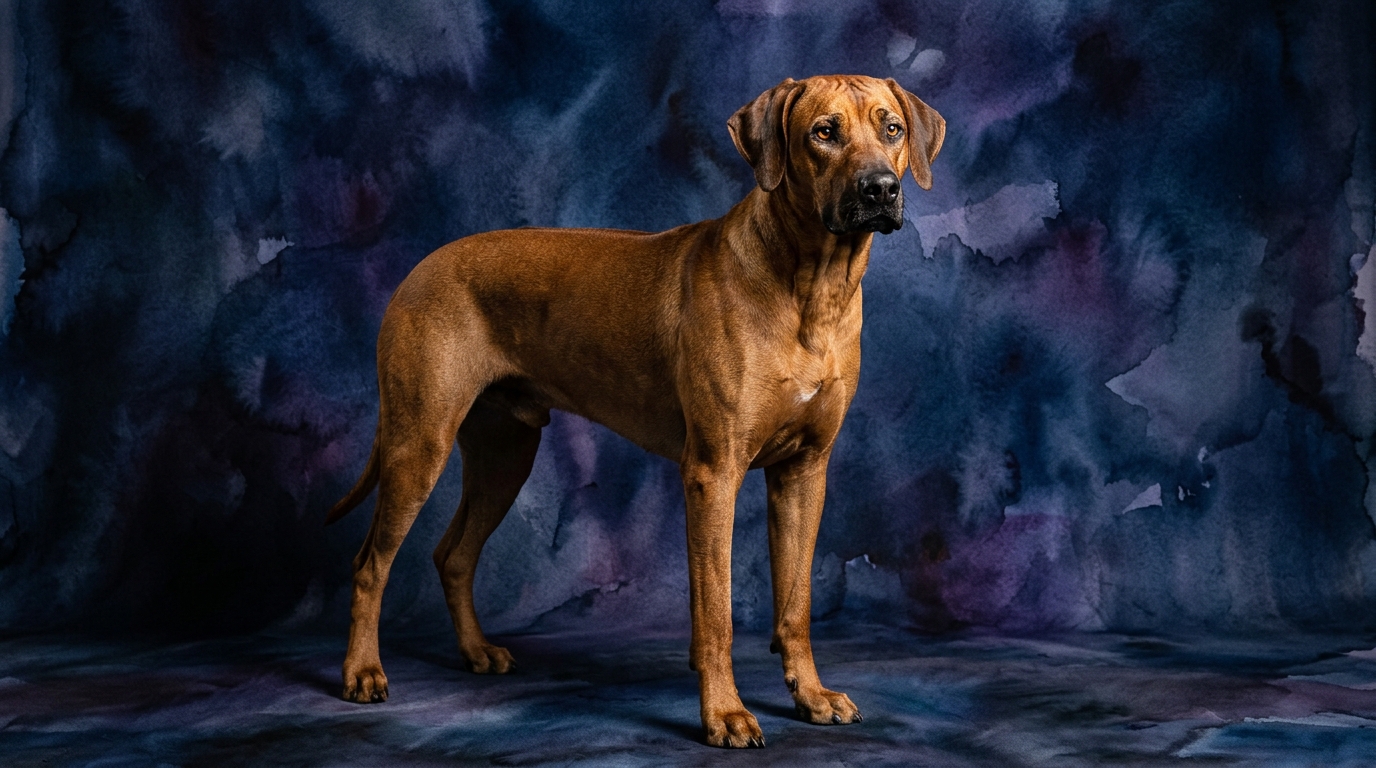
Side-by-Side Cognitive Profiles: Bull Terrier vs. Rhodesian Ridgeback
At The Cosmic Pet Pet IQ Lab, we assess canine intelligence across five critical dimensions. Interestingly, both the Bull Terrier (Coren Rank #66) and the Rhodesian Ridgeback (Coren Rank #52) achieve identical 3/5 scores across all our metrics, suggesting a robust baseline of cognitive ability that unfolds differently through the lens of their unique breed histories and temperaments.
For the **Bull Terrier**:
**Problem Solving (3/5):** Bull Terriers often approach challenges with a unique blend of persistence and a dash of playful mischief. Their problem-solving isn't always about direct obedience but about finding the most entertaining or self-serving solution, often requiring owners to be clever in their puzzle designs.
**Training Speed (3/5):** They learn commands at a moderate pace, but their independent spirit means consistency and positive reinforcement are paramount. They might understand quickly but choose to comply on their own terms if not properly motivated.
**Social Intelligence (3/5):** Bull Terriers are generally affable and enjoy interaction, but their social cues can sometimes be boisterous or direct. They read human emotions adequately but may prioritize their own playful agenda in social settings.
**Instinctive Drive (3/5):** Their terrier heritage means a significant drive for digging, chasing, and engaging with the environment. This drive, while not always predatory in a practical sense, fuels their exploration and can be channeled into constructive activities.
**Memory (3/5):** They possess a good memory for routines, people, and learned commands. Once a behavior or person is ingrained, it tends to stick, though their independent streak might make it seem like they've forgotten if motivation is lacking.
For the **Rhodesian Ridgeback**:
**Problem Solving (3/5):** Rhodesian Ridgebacks demonstrate a thoughtful approach to problems, often assessing situations before acting. Their historical role as hunters suggests a strategic problem-solving style, particularly in navigating complex environments or tracking.
**Training Speed (3/5):** They learn new tasks and commands at a moderate rate, similar to the Bull Terrier. However, their training is often more about building a strong partnership and respect, as they can be quite independent and require a clear purpose.
**Social Intelligence (3/5):** Ridgebacks exhibit a more reserved form of social intelligence, often observing and assessing new people or situations before engaging. They form deep bonds with their family and are attuned to their household's emotional climate, though they may not display overt exuberance with strangers.
**Instinctive Drive (3/5):** Their strong instinctive drive stems from their sighthound and guardian background, manifesting as a keen awareness of their surroundings, a strong prey drive for moving objects, and a natural protective instinct towards their family.
**Memory (3/5):** Ridgebacks have a reliable memory for training, routines, and the people and places they encounter. Their capacity to remember specific scents or visual cues from hunting scenarios suggests a robust recall capability.
Where the Bull Terrier Excels Cognitively
While both breeds share identical 3/5 scores across our Pet IQ Lab's cognitive dimensions, the Bull Terrier's terrier tenacity and unique approach to independence give it a distinct edge in certain areas. Their problem-solving, for instance, often manifests as a relentless, creative pursuit of a goal, even if it's just reaching a hidden toy or figuring out how to open a cabinet. This isn't always about following rules but about innovative, sometimes mischievous, determination. Their social intelligence, though rated similarly, often comes with an overt, clownish charm that can disarm and engage humans in a unique way, making them particularly adept at eliciting specific reactions or attention through their antics. Furthermore, their instinctive drive, rooted in chasing and digging, translates into an enduring focus on tasks that engage these primal urges, offering a cognitive advantage in persistence for self-selected 'missions'.
Where the Rhodesian Ridgeback Shows Cognitive Strengths
Conversely, the Rhodesian Ridgeback's cognitive strengths shine in different, equally compelling ways, despite matching 3/5 scores. Their problem-solving often involves a more measured, strategic assessment of their environment, a trait honed by their history as independent hunters tracking dangerous game. This translates into an ability to navigate complex situations with a calm deliberation that differs from the Bull Terrier's energetic approach. Their social intelligence, while reserved, allows for a sophisticated understanding of subtle human cues and household dynamics, enabling them to act as discerning guardians who are deeply attuned to their family's needs without constant overt displays. The Ridgeback's instinctive drive, particularly its heightened sensory awareness and protective instincts, provides a cognitive advantage in environmental monitoring and discerning threats, showcasing a practical intelligence geared towards vigilance and discernment rather than playful engagement.
Training Dynamics: Which is Easier and Why?
Both breeds carry a 3/5 rating for Training Speed, suggesting they learn at a similar pace, but the *ease* of training can differ significantly due to their intrinsic motivations and independence. The Rhodesian Ridgeback, while independent, often responds well to consistent, fair leadership and positive reinforcement rooted in partnership. Their historical role required them to make independent decisions but also to work in concert with humans, fostering a trainable mindset when the purpose is clear and rewarding. They can be stubborn, especially if they don't see the point, but once motivated, they demonstrate a focused effort.
The Bull Terrier, on the other hand, possesses a strong-willed, sometimes mischievous, terrier temperament that can make training feel more like a negotiation. While they grasp concepts, their compliance often hinges on whether they deem the task worthwhile or sufficiently entertaining. Their playful nature can be a distraction, and their independent streak means they might choose to 'not hear' a command if a more interesting stimulus presents itself. Therefore, while both learn, the Ridgeback's training often feels more structured and purposeful, appealing to their working drive, whereas the Bull Terrier's training requires more creativity, patience, and a sense of humor to channel their inherent exuberance and independent thought.
Matching Breeds to Owner Lifestyles: Active vs. Relaxed
Neither the Bull Terrier nor the Rhodesian Ridgeback is suitable for a truly 'relaxed' owner; both are active breeds requiring substantial engagement. For the active owner who enjoys varied outdoor pursuits and appreciates a canine companion with robust stamina, the Rhodesian Ridgeback is an exceptional fit. They thrive on long hikes, runs, and activities that challenge both their physical endurance and their keen senses, such as scent work or lure coursing. Their need for purposeful activity and mental stimulation aligns well with owners who lead an active, structured lifestyle and can provide consistent training and boundaries.
The Bull Terrier, while also requiring significant exercise, might better suit an active owner who appreciates a more playful, less overtly 'purposeful' form of activity. They enjoy energetic play sessions, interactive games, and mental puzzles that tap into their creative problem-solving and boundless energy. They need outlets for their terrier drives, such as digging pits or vigorous fetch, and benefit from owners who can provide consistent, engaging mental stimulation to prevent boredom-driven antics. Essentially, both demand active engagement, but the Ridgeback leans towards endurance and purpose-driven work, while the Bull Terrier excels in spirited play and unique mental challenges.
The Verdict
Choose a Bull Terrier if you're an owner with a good sense of humor, prepared for a creative, tenacious companion who thrives on playful interaction and unique problem-solving, offering unwavering loyalty with a dash of clownish charm.
Opt for a Rhodesian Ridgeback if you seek a dignified, thoughtful companion for active, structured living, valuing a strong, independent partner for outdoor adventures and a discerning guardian with a deep, reserved bond.
🧠 Find Your Pet's IQ Score
Our Pet IQ Lab assessment covers 25+ tests across 5 cognitive dimensions — personalized to your breed.
Take the Full IQ Test →Frequently Asked Questions
Do Bull Terriers and Rhodesian Ridgebacks require the same amount of exercise?
While both are active, their exercise needs differ in quality. Ridgebacks generally require more sustained, purposeful physical activity like long runs or hikes to satisfy their endurance and working drives. Bull Terriers need vigorous bursts of play and mental challenges, though their overall stamina for continuous, long-distance activity might be less than a Ridgeback's.
How do their social interaction styles differ with strangers?
Bull Terriers tend to be more overtly friendly or playfully boisterous with strangers, often seeking attention with their characteristic charm. Rhodesian Ridgebacks are typically more reserved and watchful, assessing new people or situations with a calm dignity before deciding to engage, reflecting their guardian instincts.
Can both breeds live in apartments?
While not ideal, both *can* adapt to apartment living if their significant exercise and mental stimulation needs are consistently met. A Rhodesian Ridgeback would require multiple long walks or runs daily, plus mental work, whereas a Bull Terrier would need intense play sessions and puzzle toys to prevent boredom in a smaller space.