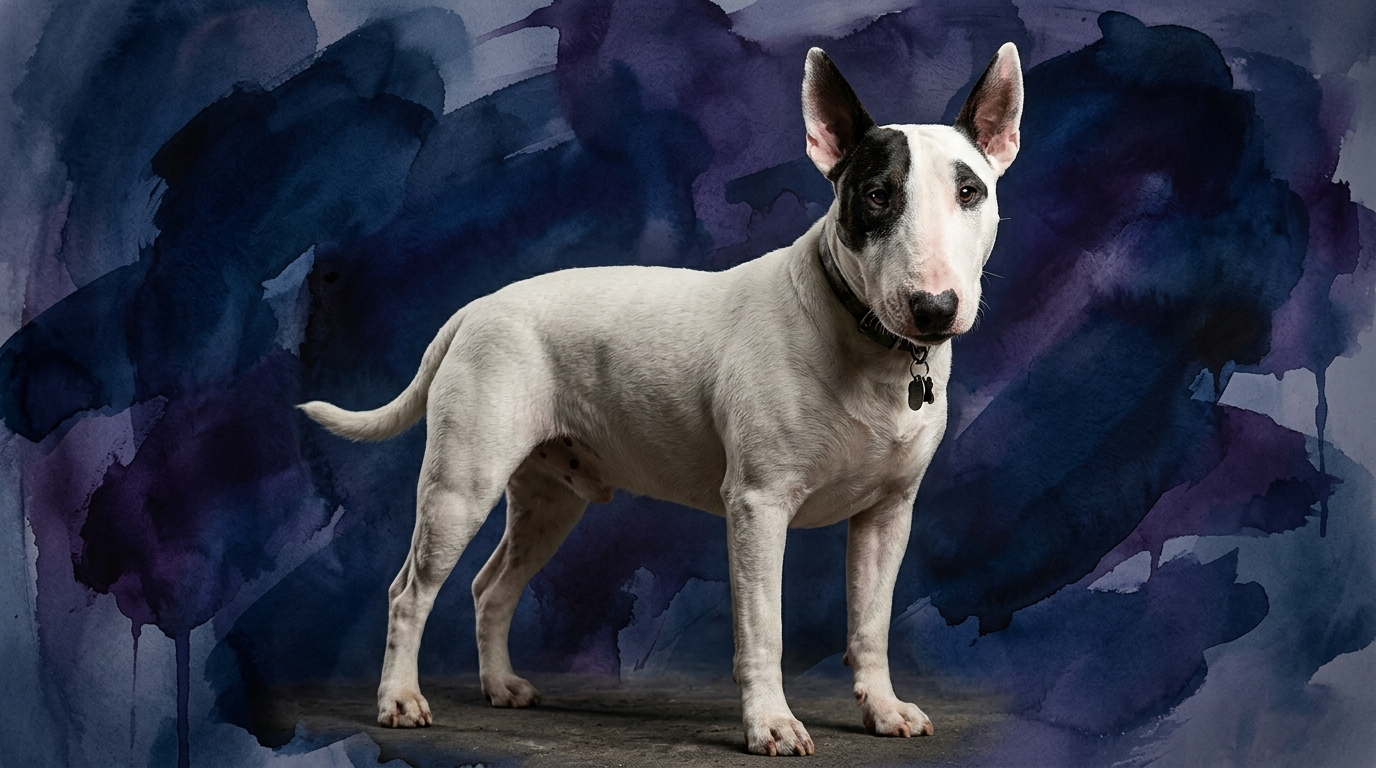

Side-by-Side Cognitive Profiles: Bull Terrier vs. Russian Toy
At The Cosmic Pet Pet IQ Lab, we assess canine intelligence across five key dimensions. Interestingly, both the Bull Terrier and the Russian Toy register a consistent 3/5 across all measured parameters, suggesting an average capacity in each area. However, the interpretation of these scores requires a deeper look into their breed-specific temperaments and historical roles. Understanding 'average' is not about limitation, but about appreciating how each breed applies these capacities within its own world.
For the Bull Terrier, a breed with a Coren rank of #66, their **Problem Solving (3/5)** often involves a resolute, sometimes stubborn approach to achieving their goals. They might methodically work through an obstacle, using their physical prowess and determination, rather than seeking the most elegant solution. Their **Training Speed (3/5)** indicates they absorb commands at an average pace, but their independent spirit means consistency and engaging methods are paramount to maintain focus and compliance. **Social Intelligence (3/5)** for a Bull Terrier frequently centers on a deep, almost singular bond with their primary human family, often displaying a reserved demeanor towards strangers and a need for careful introductions with other canines. Their **Instinctive Drive (3/5)** is rooted in their terrier heritage, manifesting as a keen interest in chasing, digging, and sometimes a strong prey drive that requires mindful management. Finally, their **Memory (3/5)** suggests they retain learned behaviors and experiences adequately, recalling routines and past interactions with a moderate degree of precision, yet they may also hold onto perceived injustices or challenging training moments.
The Russian Toy, though not Coren-ranked, presents an identical numerical profile, yet their expression of these traits is distinctly different due to their toy breed characteristics. Their **Problem Solving (3/5)** might involve navigating complex indoor environments, strategically finding hidden treats, or devising subtle ways to gain human attention, often relying on quick wits and agility rather than brute force. **Training Speed (3/5)** for a Russian Toy means they learn new cues at a moderate rate, thriving on positive reinforcement and engaging, short training sessions that cater to their sensitive nature. Their **Social Intelligence (3/5)** is typically expressed through a keen awareness of their human companions' moods, a desire to participate in family activities, and a tendency to be very attuned to household dynamics, though they can be wary of unfamiliar faces. The **Instinctive Drive (3/5)** in a Russian Toy often manifests as a strong desire for companionship, a surprising alertness to their surroundings (making them excellent little watchdogs), and sometimes a playful chase drive for small toys. Their **Memory (3/5)** allows them to recall routines, people, and pleasant or unpleasant experiences, often linking specific events to emotional outcomes, which can influence future interactions.
Where the Bull Terrier Excels Cognitively
Despite identical numerical scores, the Bull Terrier’s cognitive strengths often lie in areas requiring persistence and a certain physical boldness. Their 3/5 in Problem Solving, combined with their sturdy build, translates to a dog that can methodically overcome physical barriers or work through a puzzle toy that requires a degree of force or sustained effort. They are not easily deterred once they set their mind on something, whether it’s retrieving a specific item or figuring out how to open a gate. This tenacity, a hallmark of their terrier lineage, means they will often keep trying where a more delicate breed might give up.
The Bull Terrier's 3/5 in Instinctive Drive is channeled into a robust engagement with activities that satisfy their inherent working dog nature. This can manifest as an unwavering commitment to a game of fetch, an intense focus during scent work, or a dedicated pursuit during agility courses where strength and stamina are advantages. Their social intelligence, while sometimes reserved with strangers, allows for an incredibly deep and intuitive bond with their chosen family, enabling them to understand subtle cues and emotional states within their inner circle, often anticipating their human's desires or offering comfort without explicit prompting. This specific application of their social understanding makes them remarkably tuned into their primary caregivers.
Where the Russian Toy Excels Cognitively
The Russian Toy, conversely, showcases its 3/5 cognitive abilities in a manner befitting its companion role and small stature. Their Problem Solving, while numerically equal, often involves greater finesse and observation. They might excel at tasks requiring dexterity, such as manipulating small objects or navigating intricate obstacle courses designed for smaller dogs, using their agility and quick thinking rather than power. They are adept at finding creative, often charming ways to get what they want from their humans, demonstrating a cleverness that belies their size.
Their Social Intelligence score of 3/5 is distinctly expressed through their acute sensitivity to human emotions and a strong desire for interaction. They are often highly observant of household routines and the moods of their family members, adjusting their behavior to maintain harmony or elicit affection. This makes them excellent emotional support companions, as they can be remarkably empathetic. Their Instinctive Drive, though not for hunting large prey, is powerfully directed towards vigilance and companionship; they are quick to alert their owners to new sounds or visitors, and their drive to be close to their people is almost unparalleled, making them exceptionally devoted and attentive companions. Their memory often shines in recalling specific positive interactions and favorite people, reinforcing their bond-oriented nature.
Training Aptitude: Bull Terrier vs. Russian Toy
When considering ease of training, both breeds score 3/5 in Training Speed, meaning neither is a lightning-fast learner nor particularly slow. However, the *approach* to training differs significantly due to their behavioral profiles. Bull Terriers, with their independent and sometimes headstrong nature, require consistent, firm-but-fair training from a young age. Their 3/5 speed means they will learn, but their innate determination can lead to selective hearing if the motivation isn't compelling or the handler isn't consistent. They respond well to varied methods, often enjoying training as a game or a challenge, but repetitive drills without purpose can bore them quickly. Behavioral differences like their strong prey drive and potential for dog-dog assertiveness mean early socialization and impulse control training are crucial, demanding a dedicated owner.
The Russian Toy, while also scoring 3/5, is typically more sensitive and eager to please within its comfort zone. They learn best with positive reinforcement, gentle guidance, and short, engaging sessions. Harsh corrections can be counterproductive, potentially leading to anxiety or a shutdown in learning. Their smaller size and less physically demanding drives make them generally easier to manage in a training context, as their challenges often stem from fearfulness or over-excitement rather than stubbornness. Behavioral traits like their alert barking or tendency to be wary of strangers benefit from early, positive exposure and confidence-building exercises. While both breeds require patience and consistency, the Bull Terrier demands a more assertive and unwavering approach, whereas the Russian Toy thrives on a gentler, more encouraging methodology.
Matching Lifestyles: Active vs. Relaxed Owners
The choice between a Bull Terrier and a Russian Toy also hinges significantly on an owner's lifestyle and what they seek in a canine companion. The Bull Terrier, despite its average instinctive drive score of 3/5, is a physically robust and energetic dog. They thrive with active owners who enjoy regular, vigorous exercise, structured playtime, and mental challenges. Their stamina and desire for engagement mean they are not content with just a short walk around the block. Owners who enjoy hiking, long walks, dog sports like agility, or even just extended, interactive play sessions in a secure yard will find a fulfilling partnership with a Bull Terrier. Their strong social intelligence within their family unit also means they want to be involved in household activities, not merely observed from the sidelines. They suit owners who are prepared for a committed, engaging relationship and can provide consistent leadership.
The Russian Toy, with its delicate frame and smaller physical needs, is generally better suited for more relaxed owners or those with less space. While they certainly enjoy walks and playtime, their exercise requirements are modest compared to a Bull Terrier. Their 3/5 instinctive drive translates to a desire for companionship and mental stimulation through puzzle toys or short training sessions, rather than extensive physical exertion. They are often perfectly content to cuddle on the couch, observe household goings-on from a lap, or participate in gentle indoor games. Their high social intelligence makes them excellent companions for individuals or families seeking a devoted, attentive presence that doesn't demand hours of outdoor activity. They are ideal for apartment dwellers, seniors, or anyone who appreciates a charming, portable companion who is deeply attuned to their owner's presence.
The Verdict
Choose a Bull Terrier if you seek a robust, tenacious companion for an active lifestyle, are prepared for consistent training, and desire a deeply devoted family member with a strong personality.
Opt for a Russian Toy if you prefer a delicate, highly attentive companion for a relaxed indoor lifestyle, appreciate a sensitive and charming presence, and can provide gentle, consistent positive reinforcement.
🧠 Find Your Pet's IQ Score
Our Pet IQ Lab assessment covers 25+ tests across 5 cognitive dimensions — personalized to your breed.
Take the Full IQ Test →Frequently Asked Questions
Do Bull Terriers and Russian Toys have similar intelligence?
Based on The Cosmic Pet Pet IQ Lab's assessment, both breeds score 3/5 across all five cognitive dimensions, indicating an average capacity. However, how these capacities manifest in their behavior and problem-solving approaches differs significantly due to their distinct physical and temperamental traits.
Which breed is better for first-time dog owners?
Neither breed is typically recommended for absolute first-time owners without prior research and commitment to training. However, a Russian Toy might be slightly more manageable for a novice willing to learn about positive reinforcement due to its smaller size and generally less demanding physical needs, compared to the Bull Terrier's more robust personality and strong drives.
Can a Russian Toy be an active dog?
While not requiring the intense exercise of a Bull Terrier, Russian Toys are energetic and enjoy daily walks and playtime. They are surprisingly agile and can excel in dog sports like obedience or agility designed for small breeds, but they are equally content with less strenuous activity and abundant human companionship.