
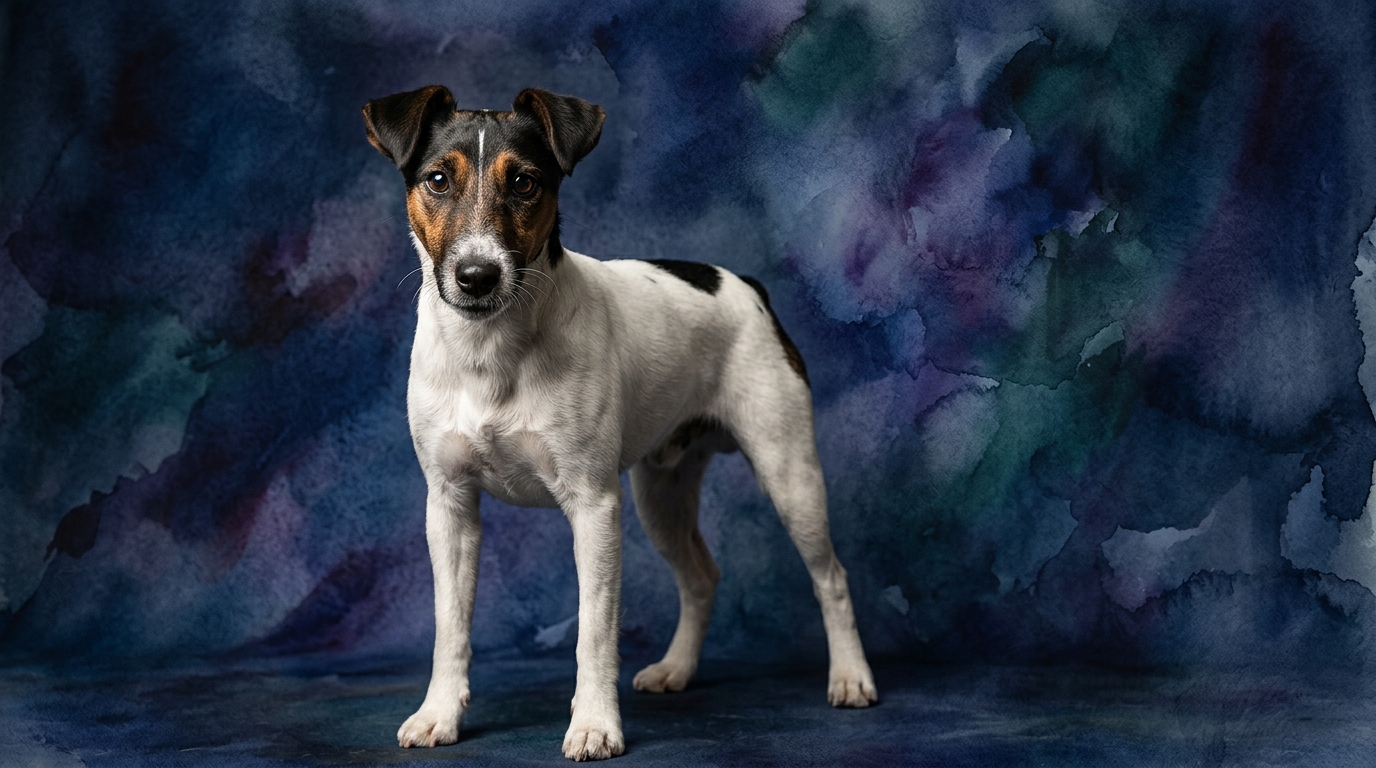
Side-by-Side IQ Profile: Bull Terrier vs. Smooth Fox Terrier
At The Cosmic Pet Pet IQ Lab, we assess canine intelligence across five critical dimensions to offer a comprehensive cognitive snapshot. For both the Bull Terrier and the Smooth Fox Terrier, our current evaluations assign a consistent 3/5 across the board, indicating a robust, yet distinct, set of mental capabilities that warrant closer inspection rather than a simple numerical interpretation. It's important to remember that Coren's ranking system, which places the Bull Terrier at #66, primarily measures 'working and obedience intelligence' based on learned tasks, a specific facet of overall cognition.
For the **Bull Terrier**, a 3/5 in **Problem Solving** reflects their resourceful nature; they can be quite adept at figuring out how to achieve a desired outcome, often through persistence and a dash of creative mischief, but their solutions might not always align with human expectations. Their **Training Speed** at 3/5 suggests they are capable learners, absorbing commands with consistent, engaging methods, though their independent streak means compliance is often a matter of motivation and perceived value. A 3/5 in **Social Intelligence** indicates they can form deep bonds and read their family's cues acutely, but may approach strangers or unfamiliar dogs with a more reserved or assertive demeanor, requiring careful socialization. Their **Instinctive Drive** at 3/5 speaks to a historically strong prey drive, coupled with a protective instinct for their family, manifesting as focused determination once aroused. Finally, a 3/5 in **Memory** means Bull Terriers generally retain learned behaviors, routines, and experiences effectively, whether positive or negative, which underscores the importance of early, consistent training.
The **Smooth Fox Terrier**, also scoring 3/5 across our cognitive dimensions, expresses these traits through its own unique lens. Their **Problem Solving** at 3/5 is characterized by quick, agile thinking, particularly when it involves exploring environments or pursuing a perceived 'quarry'; they are excellent at navigating complex physical spaces and finding ways to get where they want to be. A 3/5 for **Training Speed** means they are generally eager and quick to grasp new concepts, especially when training is kept lively and engaging, but their high environmental awareness can make them prone to distraction. Their **Social Intelligence** at 3/5 often manifests as an outgoing, sometimes boisterous, personality; they generally enjoy interaction but can be opinionated in their social exchanges, sometimes pushing boundaries. The Smooth Fox Terrier’s **Instinctive Drive** is notably strong at 3/5, encompassing a powerful prey drive, a propensity for digging, and an alert barking tendency, all rooted in their original purpose as vermin hunters. Their **Memory** at 3/5 is excellent for spatial awareness, scent trails, and routines, allowing them to recall specific locations or patterns of behavior with impressive accuracy.
Where the Bull Terrier Wins Cognitively
The Bull Terrier often demonstrates a cognitive advantage in areas requiring sustained, focused determination, particularly when a goal is clearly established in their mind. Their problem-solving, while not always conventional, is underpinned by a profound tenacity; once a Bull Terrier decides on a course of action, they can exhibit remarkable persistence to see it through, even if it involves creatively circumventing obstacles. This can manifest as a deliberate, thoughtful approach to puzzles or a steadfast refusal to give up on a desired toy or location, showcasing a unique blend of stubbornness and resolve.
Furthermore, their social intelligence, while potentially more reserved initially, often allows for a deep, nuanced understanding of their immediate family's emotional states and routines. Within their established social circle, Bull Terriers can be remarkably attuned to human moods and subtle cues, fostering a connection built on mutual understanding. This focused social processing means they are less likely to be swayed by external distractions during interaction, offering a more singular attention to their human companions compared to the more outwardly reactive Smooth Fox Terrier.
Where the Smooth Fox Terrier Wins Cognitively
The Smooth Fox Terrier's cognitive strengths shine in areas demanding rapid processing, environmental adaptability, and quick, decisive action. Their problem-solving abilities are characterized by a 'think on your feet' mentality, allowing them to assess and react to changing situations with impressive speed, especially those that engage their strong instinctive drives. This translates into being remarkably clever at navigating complex environments, finding escape routes, or outsmarting small prey, showcasing an agility of thought that matches their physical nimbleness.
Their broad environmental awareness and quick processing of sensory input give them an edge in dynamic settings. A Smooth Fox Terrier is generally quicker to notice subtle changes, movements, or sounds in their surroundings, making them excellent watchdogs and partners for activities that require constant vigilance. This alertness, combined with their enthusiastic training speed when engaged, means they can pick up new tricks and commands with zest, thriving on varied and stimulating mental challenges that leverage their inherent curiosity and drive to explore.
Which is Easier to Train and Why
While both breeds are rated 3/5 for training speed, the 'ease' of training them differs significantly due to their underlying cognitive profiles and motivational drivers. The Smooth Fox Terrier, with its quick processing and zest for engagement, can often appear 'easier' to train in the initial stages. They respond well to positive reinforcement, short, lively sessions, and tasks that involve movement or problem-solving. However, their strong instinctive drive and broad environmental awareness mean they are highly susceptible to distractions; a squirrel or an interesting scent can instantly derail a training session, requiring an owner to be constantly creative and assertive in maintaining focus. Their memory for locations and scents also means they can quickly learn where interesting things are and how to get to them, which can be a training challenge if not managed.
The Bull Terrier, conversely, might present a different set of challenges. Their 3/5 training speed is coupled with a more independent and sometimes stubborn problem-solving approach. They can be slower to grasp why a command is relevant if they don't perceive immediate value or if the training isn't consistent and fair. However, once a Bull Terrier understands and accepts a command, their memory and determination mean they are often very reliable. The 'difficulty' isn't in their capacity to learn, but in motivating them to *want* to comply. Training a Bull Terrier demands patience, consistency, a strong bond, and making training feel like their idea or a highly rewarding game, rather than a forced task. Their social intelligence within the family unit can be leveraged, as they often strive to please their beloved humans once that bond is solid.
Which Suits Active Owners vs. Relaxed Owners
For owners seeking a truly active partner, the Smooth Fox Terrier is often the more natural fit. Their high instinctive drive, quick problem-solving, and boundless energy demand consistent physical and mental engagement. They thrive in environments where they can explore, dig, chase, and participate in activities like agility, earthdog trials, or long, varied hikes. A relaxed owner who cannot provide this level of stimulation will likely find a Smooth Fox Terrier to be a demanding and potentially destructive companion, as their cognitive and physical needs will seek an outlet, often in undesirable ways. Their broad environmental awareness means they are constantly 'on,' scanning for new stimuli and opportunities for adventure.
The Bull Terrier, while needing regular exercise and mental stimulation, can adapt more readily to a somewhat more relaxed home environment *after* their needs are met. They enjoy robust play sessions and walks, but once their energy is expended, their social intelligence often leads them to seek comfort and companionship on the couch with their family. They appreciate routines and can be content with focused mental games indoors, rather than constant outdoor exploration. An owner who enjoys a balance of active engagement and quiet companionship, and who can provide firm, consistent guidance, will find the Bull Terrier's cognitive profile aligns well with their lifestyle, as their determination and social bond make them devoted companions.
The Verdict
Choose a Bull Terrier if you value a deeply bonded, determined companion who, once motivated, will apply their focused problem-solving and memory to tasks, thriving on consistent routines and a balance of activity and calm companionship.
Opt for a Smooth Fox Terrier if you're an energetic owner who relishes a quick-witted, agile partner for constant exploration, dynamic activities, and engaging challenges that cater to their strong instinctive drives and broad environmental awareness.
🧠 Find Your Pet's IQ Score
Our Pet IQ Lab assessment covers 25+ tests across 5 cognitive dimensions — personalized to your breed.
Take the Full IQ Test →Frequently Asked Questions
Do Bull Terriers really have a stubborn streak?
Bull Terriers are often perceived as stubborn due to their independent problem-solving and determination, which means they might not always comply if they don't see the value in a command. This isn't a lack of intelligence, but rather a strong will and a need for clear, consistent motivation from their owner to engage their training speed effectively.
How much mental stimulation does a Smooth Fox Terrier require daily?
A Smooth Fox Terrier, with its strong instinctive drive and agile problem-solving, requires significant daily mental stimulation beyond just physical exercise. This could include puzzle toys, scent work, short, engaging training sessions, or opportunities to explore new, safe environments, helping to channel their natural curiosity and energy constructively.
Can a Bull Terrier live harmoniously with other pets?
A Bull Terrier can live with other pets, but their social intelligence and instinctive drive mean this often requires careful, early socialization and supervision, especially with smaller animals due to their prey drive. Success largely depends on individual temperament, the specific 'other pet,' and the owner's consistent management and training to foster peaceful cohabitation.