
Side-by-Side IQ Profile: Bulldog vs. Collie
The Cosmic Pet Pet IQ Lab employs five dimensions to map canine cognition, revealing distinct mental landscapes for each breed. The English Bulldog, ranked #77 by Coren, presents a profile emphasizing social connection over complex task execution. Their Problem Solving at 2/5 suggests they approach novel cognitive challenges with less independent drive, often preferring established routines. Training Speed, also 2/5, highlights a need for patience and consistent positive reinforcement; they learn deliberately, often requiring more repetitions to solidify commands. However, their Social Intelligence at 4/5 denotes an exceptional ability to interpret human emotions and intentions, making them highly attuned companions. An Instinctive Drive of 3/5 reflects a moderate tenacity, while their Memory at 2/5 indicates they may not retain long command sequences or complex routines as readily, preferring simple, consistent cues.
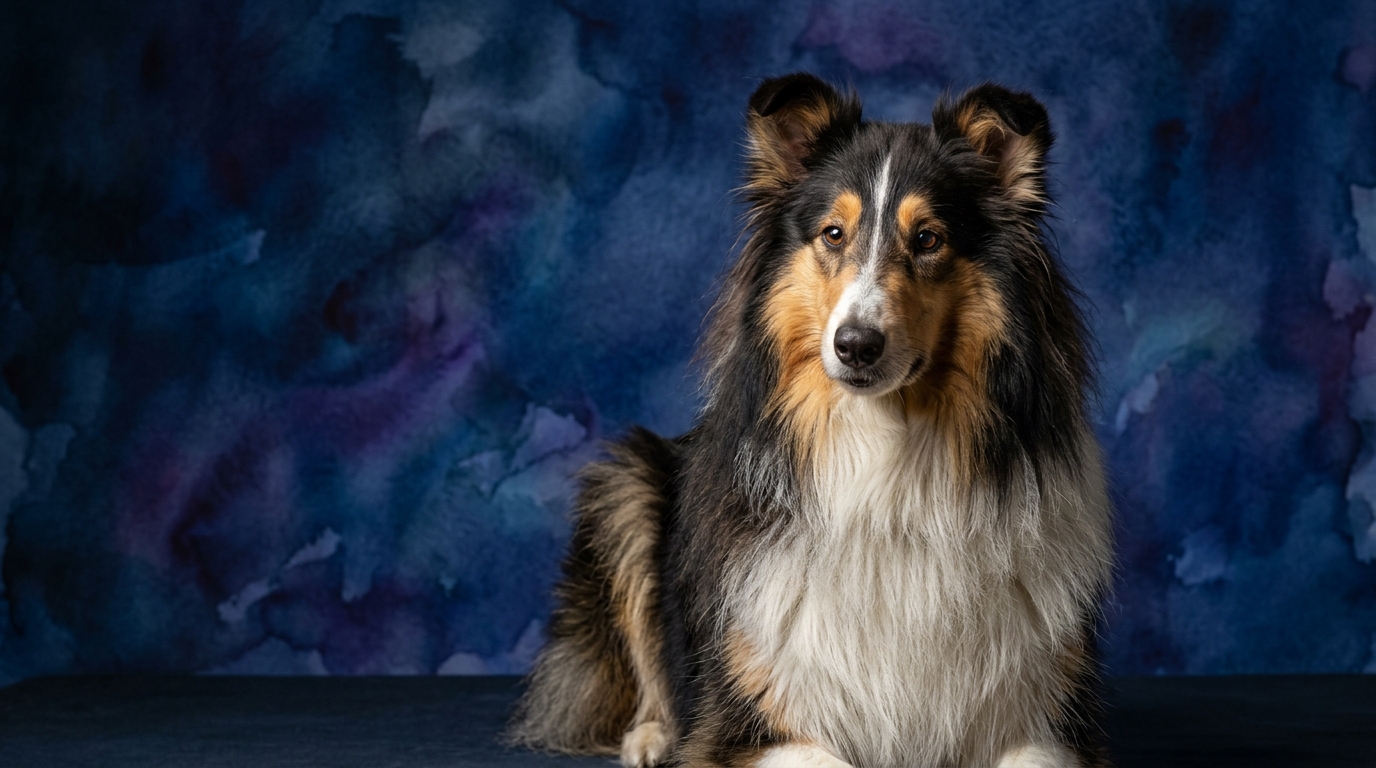
In contrast, the Rough Collie, with a Coren rank of #16, showcases a profile geared towards problem-solving and retention. Their Problem Solving at 4/5 demonstrates a strong capacity to analyze situations and adapt to new challenges, often showing initiative in navigating their environment. Training Speed, also 4/5, signifies quick acquisition of new commands and routines, often requiring fewer repetitions and responding well to varied methods. Social Intelligence at 3/5 shows a solid understanding of social cues, capable of forming strong bonds. An Instinctive Drive of 3/5 reflects their herding heritage, a moderate urge for purpose and structure. Most notably, their Memory at 5/5 signifies exceptional recall of commands, routines, and experiences over long periods, making them reliable in complex tasks.
Where the English Bulldog Wins Cognitively
The English Bulldog truly shines in social intelligence, scoring a commendable 4 out of 5. This strength lies in their profound ability to interpret human cues, emotions, and intentions. They often seem to anticipate their owner's needs for comfort or companionship, offering a quiet presence or a gentle nudge precisely when appreciated. Their cognitive prowess focuses on empathy and connection, making them remarkably attuned to their human family's emotional landscape. While not excelling at complex problem-solving, their proficiency in understanding and responding to social signals fosters an incredibly deep and fulfilling bond. This specific cognitive strength allows them to integrate seamlessly into family life as intuitive companions, masters of subtle household communication.
Where the Rough Collie Wins Cognitively
The Rough Collie exhibits clear cognitive advantages in problem-solving and memory, scoring 4/5 and 5/5 respectively. Their problem-solving prowess means they are adept at figuring out novel situations, from navigating an obstacle course to retrieving a dropped toy. This involves mental strategizing and applying learned concepts to new challenges. Coupled with exceptional memory, they retain long sequences of commands, intricate routes, or multi-step tasks with remarkable accuracy over extended periods. This cognitive combination makes them highly adaptable to various roles, from advanced obedience to complex trick training, where recalling precise actions is paramount. Their quick training speed (4/5) further complements these strengths, allowing rapid acquisition of new information and behaviors.
Training Dynamics: Which Breed is Easier to Teach?
When considering ease of training, the Rough Collie generally offers a more straightforward experience. Their impressive training speed (4/5), combined with a perfect 5/5 in memory, means they grasp new commands quickly and retain them long-term. They thrive on mental engagement and respond well to varied teaching methods, often showing a keen desire to work alongside their human. For instance, a Collie can learn a multi-step fetch routine and remember it reliably after just a few sessions. In contrast, the English Bulldog, with a training speed of 2/5 and memory of 2/5, requires a significantly different approach. Their learning style is more deliberate, needing more repetitions and consistent positive reinforcement. While capable, their historical role didn't demand complex obedience, and their independent nature means compliance often depends on current motivation rather than an inherent drive to please. A Bulldog might learn "sit" but needs more patience and incentives for consistent performance, especially with distractions, as their command recall isn't as robust.
Matching Breeds to Owner Lifestyles
The choice between these breeds often hinges on an owner's lifestyle and capacity for specific engagement. For active owners who enjoy structured activities, mental challenges, and consistent interaction, the Rough Collie is an ideal match. Their problem-solving abilities (4/5) and need for mental stimulation mean they excel in activities like agility, obedience trials, or learning new tricks. An owner dedicating time to daily walks, training, and interactive games will find the Collie eager and fulfilled. Conversely, the English Bulldog suits more relaxed owners appreciating a laid-back companion. While benefiting from moderate exercise, their lower energy and less intense drive for complex tasks mean they are content with shorter walks and plenty of couch time. Their high social intelligence (4/5) makes them excellent companions who thrive on simply being present with their human family, offering quiet affection. An owner seeking a devoted, easygoing presence will find the Bulldog's temperament perfectly aligned.
The Verdict
Opt for an English Bulldog if you seek a calm, affectionate companion whose greatest cognitive strength is a deep, intuitive understanding of human emotions, perfect for a relaxed home environment.
Select a Rough Collie if you are an active owner looking for a highly trainable partner eager for mental challenges, capable of learning complex tasks, and excelling in various dog sports.
🧠 Find Your Pet's IQ Score
Our Pet IQ Lab assessment covers 25+ tests across 5 cognitive dimensions — personalized to your breed.
Take the Full IQ Test →Frequently Asked Questions
Do English Bulldogs get bored easily if not mentally stimulated?
While they don't demand constant, complex mental puzzles, English Bulldogs do benefit from enrichment. Their social intelligence means they appreciate human interaction and simple, consistent routines more than intricate problem-solving games. A lack of social engagement might be more detrimental than a lack of "brain games."
Can Rough Collies be good family pets despite their herding instincts?
Absolutely. Their herding instinct (3/5) is moderate and, when properly channeled through training and appropriate activities, makes them attentive and protective family members. Their high memory and training speed mean they can learn appropriate behaviors around children and other pets, thriving on structured interaction and a sense of purpose within the family unit.
How do their memory differences impact daily life?
The Rough Collie's superior memory (5/5) means they recall commands, house rules, and routines with remarkable consistency, making daily interactions smooth and predictable. The English Bulldog's 2/5 memory score means owners might need to be more patient and consistent with reminders, especially for less frequently practiced commands, and rely more on established habits rather than complex recall.