
Side-by-Side Cognitive Profiles: Decoding Canine Minds
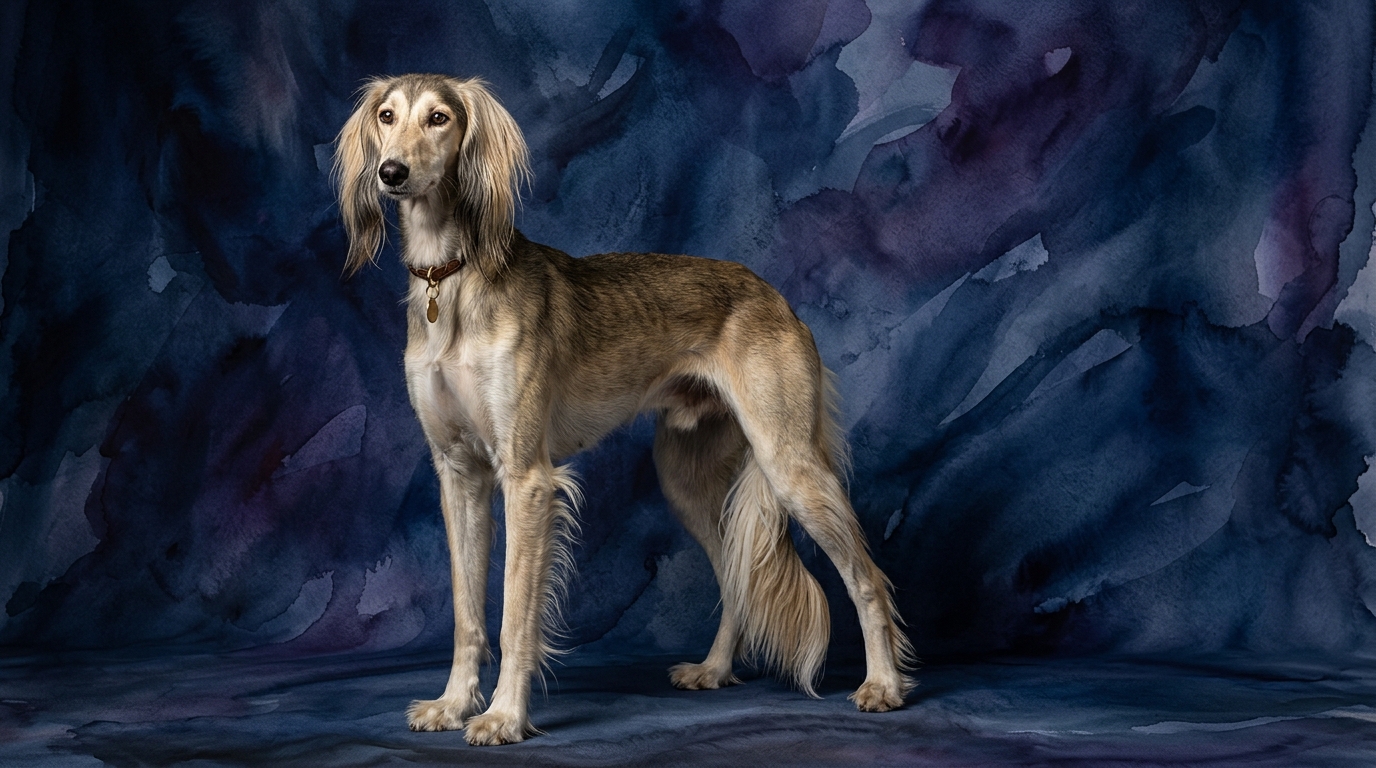
The Cosmic Pet Pet IQ Lab employs a multi-dimensional approach to evaluating canine intelligence, moving beyond simplistic notions to understand the nuances of each breed's cognitive strengths. For the English Bulldog, ranked #77 by Coren's intelligence scale, its profile paints a picture of a companion deeply attuned to its human family, but with a more deliberate approach to abstract challenges and new commands. The Saluki, a hound breed not formally Coren-ranked, presents a balanced cognitive toolkit, reflecting its ancient lineage as a swift, independent hunter.
Let's break down the specific dimensions for each breed. The English Bulldog scores 2/5 in Problem Solving, indicating they may require more guidance or repeated exposure to master new tasks that demand complex reasoning or independent strategizing. Their Training Speed also sits at 2/5, suggesting that while capable of learning, they often require patience, consistency, and positive reinforcement to grasp and reliably execute commands. Where the Bulldog truly shines is in Social Intelligence, earning a remarkable 4/5; this reflects their profound capacity to understand human emotions, cues, and social dynamics within a household, making them incredibly perceptive and empathetic companions. Instinctive Drive is rated at 3/5, representing a moderate inclination towards breed-specific behaviors, while Memory, at 2/5, suggests they might need more frequent refreshers to retain learned information over long periods.
In contrast, the Saluki's cognitive profile reveals a more uniformly capable mind, particularly suited to tasks requiring quick thinking and recall in dynamic environments. Their Problem Solving is rated 3/5, indicating an ability to navigate challenges with a fair degree of independent thought and adaptability. Training Speed also scores 3/5, suggesting they can pick up new commands at a moderate pace, often responding well to engaging and varied training methods. Social Intelligence for the Saluki is 3/5, meaning they are capable of forming strong bonds and understanding social cues, though perhaps not with the same nuanced empathy as the Bulldog. Their Instinctive Drive is also 3/5, reflecting their strong sighthound impulses for chasing and independent hunting, a key aspect of their heritage. Finally, Memory stands at 3/5, indicating a solid capacity for retaining information, which is crucial for remembering complex routes or past experiences in a hunting context.
Where the English Bulldog Cognitively Excels
The English Bulldog's standout cognitive strength lies squarely in its social intelligence, rated at an impressive 4/5. This isn't merely about being friendly; it reflects a deep capacity for understanding and responding to human emotions and social structures within a family unit. Bulldogs are adept at reading subtle cues – a change in tone, a shift in body language – and often adjust their behavior accordingly. They excel at providing comfort and companionship, frequently demonstrating an intuitive sense of when their human needs a quiet presence or a gentle nudge.
This high social intelligence translates into a profound ability to integrate seamlessly into family life, often becoming the emotional anchor of a home. Their perceptive nature allows them to anticipate needs and react with an almost human-like understanding, fostering incredibly strong, reciprocal bonds. While they may not be the quickest to learn a complex trick, their mastery of emotional connection and household harmony is a cognitive feat in itself, making them exceptional at creating a warm, supportive atmosphere.
Where the Saluki Cognitively Excels
The Saluki's cognitive advantages are rooted in its heritage as a swift, independent hunter in challenging terrains. Their 3/5 ratings across Problem Solving, Training Speed, and Memory converge to create a dog capable of intelligent action and efficient learning in practical scenarios. Their problem-solving ability means they can often figure out how to navigate obstacles or achieve a goal with a degree of independent thought, a necessity when pursuing prey without direct human command.
The Saluki's moderate training speed and memory are particularly beneficial for tasks requiring consistent recall and the ability to adapt to new situations. While not necessarily excelling in complex obedience routines, their cognitive profile supports learning practical skills rapidly and retaining them, essential for a breed that historically needed to remember vast hunting grounds and the nuances of tracking. This combination allows them to be agile thinkers, capable of making quick decisions and learning from experience, whether that's navigating a new trail or understanding a new household routine.
Training Dynamics: Patience vs. Engagement
When it comes to training, the English Bulldog and the Saluki present notably different experiences for their human counterparts. The Bulldog's 2/5 scores in both Training Speed and Problem Solving suggest that patience and consistent, positive reinforcement are paramount. Bulldogs are not necessarily defiant, but they tend to process information at a slower pace and may require more repetitions to solidify new commands. Their strong social intelligence, however, can be leveraged; they respond well to training that reinforces their bond with their owner, making praise and affection powerful motivators. Owners should anticipate a journey of steady progress rather than rapid mastery, focusing on clear, simple commands and celebrating small victories.
The Saluki, with its 3/5 ratings in Training Speed and Problem Solving, is generally a more responsive learner. They can grasp new concepts more quickly than the Bulldog, but their independent nature and moderate instinctive drive (3/5) mean that engagement is key. Salukis thrive on varied training sessions that stimulate their minds and bodies, as repetitive drills can quickly bore them. Their sighthound instincts mean that off-leash reliability, especially in open spaces, might require extra dedication, as their drive to chase can override learned commands. Effective training for a Saluki often involves making it feel like a collaborative game, tapping into their natural curiosity and desire for activity rather than strict obedience.
Matching Canine Minds to Lifestyles
Understanding these cognitive distinctions is vital for prospective owners seeking a harmonious partnership. The English Bulldog, with its superior social intelligence and lower demands for mental and physical stimulation, is an ideal match for relaxed owners or those with less active lifestyles. They thrive in environments where their primary role is that of a devoted companion, offering comfort and quiet affection. Their moderate instinctive drive (3/5) means they are generally content with moderate exercise and do not typically seek out intense mental challenges, preferring instead to be a perceptive, empathetic presence within the home. They are perfectly suited for apartment living or homes where a calm, emotionally intelligent dog is valued above athletic prowess or complex trick-learning.
Conversely, the Saluki's more balanced cognitive profile, particularly its problem-solving abilities, moderate training speed, and instinctive drive (all 3/5), makes it a better fit for active owners who enjoy engaging their dogs in various activities. Their background as sighthounds means they possess a natural inclination for speed and an independent spirit that requires outlets. Owners who appreciate a dog that can think for itself, enjoys long runs, and can participate in activities like lure coursing or extensive walks will find a rewarding companion in the Saluki. They require consistent mental engagement and physical exercise to prevent boredom, making them less suitable for purely sedentary households. Their memory (3/5) also makes them suitable for owners who enjoy exploring new routes or teaching practical skills that build on past experiences.
The Verdict
Choose the English Bulldog if you seek a deeply perceptive, emotionally intelligent companion who excels at household harmony and offers unwavering devotion, thriving in a more relaxed, stable environment. They are perfect for owners prioritizing companionship and a calm presence over high-energy activities or complex obedience training.
Opt for the Saluki if you are an active owner who appreciates an independent, agile thinker capable of moderate problem-solving and training, and enjoys engaging in activities that satisfy their natural drive and stamina. They are ideal for those who can provide consistent mental and physical stimulation for a dog with a keen memory and a spirit of adventure.
🧠 Find Your Pet's IQ Score
Our Pet IQ Lab assessment covers 25+ tests across 5 cognitive dimensions — personalized to your breed.
Take the Full IQ Test →Frequently Asked Questions
Is the English Bulldog stubborn during training?
The English Bulldog's training speed and problem-solving are rated 2/5, which means they can appear stubborn due to a slower processing speed rather than defiance. They require consistent, patient, and positive reinforcement to grasp and retain commands effectively.
Do Salukis need a lot of exercise?
Yes, Salukis have an instinctive drive of 3/5 and are sighthounds, meaning they possess a natural need for physical activity and speed. They thrive with regular opportunities for running in safe, enclosed spaces or participating in activities like lure coursing.
Which breed is better with children?
The English Bulldog's high social intelligence (4/5) often makes them incredibly tolerant and gentle with children, understanding social cues well. Salukis (social intelligence 3/5) can also be good with children, but their independent nature means interactions should always be supervised, especially with very young children.