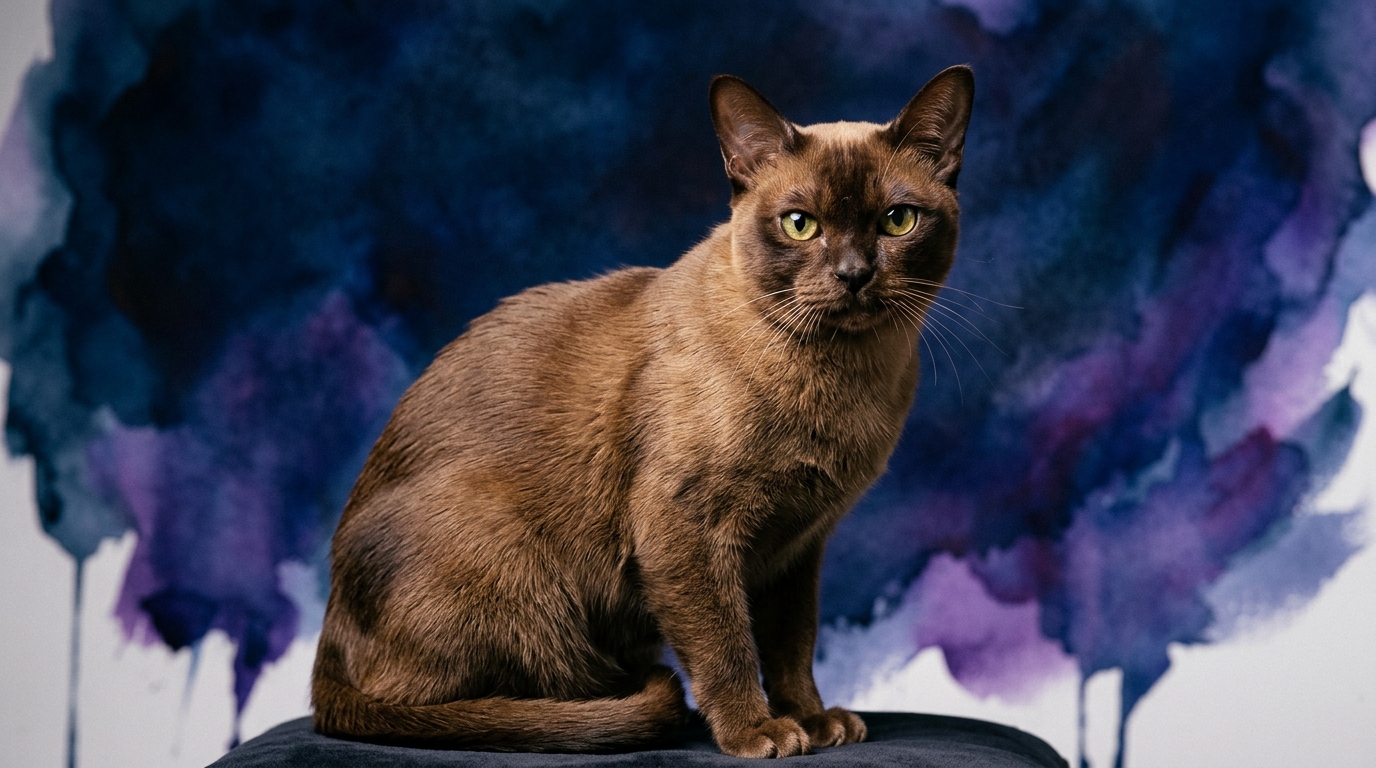
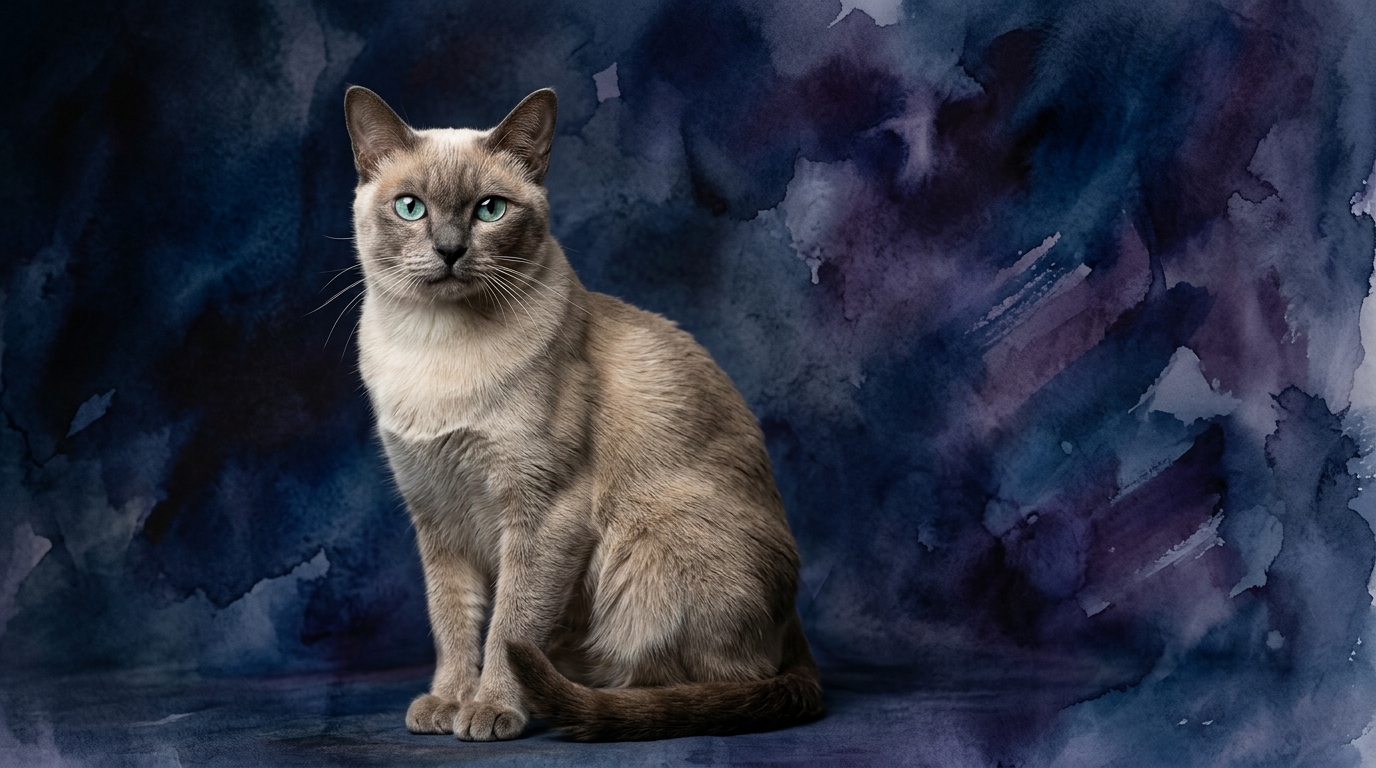
Side-by-Side IQ Profile: Burmese vs. Tonkinese
At The Cosmic Pet Pet IQ Lab, we assess feline intelligence across five crucial dimensions, providing a nuanced understanding of each breed’s cognitive strengths. Both the Burmese and Tonkinese demonstrate remarkable intellect, but their specific profiles reveal subtle yet significant differences.
**Problem Solving:** The Burmese scores 4/5 in problem-solving, indicating a robust ability to navigate their environment and overcome obstacles using practical, often socially influenced strategies. They learn from experience and apply learned solutions effectively, particularly when a human interaction offers a clue or solution pathway. In contrast, the Tonkinese achieves a perfect 5/5, exhibiting exceptional ingenuity and an active drive to decipher complex challenges. This suggests a remarkable capacity for intricate puzzle-solving, figuring out mechanisms, and devising creative, often multi-step, approaches to attain desired outcomes.
**Training Speed:** Both breeds achieve an outstanding 5/5 for training speed. This signifies that both Burmese and Tonkinese cats possess an extraordinary aptitude for learning new commands, routines, and tricks with impressive rapidity. Their eagerness to engage with humans translates directly into quick behavioral acquisition, making them highly responsive to consistent training efforts.
**Social Intelligence:** With a 5/5 in social intelligence, the Burmese is renowned for its profound connections with people, demonstrating an outstanding ability to interpret human cues, moods, and intentions. They thrive on interaction and understand the dynamics of their social environment with remarkable clarity. The Tonkinese also scores a perfect 5/5, showing an equally impressive capacity for social engagement. These felines are masters of interpersonal communication, deeply attuned to their human companions, readily understanding social signals and often initiating interactions to solicit attention or play.
**Instinctive Drive:** The Burmese typically exhibits a moderate level of predatory drive, scoring 3/5. While still possessing natural feline instincts, their inclination for intense hunting or highly active, prey-simulating play is present but generally less consuming compared to some other breeds. The Tonkinese, however, scores 4/5, demonstrating a robust instinctive drive. This translates into a higher propensity for energetic play, climbing, chasing, and investigating their surroundings with fervent curiosity, often seeking out opportunities for physical and mental engagement driven by their primal urges.
**Memory:** Possessing a strong and reliable memory, the Burmese scores 4/5, retaining information about their environment, routines, and past experiences with considerable accuracy. They remember where things are, who their preferred humans are, and established patterns within the household. The Tonkinese, with an outstanding 5/5 memory capacity, recalls details and sequences with remarkable precision. This superior retention supports their advanced problem-solving skills and their ability to learn complex tasks and remember intricate environmental layouts with lasting accuracy.
Where Burmese Wins Cognitively
While the Tonkinese edges out the Burmese in sheer problem-solving and memory scores, the Burmese’s specific cognitive profile offers distinct advantages, particularly in how it integrates into a home environment. The Burmese’s 3/5 instinctive drive, compared to the Tonkinese’s 4/5, translates into a cognitive landscape that is generally less consumed by intense predatory urges. This isn't to say they lack playfulness, but their mental energy is less consistently channeled into hunting simulations or fervent exploration of every nook and cranny for 'prey.' For owners who value a slightly less demanding internal drive for constant physical or mental engagement around hunting, this can be a significant cognitive 'win.'
Their strong memory (4/5) combined with their exceptional social intelligence (5/5) means they excel at remembering social routines and human interactions without the added cognitive 'noise' of a higher instinctive urge. They become masterful at understanding and anticipating the daily rhythms of their human family, often acting as intuitive companions who know exactly when a cuddle is desired or a quiet presence is appreciated. Their problem-solving (4/5) is more likely to be directed towards social engineering – figuring out how to get attention, how to initiate play with a person, or how to snuggle into the most comfortable spot near their loved ones, rather than intricate escape artistry or puzzle box mastery. This makes their cognitive engagement highly attuned to the emotional and social fabric of the household, fostering a deep, intuitive companionship.
Where Tonkinese Wins Cognitively
The Tonkinese truly shines in areas demanding high levels of ingenuity and retention, securing a clear cognitive advantage in problem-solving (5/5) and memory (5/5). Their minds are wired for discovery and overcoming challenges. This means they are extraordinarily adept at deciphering complex puzzle toys, learning multi-step sequences to open cupboards, or even figuring out how to manipulate objects to achieve a goal. Their superior memory ensures that once a solution is found, it is retained with remarkable precision, allowing them to apply learned strategies efficiently in new, similar situations.
Furthermore, their robust instinctive drive (4/5) provides an inherent motivation to physically interact with their environment and actively seek out new stimuli. This combination of advanced problem-solving, exceptional memory, and a strong drive for engagement means the Tonkinese is cognitively equipped for continuous learning and exploration. They are cats who don’t just observe; they actively participate in shaping their world, making decisions, and experimenting with cause and effect. This cognitive profile lends itself to a pet that is constantly assessing its surroundings, remembering past successes and failures, and formulating new strategies, often leading to delightful — and sometimes mischievous — displays of their mental prowess.
Which is Easier to Train and Why
Both Burmese and Tonkinese cats boast an impressive 5/5 rating in Training Speed, indicating that both breeds are exceptionally quick learners when it comes to formal training. However, the 'ease' of training can manifest differently based on their other cognitive attributes and behavioral tendencies. The Burmese, with its strong social intelligence (5/5) and slightly lower instinctive drive (3/5), often finds immense motivation in human interaction and praise. They are highly responsive to positive reinforcement centered around social bonding and affection. Training a Burmese might feel 'easier' in the sense that they are often very compliant and eager to please, readily learning commands, leash walking, or even simple tricks primarily for the sake of spending time with their human and receiving positive attention. Their social focus means they quickly grasp what their human wants and respond accordingly.
In contrast, the Tonkinese, while equally quick to learn (5/5 Training Speed) and socially intelligent (5/5), is also fueled by a higher problem-solving capacity (5/5) and a stronger instinctive drive (4/5). This means they can be incredibly quick to learn complex tricks, agility courses, or clicker training, often motivated by the intellectual challenge and the thrill of 'solving' the training game. Their higher instinctive drive might also make them more receptive to training involving prey-like toys or food puzzles as rewards, appealing to their inherent desire for mental and physical stimulation. Therefore, while both learn rapidly, the Burmese might be perceived as 'easier' for owners seeking a socially compliant and affection-driven training partner, whereas the Tonkinese might be 'easier' for those who enjoy pushing the boundaries of feline learning with more complex, intellectually stimulating challenges.
Better Family Pet for Active vs. Relaxed Owners
Choosing between a Burmese and a Tonkinese as a family pet largely depends on the household's lifestyle and its capacity for cognitive engagement. For active owners who enjoy interactive play, puzzle toys, and consistent mental stimulation, the Tonkinese often proves to be an ideal companion. Their superior problem-solving (5/5) and memory (5/5), coupled with a robust instinctive drive (4/5), means they thrive on environments that offer regular opportunities for exploration, intricate play, and learning new things. They need owners who can match their curiosity and energy, engaging them in activities like fetch, leash walks, or teaching complex tricks to prevent boredom. A Tonkinese will actively seek out engagement, challenging their owners with their ingenuity and often initiating play sessions.
Conversely, for more relaxed owners who appreciate a deeply affectionate and socially intuitive companion without the constant demand for high-octane mental and physical challenges, the Burmese might be a more fitting choice. While still playful and very social (5/5 Social Intelligence), their slightly lower instinctive drive (3/5) and problem-solving (4/5) scores suggest they are generally content with a more consistent rhythm of social interaction and affection, rather than constant intellectual 'quests.' They are masters of companionship, often happy to simply be near their humans, observing and participating in a more subtle, emotionally attuned manner. Both breeds are immensely loving and social, but the Tonkinese demands a higher cognitive workload from its environment, whereas the Burmese is expertly tailored for profound, empathetic companionship within a slightly calmer setting.
The Verdict
Choose the Burmese if you seek a deeply empathetic, socially intuitive companion that thrives on affectionate interaction and predictable routines without constant demands for intense mental puzzles.
Opt for the Tonkinese if you are an active owner who delights in providing constant intellectual challenges and engaging in highly interactive, stimulating play with a brilliantly resourceful and curious feline.
🧠 Find Your Pet's IQ Score
Our Pet IQ Lab assessment covers 25+ tests across 5 cognitive dimensions — personalized to your breed.
Take the Full IQ Test →Frequently Asked Questions
Are Burmese or Tonkinese cats prone to destructive behavior due to their intelligence?
Both breeds are highly social and crave interaction, but their intellect can lead to boredom if not adequately stimulated. A Tonkinese, with its higher problem-solving and instinctive drive, might become more 'cleverly' destructive (e.g., opening cabinets or finding hidden treats) if under-stimulated, whereas a bored Burmese might become more vocal or attention-seeking. Providing consistent enrichment, interactive toys, and social engagement is crucial for both breeds to channel their cognitive energy constructively.
Do Burmese and Tonkinese cats get along with other pets?
Their high social intelligence (5/5 for both) makes both breeds generally adaptable and capable of forming bonds with other pets, including dogs, given proper introductions. Their affectionate nature often extends beyond humans to other household members, fostering harmonious multi-pet homes. Individual personalities will always play a role, but their inherent sociability is a strong positive factor.
How do their memory differences impact daily life?
The Tonkinese's superior memory (5/5) means they recall intricate details and complex learned sequences with exceptional precision, making them adept at remembering escape routes, the sequence to open a specific cupboard, or complex puzzle solutions long-term. The Burmese's strong memory (4/5) is highly effective for remembering routines, social cues, and preferred interactions, making them reliable companions in established household rhythms, consistently anticipating meal times or cuddle sessions.