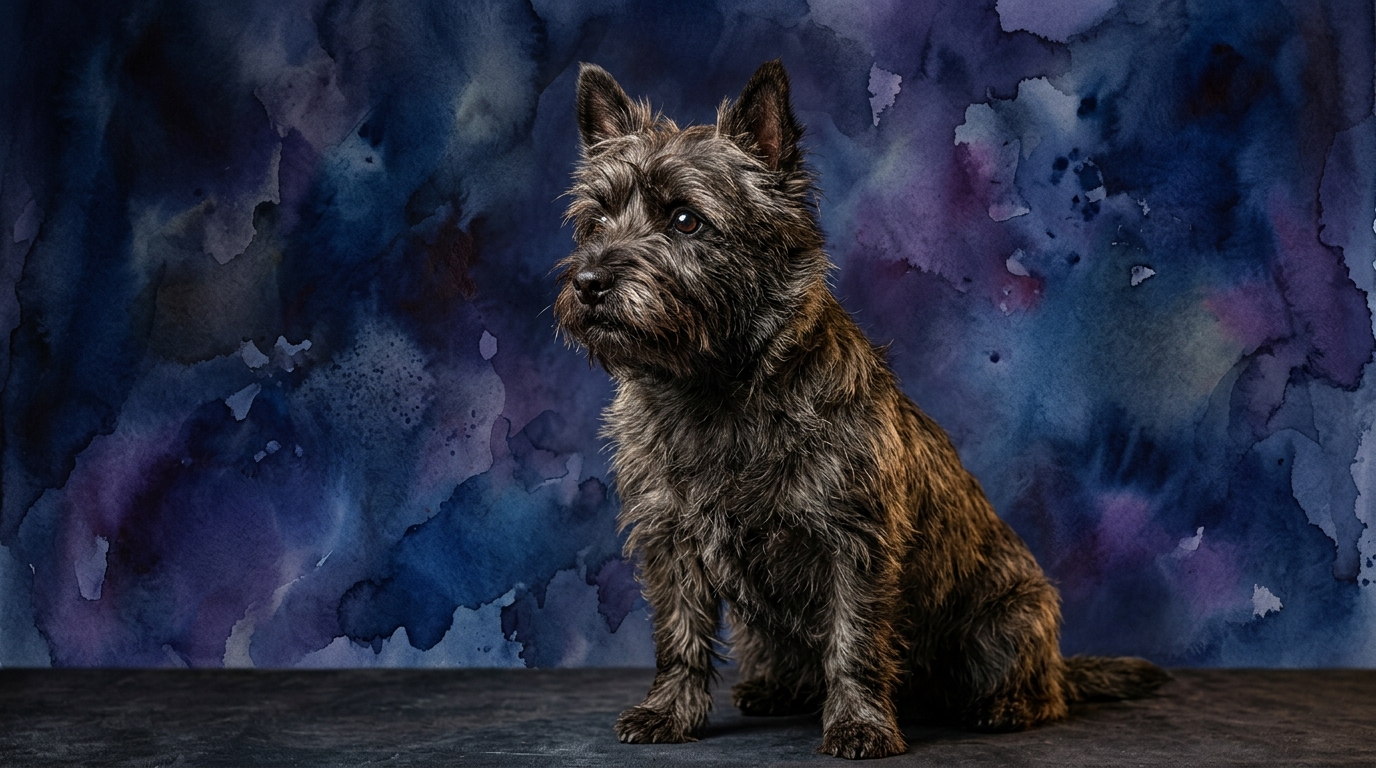

Side-by-Side Cognitive Profile: Cairn Terrier vs. Irish Terrier
**Cairn Terrier:** Ranked #35 by Coren, the Cairn Terrier displays a cognitive profile indicative of a readily adaptable and mentally agile companion. Our lab assesses their Problem Solving at 4/5, meaning they possess a strong capacity to independently navigate novel situations, such as figuring out how to retrieve a toy from under furniture or manipulating latches. Their Training Speed, also at 4/5, suggests they absorb new commands and routines with efficiency, often requiring fewer repetitions to master a task. Social Intelligence, rated 3/5, indicates a solid ability to interpret human body language and vocal cues, fostering responsive interactions within the family unit. An Instinctive Drive of 3/5 means they retain a purposeful terrier tenacity, channeling their natural hunting instincts with a manageable intensity. Finally, their Memory at 4/5 underscores their ability to retain learned behaviors and recall past experiences, making progressive training and complex trick sequences particularly rewarding.
**Irish Terrier:** While not appearing in Coren's ranks, the Irish Terrier's cognitive blueprint, as assessed by our Pet IQ Lab, highlights a different yet equally robust set of mental strengths. Their Problem Solving at 3/5 suggests they approach challenges with determination, often relying on established methods rather than spontaneous innovation, which means they'll persist at a puzzle but might not invent a new solution. Training Speed, rated 3/5, implies a steady learning curve; they are fully capable of acquiring commands but may benefit from more consistent reinforcement and varied training approaches to solidify new behaviors. Social Intelligence at 3/5 points to a direct and heartfelt connection with their human companions, enabling them to understand basic emotional states and respond with unwavering loyalty. Their Instinctive Drive, also 3/5, signifies a potent yet focused prey drive, characteristic of their working heritage. Lastly, Memory at 3/5 indicates they reliably recall routines and commands, though perhaps not with the same intricate detail or rapid recall as breeds with higher scores in this dimension.
Where the Cairn Terrier Excels Cognitively
The Cairn Terrier exhibits a discernible cognitive advantage in both Problem Solving and Memory, scoring 4/5 in each compared to the Irish Terrier's 3/5. This superior problem-solving acumen means a Cairn is more inclined to independently strategize solutions to environmental challenges. For instance, if a favorite toy rolls under a low shelf, a Cairn might creatively use its nose or paws to dislodge it, or even attempt to move the obstacle itself, rather than simply barking for help. This natural inclination towards finding solutions makes them particularly adept at engaging with interactive puzzle toys, often solving them with surprising speed and ingenuity. Their elevated memory score further amplifies this advantage; they not only solve a puzzle but remember the successful strategy for next time, leading to faster completion in subsequent attempts. This strong recall also aids in consolidating a wide repertoire of commands and tricks, allowing them to build upon learned behaviors with greater efficiency. Owners who enjoy teaching complex sequences or engaging in dog sports like agility, which demand rapid decision-making and memory of courses, will find the Cairn's cognitive profile particularly rewarding, as they can quickly generalize learned principles to new scenarios.
Where the Irish Terrier Shines Cognitively
While the Irish Terrier's scores are consistently 3/5 across the cognitive dimensions, this uniformity speaks to a distinct mental tenacity and a focused, unyielding approach that can be a significant advantage in specific contexts. Their balanced 3/5 in Instinctive Drive, coupled with their robust physical constitution, means they excel in tasks requiring sustained, singular focus and unwavering resolve. For example, in a scent tracking exercise, an Irish Terrier might not be the quickest to identify the solution, but their relentless determination and commitment to the task at hand will drive them to complete it, often outperforming breeds that might get distracted by novel stimuli. This steadfastness is a hallmark of their problem-solving at 3/5; they might not invent a new method for opening a treat dispenser, but they will apply a known technique with incredible persistence until they succeed. Their social intelligence, also at 3/5, suggests a straightforward and deeply loyal connection with their human family, free from the potential for over-analysis that might complicate interactions with breeds scoring higher in this area. This leads to a companion whose affection and dedication are uncomplicated and profound. This unwavering resoluteness and clear-headed application of known strategies, though not always about speed or invention, makes them exceptionally reliable in predictable scenarios and steadfast in their companionship, particularly when a task demands grit and endurance.
Training Dynamics: Which is Easier to Train?
Based on our Pet IQ Lab's metrics, the Cairn Terrier generally presents as the more straightforward breed to train, primarily attributable to their higher scores in Training Speed (4/5) and Memory (4/5). A Cairn will typically grasp new commands and associate actions with cues with fewer repetitions, often demonstrating a natural eagerness to learn and please. For instance, teaching a Cairn to 'sit' or 'stay' usually progresses quite rapidly, as they form strong mental connections between the verbal command, the hand signal, and the desired behavior, retaining this knowledge effectively over time. Their stronger problem-solving ability (4/5) further assists in training, allowing them to generalize learned behaviors to new environments or contexts more readily, understanding the underlying concept rather than merely memorizing a specific action in one setting. In contrast, the Irish Terrier, with consistent 3/5 ratings in both Training Speed and Memory, will require a more patient, persistent, and often more creative training approach. While perfectly capable of learning, an Irish Terrier might need more frequent and consistent reinforcement sessions to solidify a new command, and owners should be prepared to revisit lessons periodically to ensure long-term retention. Their independent terrier spirit, sometimes interpreted as a charming stubbornness, means that trainers must make learning engaging and highly rewarding to maintain their focus and cooperation. They respond best to positive reinforcement and clear, consistent boundaries, but their strong drive means they might occasionally test those boundaries, requiring a firm yet fair hand.
Lifestyle Match: Active vs. Relaxed Owners
Both the Cairn Terrier and Irish Terrier are undeniably active breeds, yet their distinct energy profiles and cognitive needs suggest different optimal matches for owner lifestyles. The Cairn Terrier, with its higher problem-solving and memory scores, thrives with owners who enjoy engaging in mentally stimulating activities as much as physical exercise. These dogs benefit immensely from interactive puzzle toys, advanced obedience training, scent work, or agility courses that continually challenge their quick and adaptable minds. An ideal owner for a Cairn is someone who enjoys daily walks and also dedicates time to regular, structured training sessions or enrichment games that prevent boredom and channel their cognitive capabilities constructively. A more relaxed owner, or one who neglects mental engagement, might find a Cairn prone to devising their own “entertainment” through less desirable behaviors, such as incessant digging, excessive barking, or destructive chewing, if their mental needs aren't adequately met. The Irish Terrier, while equally energetic with its 3/5 instinctive drive and robust build, might be a better fit for an active owner who primarily prioritizes vigorous physical activity and consistent outdoor adventures. Their cognitive profile, though capable, doesn't demand the same intricate level of daily mental problem-solving engagement as the Cairn. They are often most content after long runs, challenging hikes, or intense play sessions that burn off their substantial physical energy. A relaxed owner might struggle significantly with the Irish Terrier's sheer stamina and inherent need for substantial, regular exercise, potentially leading to a restless, bored, or even destructive companion if their physical outlets are insufficient. Neither breed is truly suited for a sedentary lifestyle, but the *type* of activity they thrive on—mental versus physical—differs notably.
The Verdict
Select a Cairn Terrier if you are an owner who enjoys engaging in varied, mentally stimulating activities, appreciates a quick learner, and is prepared to channel their independent problem-solving skills into constructive tasks and training.
Opt for an Irish Terrier if you seek a robust, physically enduring companion for active outdoor pursuits, value steadfast loyalty, and are prepared for a consistent, patient approach to training their spirited, determined nature.
🧠 Find Your Pet's IQ Score
Our Pet IQ Lab assessment covers 25+ tests across 5 cognitive dimensions — personalized to your breed.
Take the Full IQ Test →Frequently Asked Questions
Are Cairn Terriers good apartment dogs?
Cairn Terriers can adapt to apartment living if their exercise and mental stimulation needs are consistently met. Daily walks, playtime, and regular training sessions are crucial to prevent boredom and destructive behaviors in smaller spaces.
Do Irish Terriers get along with other pets?
Irish Terriers, with their strong prey drive, can coexist with other pets if socialized early and appropriately. However, their instinct to chase smaller animals means careful introductions and supervision are often necessary, especially with cats or smaller exotics.
How much exercise does an Irish Terrier need daily?
Irish Terriers are energetic and typically require at least 60-90 minutes of vigorous exercise daily. This can include long walks, runs, hikes, or active play sessions to keep them physically and mentally content.