
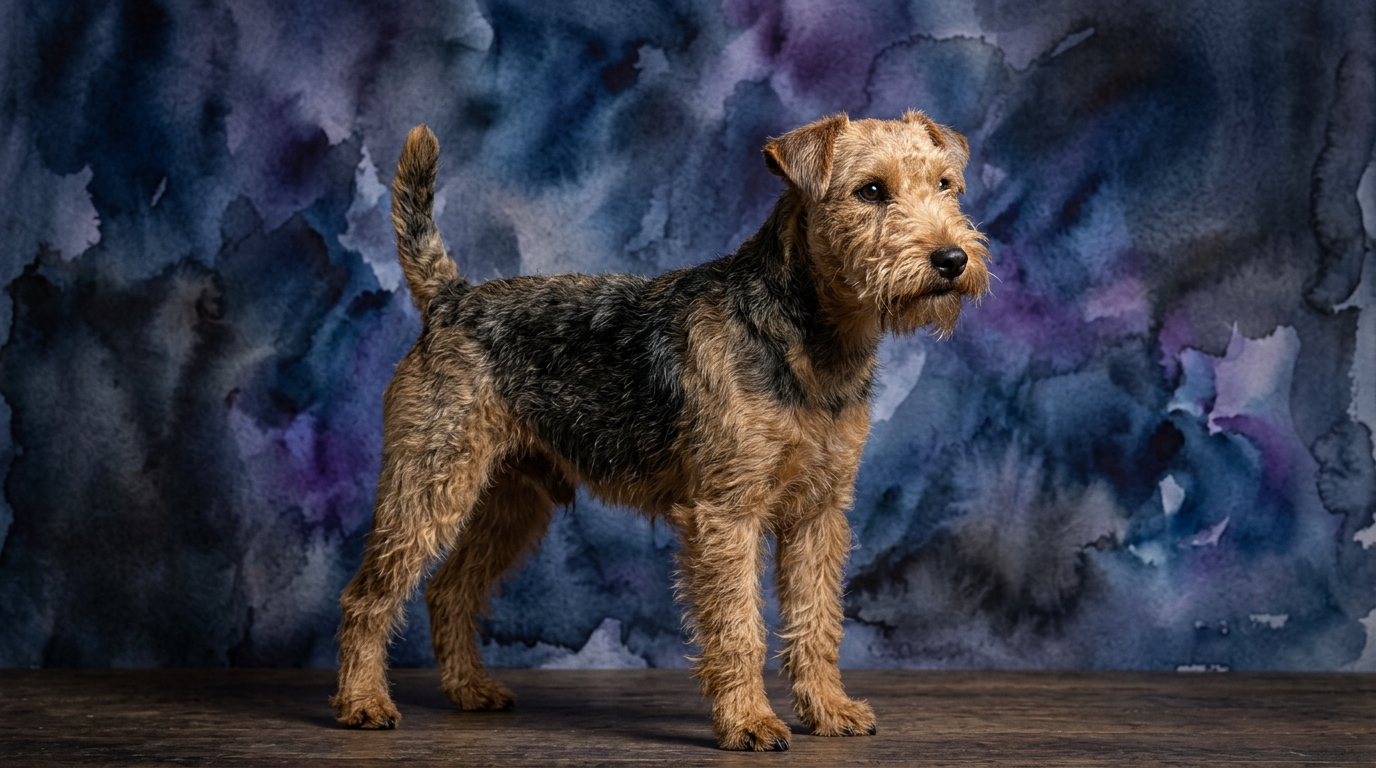
Side-by-Side Cognitive Profiles: Cairn vs. Lakeland
At The Cosmic Pet Pet IQ Lab, we dissect canine intelligence across five critical dimensions to provide a precise understanding of each breed's mental makeup. For the Cairn Terrier, we observe a robust problem-solving ability (4/5), indicating a strong capacity for figuring out complex tasks and adapting strategies. Their training speed is also commendable (4/5), suggesting a swift grasp of new commands and routines. Social intelligence for the Cairn registers at a moderate 3/5, reflecting an understanding of human cues tempered by their inherent independence. An instinctive drive of 3/5 points to a discernible, yet manageable, natural inclination towards their working heritage. Finally, their memory stands strong at 4/5, aiding in the retention of learned information and experiences. The Cairn's Coren rank of #35 further solidifies its position as a cognitively capable breed.
The Lakeland Terrier presents a profile of consistent competence across the board. Their problem-solving skills are rated at 3/5, demonstrating a capable, persistent approach to challenges, though perhaps with less inventive flair than some. Training speed for the Lakeland is also 3/5, meaning they learn at a steady pace, requiring consistent input but making reliable progress. Social intelligence mirrors the Cairn at 3/5, indicating a similar blend of attentiveness and independent spirit. Their instinctive drive is likewise 3/5, reflecting a moderate but present drive characteristic of terriers. Memory for the Lakeland also scores 3/5, suggesting a reliable capacity for retention with consistent reinforcement. The Lakeland Terrier is not Coren-ranked, which simply means its obedience aptitude hasn't been as widely standardized or studied in that specific context, rather than indicating any cognitive deficit.
Where the Cairn Terrier Demonstrates Cognitive Advantages
The Cairn Terrier demonstrates a clear cognitive edge in both problem-solving aptitude and training speed. With a 4/5 in problem-solving, Cairns often exhibit a more inventive and flexible approach to mental challenges, quickly assessing situations and devising solutions. This might manifest as them figuring out how to open a child-proof gate or systematically exploring various ways to retrieve a toy from under furniture, showcasing a greater capacity for trial-and-error learning and strategic thinking. Their 4/5 in training speed further solidifies this advantage; they tend to pick up new commands and complex sequences of actions with remarkable efficiency. This rapid assimilation of information means fewer repetitions are often needed, and they can progress to more intricate tasks faster, making them particularly rewarding for owners who enjoy advanced obedience or trick training. Furthermore, their superior memory (4/5) supports these gains, ensuring that once a lesson is learned or a solution discovered, it is retained effectively, building a robust foundation for future learning and consistent behavior.
Identifying Cognitive Strengths in the Lakeland Terrier
While the Lakeland Terrier doesn't outscore the Cairn in individual cognitive dimensions based on our metrics, their strengths lie in a different realm: a balanced, robust, and often unwavering consistency in their cognitive output. Their 3/5 scores across the board for problem-solving, training speed, social intelligence, instinctive drive, and memory indicate a reliably steady mental profile rather than peaks and valleys. This consistent intellectual grounding means they are less likely to overthink or become overly complex in their approach, which can be an advantage in certain scenarios. For instance, their instinctive drive, while present (3/5), might be channeled with a more predictable focus, making their working tendencies less prone to sudden, unexpected detours compared to a breed with higher, more erratic drive scores. Their steady training speed (3/5) ensures that while they may not be the fastest learners, what they do learn, they learn thoroughly and with enduring commitment, often becoming dependable companions once a routine is established. This cognitive steadfastness can be perceived as a win for owners who value predictability and a straightforward mental approach in their canine partner.
Training Dynamics: Which Breed Offers an Easier Journey?
Considering their respective cognitive profiles, the Cairn Terrier generally presents as the easier breed to train. This advantage stems directly from their higher scores in both Training Speed (4/5) and Memory (4/5). A Cairn’s quicker grasp of new commands means that a trainer will likely spend less time on initial repetitions, seeing results and progress more rapidly. For example, teaching a 'stay' command might require fewer sessions for a Cairn to reliably understand and execute, compared to a Lakeland. Their superior memory ensures that once a command is learned, it is retained effectively over longer periods, reducing the need for constant refreshers. Furthermore, their stronger problem-solving ability (4/5) can translate into a greater capacity to generalize learned behaviors to new situations or to independently figure out what is expected of them in a novel context. A Cairn might more readily adapt a 'leave it' command from a dropped treat to a tempting squirrel, whereas a Lakeland, with its 3/5 in these areas, might require more explicit instruction and repeated exposure to make the same connection, relying more on sustained, patient reinforcement to build and maintain behaviors.
Matching Cognitive Needs to Owner Lifestyles
The choice between a Cairn and a Lakeland Terrier for active versus relaxed owners hinges less on sheer physical energy and more on the type of mental engagement each breed thrives on. Both breeds share a similar Instinctive Drive (3/5), suggesting a moderate inclination towards activity and exploration. However, the Cairn Terrier’s higher problem-solving (4/5) and training speed (4/5) make them more suitable for active owners who enjoy engaging their dog in mentally stimulating activities. These owners might relish teaching complex tricks, participating in agility, or exploring scent work, where the Cairn’s quick wit and eagerness to learn will shine. Their cognitive agility means they thrive on varied challenges and can become bored if not given sufficient mental outlets. Conversely, the Lakeland Terrier, with its consistent 3/5 across cognitive dimensions, might be a better fit for relaxed owners who appreciate a more predictable and less demanding mental companion. While still requiring exercise and consistent training, the Lakeland may not seek out intricate mental puzzles with the same fervor as a Cairn. They are often content with established routines, regular walks, and less intense mental games, valuing a steady companionship over constant intellectual challenge. This doesn't mean they are inactive, but their mental needs are often met with straightforward engagement rather than elaborate cognitive demands.
The Verdict
Opt for the Cairn Terrier if you seek a mentally agile companion eager for diverse training challenges and quick to grasp new concepts, thriving on intellectual engagement and rapid learning.
Select the Lakeland Terrier if you prefer a steady, dependable companion whose cognitive consistency offers a more predictable and straightforward training journey, valuing thoroughness over speed.
🧠 Find Your Pet's IQ Score
Our Pet IQ Lab assessment covers 25+ tests across 5 cognitive dimensions — personalized to your breed.
Take the Full IQ Test →Frequently Asked Questions
Do Cairn Terriers require more mental stimulation than Lakeland Terriers?
Yes, generally. With a problem-solving score of 4/5, Cairn Terriers possess a more inventive and adaptable mind, meaning they thrive on varied mental challenges and can become bored without sufficient cognitive engagement. Lakeland Terriers, while still needing stimulation, often find satisfaction in more consistent routines and less intricate mental games.
Are Lakeland Terriers stubborn during training compared to Cairns?
While both are terriers with inherent independence, the Lakeland's 3/5 training speed and memory suggest they might require more patience and consistent reinforcement to learn and retain commands. Cairns, with 4/5 in both areas, tend to pick up and recall lessons more quickly, which can make them seem less 'stubborn' as they grasp concepts faster.
How does Coren ranking impact this comparison?
The Cairn Terrier's Coren rank of #35 places it among breeds with above-average working and obedience intelligence, aligning with its higher scores in problem-solving and training speed. The Lakeland Terrier's absence from the Coren ranking doesn't imply a lack of intelligence, but rather that its obedience aptitude hasn't been as widely standardized or studied in that specific context, suggesting its cognitive strengths might lie outside those particular metrics.