
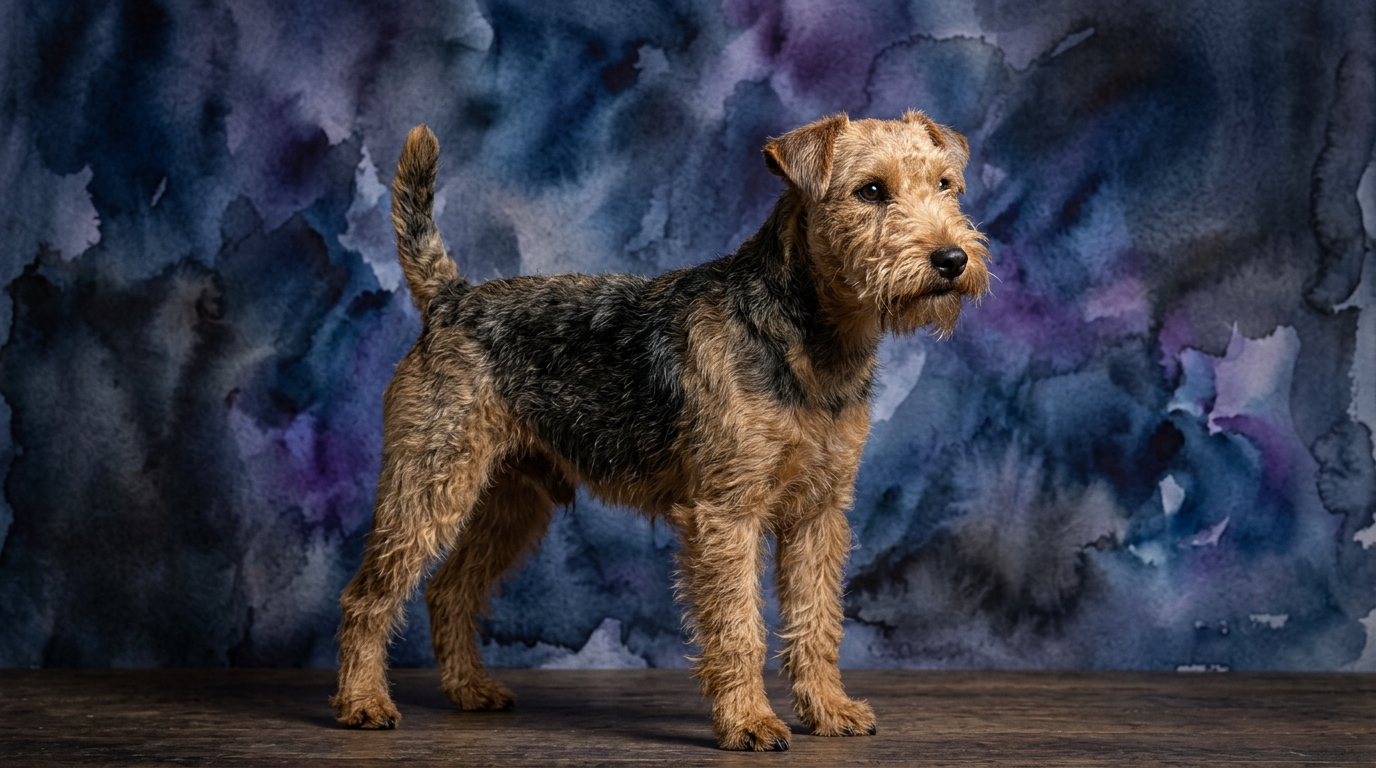
Side-by-Side IQ Profile: German Shepherd vs. Lakeland Terrier
The Cosmic Pet Pet IQ Lab employs a multi-dimensional framework to assess canine intelligence, moving beyond simple obedience to encompass a broader spectrum of cognitive abilities. For the German Shepherd, a breed ranked #3 in Stanley Coren's intelligence hierarchy, their profile consistently scores at the highest tier across all measured dimensions. Their Problem Solving is rated 5/5, indicating an exceptional capacity to analyze novel situations, devise solutions, and adapt strategies effectively. Training Speed also stands at 5/5, reflecting their rapid acquisition of new commands and complex sequences, often requiring minimal repetitions. Social Intelligence, at 5/5, highlights their profound ability to interpret human cues, form deep communicative bonds, and understand social hierarchies. Their Instinctive Drive, also 5/5, signifies a powerful intrinsic motivation for work, purpose, and task completion, often manifesting as a strong desire to be engaged. Finally, Memory at 5/5 ensures they retain vast amounts of information, from commands to routines and environmental details, over long periods.
In contrast, the Lakeland Terrier presents a distinct cognitive profile, aligning with their terrier heritage. While not formally ranked by Coren, their IQ scores provide a clear picture of their cognitive strengths and preferences. Their Problem Solving is rated 3/5, meaning they are capable of navigating challenges and learning from experience, but may not actively seek out complex puzzles or generate elaborate solutions without specific motivation. Training Speed is also 3/5, suggesting they learn at a moderate pace, requiring consistent reinforcement and a patient approach to master new commands. Social Intelligence, at 3/5, indicates they form affectionate bonds with their human companions, yet may exhibit a more independent streak, less attuned to subtle human emotional shifts compared to a Herding breed. Their Instinctive Drive, also 3/5, is often channeled into specific, intense pursuits like hunting or digging, rather than a broad working ethic. Memory, rated 3/5, ensures they recall important information and routines, though perhaps not the multi-layered command structures a German Shepherd might master.
Where the German Shepherd Excels Cognitively
The German Shepherd's cognitive prowess is evident in their unparalleled capacity for complex tasks and their almost intuitive understanding of human intent. Their 5/5 Problem Solving allows them to excel in roles requiring independent decision-making, such as guiding the visually impaired or detecting specific substances in dynamic environments. Unlike breeds that might rely on rote learning, a German Shepherd can assess an unforeseen obstacle and adapt a previously learned solution or invent a new one on the spot. This cognitive flexibility, combined with their 5/5 Training Speed, means they can absorb intricate command sequences and generalize them to new contexts with remarkable efficiency, making them adept at advanced obedience, protection work, and competitive dog sports.
Furthermore, their 5/5 Social Intelligence provides a significant cognitive edge in partnership roles. They don't just follow commands; they often anticipate them, reading subtle shifts in posture, tone, or gaze to understand their handler's desires. This deep social attunement fosters a collaborative working relationship, where the dog actively participates in achieving a shared goal. Their formidable 5/5 Memory ensures that once a lesson is learned, it is deeply ingrained, allowing for reliable performance even after long periods without practice. This combination of rapid learning, deep understanding, and robust recall positions the German Shepherd as a truly versatile and cognitively sophisticated canine partner.
Where the Lakeland Terrier's Cognition Shines
While the Lakeland Terrier's IQ scores are generally lower than the German Shepherd's, their cognitive profile represents a unique set of strengths perfectly suited to their heritage as a tenacious vermin hunter. Their 3/5 Problem Solving, for instance, isn't about solving complex puzzles for human entertainment; it's about efficient, direct action to achieve a specific goal, like flushing out quarry from a den. This focused, pragmatic approach to problem-solving means they are not easily deterred by minor setbacks and possess a singular determination that can be an asset in situations requiring perseverance rather than broad adaptability.
The Lakeland Terrier's 3/5 Instinctive Drive, while not as broad as a German Shepherd's working drive, is intensely concentrated on their primary purpose. This means they exhibit remarkable focus and endurance when engaged in activities that tap into their innate prey drive, such as scent work or agility courses that simulate a chase. Their independence, reflected in their 3/5 Social Intelligence, can be a cognitive advantage in scenarios where self-reliance is valued; they are capable of operating autonomously and making decisions in the field without constant human direction. Their 3/5 Memory, though not geared towards vast command repertoires, is highly effective for remembering critical hunting routes, scent profiles, and the locations of preferred digging spots, demonstrating a practical, purpose-driven memory.
Ease of Training: Behavioral Differences
When considering ease of training, the German Shepherd generally presents a more straightforward experience for most owners due to their exceptional cognitive attributes. Their 5/5 Training Speed means they grasp new commands quickly, often with just a few repetitions, and their strong desire to please, coupled with their 5/5 Social Intelligence, makes them highly responsive to positive reinforcement and eager to collaborate. They thrive on structure and purpose, converting training sessions into opportunities for mental engagement and bonding. Their 5/5 Memory ensures that once a command is learned, it sticks, leading to reliable long-term recall and consistent performance in various situations.
The Lakeland Terrier, with its 3/5 Training Speed, requires a more patient, consistent, and creative approach to training. Their deep-seated terrier instincts, particularly a strong prey drive and independent spirit, mean they can be easily distracted and may not always see the immediate value in human-initiated commands if it conflicts with their own perceived 'fun.' Behavioral differences include a tendency towards selective hearing when a more stimulating scent or movement is present, and a stubborn streak that can emerge if they don't understand the 'why' behind a command. Successful training with a Lakeland involves making it a game, maintaining high motivation, and understanding that while they are capable of learning, their compliance often comes on their own terms and with more repetitions than their German Shepherd counterpart.
Suitability for Active vs. Relaxed Owners
The German Shepherd is an ideal match for active owners who are prepared to provide significant mental and physical engagement. Their 5/5 Problem Solving and Instinctive Drive mean they require more than just walks; they need a 'job' or consistent challenges to channel their considerable energy and cognitive capacity. Owners who enjoy dog sports like agility, obedience, protection work, or even just complex puzzle toys and daily training sessions will find a deeply satisfied and well-adjusted companion. A German Shepherd with insufficient mental stimulation can become bored, potentially leading to undesirable behaviors as they invent their own 'work.'
The Lakeland Terrier can suit moderately active owners who appreciate a dog with bursts of energy rather than sustained high-intensity demands. While they need regular exercise to satisfy their terrier drive, it often manifests as vigorous play, digging, or exploring a secure yard, rather than marathon runs or complex obedience routines. They can be content with shorter, impactful activity sessions interspersed with periods of relaxation. A relaxed owner who understands and respects the Lakeland's independent nature and provides outlets for their natural curiosity and prey drive will find a charming and spirited companion, though they must still commit to consistent boundaries and training to manage their innate tenacity.
The Verdict
Choose a German Shepherd if you are a dedicated owner seeking a highly engaged, trainable partner for complex tasks, protection, or dog sports, who can consistently provide mental and physical challenges.
Opt for a Lakeland Terrier if you appreciate a spirited, independent companion with a keen hunting instinct, and are prepared to provide consistent, firm, and patient training, embracing a dog with a distinct personality.
🧠 Find Your Pet's IQ Score
Our Pet IQ Lab assessment covers 25+ tests across 5 cognitive dimensions — personalized to your breed.
Take the Full IQ Test →Frequently Asked Questions
Does a higher Coren rank mean a dog is 'better'?
Coren's ranking primarily assesses 'working and obedience intelligence,' which reflects a dog's ability to learn and execute human commands. It doesn't encompass all forms of canine intelligence, such as problem-solving in natural environments or social cognition within their own species, nor does it imply one breed is inherently 'better' than another, only differently wired for specific tasks.
Are Lakeland Terriers difficult to train because of their 3/5 scores?
Lakeland Terriers are not necessarily 'difficult' but require a different training approach compared to breeds with higher scores. Their 3/5 training speed and independent nature mean consistency, patience, and motivation through play and high-value rewards are crucial. Understanding their strong prey drive and using it to your advantage can make training a rewarding experience.
How do 'instinctive drive' scores impact daily life?
A high instinctive drive (like the German Shepherd's 5/5) means the dog has a strong intrinsic need to work or have a purpose, requiring owners to provide structured activities to prevent boredom. A moderate drive (like the Lakeland Terrier's 3/5) indicates a more focused, perhaps less broad, innate motivation, often tied to their original breed purpose, which still needs appropriate outlets but might be less demanding in terms of constant engagement.