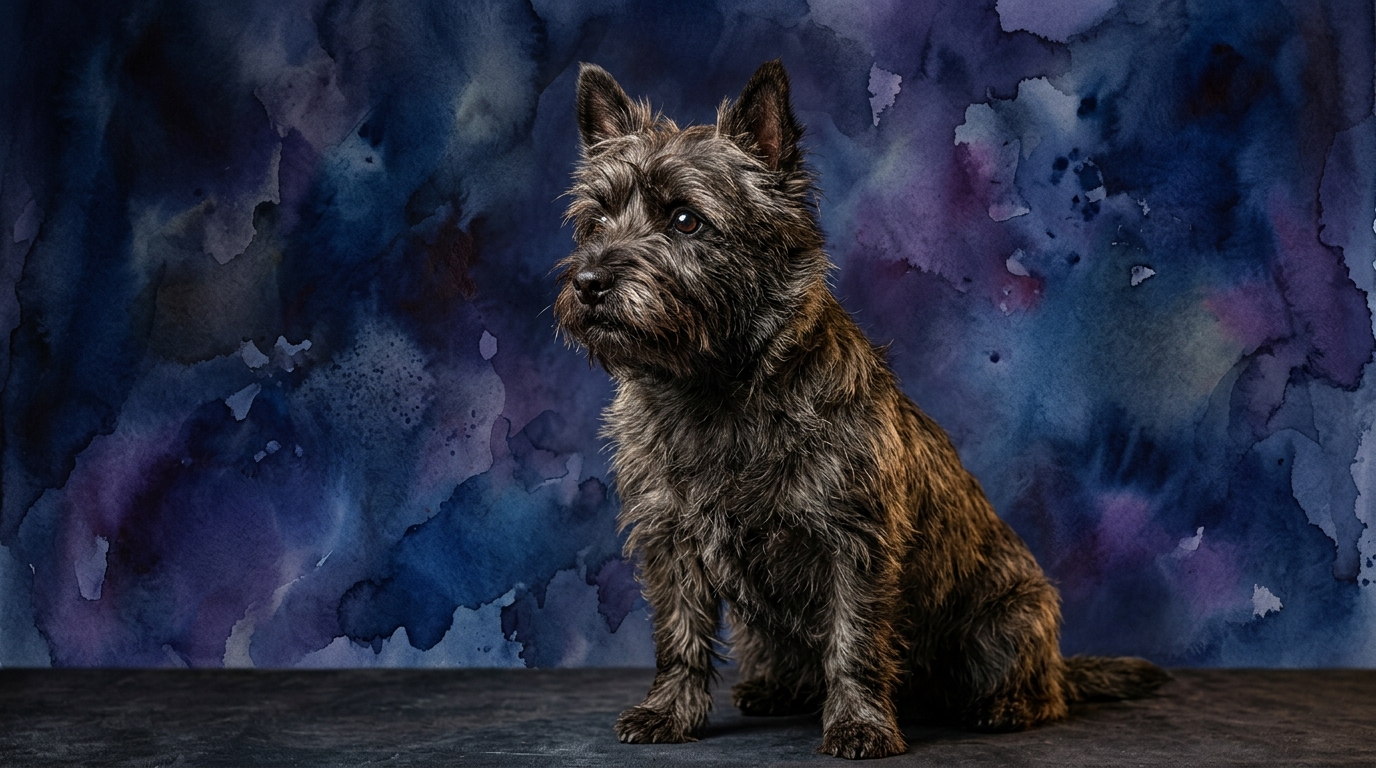

Side-by-Side IQ Profile: Cairn Terrier vs. Lhasa Apso
The Cosmic Pet Pet IQ Lab assesses canine intelligence across five key dimensions, providing a granular view beyond overall rankings. While the Cairn Terrier holds a respectable Coren rank of #35, indicating strong working and obedience intelligence, the Lhasa Apso is positioned at #68, suggesting a different, though equally valid, cognitive approach.
In Problem Solving, the Cairn Terrier scores a notable 4/5, reflecting a breed that readily engages with novel situations and devises solutions. This suggests resourcefulness and an independent streak, where they are capable of figuring things out for themselves, from puzzle toys to navigating household obstacles.
The Lhasa Apso, with a Problem Solving score of 3/5, demonstrates competence in navigating their world but may exhibit less independent initiative in complex scenarios. They are capable of understanding and overcoming challenges but might rely more on established routines or human guidance rather than inventing new strategies.
Regarding Training Speed, the Cairn Terrier's 4/5 score signifies a quick grasp of new commands and an eagerness to engage in learning sessions. This breed often thrives on structured tasks, quickly associating actions with desired outcomes, making them responsive to consistent training efforts.
The Lhasa Apso’s 3/5 in Training Speed indicates a steady learning pace; they are not slow, but may require more consistent repetition and patience to fully internalize commands. Their learning style is often deliberate, building a solid foundation of understanding rather than rushing through new material.
Both breeds register a 3/5 in Social Intelligence, but its manifestation differs. The Cairn Terrier forms strong bonds and understands household dynamics, yet retains a characteristic terrier independence, sometimes prioritizing its own agenda over immediate human directives. They are observant of their family's moods and routines.
The Lhasa Apso’s 3/5 Social Intelligence often translates into a discerning loyalty, making them acutely aware of their owner’s emotional states and daily habits. They are keen observers of human interaction but can be reserved or indifferent towards strangers, demonstrating selective social engagement that is characteristic of their ancient guardian role.
Instinctive Drive also stands at 3/5 for both, though channeled differently. The Cairn Terrier’s score reflects its heritage as an earth dog, retaining an underlying drive to investigate, dig, and pursue small, scurrying creatures, requiring proactive management to direct these natural urges.
The Lhasa Apso’s 3/5 Instinctive Drive is rooted in its historical role as a temple sentinel, manifesting as a strong alert instinct and territorial awareness. This drive primarily expresses itself as vigilant observation and a ready bark to signal perceived changes or intruders, rather than a strong prey chase or digging compulsion.
Finally, for Memory, the Cairn Terrier scores 4/5, indicating excellent retention of learned behaviors, routines, and past experiences. Once a command or boundary is established, they reliably recall it, making them consistent performers in familiar contexts and quick to adapt learned skills.
The Lhasa Apso’s 3/5 Memory suggests good recall for familiar commands and established routines but may require more frequent reinforcement for complex or infrequently performed tasks. They are capable of remembering what they’ve learned, but their recall may not be as instantaneous or robust as a Cairn's in varied situations.
Where the Cairn Terrier Wins Cognitively
The Cairn Terrier’s cognitive profile presents clear strengths, particularly in areas demanding mental agility and quick learning. Their 4/5 in Problem Solving stands out, signifying a dog that not only encounters challenges but actively seeks to overcome them. This manifests as a resourceful nature, where they are adept at figuring out solutions, from unlocking a gate to strategically moving furniture to reach a forbidden treat.
Coupled with their 4/5 Training Speed and 4/5 Memory, Cairns are exceptionally capable learners. They grasp new concepts rapidly and retain information effectively, making them prime candidates for engaging in advanced obedience, agility, or even trick training. Owners will find them quick to understand complex sequences and adapt learned behaviors, often requiring fewer repetitions to master a skill. This cognitive sharpness means they thrive on continuous mental engagement, making them highly rewarding for owners who enjoy interactive training and mind games.
Where the Lhasa Apso Wins Cognitively
While the Lhasa Apso doesn't boast numerically higher scores than the Cairn Terrier in any dimension, its cognitive profile, particularly its balanced 3/5 scores, offers distinct advantages for specific lifestyles. This consistent cognitive makeup provides a predictable and often less demanding intellectual presence, which can be a significant 'win' for certain owners.
The Lhasa Apso’s 3/5 in Social Intelligence and Instinctive Drive, while equal to the Cairn, manifests in a way that aligns perfectly with a discerning companion role. Their social intelligence often translates into a profound, unwavering loyalty to their chosen family, offering deep connection without the constant demand for engagement a more problem-solving breed might exhibit. Their instinctive drive is perfectly channeled into being an attentive, watchful indoor sentinel, a 'win' for those valuing an alert guardian without the intense burrowing or prey drive management often associated with terriers.
Furthermore, their 3/5 scores in Problem Solving and Memory mean they are capable and intelligent, yet less inclined to invent complex, self-directed 'projects' when under-stimulated. This can be a 'win' for a quieter household where an owner might prefer a dog less apt to create its own entertainment through potentially destructive means, instead relying more on established routines and companionship for contentment.
Which is Easier to Train and Why
When considering ease of training, the Cairn Terrier's 4/5 Training Speed generally gives it an edge. Cairns tend to pick up new commands more quickly and often display a greater enthusiasm for structured training sessions, making the initial stages of obedience training feel more fluid and responsive for the owner.
However, 'easier' is nuanced. Cairns, with their higher problem-solving and memory, thrive on varied training challenges, but their terrier tenacity can translate into stubbornness if they don't perceive the value of a command or if their independent streak surfaces. Lhasa Apsos, while capable learners, are more deliberate. Their historical role as independent indoor guardians means they value their autonomy and may not feel the same inherent drive to perform purely for human approval as some other breeds.
Ultimately, the Cairn might offer quicker initial results and enjoy a wider range of complex learning games. The Lhasa Apso, conversely, requires greater patience and consistency, but this dedication often leads to deeply ingrained, reliable behaviors. For an owner who values steady progress and a dog that responds reliably once a behavior is truly internalized, the Lhasa Apso, with consistent, positive reinforcement, proves a rewarding trainee.
Which Suits Active Owners vs. Relaxed Owners
For active owners seeking a dynamic companion, the Cairn Terrier is often an excellent match. Their higher scores in problem-solving, training speed, and memory, coupled with their inherent terrier zest for life, mean they thrive on mental puzzles, structured training, and ample opportunities to explore and 'work.' Owners who enjoy dog sports, extensive walks, or engaging in interactive play and regular outings will find the Cairn a willing, capable, and enthusiastic partner, ready for adventure.
The Lhasa Apso, with its more moderate cognitive profile and historical role as a companion and sentinel, generally suits a more relaxed, yet consistent, lifestyle. While they still require daily walks and mental engagement to prevent boredom, their energy levels are often lower than a Cairn's, and they are typically content observing their surroundings and enjoying quiet companionship. They are ideal for owners who prefer a less intensely demanding canine partner but still appreciate an alert, loyal, and discerning presence in their home.
The Verdict
Choose a Cairn Terrier if you desire a sharp, quick-witted companion eager for mental challenges and structured activities, thriving with an owner ready to engage its problem-solving prowess and memory.
Opt for a Lhasa Apso if you seek a discerning, loyal sentinel who appreciates a consistent, relaxed routine and offers quiet companionship, with training success built on patience and understanding their independent spirit.
🧠 Find Your Pet's IQ Score
Our Pet IQ Lab assessment covers 25+ tests across 5 cognitive dimensions — personalized to your breed.
Take the Full IQ Test →Frequently Asked Questions
Are Cairn Terriers good apartment dogs?
Yes, Cairn Terriers can adapt well to apartment living if their significant mental and physical exercise needs are consistently met. Their intelligence means they require daily engagement through walks, play, and puzzle toys to prevent boredom-driven behaviors.
Do Lhasa Apsos bark a lot?
Lhasa Apsos, with their 3/5 instinctive drive for guarding, are naturally inclined to be alert barkers, signaling when strangers approach or unusual sounds occur. Consistent training from a young age can help manage this tendency, teaching them appropriate times to be vocal.
Which breed is more prone to separation anxiety?
Neither breed is inherently more prone to separation anxiety than the other; it's more dependent on individual temperament and early training. However, both breeds form strong bonds and can develop anxiety if not properly socialized and accustomed to alone time from puppyhood.