Side-by-Side Cognitive Profile
The Cosmic Pet Pet IQ Lab employs a five-dimensional framework to assess canine cognition, providing a nuanced understanding beyond simple rankings. Let’s examine how the Standard Poodle and Lhasa Apso measure up across these critical areas.
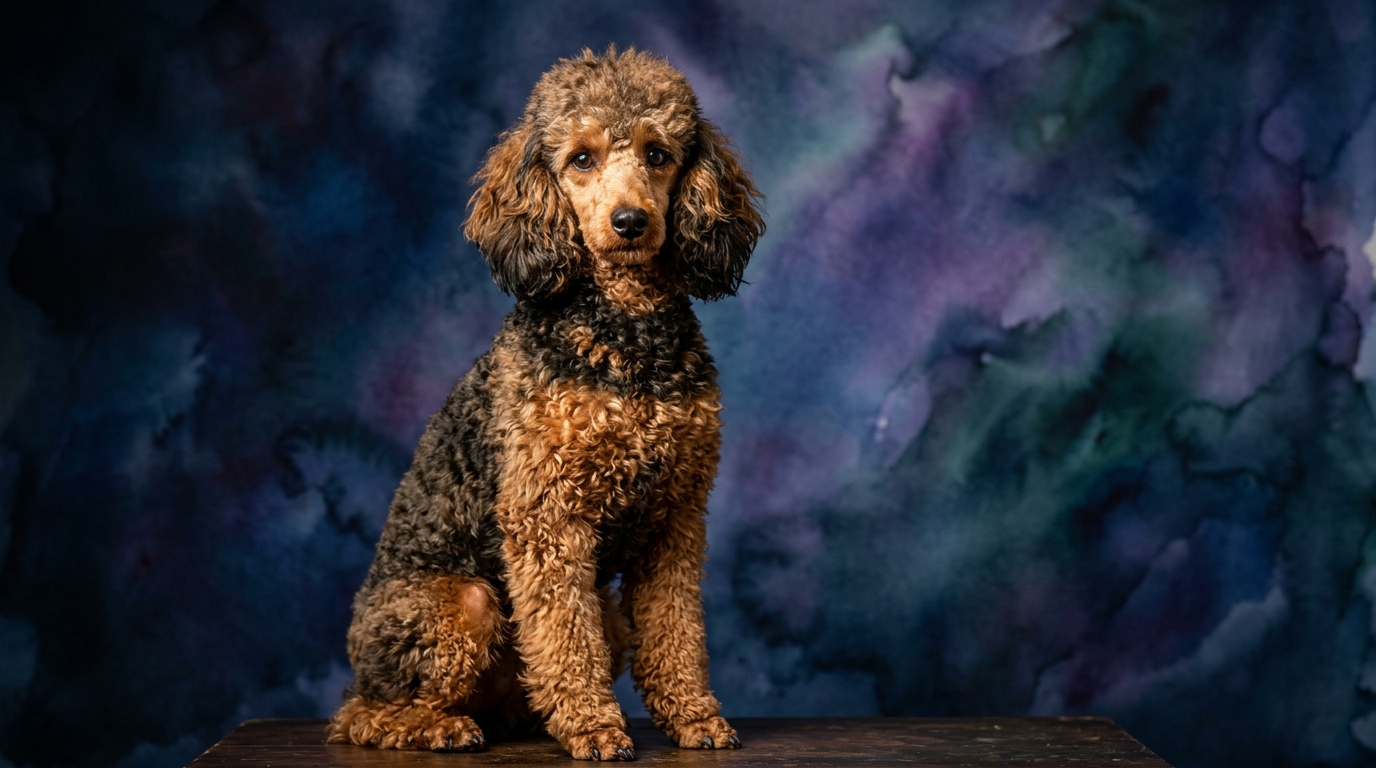
The Standard Poodle, holding a Coren rank of #2, demonstrates exceptional aptitude across almost all cognitive dimensions. Their Problem Solving is rated 5/5, indicating a rapid ability to decipher complex tasks and navigate novel situations. Training Speed, also 5/5, highlights their quick acquisition of new commands and routines, often requiring minimal repetition. Social Intelligence, at 5/5, reflects an outstanding capacity to interpret human cues, emotions, and intentions, fostering highly communicative interactions. Their Instinctive Drive is a strong 4/5, suggesting a pronounced inherent motivation for various tasks like retrieving or companionship, which is also highly channelable. Finally, Memory is a perfect 5/5, ensuring consistent retention of learned information and experiences over time.
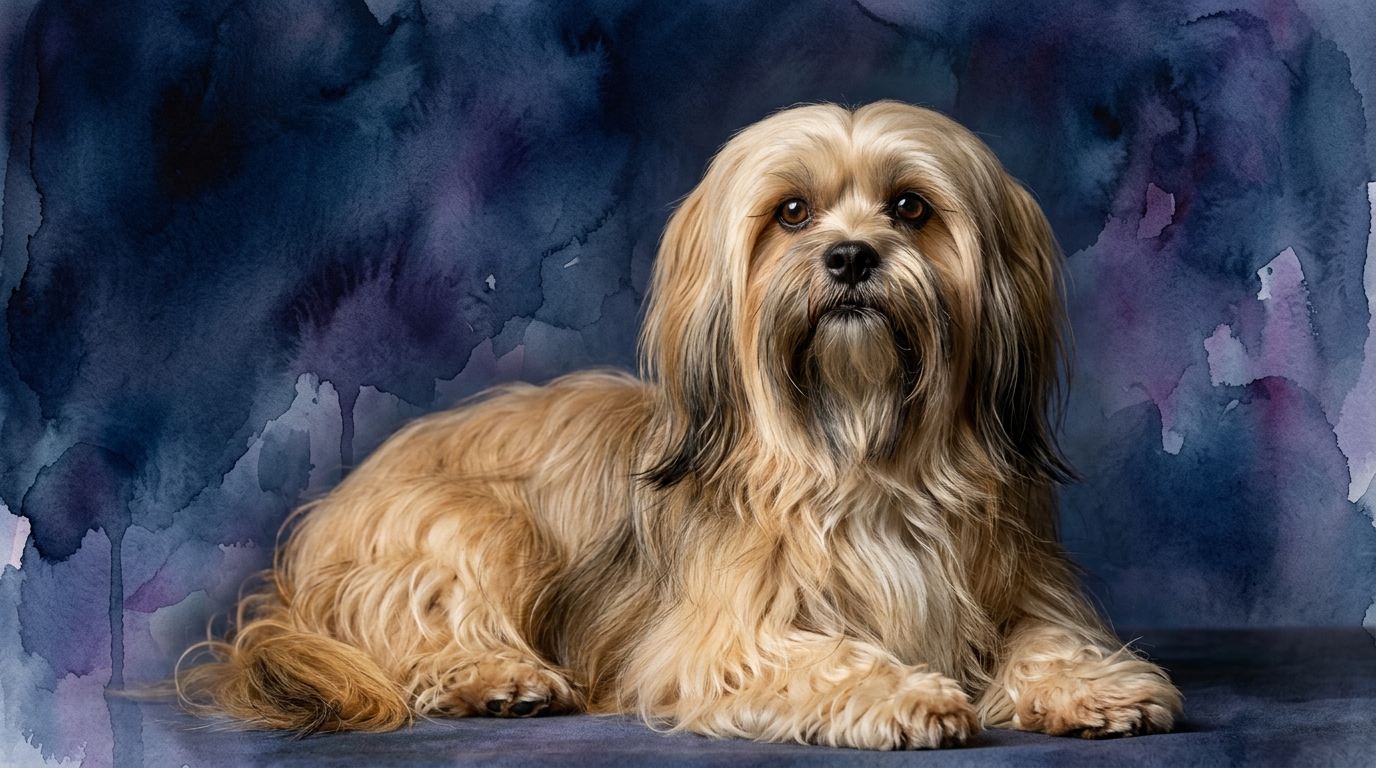
In contrast, the Lhasa Apso, with a Coren rank of #68, presents a different cognitive blueprint. Their Problem Solving capability is rated 3/5, indicating they are capable of practical solutions but may prefer established methods or require more time to strategize. Training Speed, at 3/5, suggests they learn at a moderate pace, benefiting from consistent, patient, and reward-based instruction. Social Intelligence also stands at 3/5; they are observant of human behavior but often maintain a degree of discerning independence in their interactions. Their Instinctive Drive is 3/5, revealing a moderate, often self-directed motivation for specific tasks, less geared towards constant human-pleasing. Their Memory, rated 3/5, is sufficient for retaining important information, particularly routines and territorial boundaries, though complex sequences might require more reinforcement.
Where the Standard Poodle Excels Cognitively
The Standard Poodle's cognitive architecture, marked by its 5/5 scores across Problem Solving, Training Speed, Social Intelligence, and Memory, positions it as a highly adaptable and responsive canine companion. Their capacity to rapidly process new information allows them to grasp complex multi-step commands with remarkable efficiency, often requiring fewer repetitions than many other breeds. For instance, a Standard Poodle might quickly learn to retrieve specific items by name or navigate an intricate agility course after minimal demonstrations. Their exceptional Social Intelligence means they are adept at interpreting subtle human cues, understanding not just verbal commands but also shifts in body language and tone, allowing for a nuanced, almost conversational interaction. This makes them particularly responsive partners in activities requiring close cooperation, such as advanced obedience or therapy work. Furthermore, their 5/5 Memory ensures that once a concept or skill is acquired, it is retained with impressive consistency, building a robust foundation for continuous learning and skill refinement throughout their lives. This cognitive profile means they don't just learn *what* to do, but often seem to understand *why* they are doing it, leading to highly motivated and engaged participation in various activities.
Where the Lhasa Apso Demonstrates Unique Cognitive Strengths
While the Lhasa Apso's cognitive profile, with 3/5 across the board, suggests a different approach to intelligence, it unveils distinct strengths rooted in their historical role as watchful guardians. Their cognitive victories aren't about eager compliance but rather a discerning independence. A Lhasa Apso's Problem Solving at 3/5 manifests as practical, often self-directed solutions; they might not seek human instruction for every challenge but will assess situations and act based on their own judgment, particularly concerning their territory or perceived threats. Their Social Intelligence, also 3/5, enables them to observe human behavior meticulously, not necessarily to please, but to understand the household dynamics and identify patterns. This observational capacity fuels their discerning nature, allowing them to form strong, selective bonds and exhibit a deep understanding of their chosen companions. Furthermore, their moderate Instinctive Drive is not a deficit but a strength in self-sufficiency; they possess a strong sense of self-preservation and a natural inclination to guard their space, often making independent decisions about who or what is welcome. This breed excels in a cognitive framework where self-reliance, keen situational awareness, and a strong inner compass are highly valued, rather than a constant desire for external direction. Their memory, at 3/5, is sufficient for retaining critical information, especially concerning routines and the layout of their environment, contributing to their steadfast guardianship.
Training Ease: Poodle vs. Lhasa Apso
When considering ease of training, the Standard Poodle presents a significantly smoother journey for most owners. Their 5/5 Training Speed means they absorb new commands and behaviors quickly, often thriving on the mental engagement that training provides. Their high Social Intelligence makes them eager to cooperate and understand what is expected, often anticipating cues and responding with enthusiasm. This breed generally forms strong associations between actions and rewards rapidly, making positive reinforcement highly effective. Their consistent 5/5 Memory ensures that once a behavior is learned, it is reliably recalled, building a strong foundation for advanced training and long-term behavioral consistency.
The Lhasa Apso, with a 3/5 Training Speed and Social Intelligence, requires a more patient and nuanced approach. Their independent nature often means they need to be convinced of the value or purpose of a command before offering consistent compliance. They are not inherently driven to please in the same way as a Standard Poodle; instead, their motivation often stems from their own self-interest or a strong bond with their primary caregiver. Training a Lhasa Apso benefits from very consistent methods, short engaging sessions, and a deep understanding of their individual personality. Owners should be prepared for a journey that emphasizes mutual respect and understanding rather than immediate obedience, acknowledging their discerning nature and strong will. Real behavioral differences include the Poodle's tendency to offer behaviors proactively to earn rewards versus the Lhasa Apso's tendency to evaluate a request before responding, sometimes with a 'what's in it for me?' attitude.
Matching Canine Cognition to Owner Lifestyles
The distinct cognitive profiles of the Standard Poodle and Lhasa Apso naturally align with different owner lifestyles and expectations. Owners seeking an active, mentally stimulating partnership will find a profound connection with the Standard Poodle. Their high scores in Problem Solving, Training Speed, and Instinctive Drive make them ideal companions for individuals who enjoy engaging in dog sports such as agility, obedience, or rally, or even complex trick training. They thrive on learning new things and appreciate consistent mental challenges, making them suitable for owners who are committed to providing daily enrichment and structured activities. A Standard Poodle’s enthusiastic participation and responsive nature make them excellent partners for an owner who wants a dog to be an active participant in their hobbies and daily routines, constantly seeking interaction and understanding.
Conversely, the Lhasa Apso is a better fit for owners who appreciate a companion with a strong, independent personality and a more relaxed pace, yet still value consistent, reward-based training. Their discerning nature and moderate instinctive drive mean they are content with a comfortable routine and fewer demands for constant engagement. Owners who enjoy a dog that observes and participates on its own terms, offering affection and companionship selectively but deeply, will appreciate the Lhasa Apso. While they still require regular exercise and mental stimulation, it’s often less about intense, structured activities and more about thoughtful interaction, consistent boundaries, and respecting their self-directed nature. They suit owners who are patient, understanding of a dog's inherent independence, and derive joy from a companion that is steadfast and discerning rather than overtly eager to please.
The Verdict
Choose a Standard Poodle if you desire a highly engaged, responsive companion eager to learn and participate in varied activities, from dog sports to complex home routines, thriving on constant mental and physical stimulation.
Opt for a Lhasa Apso if you value a discerning, independent companion with a charming personality, willing to invest patience in training and appreciate a dog with strong self-direction and territorial instincts.
🧠 Find Your Pet's IQ Score
Our Pet IQ Lab assessment covers 25+ tests across 5 cognitive dimensions — personalized to your breed.
Take the Full IQ Test →Frequently Asked Questions
Do Standard Poodles require a lot of mental stimulation?
Yes, Standard Poodles, with their high Problem Solving and Memory scores, thrive on consistent mental engagement. Owners should provide puzzles, training sessions, and varied activities to keep their minds active and prevent boredom-related behaviors.
Are Lhasa Apsos difficult to train?
Lhasa Apsos are not inherently difficult, but their independent nature and 3/5 Training Speed mean they require patience, consistency, and positive reinforcement. Their discerning personality means they need to understand the value of a command before offering reliable compliance.
How do their social interaction styles differ?
Standard Poodles, with 5/5 Social Intelligence, are highly attuned to human emotions and cues, often seeking interaction and cooperation. Lhasa Apsos, at 3/5, are observant but often more independent, forming deep but selective bonds and preferring to interact on their own terms.