
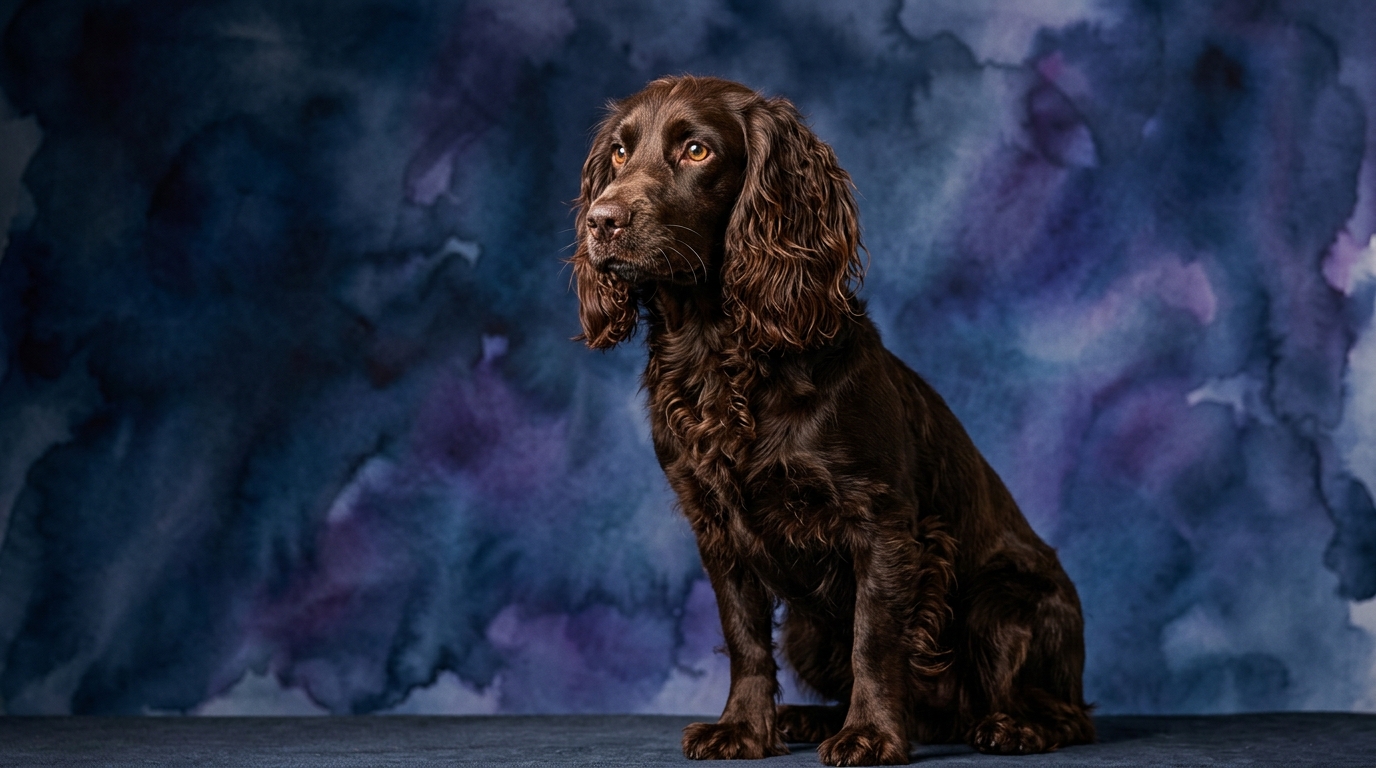
Side-by-Side IQ Profile: Canaan Dog vs. Boykin Spaniel
The Cosmic Pet Pet IQ Lab employs a five-dimensional framework to assess canine intelligence, moving beyond simple obedience to understand the nuances of a breed's cognitive landscape. Here’s how the Canaan Dog and Boykin Spaniel measure up:
**Canaan Dog (Herding, Coren Rank #43)**: This breed, with its long history of self-sufficiency, scores consistently across several cognitive domains. Its **Problem Solving (3/5)** reflects a moderate capacity for navigating novel situations and devising solutions independently, a skill honed by its desert survival and herding instincts. **Training Speed (3/5)** indicates a steady learning pace for new commands, though their independent nature necessitates consistent, engaging methods. Their **Social Intelligence (3/5)** shows a moderate understanding of human cues and pack dynamics, allowing for strong bonds, yet often approaching new interactions with cautious observation. **Instinctive Drive (3/5)** is present but manageable, encompassing moderate prey drive and territoriality. A standout is their **Memory (4/5)**, demonstrating a strong ability to retain learned commands, routines, and experiences over extended periods.
**Boykin Spaniel (Sporting, Not Coren-Ranked)**: Bred for cooperative hunting, the Boykin Spaniel's cognitive profile emphasizes practicality and partnership. Their **Problem Solving (3/5)** reveals a moderate aptitude, often characterized by enthusiastic and persistent efforts to achieve task-oriented goals, especially in retrieving scenarios. **Training Speed (3/5)** means they learn new tasks at a moderate pace, often eager to please their handler, making training a generally cooperative endeavor. Their **Social Intelligence (3/5)** highlights a moderate level of awareness, adept at reading human emotions and responding with affection and engagement, driven by a desire for companionship. **Instinctive Drive (3/5)** is well-developed for sporting tasks, manifesting as enthusiasm for retrieving, swimming, and exploring. Their **Memory (3/5)** indicates a good capacity for remembering commands and routines, though their recall of specific events might not be as detailed or long-lasting as breeds with a higher score.
Where the Canaan Dog Wins Cognitively
The Canaan Dog's most distinct cognitive advantage lies in its superior memory, scoring 4/5 compared to the Boykin Spaniel's 3/5. This enhanced recall means a Canaan Dog is more likely to remember complex sequences of commands, intricate routes, or specific encounters over extended periods. For instance, once a Canaan learns a multi-step agility course or a nuanced herding pattern, they are prone to retain that knowledge with remarkable fidelity, requiring fewer refreshers. This robust memory also underpins their cautious nature; they remember past negative experiences or perceived threats, leading to a more discerning approach in new situations. Their Coren ranking at #43 further suggests a strong capacity for adaptive intelligence, particularly in tasks requiring independent thought and learning from environmental feedback, skills honed by centuries of self-sufficiency in challenging environments. While their problem-solving score is identical, the depth of their memory allows them to draw upon a richer database of past solutions, potentially giving them an edge in applying learned strategies to new, but similar, dilemmas.
Where the Boykin Spaniel Wins Cognitively
While their numerical scores for problem-solving, training speed, and social intelligence are similar, the Boykin Spaniel's cognitive strengths manifest uniquely through its enthusiastic and cooperative nature, deeply rooted in its sporting heritage. Their problem-solving, though rated 3/5, is often characterized by persistent, goal-oriented efforts, particularly when a task involves retrieving or working alongside a handler. They might not devise complex, abstract solutions, but they will apply themselves with unwavering focus to achieve a tangible outcome, such as finding a hidden toy or retrieving an object from water. Their social intelligence, also 3/5, is geared towards partnership; they excel in reading their handler's cues for joint activities, demonstrating a strong desire to please and collaborate. This biddability, while not reflected in a higher training speed score, means they often apply their learning more readily and consistently in real-world scenarios, making them highly effective working companions. Their instinctive drive, also 3/5, is finely tuned for specific tasks like flushing and retrieving, leading to a cognitive focus that prioritizes these functions with singular determination. This targeted drive and cooperative spirit give them an edge in tasks requiring sustained engagement and handler-oriented focus.
Which is Easier to Train and Why
Despite both breeds scoring 3/5 for Training Speed, the Boykin Spaniel generally presents as the easier breed to train for the average owner, primarily due to fundamental differences in temperament and motivation. The Boykin's social intelligence and instinctive drive are geared towards cooperative work and pleasing their handler. They possess a strong desire to engage in joint activities and respond readily to positive reinforcement, making them eager participants in training sessions. Their biddable nature means they are often more forgiving of handler errors and quicker to offer desired behaviors. In contrast, the Canaan Dog, while capable of learning at the same speed, approaches training with a more independent and discerning mindset. Their problem-solving and social intelligence are tempered by a self-reliant heritage; they are less inclined to blindly obey if they perceive a command as illogical or if their handler's leadership is not consistently clear. This independence can translate into a need for more patient, consistent, and creative training methods that appeal to their problem-solving abilities rather than relying solely on eager compliance. While both learn, the Boykin's inherent desire for partnership makes the process of training feel more fluid and less challenging for many individuals.
Suitability for Active vs. Relaxed Owners
For active owners seeking a dynamic companion, both breeds offer engagement, but their preferred activities differ significantly. The Boykin Spaniel is an excellent match for owners who enjoy consistent, vigorous outdoor activities focused on partnership, such as hiking, running, swimming, or dog sports like agility and obedience. Their moderate instinctive drive and cooperative social intelligence mean they thrive on structured activities where they work closely with their person, channeling their energy into tasks that mimic their retrieving heritage. They enjoy having a 'job' to do and excel when their cognitive and physical needs are met through shared endeavors. For more relaxed owners, the Boykin can adapt, but still requires daily mental and physical stimulation to prevent boredom and channeling of their moderate energy into less desirable behaviors.
The Canaan Dog, conversely, suits active owners who appreciate a more independent companion for activities like long walks, exploring varied terrain, or participation in herding trials where their problem-solving and memory can shine. They enjoy physical exercise but might not always seek constant interaction during these activities, preferring to observe and patrol their surroundings. For relaxed owners, the Canaan Dog can be more challenging. Their moderate instinctive drive, combined with a strong memory and self-reliant problem-solving, means they require consistent mental engagement and appropriate outlets for their innate behaviors. Without sufficient stimulation, their independent nature can lead to resourceful but potentially undesirable behaviors, making them less suitable for a purely sedentary lifestyle.
The Verdict
Choose the Canaan Dog if you value an independent thinker with a remarkable memory, appreciating a canine partner who is discerning, self-reliant, and thrives on observing and learning from its environment, suited for experienced owners who enjoy nuanced training.
Opt for the Boykin Spaniel if you desire an eager, biddable companion keen on cooperative tasks, perfect for active owners seeking a devoted partner for outdoor adventures and structured training that leverages their enthusiastic, task-oriented focus.
🧠 Find Your Pet's IQ Score
Our Pet IQ Lab assessment covers 25+ tests across 5 cognitive dimensions — personalized to your breed.
Take the Full IQ Test →Frequently Asked Questions
Are Canaan Dogs good family pets despite their independence?
Yes, with proper socialization from a young age, Canaan Dogs can form strong bonds with their family members. Their moderate social intelligence allows them to be affectionate and protective, though they may maintain a watchful distance with strangers, reflecting their discerning nature.
How do Boykin Spaniels handle being left alone?
Boykin Spaniels, with their moderate social intelligence and desire for companionship, generally prefer not to be left alone for extended periods. They thrive on interaction and can develop separation anxiety or boredom-related behaviors if their social and activity needs are not met, making mental and physical enrichment crucial.
Does a Canaan Dog's strong memory make them harder to re-home?
A Canaan Dog's strong memory means they vividly recall past experiences, which can influence their adjustment to a new home. While they adapt, their memory of previous environments or handlers may require extra patience and consistent positive reinforcement to build new trust and routines.