Side-by-Side IQ Profile: Canaan Dog vs. Xoloitzcuintli
The Cosmic Pet Pet IQ Lab evaluates canine intelligence across five key dimensions, providing a nuanced understanding of each breed's cognitive strengths. Let's examine how the Canaan Dog and Xoloitzcuintli stack up.
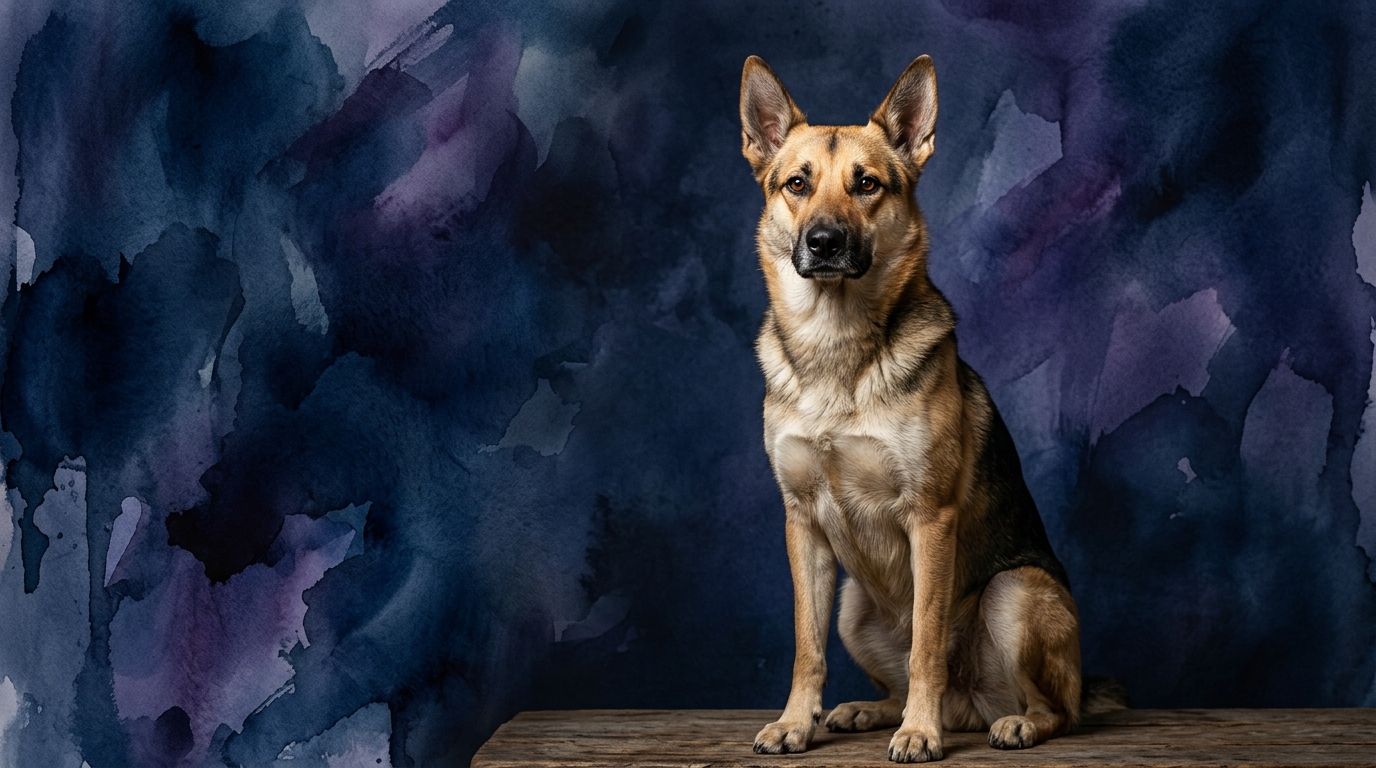
**Canaan Dog (Herding, Coren rank #43):** This ancient landrace breed, originating from the Middle East, boasts a history of independent herding and guarding, influencing its distinct cognitive makeup. Its **Problem Solving (3/5)** capacity reflects a strong aptitude for independent thought and finding practical solutions, often without direct human instruction, crucial for its survivalist past. **Training Speed (3/5)** indicates a good ability to learn new commands, though its inherent independence means it often evaluates the utility of a task before committing, requiring engaging and consistent methods. Its **Social Intelligence (3/5)** is characterized by vigilance and a discerning nature; they form deep bonds with family but remain reserved with strangers, constantly assessing their environment. The **Instinctive Drive (3/5)**, rooted in its herding heritage, manifests as a natural inclination to observe, protect, and sometimes 'manage' its surroundings and family members. A notable strength is its **Memory (4/5)**, allowing it to retain complex information, learned behaviors, and spatial awareness over extended periods, vital for navigating territories and recalling past experiences.
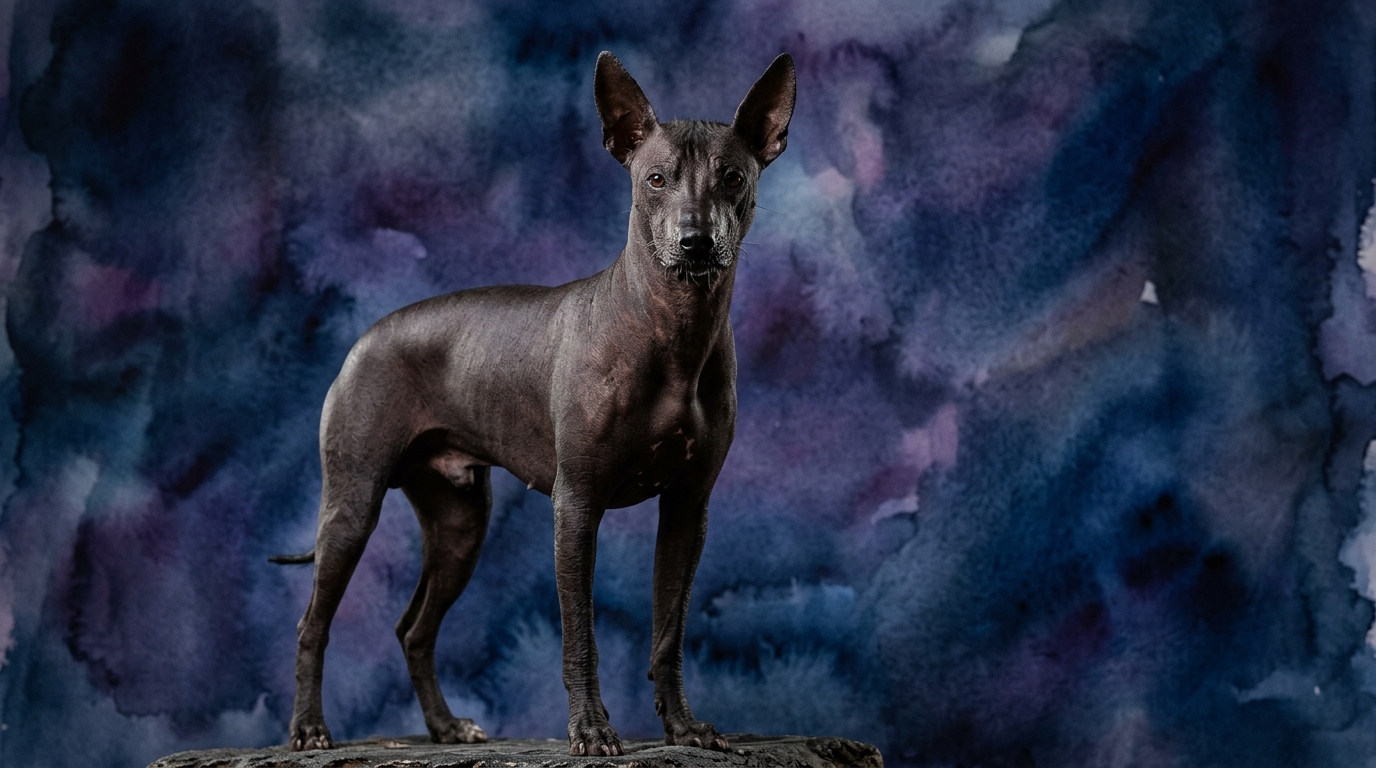
**Xoloitzcuintli (Non-Sporting, Not Coren-ranked):** The Xoloitzcuintli, an ancient companion breed from Mexico, carries a legacy of loyalty and quiet companionship, shaping its unique cognitive profile. Its **Problem Solving (3/5)** ability is practical and efficient, geared towards navigating its home environment and achieving personal comfort, often with a self-contained approach. **Training Speed (3/5)** demonstrates a solid capacity to absorb new information, though their sensitivity means they respond best to positive reinforcement and gentle guidance, thriving on strong relationships rather than harsh corrections. The Xolo's **Social Intelligence (3/5)** is profound and often intense within its core family unit; they are deeply attuned to their owners' emotional states, forming almost telepathic bonds, yet remain aloof and reserved with outsiders. Its **Instinctive Drive (3/5)**, while not tied to a specific working role, reflects a natural vigilance, a desire for security, and a strong pack bond with its human family. The breed possesses a reliable **Memory (3/5)** for routines, learned cues, and familiar individuals, allowing for consistent performance and recognition in their daily lives.
Where Canaan Dog Wins Cognitively
The Canaan Dog's cognitive advantage lies significantly in its superior memory, scoring 4/5 compared to the Xoloitzcuintli's 3/5. This enhanced recall is a direct legacy of its pariah dog origins, where remembering water sources, safe havens, and predator patterns was crucial for survival. For an owner, this translates into a dog that often learns complex sequences faster and retains training over longer periods, potentially requiring fewer refreshers for intricate tasks or multi-step commands. Their memory also plays a role in their capacity for independent problem-solving; by remembering past solutions or environmental layouts, they can more efficiently navigate new challenges. Furthermore, their herding group classification, even with a 3/5 instinctive drive, implies a cognitive framework geared towards observation and strategic control, which can manifest as a nuanced understanding of group dynamics and spatial awareness that might be less pronounced in the Xolo.
Where Xoloitzcuintli Wins Cognitively
While the Xoloitzcuintli's individual scores don't numerically surpass the Canaan Dog's, its cognitive strengths manifest uniquely, particularly in the depth and nuance of its social intelligence and self-contained problem-solving. Its 3/5 social intelligence is often expressed through an extraordinary attunement to its primary human companions, developing an almost telepathic understanding of moods and intentions. This isn't about broad social awareness, but a profound, almost empathic connection within its small, trusted circle, allowing it to anticipate needs and offer comfort in a way that’s distinctly Xolo. Moreover, as an ancient primitive breed, the Xolo displays a self-sufficient problem-solving capacity (3/5) that often prioritizes personal comfort and efficiency, allowing it to adapt resourcefully to various home environments with minimal fuss or external direction, valuing internal peace and security. This unique blend of deep social connection and self-reliant ingenuity defines its cognitive 'win' in specific contexts.
Which is Easier to Train and Why
Both the Canaan Dog and Xoloitzcuintli score 3/5 in training speed, suggesting they are equally capable of learning new commands. However, real behavioral differences significantly influence the *experience* of training. The Canaan Dog, with its independent problem-solving and primitive herding instincts, often requires a trainer who can engage its intellect and respect its inherent self-sufficiency. They learn quickly, particularly if the task makes sense to them or appeals to their observational and problem-solving nature, but they can also be less inclined to repeat an action if they don't see the immediate value. Their superior memory means once they learn something, they often retain it well, but motivating them to *perform* it consistently requires cleverness and positive reinforcement. The Xoloitzcuintli, while also having an independent streak, often responds more readily to training rooted in strong, positive relationships. Their 3/5 social intelligence, often expressed as sensitivity and deep loyalty to their chosen family, means they thrive on praise and connection. They can be more sensitive to harsh corrections, which might shut them down, but their desire to please their primary person, combined with their moderate memory, makes them generally receptive to consistent, reward-based methods. Therefore, while both learn at a similar pace, the Xolo may *feel* easier to train for owners who prioritize positive reinforcement and relationship-building, whereas the Canaan Dog might challenge an owner to be more creative and patient with its independent decision-making.
Which Suits Active Owners vs. Relaxed Owners
For active owners seeking a canine partner for outdoor adventures and mental challenges, the Canaan Dog presents an excellent match. Its heritage as a desert survivor and herding dog means it thrives on physical activity and mental engagement. Their instinctive drive, even at 3/5, combined with their problem-solving ability, makes them keen participants in activities like agility, scent work, or long hikes where they can use their senses and intellect. They require consistent stimulation to prevent boredom, which can manifest as independent (and sometimes mischievous) problem-solving if left under-stimulated. A relaxed owner might find the Canaan Dog's need for activity and mental engagement overwhelming.
The Xoloitzcuintli, conversely, often suits owners who appreciate a balance of activity and calm companionship. While they certainly enjoy walks, playtime, and can excel in dog sports, their ancient role as companions means they are equally content to curl up with their family. Their 3/5 instinctive drive leans more towards vigilance and comfort, making them adaptable to a less rigorous exercise schedule than a typical herding breed. A relaxed owner who values deep, quiet companionship, and who can provide regular but not necessarily intense physical and mental exercise, will find the Xolo a wonderfully devoted and self-contained companion. They appreciate warmth and proximity, making them ideal for cozy evenings after a moderate daily outing.
The Verdict
Select the Canaan Dog if you are an experienced, active owner seeking a highly observant, independent thinker with exceptional memory for complex tasks, valuing a dog that engages with the world intelligently and requires consistent mental and physical stimulation.
Opt for the Xoloitzcuintli if you prioritize a deeply loyal, sensitive companion with a nuanced social intelligence, valuing a dog that balances moderate activity with quiet devotion and self-sufficiency within its trusted family circle.
🧠 Find Your Pet's IQ Score
Our Pet IQ Lab assessment covers 25+ tests across 5 cognitive dimensions — personalized to your breed.
Take the Full IQ Test →Frequently Asked Questions
Are Canaan Dogs good with children?
Canaan Dogs can be excellent family dogs, but their herding instincts and reserved nature mean they often do best with older, respectful children who understand how to interact appropriately with dogs. Early socialization is crucial for harmonious family life.
Do Xoloitzcuintlis require special care due to being hairless?
Hairless Xolos do require specific care, including sun protection (sunscreen or clothing) to prevent sunburn, moisturizing to prevent dry skin, and warm clothing in cold weather. Their sensitive skin needs consistent attention to remain healthy.
Which breed is more prone to separation anxiety?
Both breeds can develop separation anxiety if not properly conditioned or if their social and mental needs aren't met. The Xolo's deep, intense bond with its family might make it slightly more prone to distress if left alone for extended periods without adequate preparation and training.