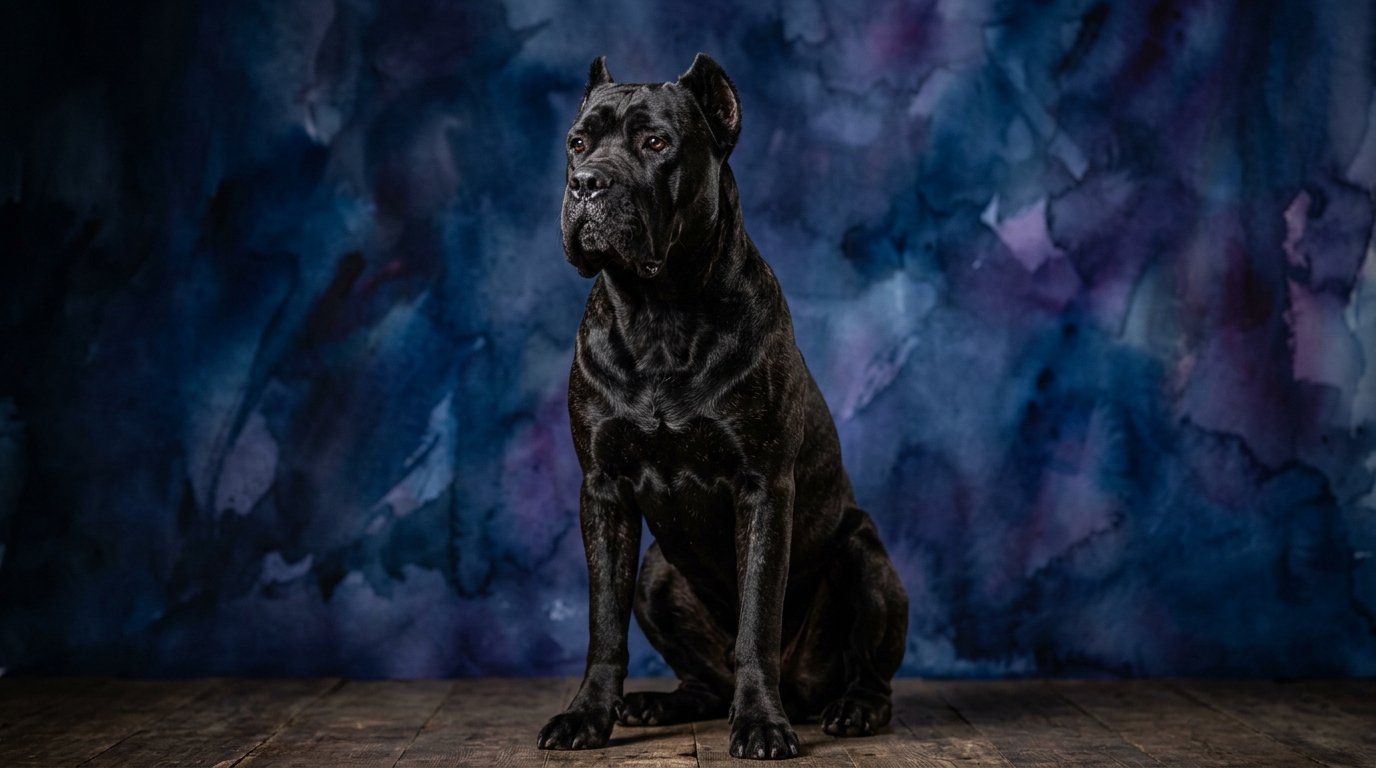
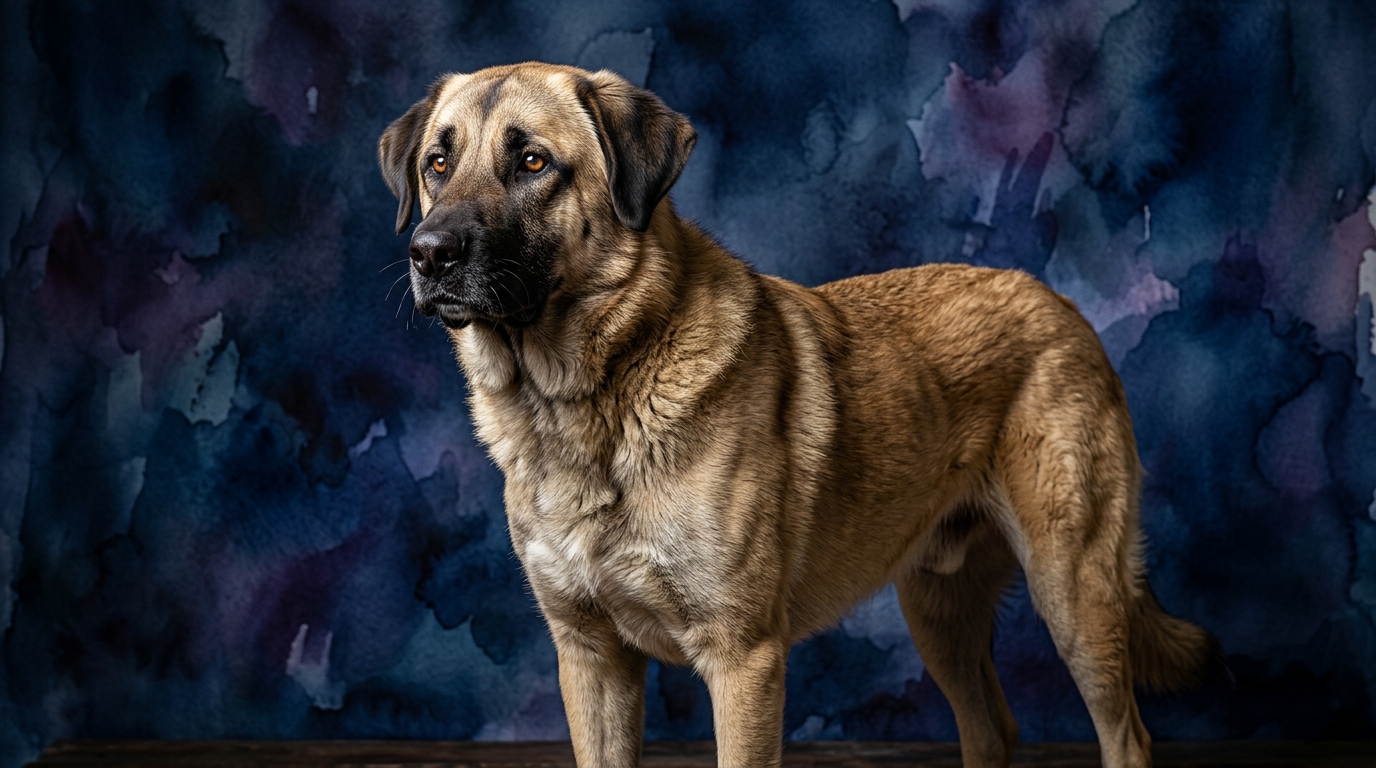
Side-by-Side IQ Profile: Cane Corso vs. Anatolian Shepherd Dog
When evaluating the cognitive profiles of the Cane Corso and the Anatolian Shepherd Dog, The Cosmic Pet Pet IQ Lab assigns both breeds a consistent 3/5 across all five dimensions: Problem Solving, Training Speed, Social Intelligence, Instinctive Drive, and Memory. While the numerical scores align, the manifestation and application of these cognitive traits are profoundly shaped by each breed's unique heritage and purpose.
For the Cane Corso, a 3/5 in Problem Solving reflects their capacity to assess novel situations within their family's environment, such as determining if a new visitor is a threat or guest, or figuring out how to open a gate to rejoin their people. Their cognitive efforts are often directed at maintaining social order or fulfilling a personal desire within the household. The Anatolian Shepherd Dog's 3/5 in Problem Solving, conversely, manifests in their ability to autonomously strategize against perceived threats to their flock, like finding the weakest point in a predator's approach or guiding wayward animals back to safety, often without direct human command in vast, independent settings.
In terms of Training Speed, the Cane Corso's 3/5 indicates a moderate pace of learning new commands and routines, particularly when motivated by their handler's approval and positive reinforcement. Their willingness to engage with their human family aids in processing and retaining instructions. The Anatolian Shepherd Dog, also at 3/5, can acquire new skills, but their learning process is often more about understanding the *purpose* and *necessity* of a task rather than simply complying. Their inherent independence can make training feel slower if not approached with immense patience and an understanding of their intrinsic motivations as guardians.
Social Intelligence at 3/5 for the Cane Corso means they are highly attuned to their family's emotions and social cues, capable of discerning friend from perceived foe, and adjusting their behavior accordingly. They are sensitive to their human's moods and intentions, fostering strong, reciprocal bonds. The Anatolian Shepherd Dog's 3/5 Social Intelligence is primarily directed towards their flock and assessing external threats. They read subtle cues from animals, recognizing distress or deviation, and are highly perceptive of unfamiliar presences in their territory. Their social interactions with humans can be more reserved, prioritizing observation over overt engagement.
The Instinctive Drive of 3/5 for the Cane Corso signifies a strong protective impulse for their family and home, coupled with a notable prey drive. This instinct fuels their guarding capabilities and can manifest in a desire to chase or 'manage' perceived threats within their immediate sphere. The Anatolian Shepherd Dog's 3/5 Instinctive Drive is profoundly rooted in livestock protection, exhibiting a powerful territorial imperative and an innate ability to deter predators. This drive is constant and unwavering, making them dedicated, self-sufficient guardians. Finally, Memory at 3/5 for the Cane Corso demonstrates good recall for commands, routines, and experiences, remembering people, places, and learned behaviors over time, which aids in their consistency and reliability within their family environment. The Anatolian Shepherd Dog also possesses a durable memory, particularly for territory, flock members, and past threats. They remember boundaries, safe zones, and the individuals (both animal and human) they are responsible for guarding, which is critical for their extensive role.
Where the Cane Corso Wins Cognitively
Despite identical numerical scores, the Cane Corso demonstrates cognitive advantages in specific contexts. Their problem-solving (3/5) is often more directly applicable to navigating complex human social dynamics, allowing them to quickly discern appropriate behavior in varying household interactions. This adaptability makes them particularly adept at integrating seamlessly into diverse family settings, learning household rules and routines with a keen understanding of their human companions' expectations. Their social intelligence (3/5), while numerically equal, translates into a more direct and responsive engagement with handler cues, showcasing a quicker cognitive processing of immediate human directives. This means they are often more inclined to use their intellect to collaborate and seek approval from their primary caregivers, translating their cognitive strengths into refined household manners and companionship. They excel in tasks requiring close cooperation and a desire to integrate fully into a human family's daily life, demonstrating their memory (3/5) for commands and learned behaviors within this collaborative framework.
Where the Anatolian Shepherd Dog Wins Cognitively
The Anatolian Shepherd Dog, with its identical 3/5 scores, displays its cognitive strengths in areas distinct from the Cane Corso. Their problem-solving (3/5) is unparalleled in independent decision-making within vast, unsupervised environments. This breed excels at assessing and reacting to threats to their flock or territory without needing direct human intervention, showcasing a robust ability to strategize autonomously. Their memory (3/5) is particularly durable for spatial awareness and territorial boundaries, allowing them to patrol and protect extensive areas effectively, remembering safe zones, potential danger points, and the movements of their charges over long periods. Furthermore, their social intelligence (3/5) is uniquely specialized; they possess a superior ability to interpret and respond to the nuanced behaviors of livestock, demonstrating a profound, instinct-driven form of empathy and protective care geared specifically towards animal welfare and flock management. This specialized cognitive application allows them to perform their traditional role with exceptional efficacy.
Which is Easier to Train, and Why?
When considering ease of training, the Cane Corso is generally perceived as more straightforward to guide. Their 3/5 Training Speed is significantly augmented by their 3/5 Social Intelligence, which translates into a strong desire to please their primary family members and a higher engagement with human interaction. Cane Corsos thrive on structured learning and consistent guidance from a trusted leader, readily absorbing commands that make sense within their perceived family hierarchy. They are receptive to clear communication and positive reinforcement, making them eager participants in training sessions. While possessing a strong will, their cognitive framework is more geared towards collaboration with their human companions, making the training process a partnership.
The Anatolian Shepherd Dog, while also possessing a 3/5 Training Speed, approaches learning from a different cognitive perspective. Their independent nature and historical role as autonomous guardians mean they are less inherently motivated by human approval as a primary driver. Their training requires immense patience, understanding, and a willingness to work *with* their innate guarding instincts rather than against them. They learn best when tasks are presented as logical extensions of their protective duties, demonstrating their 3/5 Problem Solving to understand the 'why' behind a command. Their 3/5 Social Intelligence is more focused on their charge (flock/territory) than on immediate human directives, which can make them appear less eager to comply with arbitrary commands. Training an Anatolian is about building a respectful relationship where commands are seen as reasonable requests, not absolute dictates, leveraging their deep understanding of purpose and territory.
Which Suits Active Owners vs. Relaxed Owners?
The Cane Corso is best suited for active owners who can provide consistent mental stimulation, structured exercise, and dedicated training time. They thrive on having a 'job' within the family unit, whether it's obedience, protection work, or participating in dog sports. Their energy levels and need for engagement mean they require an owner who is committed to integrating them fully into an active lifestyle, providing both physical outlets and cognitive challenges that leverage their problem-solving and memory skills. An owner who can channel their instinctive drive (3/5) into constructive activities will find a highly rewarding companion.
The Anatolian Shepherd Dog, while requiring vast space and significant exercise in the form of patrolling their territory, is not typically suited for owners seeking a dog for intense, human-directed activities like long-distance running or competitive sports. Their activity is often self-directed and purposeful, making them ideal for owners who appreciate an independent, watchful companion for large properties or farms. A 'relaxed' owner for an Anatolian means someone who can provide a vast, secure environment and understands their need for autonomous work, rather than constant human-initiated interaction or high-intensity play. They need owners who respect their independent nature and specialized instinctive drive (3/5) for guarding, rather than trying to force them into a role unsuited to their inherent cognitive strengths.
The Verdict
Choose a Cane Corso if you seek a highly engaged, protective family companion who thrives on close cooperation, structured activities, and integrating directly into your active lifestyle, rewarding your consistent training efforts with dedicated loyalty.
Opt for an Anatolian Shepherd Dog if you need an independent, self-reliant guardian for a large property or livestock, valuing their autonomous decision-making and specialized protective instincts over constant human-directed interaction and high-intensity, structured play.
🧠 Find Your Pet's IQ Score
Our Pet IQ Lab assessment covers 25+ tests across 5 cognitive dimensions — personalized to your breed.
Take the Full IQ Test →Frequently Asked Questions
Do Cane Corsos and Anatolian Shepherds need a lot of mental stimulation?
Yes, both breeds benefit from mental engagement, though its form differs. Cane Corsos thrive on structured training, puzzle toys, and interactive family activities, while Anatolian Shepherds require challenges related to their guarding instincts, such as observing and patrolling their territory and making independent decisions about potential threats.
Are Cane Corsos or Anatolian Shepherds better with children?
Both breeds can be good with children when properly socialized and raised, but their approaches differ. Cane Corsos often form close bonds with 'their' children as part of their family unit, extending their protective instincts directly. Anatolian Shepherds tend to extend their protective instincts to children within their perceived flock or territory, often being watchful and tolerant rather than overtly playful, viewing them as part of their charge.
Which breed is more prone to destructive behavior if bored?
Both can exhibit destructive behaviors if their cognitive and physical needs are not met, though the manifestation varies. A bored Cane Corso might chew inappropriately, become anxious, or engage in nuisance barking due to lack of interaction and mental engagement. A bored Anatolian Shepherd, on the other hand, might engage in excessive barking, digging, or fence-running as an outlet for their unfulfilled guarding instincts and territorial patrol needs.