
Side-by-Side IQ Profile: Cane Corso vs. Kuvasz
The Cosmic Pet Pet IQ Lab employs a five-dimensional framework for canine intelligence. For the Cane Corso, this framework reveals a balanced cognitive landscape: a Problem Solving score of 3/5, indicating a solid capacity to navigate novel situations. Its Training Speed, also 3/5, suggests a moderate learning pace. Social Intelligence, at 3/5, points to a reliable understanding of human cues. Its Instinctive Drive, again 3/5, underscores a robust inherent motivation for its working roles. Finally, Memory, at 3/5, indicates a sound ability to retain learned behaviors.
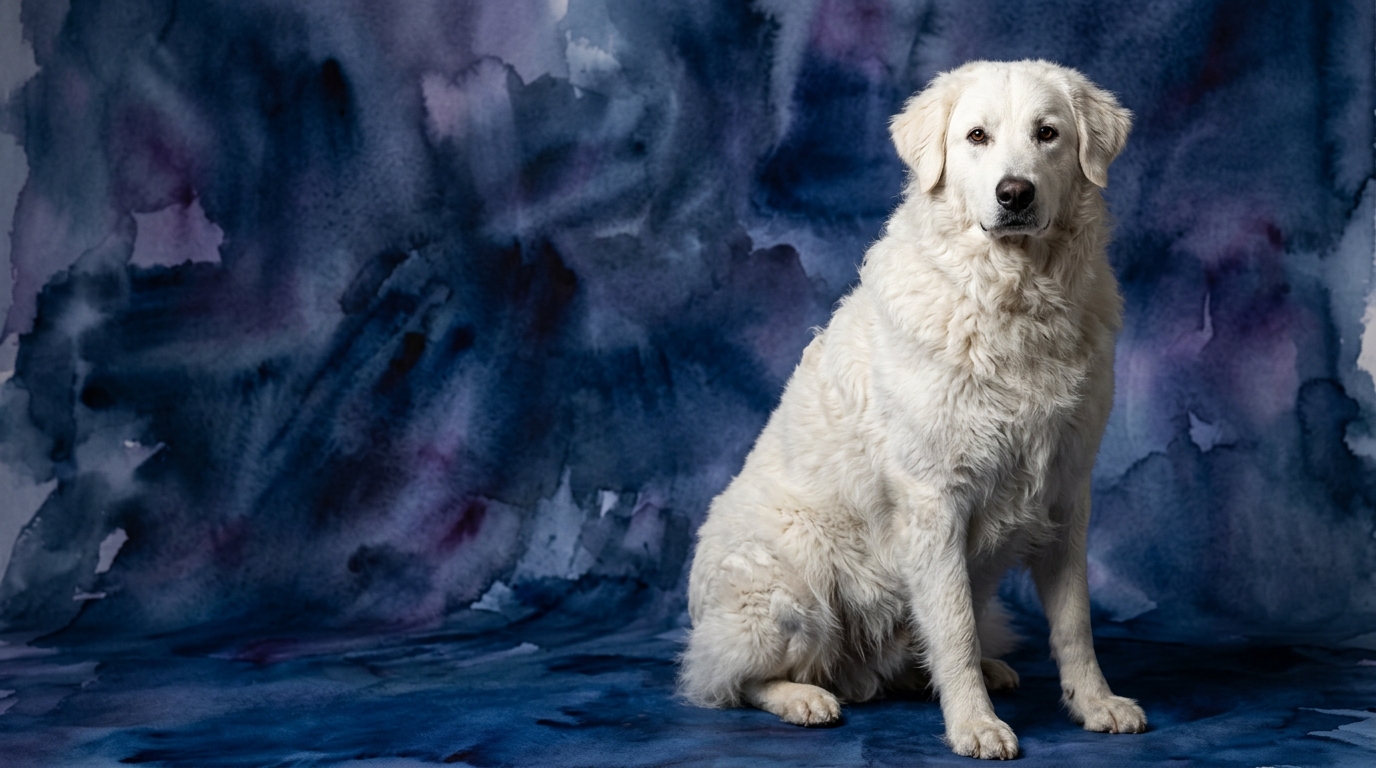
In contrast, the Kuvasz presents a largely similar, yet critically distinct, cognitive profile. It shares the Cane Corso’s Problem Solving (3/5), Training Speed (3/5), Social Intelligence (3/5), and Instinctive Drive (3/5). The significant divergence appears in Memory, where the Kuvasz achieves a superior score of 4/5, indicating a markedly enhanced capacity for recall. Its Coren rank of #42 places it within a respectable tier for obedience and adaptive intelligence.
Where the Cane Corso Wins Cognitively
The Cane Corso’s cognitive strength lies not in an outlier score, but in its balanced, pragmatic application of its 3/5 capacities within its protective role. Its 3/5 Problem Solving, combined with 3/5 Instinctive Drive, often manifests as a direct, resolute approach to perceived threats. This breed processes situations with focused intensity, making swift, decisive judgments based on immediate assessment and innate protective urges. This translates to a more immediate, less contemplative response in high-stakes situations, channeling cognitive resources into efficient action. Its balanced social intelligence ensures reliable threat interpretation while remaining attuned to family safety, without the potential for the more independent decision-making seen in breeds with higher memory. Its consistent 3/5 memory means it learns reliably, but its application is often tied more closely to direct, recent experiences and established routines, making it exceptionally dependable within its learned operational parameters.
Where the Kuvasz Wins Cognitively
The Kuvasz distinguishes itself primarily through its superior Memory score of 4/5, a critical cognitive advantage shaping its operational intelligence. This enhanced recall means the Kuvasz retains lessons, boundaries, and past experiences with greater fidelity and for longer durations. For a guardian breed, this translates into a more nuanced understanding of its territory and its inhabitants, remembering specific individuals, their patterns, and potential past threats with exceptional clarity. This cognitive depth allows the Kuvasz to build a comprehensive mental map, contributing to its renowned independence and reliability in decision-making. Its 3/5 Problem Solving and 3/5 Social Intelligence are significantly amplified by this memory, as it draws upon a richer database of past events to inform current responses, making its protective actions appear more calculated and self-directed. The Kuvasz’s ability to remember complex sequences enables effective operation even without direct human command, invaluable for its traditional role where constant supervision was impractical.
Which is Easier to Train and Why?
Assessing ease of training between the Cane Corso and Kuvasz requires understanding their similar Training Speed (both 3/5) and distinct Memory scores. For initial command acquisition, both breeds require consistent, patient, and clear instruction, learning at a moderate pace. Neither will be a 'quick study.' However, the Kuvasz’s superior Memory (4/5) becomes a significant long-term advantage. Once a Kuvasz learns a command or routine, it retains that information with greater accuracy and for longer periods, reducing the need for frequent refreshers. This doesn't mean it’s easier to *initiate* training, but rather that the *retention* and *reliability* of learned behaviors will likely be higher.
Conversely, the Cane Corso, with its 3/5 Memory, learns and retains, but might require more regular reinforcement to keep its repertoire sharp. Both breeds possess 3/5 Instinctive Drive, meaning training often channels inherent protective tendencies rather than demanding blind obedience. The Cane Corso’s directness and desire to engage can make it feel more responsive during active training sessions, even if retention requires more ongoing effort. The Kuvasz, while remembering well, can exhibit a more independent streak, sometimes appearing less outwardly eager to please during training, preferring to process and act on its own terms once a concept is grasped. Thus, while initial training may feel similar, the Kuvasz's cognitive architecture makes it more likely to 'set it and forget it' with established commands, while the Cane Corso benefits from continuous, reinforcing engagement.
Which Suits Active Owners vs. Relaxed Owners?
Neither breed suits truly relaxed owners. Both are working breeds with significant physical presence and inherent drives demanding active management. However, their specific cognitive profiles suggest different types of 'activity.'
The Cane Corso, with its consistent 3/5 scores, particularly its 3/5 Instinctive Drive and Problem Solving, thrives with active owners who enjoy structured activities, consistent training, and direct engagement. They benefit from clear leadership, regular physical exercise like long walks or runs, and mental stimulation through obedience or scent work. Their directness and desire for inclusion mean they prefer to be involved in the owner's 'active' lifestyle. An owner providing consistent mental and physical outlets will find the Cane Corso a highly engaged partner.
The Kuvasz, while also requiring an active owner, leans towards purposeful guarding and patrolling. Its 4/5 Memory and 3/5 Instinctive Drive mean it excels when given a territory to oversee and a 'job' to do, even if observing a large yard. While it needs regular exercise, its mental stimulation often comes from processing its environment, remembering nuances, and making independent decisions. Owners 'active' in managing a property or providing an expansive environment for protective instincts will find it suitable. It can appear more self-sufficient, requiring less direct 'playtime' or structured training engagement than the Cane Corso, but still needs attentive owners. Both breeds require owners prepared for the responsibilities of a large, powerful guardian dog.
The Verdict
Choose the Cane Corso if you seek a direct, consistently engaged working partner, valuing its balanced, pragmatic intelligence for structured tasks and a more collaborative training dynamic.
Opt for the Kuvasz if you prioritize exceptional memory and a more independently thinking guardian, one capable of retaining complex information and making nuanced judgments within its domain with less direct oversight.
🧠 Find Your Pet's IQ Score
Our Pet IQ Lab assessment covers 25+ tests across 5 cognitive dimensions — personalized to your breed.
Take the Full IQ Test →Frequently Asked Questions
Does the Kuvasz's higher memory make it inherently 'smarter' than the Cane Corso?
The IQ Lab scores indicate the Kuvasz has superior memory retention, a critical cognitive advantage for its independent guardian role. While 'smarter' is subjective, its memory contributes to more nuanced, self-directed decision-making and reliability.
How do their social intelligence scores impact their family interactions?
Both breeds score 3/5 in social intelligence, meaning they reliably understand human cues and integrate into family dynamics. They form strong bonds and discern between family and potential threats, making them effective protectors attuned to their human companions.
Can either breed adapt well to urban living, given their working dog backgrounds?
Both breeds are large working dogs with significant needs for space and purpose. While possible with dedicated, experienced owners providing ample exercise and mental stimulation, their instinctive drives and size make them generally better suited to environments with more room to roam and patrol.