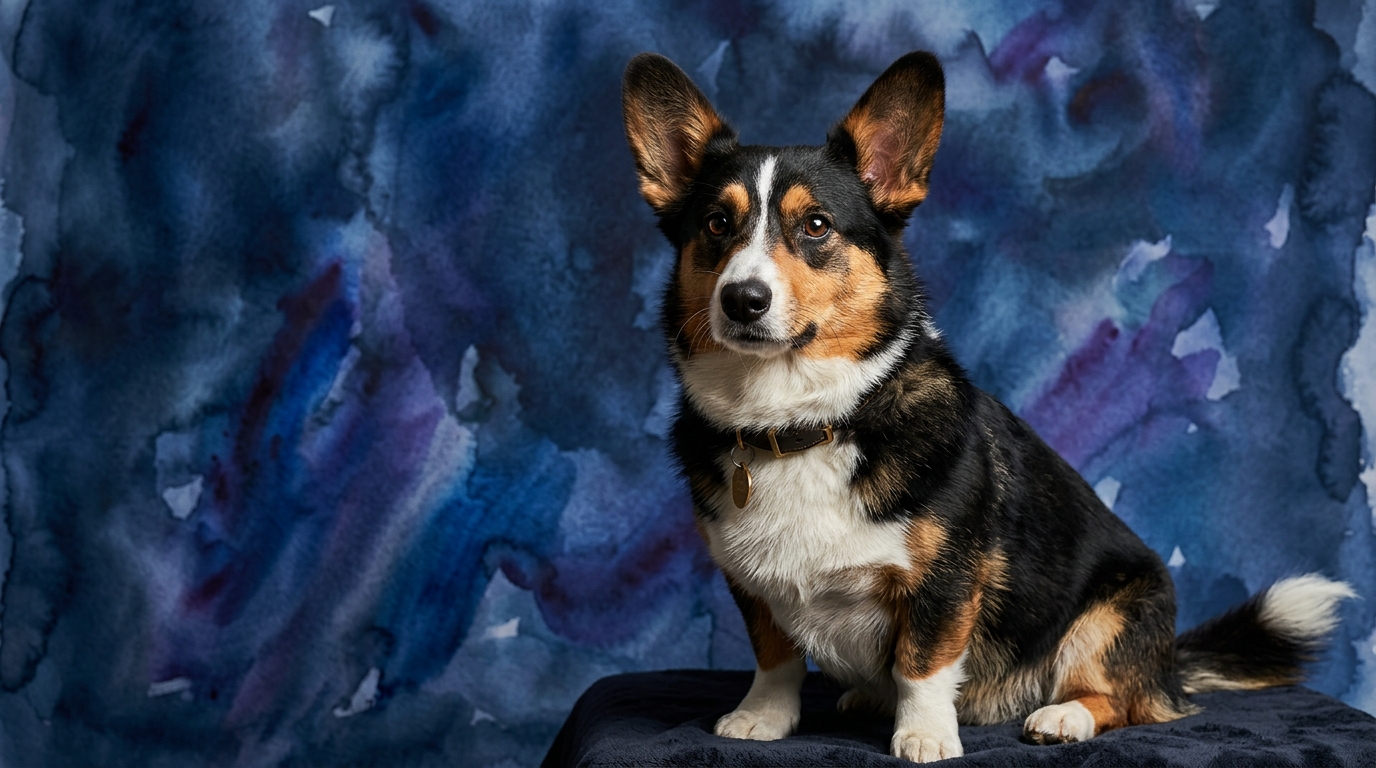

Side-by-Side IQ Profile: Cardigan Welsh Corgi vs. Brussels Griffon
The Cardigan Welsh Corgi, a dog from the Herding group with a Coren rank of #26, exhibits a cognitive profile tailored for its historical role. Its Problem Solving score is 4/5, indicating a strong capacity for independent thought and strategic action when faced with challenges. Training Speed is also 4/5, reflecting a quick grasp of new commands and routines, often requiring fewer repetitions to solidify learning. Social Intelligence stands at 3/5, demonstrating a solid understanding of human cues and social dynamics, capable of forming strong bonds and responding appropriately to family interactions. The breed's Instinctive Drive is 3/5, retaining a moderate, but discernible, drive stemming from its herding heritage, which can manifest as an urge to gather or control. Finally, its Memory is 4/5, showing a robust ability to recall learned behaviors, commands, and even spatial information over extended periods, invaluable for complex working roles and consistent training.
In contrast, the Brussels Griffon, a charming dog from the Toy group and not Coren-ranked, presents a cognitive makeup more suited for companionship. Its Problem Solving is rated 3/5, meaning it is capable of solving straightforward puzzles and adapting to new situations within a domestic context, often through charm or persistent effort rather than complex manipulation. Training Speed is 3/5, indicating it learns new commands at a steady pace, generally requiring consistent, positive reinforcement, though sometimes with a touch of toy breed independence. Social Intelligence is 3/5, displaying a good understanding of human emotions and social interactions, often forming very close, perceptive bonds with their owners and adept at interpreting subtle cues. The Instinctive Drive is 3/5, largely geared towards companionship and interaction rather than specific tasks, manifesting as a desire for proximity, attention-seeking behaviors, and an alert nature. Its Memory is 3/5, possessing a reliable memory for routines, familiar faces, and previously learned commands, especially when associated with positive experiences and their human companions.
Where the Cardigan Welsh Corgi Wins Cognitively
The Cardigan Welsh Corgi's cognitive profile truly shines in its capacity for independent problem-solving and rapid skill acquisition. Their 4/5 score in problem-solving means they aren't just following commands; they are actively thinking through challenges. For instance, a Corgi might quickly devise a strategy to retrieve a toy stuck under furniture, or figure out how to open a gate they've observed their human manipulate. This isn't just about mimicry; it’s about internalizing principles and applying them creatively. Their herding background instilled a need for quick, adaptable decision-making in dynamic environments, a trait that translates into a dog who can assess a situation and act.
Furthermore, their 4/5 training speed is a direct reflection of their attentiveness and willingness to engage in structured learning. They typically pick up new cues with fewer repetitions compared to many breeds, making them highly receptive to advanced obedience, agility, or even complex trick training. This cognitive edge allows them to progress through training curricula at an impressive pace, often delighting owners with their capacity for learning intricate sequences and behaviors. The robust memory (4/5) further cements these wins, ensuring that once a skill is learned, it tends to stick, minimizing the need for constant re-training and allowing for the building of an extensive repertoire of behaviors and understandings. This combination makes them particularly apt for roles requiring sustained mental effort and retention.
Where the Brussels Griffon Wins Cognitively
While the Brussels Griffon's scores might appear lower on paper, their cognitive strengths are uniquely tailored to their role as a devoted companion, making them "win" in very specific, nuanced ways. Their 3/5 in social intelligence, though matching the Corgi's, manifests differently, often with a profound sensitivity to human emotions and needs within a close family unit. A Griffon might excel at subtle communication, using body language and vocalizations to convey desires or comfort a distressed owner, showing a keen awareness of their human's internal state. Their problem-solving (3/5) is less about complex environmental manipulation and more about navigating social landscapes.
They might ingeniously figure out how to gain attention, secure a comfortable spot, or charm their way into an extra treat, demonstrating a practical, social form of intelligence perfectly suited for domestic life. This isn't about herding sheep, but about mastering the art of companionship. Their instinctive drive (3/5) is predominantly focused on proximity and interaction, leading to a dog who is intensely present and engaged with their human, often anticipating needs for cuddles or play. This translates to an inherent "win" for owners seeking a deeply connected, intuitive companion who thrives on shared experiences and provides constant, comforting presence, requiring less of an outlet for intense working drives. Their memory (3/5) is perfectly adequate for recalling routines, beloved people, and the boundaries of their home, ensuring a harmonious and predictable shared life without the need for vast, complex information recall.
Which is Easier to Train and Why
When it comes to ease of training, the Cardigan Welsh Corgi generally holds an advantage, reflected in its 4/5 training speed compared to the Brussels Griffon's 3/5. The Corgi's herding heritage means they come pre-programmed with a desire to work collaboratively with humans, a trait that makes them highly receptive to commands and eager to please. They typically require fewer repetitions to grasp new concepts, and their strong problem-solving skills (4/5) mean they can often generalize learned behaviors to new situations more readily. For example, once a Corgi understands "stay" in one context, they are quicker to apply it in a different, distracting environment. Their instinctive drive (3/5), while not overwhelming, provides a foundation of focus and purpose that can be harnessed in training.
In contrast, the Brussels Griffon, while trainable, often presents a more independent streak, characteristic of many toy breeds. Their 3/5 training speed means they learn at a steady pace, but might require more patience and creative motivation. A Griffon might decide a particular command isn't worth their effort at that moment, or become easily distracted if the training isn't engaging enough. Their focus is often more on the human-dog bond itself rather than the execution of a task, which can sometimes translate into a charming but less precise training partner. Real behavioral differences include the Corgi's natural inclination to "gather" or "control" which can be channeled into obedience exercises like heeling or recall, whereas a Griffon's primary motivation might be a treat or a cuddle, making consistency and high-value rewards crucial for success.
Which Suits Active Owners vs. Relaxed Owners
The cognitive profiles and inherent drives of these two breeds offer clear guidance for matching them with owner lifestyles. The Cardigan Welsh Corgi, with its 4/5 problem-solving and 3/5 instinctive drive rooted in herding, is an excellent fit for active owners who relish mental engagement and structured activities. These dogs thrive when given a "job," whether it's advanced obedience, agility, herding trials, or even complex puzzle toys that challenge their quick minds. An active owner for a Corgi doesn't just mean physical exercise; it means providing consistent mental stimulation to prevent boredom and channel their innate drive to work and strategize.
They need owners who can commit to regular training sessions, long walks, and opportunities to explore and learn, as their robust memory (4/5) means they retain information and thrive on new experiences. Conversely, the Brussels Griffon, while certainly not a "couch potato," is generally better suited for more relaxed owners who prioritize companionship and intimate interaction. Their 3/5 problem-solving and instinctive drive are geared more towards social navigation and being an integral part of family life rather than intense physical or mental tasks. A relaxed owner for a Griffon is someone who enjoys consistent, gentle interaction, short playful bursts, and appreciates a dog who is content to be near them, observing and participating in daily routines. While they still benefit from walks and basic training, their needs for structured "work" are considerably lower than a Corgi's. Their social intelligence (3/5) makes them perceptive companions, thriving in a home where they receive ample affection and are considered a cherished family member, rather than a working partner.
The Verdict
Choose the Cardigan Welsh Corgi if you are an active owner seeking a highly trainable, problem-solving companion eager for mental challenges and structured activities like agility or advanced obedience.
Choose the Brussels Griffon if you desire a perceptive, charming companion who thrives on close family interaction and offers devoted, intuitive presence without the need for extensive working tasks.
🧠 Find Your Pet's IQ Score
Our Pet IQ Lab assessment covers 25+ tests across 5 cognitive dimensions — personalized to your breed.
Take the Full IQ Test →Frequently Asked Questions
Are Cardigan Welsh Corgis prone to stubbornness?
Despite their training speed, Corgis can exhibit independence stemming from their herding roots, requiring consistent and engaging training to channel their focus effectively. Their intelligence can sometimes lead them to make their own decisions if not properly guided.
Do Brussels Griffons need much mental stimulation?
While not requiring complex herding tasks, Brussels Griffons benefit significantly from regular mental enrichment through puzzle toys, short training sessions, and interactive play to prevent boredom and foster engagement. Their social intelligence also means they thrive on interaction with their human companions.
How do their social intelligence scores impact their family life?
Both breeds score 3/5, indicating they are generally adept at understanding human cues and forming strong bonds. The Corgi's social intelligence often supports its working partnership, while the Griffon's focuses more on intimate companionship and sensing subtle mood shifts within its immediate family, making them highly perceptive housemates.