
Side-by-Side IQ Profile: A Cognitive Blueprint
The Cosmic Pet Pet IQ Lab employs a five-dimensional framework to assess canine intelligence, offering a nuanced view beyond simple labels. Let's dissect the cognitive blueprints of the Cardigan Welsh Corgi and the Dogue de Bordeaux.
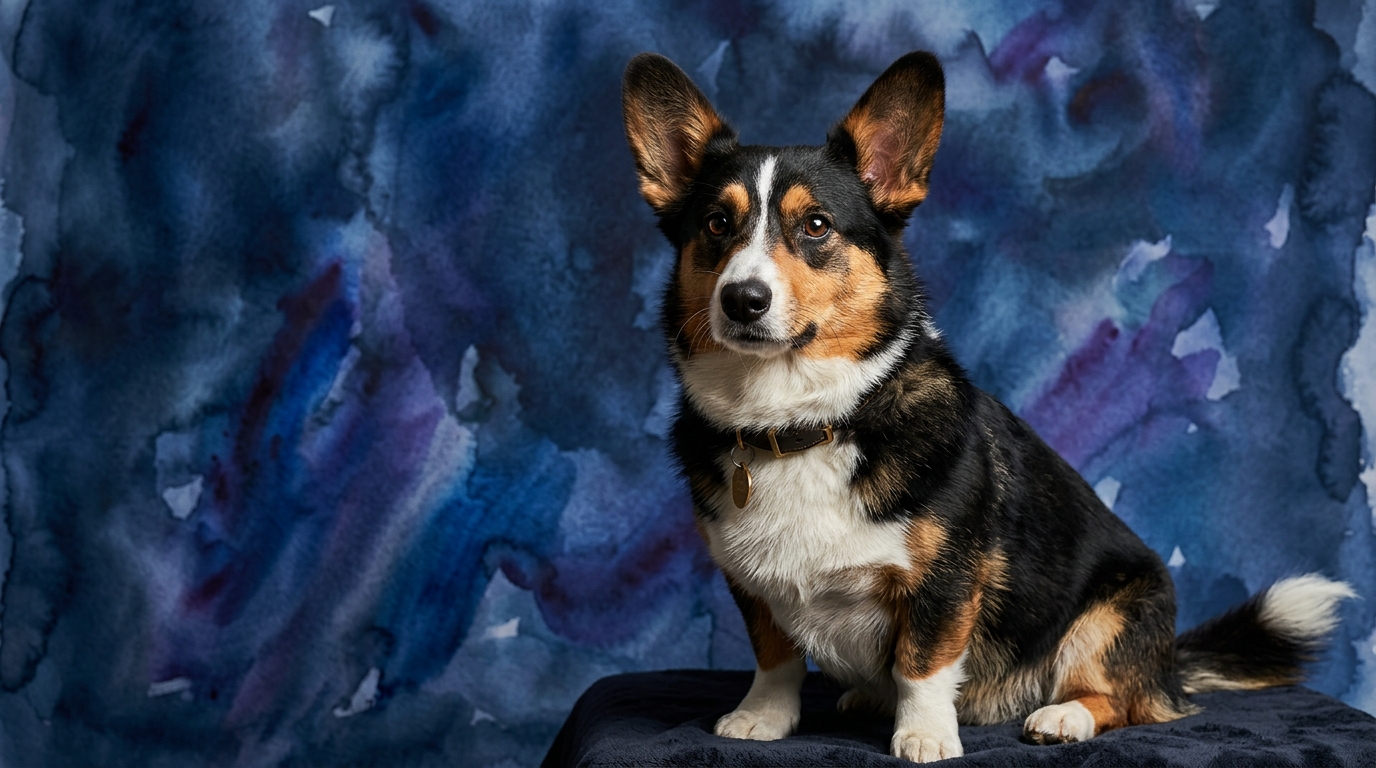
**Cardigan Welsh Corgi (Herding Breed, Coren Rank #26)**: This spirited herder presents a cognitive profile geared for agility and quick decision-making. Its Problem Solving score of 4/5 indicates a capacity for ingenious solutions, whether navigating complex environments or figuring out novel puzzles. Training Speed, also at 4/5, highlights its rapid learning curve, often grasping new commands with minimal repetition. Social Intelligence, rated 3/5, suggests an ability to understand human cues and interact effectively, though its herding instincts might sometimes lead to independent decisions. An Instinctive Drive of 3/5 means its inherent herding behaviors are present but generally manageable and can be channeled. Finally, a Memory score of 4/5 underscores its excellent retention of learned behaviors and routines, making long-term training highly effective.
**Dogue de Bordeaux (Working Breed, Not Coren-ranked)**: The imposing Dogue de Bordeaux, a breed historically dedicated to guarding and protection, exhibits a cognitive makeup focused on deliberate action and unwavering loyalty. Its Problem Solving ability, at 3/5, suggests a practical, direct approach to challenges, relying on presence and strength rather than intricate strategizing. Training Speed, also 3/5, indicates a moderate learning pace, requiring consistent reinforcement and patience for new concepts to solidify. Social Intelligence, rated 3/5, reflects its deep bond with family, its ability to read household dynamics, and a reserved demeanor towards strangers, a hallmark of a guardian. An Instinctive Drive of 3/5 points to a strong, inherent protective nature that is typically measured and controlled. Its Memory score of 3/5 means it retains information well with regular practice, forming solid associations over time.
Where the Cardigan Welsh Corgi Wins Cognitively
The Cardigan Welsh Corgi's cognitive strengths shine brightest in areas demanding mental agility and rapid learning. Its superior Problem Solving score of 4/5, compared to the Dogue de Bordeaux's 3/5, means a Corgi is more likely to devise creative solutions to obstacles, such as figuring out how to open a child-proof gate or extracting a treat from a complex puzzle toy. This ingenuity stems from its herding lineage, where quick thinking was essential for managing livestock.
Furthermore, the Corgi's Training Speed of 4/5 significantly outpaces the Dogue de Bordeaux's 3/5. This translates into a dog that picks up new commands and tricks with remarkable swiftness, often requiring fewer repetitions to achieve mastery. Owners will find the Corgi eager to engage in learning sessions, often treating them as stimulating games. This quicker acquisition of skills makes the Corgi an appealing candidate for various dog sports and advanced obedience work.
The Cardigan's Memory score of 4/5 also gives it an edge, allowing it to retain a wider array of commands and routines over longer periods without frequent refreshers. This robust memory contributes to its overall trainability and adaptability, as it can recall past experiences and learned behaviors more readily, making it proficient in complex sequences or multi-step tasks.
Where the Dogue de Bordeaux Wins Cognitively
While the Dogue de Bordeaux may not outscore the Corgi in individual cognitive dimensions, its strengths lie in the cohesive nature and specific application of its cognitive profile, especially concerning its role as a guardian. Its consistent 3/5 scores across the board denote a reliable and steadfast cognitive approach, which for a protective breed, is a considerable advantage.
The Dogue de Bordeaux's Social Intelligence, rated 3/5, while matching the Corgi's, manifests differently. It excels in discerning family dynamics and potential external threats, displaying a deep, unwavering loyalty and a measured protective instinct. This isn't about quick social maneuvering but about profound, stable attachment and a cognitive capacity for vigilance. Its instinctive drive for protection (3/5) is less about reactive herding and more about a calm, authoritative presence that assesses situations carefully before acting, a crucial cognitive trait for a guardian.
Even its Problem Solving at 3/5, though lower than the Corgi, is perfectly suited for its purpose. A Dogue de Bordeaux might not invent a clever escape route, but it will stand its ground, using its presence and deliberate thought to 'solve' a perceived threat by deterring it. This deliberate, rather than agile, problem-solving is a strength in its own right for a working dog whose primary function is stability and security.
Which is Easier to Train and Why
When comparing ease of training, the Cardigan Welsh Corgi generally presents a more straightforward experience due to its higher scores in Problem Solving, Training Speed, and Memory. Its inherent desire to work in partnership, stemming from its herding background, means it’s often intrinsically motivated to understand and execute commands. Corgis respond enthusiastically to positive reinforcement and mental challenges, quickly associating actions with rewards. Their quick comprehension allows for a broader range of commands to be taught efficiently, and their good memory ensures these lessons stick.
The Dogue de Bordeaux, with its consistent 3/5 scores, requires a different approach to training. While capable of learning, it demands more patience, consistency, and a clear, confident leader. Their deliberate nature means they may take longer to process and respond to new commands, and repetitions are key to solidifying behaviors. Training should focus on practical obedience and boundaries, leveraging their loyalty rather than expecting a quick mastery of complex tricks. Owners should understand that a Dogue de Bordeaux's 'stubbornness' often stems from a thoughtful, less impulsive cognitive process, requiring trust and respect to build a strong training relationship.
Which Suits Active Owners vs. Relaxed Owners
For owners who lead an active lifestyle and seek a canine companion to match their pace, the Cardigan Welsh Corgi is often the more suitable choice. Its high scores in problem-solving and training speed, combined with its herding heritage, mean it thrives on consistent mental and physical engagement. Corgis excel in activities like agility, obedience trials, and even herding games, requiring owners to provide varied challenges and regular opportunities for their sharp minds and energetic bodies to be utilized. They are dogs that want a 'job' and will seek out engagement if not provided.
Conversely, the Dogue de Bordeaux aligns well with more relaxed owners who appreciate a steadfast, loyal presence without the constant demand for intricate mental stimulation. While they certainly need regular, moderate exercise to maintain their physical health, their cognitive profile suggests a preference for routine and stability over novelty. Their social intelligence and instinctive drive are geared towards being a calm, protective family member, content with a secure home environment and predictable daily rhythms. Owners who can offer consistent leadership and a loving, stable home will find the Dogue de Bordeaux a deeply rewarding companion.
The Verdict
For owners seeking a mentally agile companion who enjoys learning complex tasks, thrives on varied activities, and can adapt quickly to new challenges, the Cardigan Welsh Corgi is an excellent fit.
For owners desiring a loyal, steady, and protective presence who appreciates a calmer, more deliberate companion and is prepared for consistent, patient training, the Dogue de Bordeaux offers profound companionship.
🧠 Find Your Pet's IQ Score
Our Pet IQ Lab assessment covers 25+ tests across 5 cognitive dimensions — personalized to your breed.
Take the Full IQ Test →Frequently Asked Questions
Is the Corgi truly 'smarter' than the Dogue de Bordeaux?
The Corgi scores higher in specific cognitive dimensions like problem-solving and training speed, indicating a quicker grasp of new concepts and more inventive solutions. However, the Dogue de Bordeaux's cognitive strengths lie in its steadfastness and protective social intelligence, which are vital for its guardian role, showcasing different forms of cognitive ability.
What kind of mental stimulation does a Dogue de Bordeaux need?
A Dogue de Bordeaux benefits from consistent, clear training that reinforces obedience and boundaries, along with puzzle toys that aren't overly complex. Their mental engagement often revolves around their role as a family member and protector, so secure home environments and predictable routines are key to their contentment.
Can a Cardigan Welsh Corgi live in an apartment?
While smaller, a Cardigan Welsh Corgi possesses a significant need for mental and physical activity due to their herding background and high cognitive scores. An apartment lifestyle is possible if owners commit to daily structured walks, puzzle toys, and regular training sessions to satisfy their drive for engagement and prevent boredom-related behaviors.