
Side-by-Side Cognitive Profiles
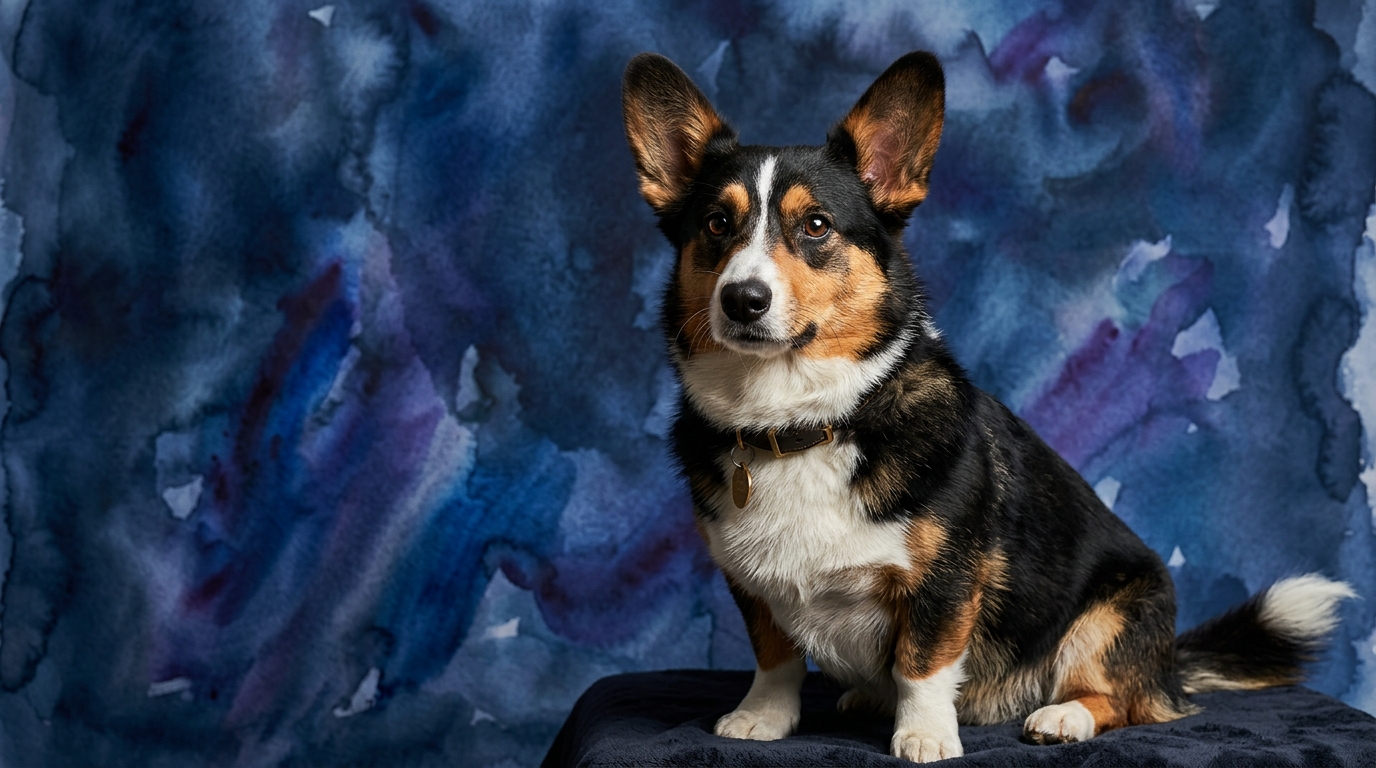
The Cardigan Welsh Corgi, a Herding breed, displays a balanced and robust cognitive toolkit tailored for independent decision-making and livestock management. Its Problem Solving score of 4/5 reflects an aptitude for navigating complex situations, such as maneuvering cattle or sheep, often requiring quick, on-the-spot assessments. Training Speed, also at 4/5, indicates a quick grasp of new commands and routines, essential for effective herding communication. Social Intelligence, rated 3/5, suggests a capacity for understanding human cues and intentions, though perhaps with a degree of self-reliance typical of a herding dog. Its Instinctive Drive at 3/5 points to a moderate but present genetic predisposition for its original work, while a Memory score of 4/5 ensures it retains learned behaviors and environmental layouts effectively, vital for consistent performance.
In contrast, the English Cocker Spaniel, a Sporting breed, showcases a cognitive profile optimized for partnership and precision in the field. Its Problem Solving at 4/5 illustrates an ability to overcome obstacles in pursuit of game, often requiring creative solutions within a hunting context. Training Speed, matching the Corgi at 4/5, highlights its eagerness and capacity to absorb instructions rapidly, crucial for intricate hunting commands. Social Intelligence, also 3/5, underscores its cooperative nature and responsiveness to handler direction. The Instinctive Drive of 3/5 reflects a moderate but strong drive for flushing and retrieving game. Where the Cocker truly distinguishes itself is its Memory, scoring a perfect 5/5, signifying an exceptional ability to recall complex sequences, scent trails, and handler instructions over extended periods, an invaluable asset in the field.
Where the Cardigan Welsh Corgi Excels Cognitively
While both breeds share similar scores in problem-solving and training speed, the Cardigan Welsh Corgi's cognitive strengths are uniquely shaped by its herding heritage. Its 4/5 Problem Solving, combined with its 3/5 Instinctive Drive, manifests as a distinct brand of independent thinking. A Corgi is often tasked with making autonomous decisions to move livestock, sometimes without direct human instruction, relying on its own judgment of herd dynamics and environmental factors. This translates into a dog that can often figure out how to open a gate or retrieve a dropped toy from an awkward spot with minimal prompting, demonstrating a self-directed ingenuity. Its solid 4/5 Memory supports this by allowing it to recall effective strategies for past problems, applying them to new, similar challenges.
The Corgi's cognitive framework also supports a nuanced understanding of boundaries and spatial reasoning. Their low-to-the-ground perspective and agility, coupled with their cognitive scores, allow them to navigate and control spaces effectively. This isn't just about physical movement; it's about mentally mapping an area and understanding how to influence the movement of other animals or even people within that space. Owners might observe this as a Corgi subtly 'herding' family members into a particular room or anticipating the path of a child's toy to intercept it, showcasing a practical application of its inherited cognitive abilities.
Where the English Cocker Spaniel Shows Its Cognitive Edge
The English Cocker Spaniel's cognitive prowess truly shines in its exceptional Memory (5/5), a trait that sets it apart and underpins many of its other abilities. This superior memory isn't just about remembering a trick; it's about retaining intricate scent patterns, marking fall locations of birds with precision, and recalling complex sequences of commands given during a hunt. This allows a Cocker to execute multi-step tasks flawlessly, holding several instructions in its mind and performing them in the correct order, even after distractions or delays. For a sporting dog, this level of retention is paramount for efficiency and success in the field, enabling it to retrieve multiple birds from different locations or follow a convoluted scent trail with unwavering focus.
Furthermore, the Cocker's problem-solving (4/5) and training speed (4/5) are often leveraged in conjunction with its memory to excel in cooperative tasks. While a Corgi might problem-solve independently, a Cocker often uses its cognitive skills to solve problems in partnership with its handler. This could involve figuring out the best way to navigate dense cover to retrieve an object, or quickly adapting to new hand signals, then committing these solutions and signals to its exceptional long-term memory. This makes the Cocker exceptionally reliable for tasks requiring consistency and adherence to learned protocols, making it a stellar candidate for advanced obedience, agility, or scent work where accuracy over time is critical.
Training: Which Breed Offers an Easier Path?
Both the Cardigan Welsh Corgi and the English Cocker Spaniel share a Training Speed score of 4/5, suggesting they are equally quick to pick up new commands. However, the 'ease' of training often comes down to how their other cognitive traits and instinctive drives interact with the training process. The Corgi's Herding background imbues it with a certain independent streak. While it learns quickly, its 3/5 Social Intelligence and 3/5 Instinctive Drive mean it might occasionally prioritize its own assessment of a situation over immediate compliance, especially if it perceives a task as unrelated to its perceived 'job.' This can manifest as a Corgi being quick to learn a command but sometimes choosing when to apply it, particularly if an interesting scent or perceived 'herd' (like a group of children) diverts its attention. Training a Corgi benefits from consistency, clear rules, and channeling its problem-solving into desired behaviors rather than letting it devise its own agenda.
The English Cocker Spaniel, with its 4/5 Training Speed and exceptional 5/5 Memory, often presents a more straightforward training experience for owners seeking consistent obedience. Its sporting heritage cultivates a strong desire to work cooperatively with a handler, and its superior memory ensures that once a command is learned, it is retained with remarkable fidelity. While its 3/5 Instinctive Drive is present, it's typically directed towards retrieving and flushing, making it highly amenable to reward-based training that leverages these natural inclinations. A Cocker is generally eager to please and thrives on positive reinforcement, readily recalling complex chains of commands. Owners may find the Cocker more forgiving of minor inconsistencies in training due to its robust memory, though consistency always yields the best results for any breed.
Aligning Breeds with Owner Lifestyles
For active owners, both breeds offer engaging companionship, but their activity preferences diverge based on their cognitive and instinctive leanings. The Cardigan Welsh Corgi, stemming from a herding lineage, benefits from activities that engage its problem-solving and independent decision-making. These dogs enjoy structured 'work' such as herding games, agility, or obedience challenges that require thought and navigation. They are content with brisk walks and yard play, but truly thrive when their minds are stimulated with tasks that allow them to 'figure things out' and exert some control. Owners who enjoy teaching complex sequences, exploring new trails where the Corgi can assess its surroundings, or participating in dog sports that involve strategic thinking will find a Corgi a rewarding partner. Their ideal active owner is one who prioritizes mental engagement as much as physical exercise, providing outlets for their innate curiosity and problem-solving drive.
The English Cocker Spaniel, with its sporting background and exceptional memory, is an excellent fit for owners who appreciate consistent, cooperative activity and structured routines. These dogs excel in activities like scent work, retrieving games, advanced obedience, or field trials, where their keen nose, stamina, and ability to recall intricate instructions are put to use. They enjoy long walks, runs, and vigorous play, but their satisfaction comes from working alongside their human, often with a clear purpose. A Cocker needs regular physical activity combined with mental stimulation that reinforces learned behaviors and allows them to utilize their exceptional memory. Owners who enjoy consistent training, participate in canine sports requiring precision and recall, or simply appreciate a dog that is always ready for an engaging, active partnership will find the English Cocker Spaniel a highly compatible companion. For more relaxed owners, both breeds can adapt to a degree, but the Cocker's desire for companionship and structured interaction might make it slightly more content in a less 'active' but still engaged home, provided it receives sufficient daily exercise and mental puzzles to occupy its sharp mind.
The Verdict
Choose the Cardigan Welsh Corgi if you appreciate a dog with independent problem-solving abilities and a unique charm, thriving on mental challenges that allow it to think for itself.
Opt for the English Cocker Spaniel if you seek a highly cooperative companion with exceptional memory, excelling in consistent training and activities that leverage its keen senses and desire to work alongside you.
🧠 Find Your Pet's IQ Score
Our Pet IQ Lab assessment covers 25+ tests across 5 cognitive dimensions — personalized to your breed.
Take the Full IQ Test →Frequently Asked Questions
Do Cardigan Welsh Corgis bark a lot?
Cardigan Welsh Corgis, with their herding background, often use their voice to manage livestock, translating into a tendency to bark at perceived intruders or novel situations. While not excessive, they can be vocal, especially if not given appropriate mental stimulation or outlets for their watchful nature.
Are English Cocker Spaniels good with children?
English Cocker Spaniels generally possess a gentle and affectionate temperament, making them suitable companions for children when properly socialized. Their cooperative nature and eagerness to please can make them patient playmates, though supervision is always recommended to ensure respectful interactions from both dog and child.
Which breed requires more grooming?
The English Cocker Spaniel typically requires more extensive grooming due to its longer, silky coat, especially on its ears, legs, and belly, which can mat and collect debris. The Cardigan Welsh Corgi has a double coat that sheds, but usually needs less intensive daily grooming, primarily regular brushing to manage shedding and prevent tangles.