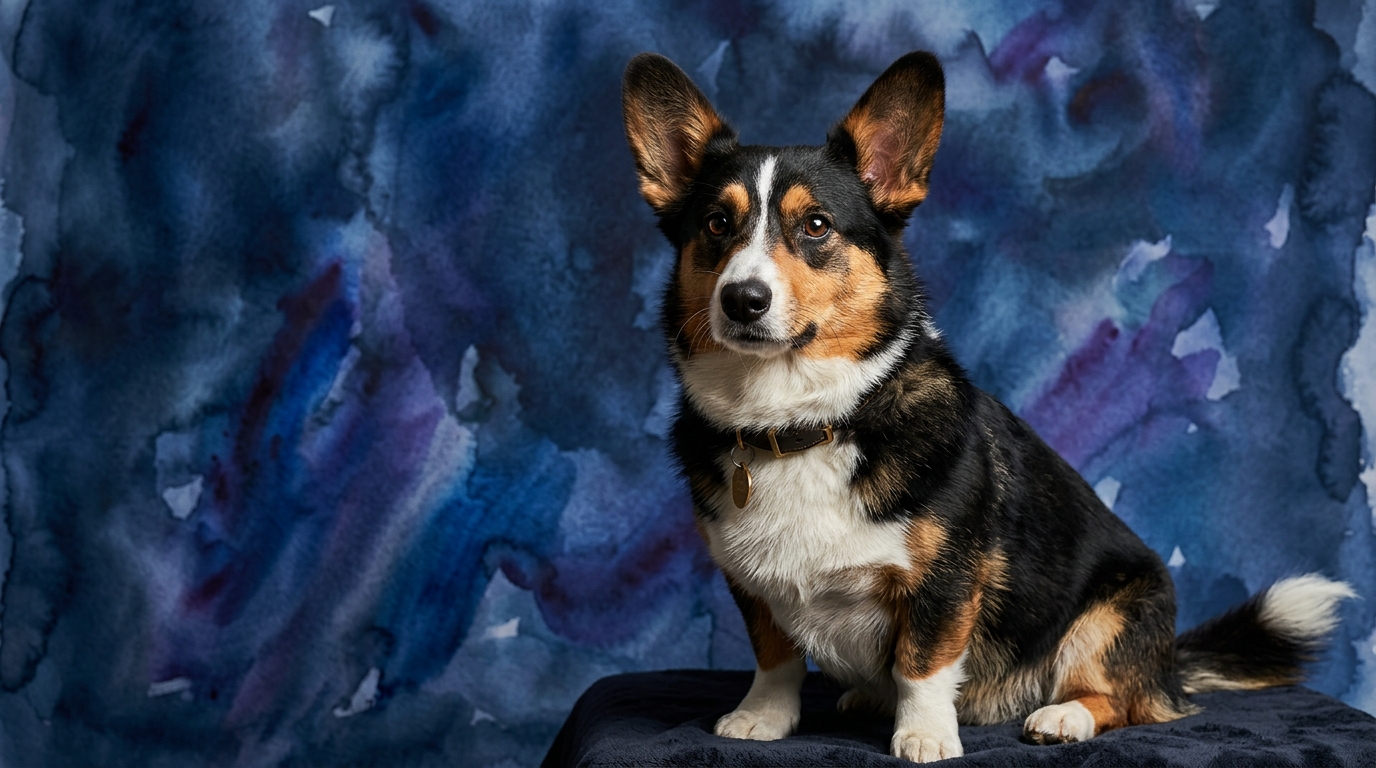

Side-by-Side IQ Profile: Herding Wit vs. Sporting Acumen
The Cardigan Welsh Corgi, ranked #26 by Coren, demonstrates a remarkable cognitive toolkit honed for its herding legacy. Its Problem Solving (4/5) manifests as a keen ability to independently strategize livestock movement, figuring out routes and outmaneuvering animals, often translating into a cleverness for navigating household challenges or even manipulating for treats. Training Speed (4/5) is swift, as Corgis quickly absorb commands, yet their independent herding spirit means they respond best to consistent, purposeful instruction. Their Social Intelligence (3/5) allows them to adeptly read human cues, which they might leverage to assert their presence or achieve their aims within a family unit. The Instinctive Drive (3/5) is centered on gathering and controlling, requiring outlets to prevent misdirected herding behaviors. Finally, their Memory (4/5) is robust, enabling recall of complex routines, commands, and spatial layouts crucial for their historical work.
In contrast, the English Setter, Coren ranked #37, applies its cognitive capacities with a focus on collaborative field work. Its Problem Solving (4/5) is finely tuned for interpreting complex scent trails, navigating varied terrain to locate game, and adapting to dynamic outdoor conditions, often showing persistence in its investigative approach. Training Speed (4/5) is also swift, as Setters are eager to please and quick to grasp commands, especially those for pointing and retrieving, thriving on cooperative learning. Their Social Intelligence (3/5) is geared towards harmonious partnership, making them highly attuned to a handler's subtle cues and emotional states in working contexts. The Instinctive Drive (3/5) is deeply rooted in bird hunting, manifesting as a strong inclination to scent, point, and retrieve, demanding regular engagement of these natural talents. Their Memory (4/5) is particularly strong for spatial recall, scent patterns, and intricate sequences of hunting commands, ensuring reliable performance in the field.
Where the Cardigan Welsh Corgi Wins Cognitively
The Corgi's cognitive edge lies in its nuanced application of problem-solving for control and management. While both breeds score 4/5 in Problem Solving, the Corgi's historical role as a "heeler" means its intelligence is geared towards independent decision-making in real-time to direct movement, often involving subtle manipulation of others. This translates into a dog that can independently assess a situation and devise a strategy to achieve a desired outcome, even if it's just getting a treat from a closed jar. Their higher Coren rank (#26 vs #37) also suggests a slightly more consistent and generalized obedience in structured learning environments, indicating an aptitude for formal training that perhaps transcends specific task-oriented learning.
Where the English Setter Wins Cognitively
The English Setter's cognitive strengths shine in its refined sensory processing and collaborative problem-solving within dynamic environments. With a 4/5 in Problem Solving, the Setter's intellect is specialized in interpreting complex olfactory information and coordinating with a human partner to achieve a shared goal, such as locating hidden game. Their memory (4/5) is particularly adept at spatial recall and scent discrimination, allowing them to map out territories and track subtle changes over time, skills vital for their field work. This breed excels at sustained focus on a task dictated by environmental cues, demonstrating a remarkable capacity for intricate sensory analysis and responsive action.
Which is Easier to Train and Why
Both breeds boast a 4/5 in Training Speed, indicating a rapid ability to grasp new commands. However, the nuances of their instinctive drives and social intelligence create distinct training experiences. The Cardigan Welsh Corgi, with its herding instinct (3/5) and tendency towards independent decision-making, might present a challenge of redirecting its innate desire to "manage" and control. While quick to learn, a Corgi might test boundaries, requiring a trainer who is consistent, firm, and engages their intelligence with varied tasks. Their social intelligence, while good, can be used to their advantage, meaning they might "negotiate" commands if not properly motivated.
The English Setter, while equally quick to learn, often presents a different training dynamic. Its strong instinctive drive (3/5) towards scenting and chasing can lead to environmental distractions, especially outdoors. Training a Setter requires patience in maintaining focus amidst enticing stimuli, but their inherent desire to work cooperatively with a handler, driven by their sporting heritage, makes them eager to please and responsive to positive reinforcement. They are less likely to question commands and more likely to follow direction once a clear bond and understanding are established, making them potentially more straightforward in focused, task-oriented training, provided distractions are managed.
Which Suits Active Owners vs. Relaxed Owners
For active owners seeking a canine partner for adventures, the English Setter is often an ideal fit. Its moderate instinctive drive (3/5) for scenting and retrieving, coupled with its endurance and love for covering ground, makes it a superb companion for long hikes, trail running, or field sports. They thrive on consistent physical and mental stimulation that taps into their sporting heritage, enjoying varied outdoor environments where their senses can engage, making them excellent partners for an owner with an outdoorsy lifestyle.
The Cardigan Welsh Corgi, while also needing regular exercise and mental engagement, suits owners who appreciate a dog with a robust personality that enjoys structured activities and intellectual challenges within a more contained environment. Their herding drive, though moderate, means they enjoy "jobs" like agility, obedience, or even trick training that channel their problem-solving skills (4/5) and desire for purposeful activity. While they can keep up on walks, they are less inclined towards sustained, high-intensity endurance activities typical of a sporting dog, fitting well with owners who enjoy daily walks, puzzle toys, and interactive play sessions in a backyard or park.
The Verdict
Choose a Cardigan Welsh Corgi if you seek a clever, independent companion who excels at structured problem-solving and enjoys purposeful tasks within a family setting.
Opt for an English Setter if you desire a devoted, adaptable partner for outdoor adventures and collaborative activities that engage their keen senses and cooperative spirit.
🧠 Find Your Pet's IQ Score
Our Pet IQ Lab assessment covers 25+ tests across 5 cognitive dimensions — personalized to your breed.
Take the Full IQ Test →Frequently Asked Questions
Do Cardigan Welsh Corgis and English Setters get along with children?
Both breeds can be good with children, though supervision is always recommended. Corgis, with their herding instincts, might attempt to "herd" children by nipping at heels, which requires early training and management. English Setters are generally gentle and tolerant, often displaying a patient demeanor.
Are these breeds prone to specific health issues related to their build or activity level?
Cardigan Welsh Corgis can be prone to back issues due to their long backs, requiring careful handling and weight management. English Setters, being active sporting dogs, can be susceptible to hip and elbow dysplasia, along with certain ear and eye conditions, necessitating regular vet check-ups.
How much grooming do Cardigan Welsh Corgis and English Setters require?
Both breeds have double coats and are moderate to heavy shedder. Cardigan Welsh Corgis need regular brushing a few times a week to manage shedding and prevent matting. English Setters have longer feathering on their legs, chest, and tail, requiring more frequent brushing (daily or every other day) to prevent tangles and keep their coat healthy.