
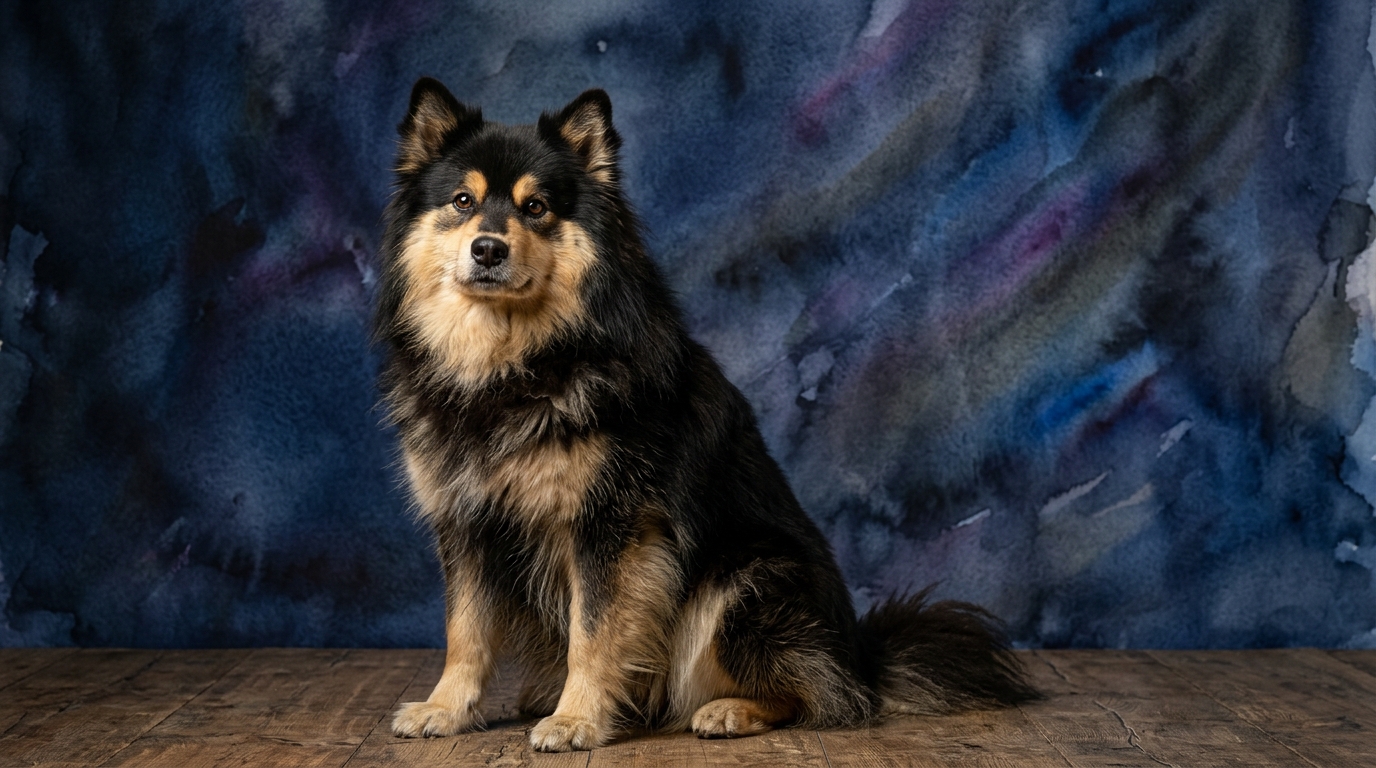
Side-by-Side IQ Profile: Cavalier King Charles Spaniel vs. Finnish Lapphund
Let's break down the individual cognitive dimensions for each breed. The Cavalier King Charles Spaniel (CKCS), a Toy breed, shows a problem-solving capacity of 3/5, indicating they can navigate moderate challenges but aren't typically devising complex multi-step solutions independently. Their training speed also sits at 3/5, meaning they learn new commands at an average pace, requiring consistent repetition. Where the CKCS truly shines is in social intelligence, scoring a perfect 5/5, reflecting their exceptional ability to understand and respond to human emotions and social cues. Their instinctive drive is 3/5, aligning with their companion role, showing moderate interest in activities like chasing or retrieving but lacking strong predatory or herding urges. Memory is rated at 3/5, suggesting they retain learned information and routines adequately.
The Finnish Lapphund, a Herding breed, presents a remarkably consistent cognitive profile across the board, with every dimension scoring 3/5. Their problem-solving at 3/5 means they are capable of figuring out practical tasks, especially those related to their environment or routines, but might not excel at abstract puzzles. A training speed of 3/5 indicates they learn at a steady pace, benefiting from clear, patient instruction. Their social intelligence, at 3/5, suggests they are connected to their human families but may not possess the same intuitive emotional attunement as a CKCS, often displaying a more independent or reserved demeanor. The instinctive drive of 3/5 reflects their herding heritage, manifesting as an awareness of surroundings and a moderate urge to gather or control, but not an overwhelming, high-intensity drive. Finally, their memory at 3/5 ensures they remember commands, boundaries, and familiar people and places reliably.
Where the Cavalier King Charles Spaniel Wins Cognitively
The Cavalier King Charles Spaniel's undeniable cognitive victory lies in its exceptional social intelligence, scoring a 5/5 compared to the Finnish Lapphund's 3/5. This isn't merely about friendliness; it's about a profound capacity for emotional perception and responsiveness. A CKCS can often anticipate a human's mood, offer comfort without prompting, and engage in deeply reciprocal interactions. This means they are extraordinarily adept at reading subtle human cues, making them intuitive companions who seamlessly integrate into family life and often excel in roles requiring emotional support, such as therapy work. Their ability to form strong, empathetic bonds is a distinct cognitive advantage, allowing them to navigate complex social environments with grace and ease, making them feel incredibly connected to their people. While their problem-solving and training speed are average, their social acumen means they are often highly motivated to cooperate and please their human partners, which can indirectly enhance perceived trainability in a family setting.
Where the Finnish Lapphund Wins Cognitively
While both breeds share a 3/5 score across many dimensions, the Finnish Lapphund's cognitive strengths are rooted in its working heritage, which manifests differently than a toy breed's. Their 3/5 problem-solving, for instance, often translates into a practical intelligence geared towards navigating varied environments and adapting to outdoor challenges. They might be adept at finding their way around, assessing their surroundings, or figuring out how to access a desired location, demonstrating a robust environmental awareness. Their 3/5 instinctive drive, while not as intense as some high-drive herding breeds, provides a foundation for vigilance and independence. This means they possess an inherent watchfulness and a capacity for making independent decisions, which historically served them well in supervising livestock in vast, open spaces. This cognitive independence, coupled with their moderate memory, allows them to retain complex routines and boundaries, making them reliable partners for owners who appreciate a dog with a thoughtful, self-possessed approach to its world. They excel in situations requiring resilience and a certain degree of self-sufficiency, rather than constant human direction.
Which is Easier to Train and Why
When considering ease of training, the Cavalier King Charles Spaniel often presents a more straightforward experience for the average owner, primarily due to their superior social intelligence (5/5). While their training speed is an average 3/5, their profound desire to please and their sensitivity to human emotions mean they are highly motivated by positive reinforcement and human connection. They are quick to understand what is expected of them in a social context and are less likely to push boundaries or display stubbornness, thriving on cooperative learning. Their strong bond with their owners makes them eager participants in training sessions, even if the actual acquisition of new commands takes an average amount of repetition. This emotional receptiveness makes training feel more intuitive and rewarding for both dog and owner.
The Finnish Lapphund, with a 3/5 in both social intelligence and training speed, can be more challenging for novice owners. While they are certainly capable of learning, their more independent nature and lower social drive mean they may not be as inherently motivated by human approval alone. Training a Finnish Lapphund requires patience, consistency, and an understanding of their Nordic breed independence. They learn at an average pace, but their willingness to perform might be influenced by their own assessment of the task's value or their mood. Their 3/5 instinctive drive, while moderate, can also mean they are occasionally more interested in their environment or their own agenda than in executing a command flawlessly. Successful training with a Lapphund often involves making it fun, engaging their natural curiosity, and respecting their thoughtful, sometimes reserved, personality.
Which Suits Active Owners vs. Relaxed Owners
For relaxed owners seeking a devoted companion, the Cavalier King Charles Spaniel is an ideal match. Their moderate instinctive drive (3/5) means they are content with regular walks, indoor play, and ample cuddle time. Their cognitive profile, particularly their high social intelligence, means they thrive on close human contact and a comfortable home environment, making them perfect for individuals or families who prefer a less demanding activity schedule. They are generally adaptable to apartment living and are happiest when nestled close to their loved ones, providing gentle companionship without requiring extensive physical or mental exertion.
Conversely, the Finnish Lapphund is better suited for active owners who enjoy outdoor adventures and can provide consistent mental and physical engagement. Despite their 3/5 instinctive drive, their heritage as a herding dog in cold climates means they possess significant stamina and a need for purpose. They are built for activity and thrive when given opportunities to explore, hike, or participate in dog sports like agility or obedience. Their moderate problem-solving and independent nature mean they benefit from varied mental challenges beyond simple walks. Owners who appreciate a resilient, watchful, and active partner will find the Finnish Lapphund an engaging companion capable of keeping pace with a more adventurous lifestyle. Without adequate stimulation, their cognitive independence can lead to self-entertaining behaviors that might not align with an owner's preferences.
The Verdict
Choose the Cavalier King Charles Spaniel if your priority is an unparalleled emotional connection and a gentle, adaptable companion for a relaxed home life, where their social brilliance can truly shine.
Opt for the Finnish Lapphund if you seek an engaged, resilient partner for an active lifestyle, one that thrives on outdoor exploration and offers a thoughtful, independent presence.
🧠 Find Your Pet's IQ Score
Our Pet IQ Lab assessment covers 25+ tests across 5 cognitive dimensions — personalized to your breed.
Take the Full IQ Test →Frequently Asked Questions
Are Cavalier King Charles Spaniels good with children?
Yes, their high social intelligence and gentle nature typically make Cavalier King Charles Spaniels excellent family dogs. They are generally patient and adaptable to household dynamics, forming strong bonds with all family members.
Do Finnish Lapphunds bark a lot?
Finnish Lapphunds can be quite vocal, using barks to communicate and alert, a trait stemming from their herding and guarding heritage. Consistent training and appropriate mental stimulation can help manage this tendency, but some degree of vocalization is natural for the breed.
What kind of mental stimulation do these breeds need?
Cavalier King Charles Spaniels benefit from interactive play, training focused on social engagement, and puzzle toys that reinforce their bond with humans. Finnish Lapphunds require more varied mental challenges like scent work, advanced obedience, or problem-solving games that satisfy their working heritage and independent thinking.