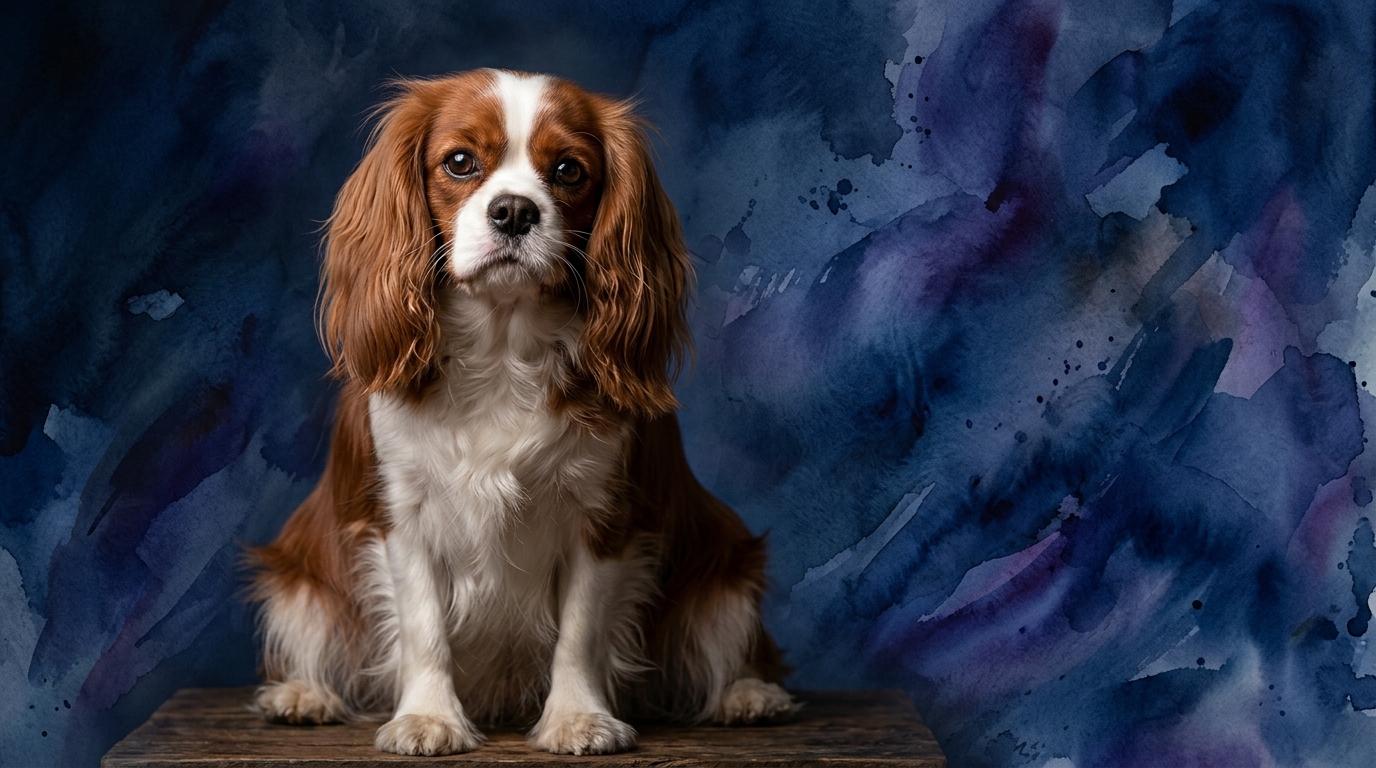
Side-by-Side IQ Profile: Cavalier King Charles Spaniel
The Cavalier King Charles Spaniel (CKCS), a member of the Toy group and ranked #44 by Coren, presents a cognitive profile finely tuned for companionship. Their Problem Solving is rated 3/5, indicating a moderate capacity for navigating novel situations and adapting to minor environmental changes, though they typically prefer human guidance in complex scenarios. Training Speed also stands at 3/5; Cavaliers learn new commands at a moderate pace, particularly when positive reinforcement and interaction with their owner are involved. Their standout trait is Social Intelligence, scoring an exceptional 5/5, which signifies a profound ability to interpret human emotions, body language, and vocal tones, making them incredibly empathetic. Instinctive Drive is 3/5, primarily focused on interaction and companionship rather than strong task-oriented urges. Finally, their Memory is 3/5, allowing for moderate recall of routines, learned commands, and familiar individuals and places.
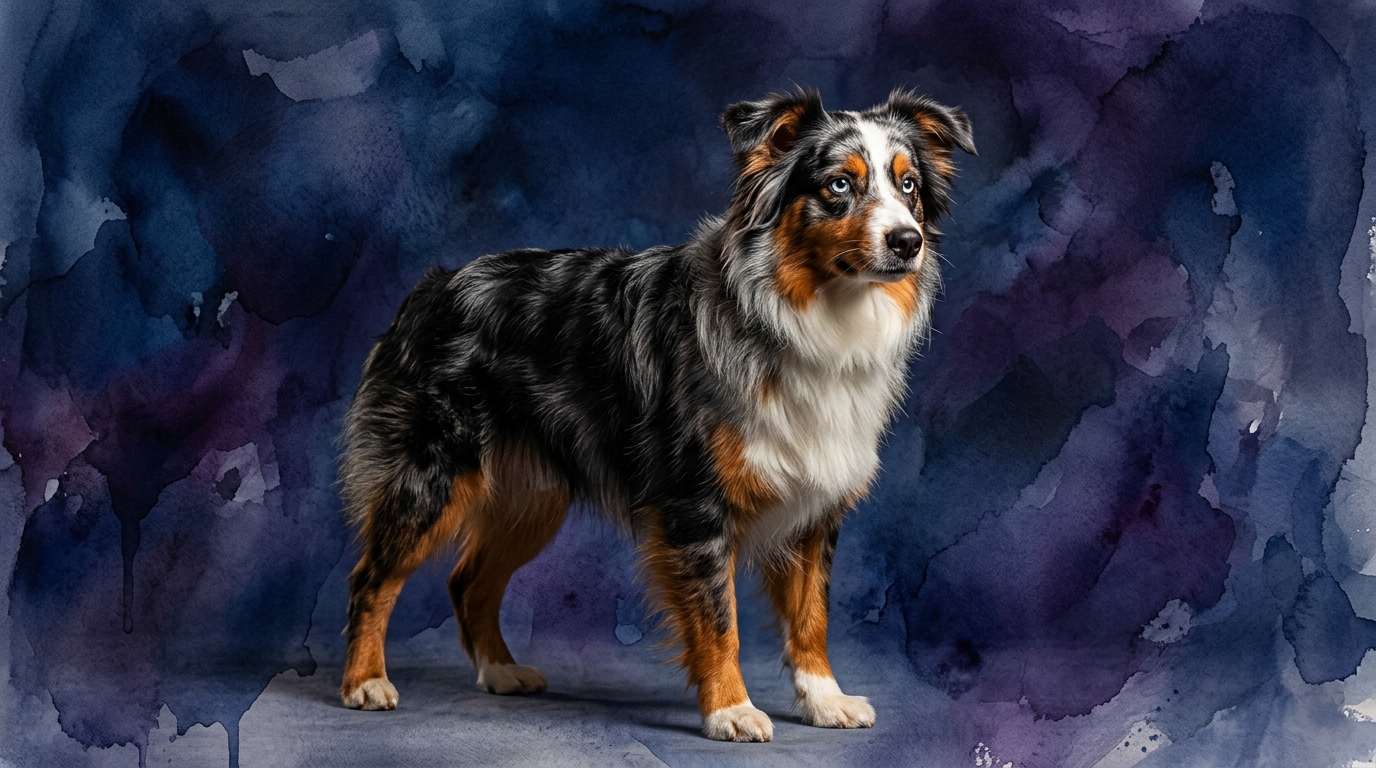
Side-by-Side IQ Profile: Miniature American Shepherd
The Miniature American Shepherd (MAS), a Herding breed not ranked by Coren, displays a cognitive makeup geared toward purpose and activity. Their Problem Solving ability is 3/5, meaning they possess a moderate capacity for independent thought, often manifesting in their ability to understand and achieve goals, such as navigating an agility course. Training Speed is also 3/5; MAS learn new commands at a moderate rate, thriving when tasks are stimulating and provide a sense of utility. Their Social Intelligence is 3/5, indicating they form strong bonds and understand basic human cues, but their focus is often more on task execution than subtle emotional nuances. The Instinctive Drive, while 3/5, is distinctly rooted in their herding lineage, translating into a purposeful energy for gathering and organizing. Their Memory is 3/5, demonstrating moderate recall for complex command sequences and environmental layouts, crucial for tasks requiring precision and sustained attention.
Where Cavalier King Charles Spaniel Wins Cognitively
The Cavalier King Charles Spaniel undeniably excels in the realm of social cognition, registering a perfect 5 out of 5 in Social Intelligence. This isn't merely about being affectionate; it represents a sophisticated cognitive ability to deeply understand and respond to human emotional states and intentions. A Cavalier can often intuit an owner's mood, offering a gentle nudge or a comforting presence without being explicitly prompted. They are masters at reading subtle facial expressions, shifts in tone of voice, and body language, allowing for an incredibly nuanced and empathetic bond. This exceptional capacity for emotional attunement makes them unparalleled companion animals, capable of providing profound psychological support and connection. Their cognitive strengths lie in fostering reciprocal emotional relationships, understanding the social dynamics of their human household, and adapting their behavior to maintain harmony and closeness. This level of social acumen means they are often the first to notice a change in family dynamics or an owner's distress, and respond in ways that demonstrate a complex understanding of social cues and emotional needs. Unlike breeds whose cognitive strengths are task-oriented, the Cavalier’s mind is finely tuned to the intricacies of human-canine emotional communication, making them profoundly intuitive partners in daily life.
Where Miniature American Shepherd Wins Cognitively
While the Miniature American Shepherd shares several 3/5 ratings with the Cavalier, the application and context of these scores reveal distinct cognitive advantages, particularly stemming from their herding heritage. Their 3/5 Problem Solving and 3/5 Training Speed, when combined with their 3/5 Instinctive Drive, manifest as a robust capacity for purposeful action and learning within structured environments. The MAS's mind is geared towards understanding systems, patterns, and dynamic movements. For example, their problem-solving isn't just about navigating a room; it's about figuring out how to direct a flock, or how to efficiently complete an agility course, requiring spatial reasoning and strategic planning. Their instinctive drive, though moderate, is highly focused on work-like activities, meaning they derive significant mental satisfaction from engaging in tasks. This often translates into a keen ability to learn and execute complex sequences of commands, demonstrating a cognitive preference for structured mental engagement over pure social interaction. They excel in activities requiring sustained focus, body awareness, and the ability to adapt to changing variables within a task. This isn't necessarily about outsmarting a human, but about efficiently processing information related to a goal and executing a plan, showcasing a practical, applied form of cognition that is deeply satisfying for these working-minded dogs.
Which is Easier to Train and Why
Although both the Cavalier King Charles Spaniel and the Miniature American Shepherd are rated 3/5 for Training Speed, indicating a moderate pace of learning new commands, the ease of training can differ significantly due to their other cognitive strengths. The Cavalier, with its exemplary 5/5 Social Intelligence, is often perceived as easier to train in a general household context. Their profound desire to please and their acute sensitivity to human emotions mean they are highly motivated by positive reinforcement, praise, and the strengthening of their bond with their owner. They quickly pick up on what makes their human happy and are eager to comply to maintain that positive social connection. Their comparatively lower instinctive drive (3/5, focused on companionship) means fewer competing motivations or strong urges to override during training sessions. Conversely, the Miniature American Shepherd, despite the same Training Speed score, might present a different training dynamic. While they are capable learners, their 3/5 Instinctive Drive, rooted in herding, means they thrive on purpose and engagement. Training for an MAS needs to be stimulating, consistent, and often task-oriented to truly capture their attention and leverage their cognitive strengths. They might be less swayed by pure social approval alone and require clearer, more structured cues. Their moderate social intelligence means they might not inherently understand subtle human desires as readily as a Cavalier, necessitating more explicit communication and engaging activities to maintain focus. Therefore, for an owner seeking a dog that naturally aligns with human desires and responds readily to social cues, the Cavalier might feel easier to train, whereas the MAS excels with an owner prepared to provide structured, stimulating, and consistent training that taps into their working drive.
Which Suits Active Owners vs. Relaxed Owners
The distinct cognitive profiles of the Cavalier King Charles Spaniel and the Miniature American Shepherd clearly delineate their suitability for different owner lifestyles. The Cavalier, with its unparalleled 5/5 Social Intelligence and moderate instinctive drive, is an ideal match for relaxed owners or those seeking a devoted, intuitive companion for a quieter home life. Their cognitive strengths are centered around emotional connection and social harmony, meaning they thrive on being close to their humans, participating in daily routines, and offering comfort. While they enjoy walks and gentle play, their mental stimulation needs are largely met through social interaction and being an integral part of the family. They are content with a less rigorous schedule, prioritizing affection and companionship over intense physical or mental challenges. In contrast, the Miniature American Shepherd, despite similar scores in problem-solving and training speed, possesses an instinctive drive (3/5, but herding-specific) that necessitates an active owner. Their minds are wired for purpose and engagement, thriving when given tasks to do or problems to solve that go beyond simple companionship. They excel in environments where they can channel their energy into activities like agility, obedience trials, herding games, or extensive hikes. An MAS will benefit significantly from owners who can provide consistent mental and physical challenges, preventing boredom and potential misdirected energies. Their moderate social intelligence means they appreciate companionship but find deeper fulfillment in purposeful activity, making them a better fit for individuals or families who lead an energetic lifestyle and are committed to consistent training and engagement.
The Verdict
Choose the Cavalier King Charles Spaniel if your priority is an emotionally intuitive companion, a dog that deeply understands your moods, and thrives on constant social connection in a relaxed home environment.
Opt for the Miniature American Shepherd if you seek an active, purposeful partner for canine sports, outdoor adventures, or structured training, thriving with consistent mental and physical challenges.
🧠 Find Your Pet's IQ Score
Our Pet IQ Lab assessment covers 25+ tests across 5 cognitive dimensions — personalized to your breed.
Take the Full IQ Test →Frequently Asked Questions
Do Cavalier King Charles Spaniels require a lot of mental stimulation?
Cavaliers primarily find mental stimulation through social interaction and companionship. While they enjoy learning new tricks, their deepest cognitive engagement comes from understanding and responding to human emotions and being an integral part of the family's daily life.
Can a Miniature American Shepherd be a good family pet, despite its herding drive?
Absolutely, Miniature American Shepherds can be devoted family pets, provided their innate herding drive and cognitive need for purpose are met through consistent training, exercise, and engaging activities. They thrive when given a 'job' to do, even if it's participating in canine sports or structured play.
How does the "Instinctive Drive" score differ between these two breeds if both are 3/5?
While both are rated 3/5, the nature of the drive is distinct. The Cavalier's drive is primarily for companionship and comfort, while the Miniature American Shepherd's drive is rooted in herding, manifesting as a desire to gather, organize, and control, requiring specific outlets for fulfillment.