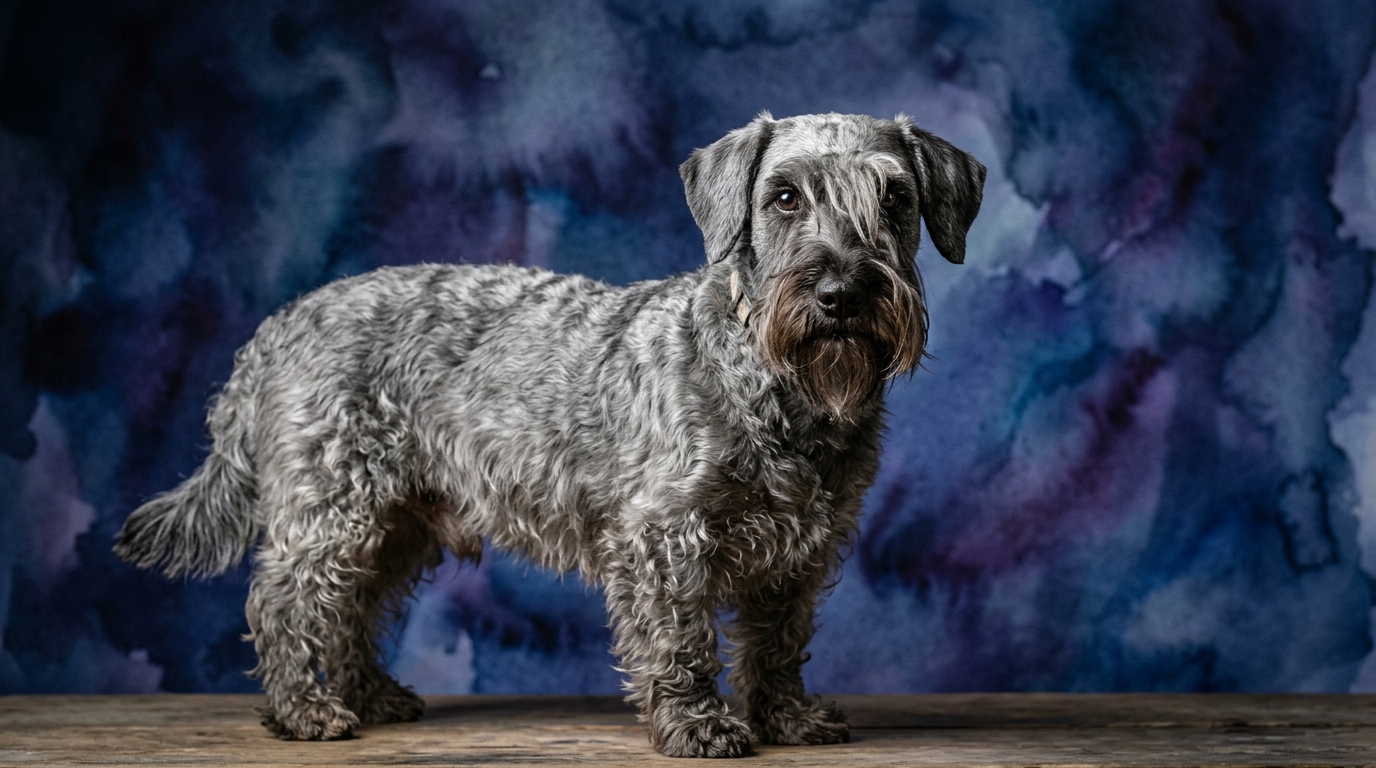

Side-by-Side IQ Profile: Unpacking the 3/5 Scores
Both the Cesky Terrier and the Russian Toy consistently score a 3 out of 5 across all five intelligence dimensions: Problem Solving, Training Speed, Social Intelligence, Instinctive Drive, and Memory. This uniform rating indicates that neither breed is at an extreme end of the cognitive spectrum, suggesting a balanced, middle-ground aptitude for learning and interaction. However, the manifestation of these scores differs significantly due to their foundational breed characteristics; the Cesky, a tenacious terrier, and the Russian Toy, a delicate companion.
For the Cesky Terrier, a 3/5 in Problem Solving often translates to a practical, independent approach to overcoming obstacles. They aren't deterred by simple barriers and will methodically work through challenges, perhaps with a terrier's characteristic digging or persistent sniffing, to achieve their goal. Their Training Speed at 3/5 means they are capable of learning new commands at a moderate pace, but their inherent independence might require consistent, engaging methods to maintain focus. Social Intelligence at 3/5 suggests they are observant of their human companions and other animals, capable of forming bonds, but might display the typical terrier reserve or selective affection rather than universal effusiveness. Their Instinctive Drive, also 3/5, is clearly rooted in their earthdog heritage, manifesting as a moderate but present prey drive and a desire for engaging activities. Finally, a 3/5 in Memory indicates they retain learned behaviors and routines effectively, making them reliable once a command is truly ingrained.
The Russian Toy's 3/5 in Problem Solving might manifest as a more adaptive or human-reliant strategy. They are clever enough to figure out how to get what they want, often by charming their owners or finding novel ways to navigate their environment, rather than brute force. Their Training Speed at 3/5 reflects a willingness to learn, often eager to please their favored person, but their small size and sensitive nature can mean shorter attention spans or a need for very gentle, positive reinforcement methods. Social Intelligence at 3/5 for the Russian Toy points to a strong capacity for bonding, often developing deep attachments to their family members and being attuned to their moods, though they can be wary of strangers. Their Instinctive Drive, also 3/5, is primarily expressed as a companion drive, a desire to be close to their people, occasionally coupled with a moderate alert barking or toy-like playfulness. Their Memory, at 3/5, allows them to remember routines, commands, and social cues, contributing to their adaptability as house pets.
Where the Cesky Terrier Wins Cognitively
The Cesky Terrier, despite matching scores, often exhibits a cognitive edge in areas demanding independent thought and sustained focus on a task. Their terrier heritage imbues them with a practical problem-solving style that is less reliant on human intervention. When faced with an environmental puzzle, such as retrieving a toy from under furniture or navigating a complex scent trail, the Cesky is more likely to methodically work through it on their own, demonstrating a persistent, self-directed approach. This translates into a robust resilience in tasks that require sustained mental engagement without constant human prompting, a trait highly valued in working breeds.
Furthermore, their instinctive drive, even at a moderate 3/5, is geared towards purpose-driven activities. This means they can excel in canine sports like earthdog trials or agility, where their problem-solving skills and memory are channeled into specific, objective-oriented tasks. The Cesky's moderate social intelligence also means they are less likely to be overly distracted by external social stimuli during a task, maintaining a more singular focus on the objective at hand. This independence in thought and action provides a distinct advantage for owners seeking a dog capable of engaging with challenges autonomously.
Where the Russian Toy Wins Cognitively
The Russian Toy, while equally rated, shines in cognitive domains centered around human interaction and environmental adaptability. Their manifestation of 3/5 social intelligence often means they are exceptionally attuned to their owner's emotions and body language, making them highly responsive to subtle cues. This sensitivity allows them to anticipate needs or respond quickly to changes in their human's mood, fostering a profound companion bond. Their problem-solving might lean more towards finding ways to engage with their human or adapt to household routines, making them remarkably intuitive housemates.
Additionally, their training speed, while numerically identical, is often bolstered by a strong desire for human approval and affection. This can make them particularly receptive to learning commands that reinforce positive interaction, like tricks or polite leash manners. Their memory, combined with this social awareness, enables them to quickly recall which behaviors elicit positive responses and which do not, allowing them to adjust their actions to maintain harmony within the home. This makes them superb candidates for owners who value a dog that integrates seamlessly into their daily lives and responds keenly to social feedback.
Their compact size and inherent adaptability also mean their problem-solving and memory skills are often applied to navigating diverse human environments. A Russian Toy might quickly learn the best napping spots, the routine for meal times, or how to subtly signal their needs to their owner, showcasing a cleverness focused on comfort and companionship rather than independent hunting tasks.
Which is Easier to Train and Why
Determining which breed is 'easier' to train, given their identical 3/5 Training Speed scores, hinges on understanding their intrinsic motivators and temperaments. The Russian Toy often presents as 'easier' for many owners due to their pronounced eagerness to please and their sensitivity to human feedback. They respond very well to positive reinforcement, praise, and gentle guidance, often thriving on the attention they receive during training sessions. Their smaller size also makes them physically easier to manage, and their strong social intelligence means they are often watching their owner for cues, which can facilitate quicker understanding of commands, provided distractions are minimized.
Conversely, the Cesky Terrier, while perfectly capable of learning at a 3/5 speed, may require a more patient and consistent approach. Their terrier independence means they can be more strong-willed and might challenge commands if they don't perceive an immediate benefit or if the training isn't engaging enough. While they retain information well (3/5 Memory), getting them to initially comply and overcome their natural 'what's in it for me?' attitude can be more demanding. Training a Cesky often requires a firmer, yet still positive, hand, with an emphasis on making sessions varied and stimulating to prevent boredom and harness their inherent drive. They are less likely to be motivated purely by pleasing their owner and more by achieving a goal or earning a reward they truly value.
Which Suits Active Owners vs. Relaxed Owners
For active owners, the Cesky Terrier generally proves to be a more fitting companion. Their 3/5 Instinctive Drive, coupled with their independent problem-solving skills, means they thrive on structured activities that challenge both their body and mind. They enjoy long walks, hiking, and participating in canine sports like earthdog trials, obedience, or agility. An active owner who can provide consistent mental stimulation and physical exercise will find the Cesky to be a steadfast and engaged partner. Their moderate social intelligence means they appreciate their owner's company during these activities but also possess the self-reliance to explore and engage with their environment independently.
Relaxed owners will likely find the Russian Toy to be a more harmonious fit. Their 3/5 social intelligence and companion-oriented drive mean they are content to be close to their human, adapting readily to a quieter home life. While they do enjoy regular, short walks and playtime, their exercise needs are generally lower than a terrier's. Their adaptability and eagerness to be involved in their owner's daily routine, whether it's cuddling on the sofa or accompanying them on errands, make them excellent companions for those who prefer a less strenuous pace. Their sensitive nature means they flourish in a calm, predictable environment where they receive ample affection and companionship.
The Verdict
Choose the Cesky Terrier if you are an active owner seeking an independent, tenacious companion who thrives on structured mental and physical challenges, and you appreciate a dog with a practical, self-reliant approach to problem-solving.
Opt for the Russian Toy if you are a relaxed owner desiring a highly social, sensitive, and adaptable companion who excels at integrating into family life and responds keenly to subtle human cues and affection.
🧠 Find Your Pet's IQ Score
Our Pet IQ Lab assessment covers 25+ tests across 5 cognitive dimensions — personalized to your breed.
Take the Full IQ Test →Frequently Asked Questions
Do Cesky Terriers get along well with other pets?
Cesky Terriers, with their 3/5 social intelligence, can coexist peacefully with other pets, especially if socialized from a young age. Their terrier instincts mean they might view smaller, fast-moving animals as prey, so careful introductions and supervision are crucial, particularly with non-canine pets.
Are Russian Toys prone to separation anxiety?
Given their 3/5 social intelligence and strong companion drive, Russian Toys can develop separation anxiety if left alone for extended periods. They thrive on human companionship and may express distress through barking or destructive behavior if their need for social interaction isn't met consistently.
What kind of mental stimulation do these breeds need?
Both breeds, with 3/5 problem-solving and memory, benefit from mental stimulation. Cesky Terriers enjoy puzzle toys, scent work, and training for dog sports, while Russian Toys prefer interactive play, learning tricks, and engaging in activities that involve their human companions, leveraging their social intelligence.