Side-by-Side Feline IQ Profile
At The Cosmic Pet Pet IQ Lab, we assess feline intelligence across five key dimensions to provide a comprehensive understanding of each breed's cognitive strengths. While both the Chausie and the Oriental Shorthair register an identical 3/5 score in each category, the manifestation of these abilities paints distinct pictures.
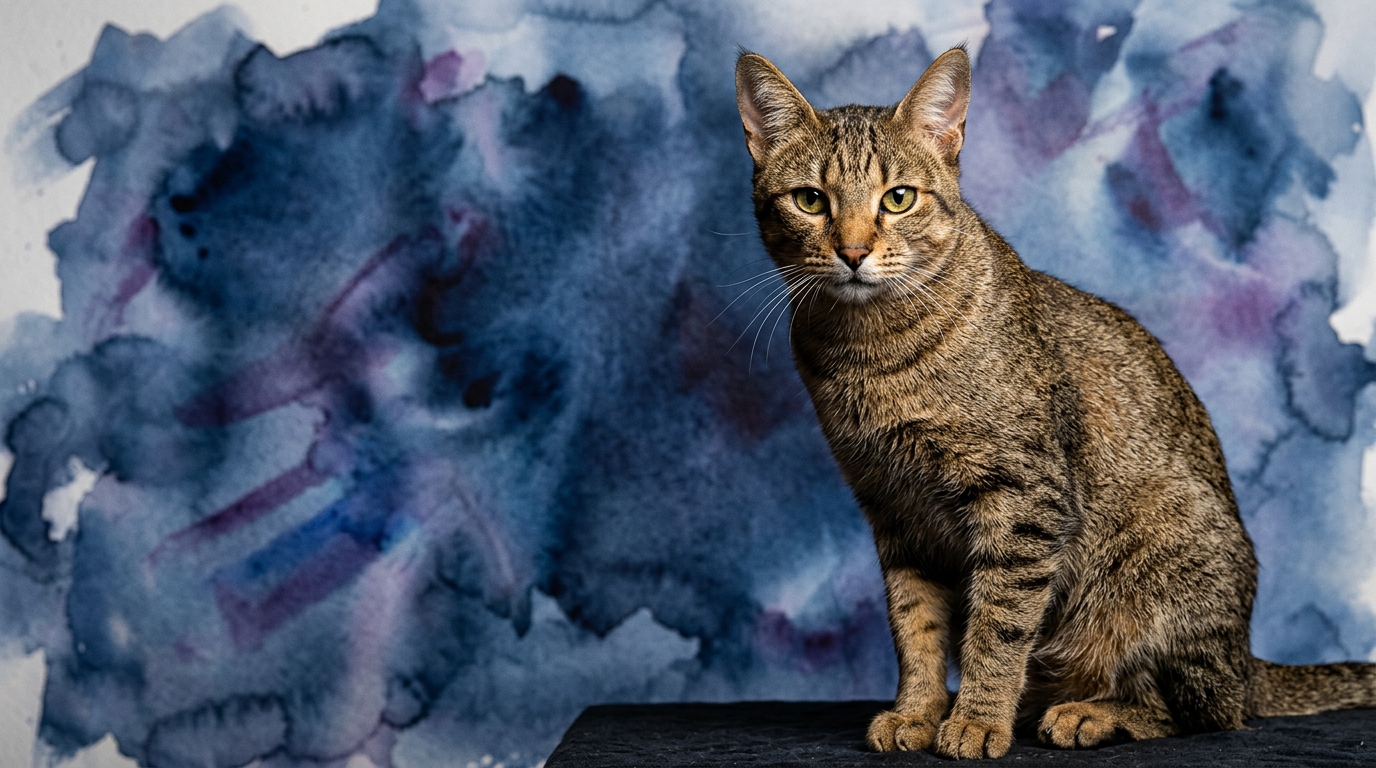
For the **Chausie**, a breed with wild ancestry, these scores translate into a unique cognitive profile:
**Problem Solving (3/5):** Chausies typically approach obstacles pragmatically, utilizing physical agility and keen observation to find solutions. They often meticulously assess situations, testing boundaries or exploring alternative pathways, driven by curiosity to access high spots or open simple latches through environmental manipulation.
**Training Speed (3/5):** Receptive to training aligned with natural inclinations or clear rewards, Chausies learn routines and boundaries effectively with consistent reinforcement. Their pace is less about immediate compliance, more about understanding personal benefit, requiring patience and methods tapping into their innate drives like hunting games.
**Social Intelligence (3/5):** Chausies exhibit selective social intelligence, forming deep bonds with chosen humans. They accurately read primary caregivers' moods, responding with subtle cues rather than overt displays. They understand their family role, adapting behavior for harmony, though less inclined to engage strangers.
**Instinctive Drive (3/5):** Reflecting wild ancestry, Chausies possess a robust prey drive, manifesting in focused hunting behaviors and intense environmental curiosity. This fuels exploration, physical prowess, and adept stalking/pouncing, indicating a well-preserved natural toolkit for vigorous play.
**Memory (3/5):** Chausies show good memory for spatial layouts, routines, and resource locations. They recall specific individuals and interactions, holding associations. Their practical memory aids navigation of complex environments and recall of successful strategies, like remembering treat locations.
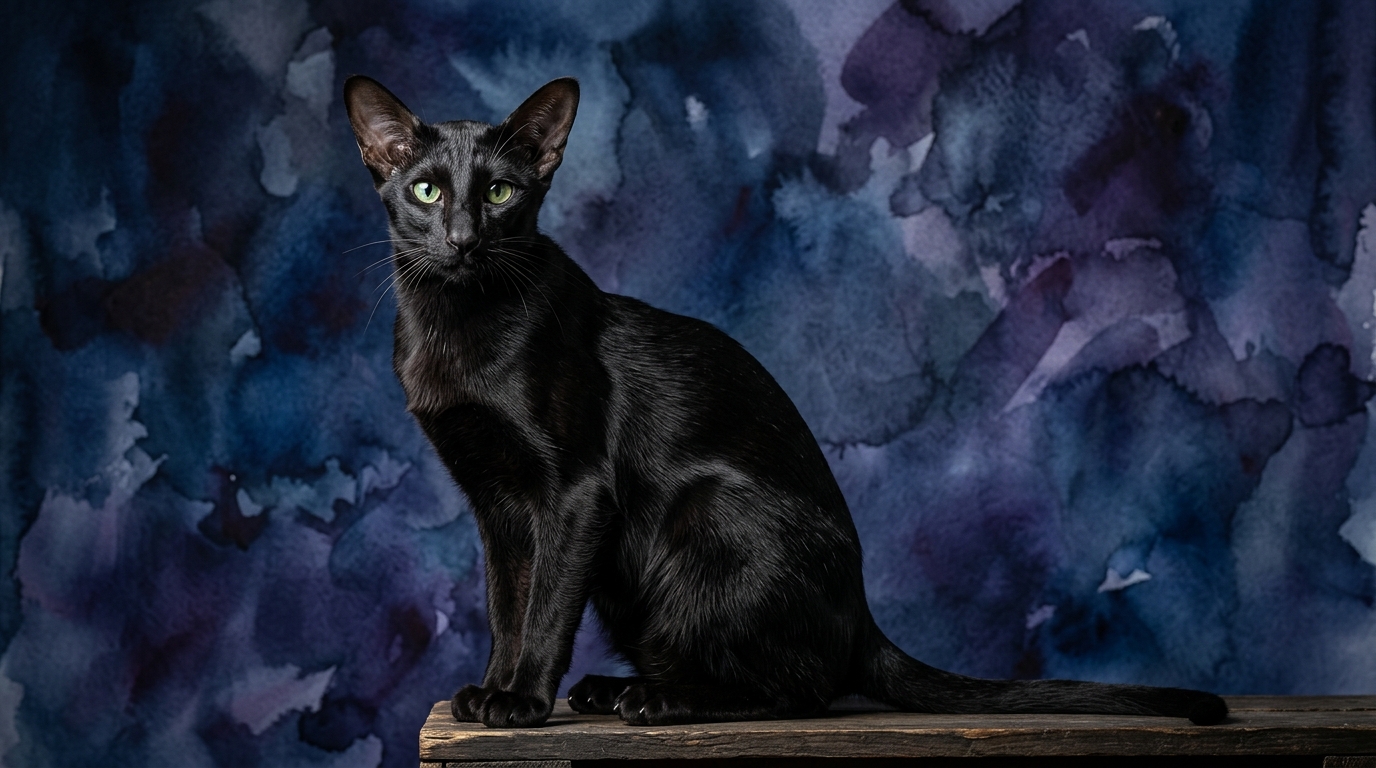
The **Oriental Shorthair**, a highly refined domestic breed, interprets these same scores through a lens of intense social engagement and vocal communication:
**Problem Solving (3/5):** Oriental Shorthairs often employ interactive, vocal strategies, frequently "asking" for help or drawing attention. They manipulate environments not just physically, but by engaging humans, figuring out door handles or persistently meowing for assistance, demonstrating social problem-solving.
**Training Speed (3/5):** Orientals respond well to training, eager to please and quick to grasp commands, especially with positive reinforcement and intellectual stimulation. Their speed benefits from engagement and attentiveness, allowing them to learn complex actions for leash training or agility.
**Social Intelligence (3/5):** Oriental Shorthairs excel in social intelligence, forming strong, "dog-like" bonds. Highly attuned to human emotions and body language, they seek to comfort or engage. Their acumen allows deep integration into family life, understanding dynamics and often initiating interaction.
**Instinctive Drive (3/5):** While retaining predatory instinct, the Oriental Shorthair's drive is channeled through human interaction and play. They enjoy chasing, pouncing, and interactive games simulating hunting. Their drive extends to a strong need for companionship and environmental enrichment, motivating playful exploration.
**Memory (3/5):** Oriental Shorthairs possess strong memory for routines, people, and interactive events. They recall who provides meals, who plays, and daily schedules. This memory aids anticipation and complex associations, allowing quick adaptation to environmental or social changes.
Where the Chausie Wins Cognitively
The Chausie's cognitive strengths often manifest in their independent resourcefulness and environmental mastery. Their problem-solving, while rated 3/5, often involves a more self-reliant approach, where they leverage physical prowess and acute senses to navigate complex physical spaces or overcome obstacles without direct human intervention. This makes them particularly adept at figuring out intricate mechanisms or reaching high, secluded spots through trial and error, demonstrating a unique blend of physical and analytical thought. Their instinctive drive, also 3/5, is arguably more primal and self-directed, providing a robust internal motivation for exploration and self-sufficiency, which can be a cognitive advantage in navigating novel or challenging physical environments.
Where the Oriental Shorthair Wins Cognitively
The Oriental Shorthair shines in areas requiring nuanced social engagement and interactive problem-solving. While also rated 3/5, their social intelligence is distinctly more human-centric, allowing them to quickly decipher complex human cues and adapt their behavior to elicit desired responses. Their problem-solving often involves a sophisticated understanding of how to "communicate" their needs or desires to their owners, using vocalizations or directed actions, which signifies a higher level of social cognitive strategy. Their training speed, while numerically identical, is often bolstered by their eagerness to participate and form a collaborative bond, making them highly responsive to verbal cues and positive reinforcement in a way that feels more like a partnership.
Which is Easier to Train and Why
When considering ease of training, the Oriental Shorthair generally presents a more straightforward path for the average owner. Their social intelligence and desire for interaction mean they are often more motivated by human approval and the fun of shared activities. They quickly form associations between commands and actions, often thriving on the intellectual stimulation of learning new tricks or routines. Their vocal nature can also be an asset, as they often "talk" to their owners, making communication during training feel more reciprocal. In contrast, the Chausie's independent nature, while capable of learning at a 3/5 speed, means training often requires a deeper understanding of their individual motivations, often needing to tap into their prey drive or natural curiosity. While they learn well with consistency, their compliance might stem more from understanding a routine's benefit to themselves rather than a strong desire to please, making the initial engagement phase potentially more challenging for a novice trainer.
Which Suits Active Owners vs. Relaxed Owners
Active owners seeking a participatory companion will likely find the Oriental Shorthair a more natural fit. Their high social intelligence and interactive nature mean they thrive on engagement, whether it's learning new tricks, going for walks on a leash, or simply being involved in household activities. They demand mental and physical stimulation and will actively seek out interaction, making them ideal for owners who enjoy consistent daily play and intellectual challenges. Conversely, the Chausie, with its strong instinctive drive and more independent problem-solving approach, might appeal more to owners who appreciate a cat with a robust, self-sufficient spirit that can entertain itself but also enjoys focused, intense play sessions. While they are active and enjoy exploration, their social needs can be more selective, making them suitable for owners who might prefer a companion that is not constantly seeking attention but still enjoys dedicated play and bonding time. A relaxed owner might find the Oriental Shorthair's constant need for interaction overwhelming, whereas a Chausie might be more content with periods of independent exploration between focused play sessions.
The Verdict
Choose the Chausie if you appreciate a cat with a robust, independent spirit, strong self-reliance, and a more self-directed approach to problem-solving and environmental mastery. Their unique blend of wild ancestry and domestic charm suits an owner who values focused, intense play and a companion that explores its world with keen, pragmatic curiosity.
Choose the Oriental Shorthair if you seek a highly interactive and socially astute companion that thrives on deep human connection, intellectual engagement, and collaborative activities. Their eagerness to participate and communicate makes them an excellent choice for owners who desire a "dog-like" cat eager to learn and be an active, vocal participant in family life.
🧠 Find Your Pet's IQ Score
Our Pet IQ Lab assessment covers 25+ tests across 5 cognitive dimensions — personalized to your breed.
Take the Full IQ Test →Frequently Asked Questions
Do Chausies and Oriental Shorthairs get along with other pets?
Chausies, with their strong prey drive, might require careful introductions to smaller pets, though they can coexist peacefully with other confident cats or cat-friendly dogs when properly socialized. Oriental Shorthairs generally adapt well to multi-pet households due to their adaptable social intelligence, often enjoying the company of other animals.
Are Chausies or Oriental Shorthairs better for apartment living?
Both breeds can adapt to apartment living with sufficient enrichment, but their needs differ. Oriental Shorthairs thrive with vertical space, puzzle toys, and consistent human interaction, while Chausies require ample climbing opportunities, robust play, and regular mental stimulation to satisfy their exploratory instincts.
How do their memory capabilities affect their daily lives?
The Chausie's memory helps them efficiently navigate their environment and recall successful strategies for obtaining resources, ensuring they remember preferred hunting spots or safe havens. The Oriental Shorthair's memory significantly aids in anticipating routines and understanding human expectations, allowing them to seamlessly integrate into household schedules and maintain strong social bonds.