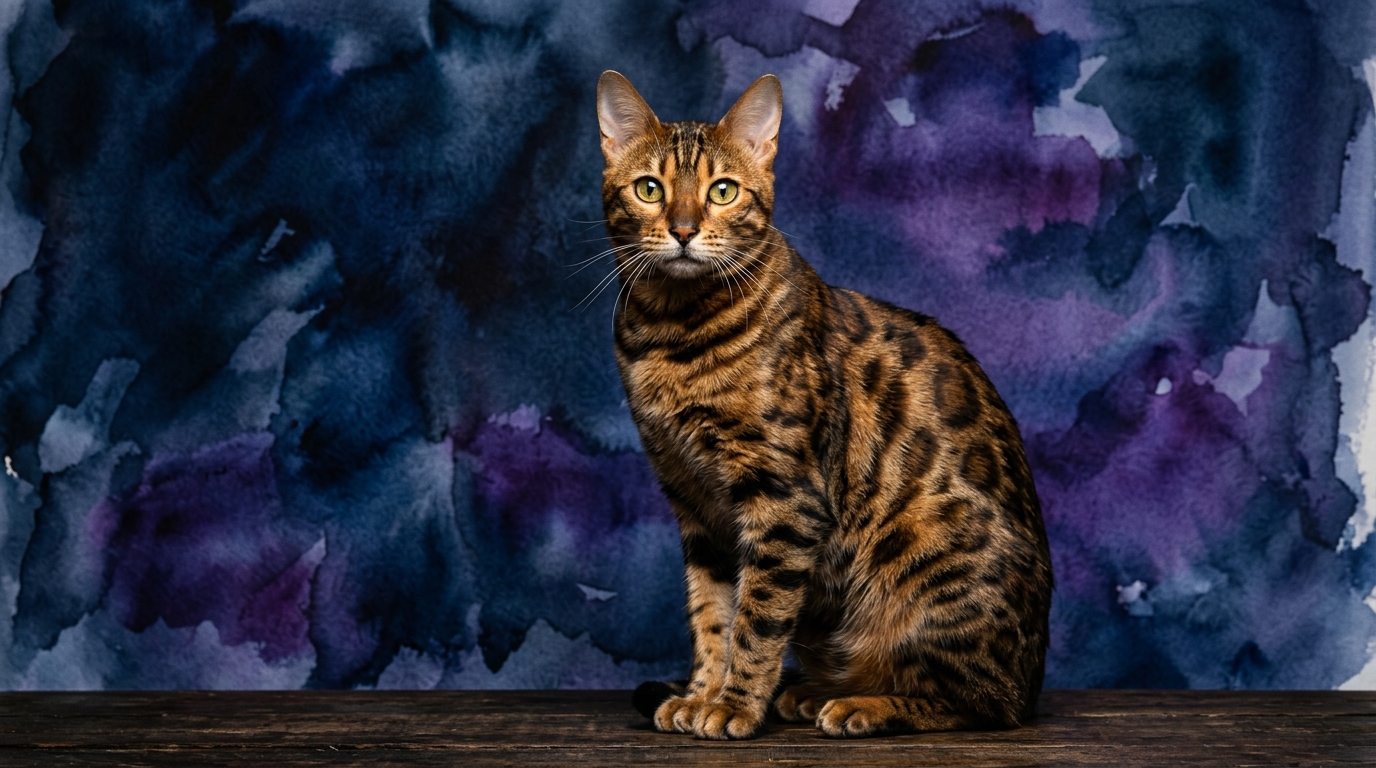
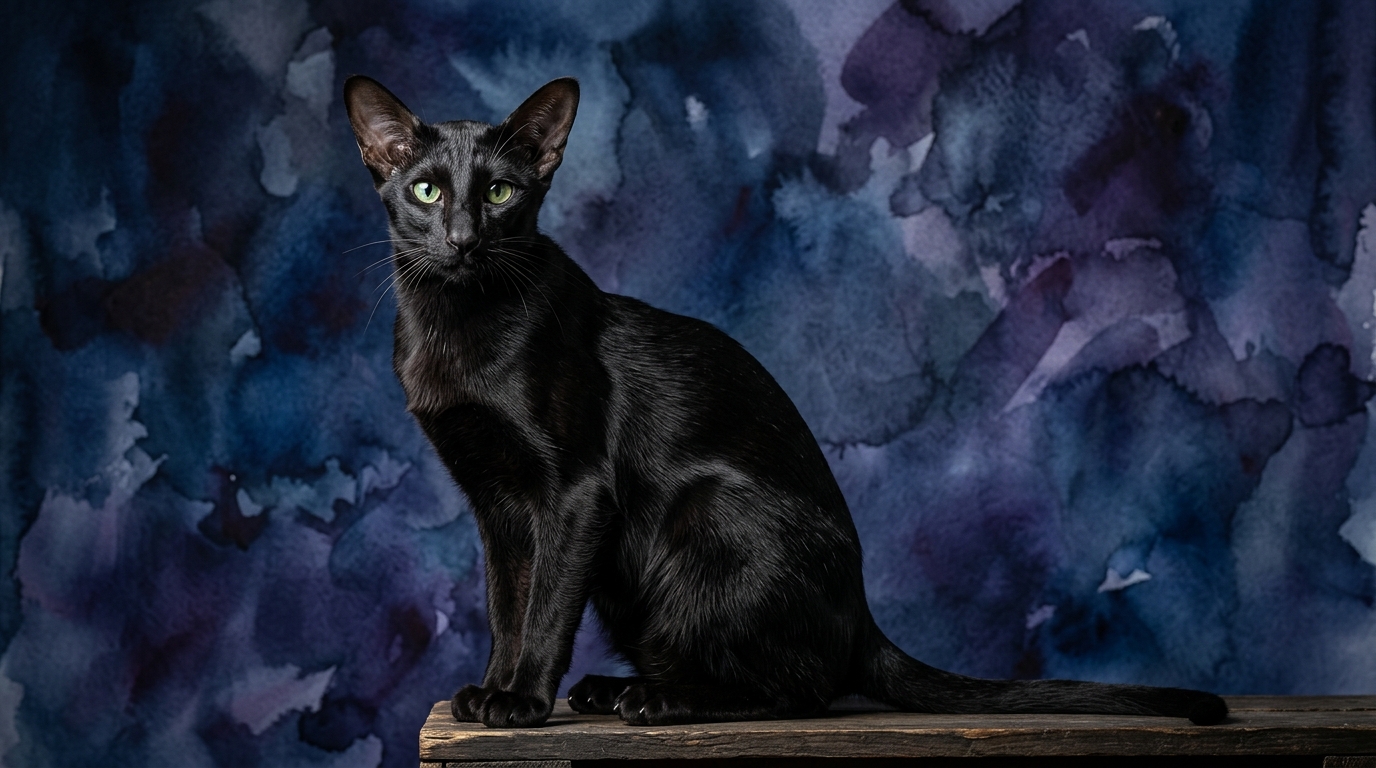
Side-by-Side Cognitive Profile: Bengal vs. Oriental Shorthair
At The Cosmic Pet Pet IQ Lab, we evaluate feline intelligence across five crucial dimensions, offering a clear comparative lens for the Bengal and Oriental Shorthair. The Bengal, a breed renowned for its active and curious nature, consistently scores at the higher end of the spectrum in several key areas. Its Problem Solving ability is rated 5/5, indicating an exceptional capacity to navigate complex situations, figure out puzzles, and devise creative solutions to reach goals or overcome obstacles. In Training Speed, the Bengal earns a 4/5, signifying a quick grasp of new commands, tricks, and routines, demonstrating a strong aptitude for learning through positive reinforcement. Their Social Intelligence stands at 4/5, reflecting a capability for forming strong bonds and understanding human cues, though their interactions can be quite active and demanding. The Bengal’s Instinctive Drive is a perfect 5/5, a clear nod to their wild ancestry, exhibiting profound predatory instincts, exploratory urges, and a deep need for stimulating environments. Finally, their Memory is also a 5/5, showcasing outstanding recall of locations, routines, people, and learned behaviors, which contributes significantly to their adaptability and environmental navigation.
In contrast, the Oriental Shorthair presents a more moderate, yet equally engaging, cognitive profile across all dimensions. Their Problem Solving ability is rated 3/5, indicating a functional capacity for handling straightforward challenges but a lesser inclination to devise intricate solutions compared to the Bengal. For Training Speed, they also score 3/5, suggesting they learn at an average pace, responsive to consistent training but potentially requiring more patience and repetition. Their Social Intelligence is a balanced 3/5; they form affectionate bonds and enjoy interaction, generally understanding social cues, but might be less intensely demanding or complex in their social engagement. The Oriental Shorthair’s Instinctive Drive is likewise 3/5, meaning they exhibit a moderate level of natural instincts, including hunting and exploration, but generally with less intensity or pervasiveness. Lastly, their Memory also comes in at 3/5, indicating a functional recall for daily routines and familiar people, though perhaps not with the same depth or intricate detail as a Bengal.
Where the Bengal's Cognition Shines Brightest
The Bengal’s cognitive strengths are particularly evident in its exceptional Problem Solving and Instinctive Drive. A 5/5 in Problem Solving means these cats are not just smart, but strategically clever. Owners often report Bengals opening cabinets, solving complex puzzle feeders, or even figuring out how to operate light switches – a testament to their analytical prowess. This isn't mere curiosity; it's a deep-seated ability to analyze a situation, form a hypothesis, and test solutions. This cognitive trait makes them highly engaging companions but also requires owners to be equally clever in providing enrichment and securing their environment to prevent unintentional mischief.
Coupled with their 5/5 Instinctive Drive, the Bengal's problem-solving skills become a powerful force. This drive manifests as a profound need to hunt, explore, and interact with their surroundings in a dynamic way. They don't just solve a puzzle; they might solve it because their instinct to 'catch' or 'discover' is so strong. Their impressive 5/5 Memory further enhances these traits, allowing them to remember where they last saw a hidden toy, the precise sequence to open a tricky door, or the routines of their human companions, making them incredibly adaptive and resourceful. This blend of high problem-solving, strong instincts, and excellent memory means a Bengal is always processing, planning, and engaging with their world at a very active cognitive level.
Distinct Cognitive Benefits of the Oriental Shorthair
While the Oriental Shorthair's cognitive scores are generally more moderate than the Bengal's, this profile offers distinct advantages for owners seeking a specific kind of feline companion. Their 3/5 score in Instinctive Drive, for example, means they are less likely to exhibit the intense predatory behaviors or relentless exploratory urges that can sometimes lead to household mischief or the need for constant, high-energy engagement. This moderation can be a cognitive benefit for owners desiring a cat whose natural drives are present but not overwhelming, leading to a calmer home environment where elaborate cat-proofing might be less critical.
Similarly, a 3/5 in Problem Solving indicates they are less inclined to meticulously strategize escape routes or devise intricate schemes to access forbidden areas, which can translate to fewer unexpected challenges for their human companions. This isn't to say they aren't clever, but their approach to challenges is generally more straightforward and less manipulative than a higher-scoring breed. Their 3/5 in Social Intelligence means they are affectionate and communicative, yet their demands for interaction might be less intense than a Bengal's. They appreciate companionship and engage readily, but perhaps without the constant, high-octane need for attention that a higher social intelligence score might imply, making them a wonderful fit for owners who appreciate a loving bond that also respects personal space.
Training Dynamics: Which Cat Learns Faster?
When it comes to trainability, the Bengal, with its 4/5 Training Speed and 5/5 Problem Solving, generally picks up new commands and tricks more rapidly. Their quick cognitive processing allows them to make associations between actions and rewards efficiently, meaning that with consistent, positive reinforcement, they can master complex sequences, leash training, or even retrieve toys with impressive speed. Their high problem-solving also means they can generalize learned behaviors to new situations more readily, adapting their understanding.
The Oriental Shorthair, scoring 3/5 in Training Speed, will also respond well to training, but owners should anticipate a more gradual learning curve. They require more repetition and patience, but their moderate Instinctive Drive means they might be less distracted by intense environmental stimuli during training sessions. While they might not devise complex solutions to bypass training boundaries, their consistent nature makes them reliable learners over time. The key difference lies in the pace and intensity of engagement required; Bengals demand more mental gymnastics from their trainers, while Oriental Shorthairs thrive on calm consistency.
Matching Cognitive Profiles to Lifestyles: Active vs. Relaxed Owners
The Bengal's cognitive profile makes them an ideal companion for active owners who relish constant engagement and mental stimulation. Their 5/5 Instinctive Drive means they require frequent, dynamic play sessions involving hunting simulations, climbing opportunities, and puzzle feeders that challenge their 5/5 Problem Solving. An owner who enjoys teaching tricks, setting up elaborate enrichment, and engaging in interactive play for significant portions of the day will find a Bengal endlessly rewarding. Their 4/5 Social Intelligence means they thrive on interaction and can become quite vocal and demanding if their cognitive and physical needs are not met, making them unsuitable for passive companionship.
Conversely, the Oriental Shorthair's balanced cognitive scores (all 3/5) lend themselves well to owners who desire an engaged, affectionate cat but perhaps with less intensity than a Bengal. While still active and playful, their moderate Instinctive Drive and Problem Solving mean they are content with regular, but not necessarily relentless, play sessions and a stimulating home environment without requiring constant, novel challenges. Their 3/5 Social Intelligence indicates they form strong bonds and enjoy companionship, but their demands for attention might be less overwhelming, making them a superb choice for individuals who appreciate a loving, interactive feline presence that also respects periods of quiet relaxation. They are a wonderful fit for owners who can provide consistent affection and moderate engagement without needing to be a full-time feline activities director.
The Verdict: When to Choose Each Breed
The Verdict
Choose a Bengal if you are an experienced cat owner eager for an intellectually stimulating companion who thrives on complex challenges, extensive interactive play, and can commit to fulfilling their profound cognitive and instinctive needs daily.
Opt for an Oriental Shorthair if you seek a highly social and affectionate cat with a balanced cognitive profile, offering engaging companionship and moderate activity levels without the intense demands of a more instinct-driven breed.
🧠 Find Your Pet's IQ Score
Our Pet IQ Lab assessment covers 25+ tests across 5 cognitive dimensions — personalized to your breed.
Take the Full IQ Test →Frequently Asked Questions
Are Bengals prone to destructive behavior due to their high intelligence?
Bengals possess a high 5/5 Instinctive Drive and 5/5 Problem Solving, meaning they require consistent mental and physical enrichment. Without adequate stimulation, their cognitive energy can be redirected into unwanted behaviors like exploring forbidden areas or seeking out mischief, rather than being inherently destructive.
Do Oriental Shorthairs enjoy learning tricks?
Yes, Oriental Shorthairs, with a 3/5 Training Speed, enjoy learning tricks and respond well to positive reinforcement. While they might learn at a more moderate pace than a Bengal, their social nature and desire for interaction make training sessions a rewarding bonding experience for both cat and owner.
Which breed is more vocal?
Both breeds are known for their vocalizations, but in different ways. Bengals can be quite communicative with a wide range of sounds, often using their voice to 'talk' to their owners. Oriental Shorthairs are also very vocal, known for their distinctive, often loud, meows, and their tendency to 'chat' with their human companions extensively.