Side-by-Side Cognitive Profiles
The Cosmic Pet Pet IQ Lab employs a five-dimensional framework to assess canine intelligence, offering a nuanced view beyond simple obedience. Let's examine how the Chesapeake Bay Retriever and the Bluetick Coonhound measure up.
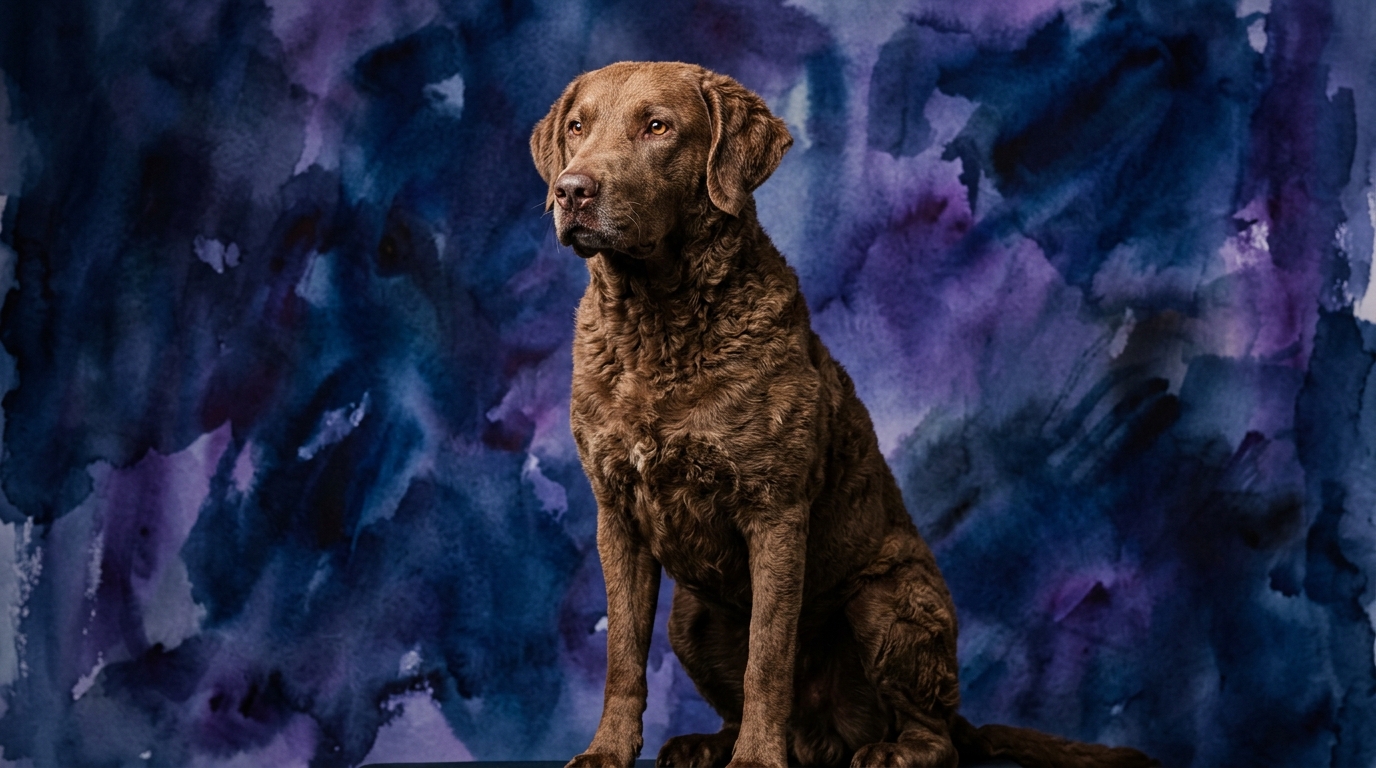
The Chesapeake Bay Retriever, a robust Sporting breed, exhibits a cognitive profile tailored for demanding retrieving tasks. Their Problem Solving is rated at 4/5, reflecting their capacity to navigate complex environments, overcome obstacles to retrieve game, and adapt strategies in varied conditions. Training Speed is also strong at 4/5, indicating a breed that grasps new commands and routines with efficiency, often showing a keen desire to work alongside their handler. Social Intelligence stands at 3/5; while capable of forming deep bonds, Chessies can be reserved with strangers and primarily focus their social cognition on their immediate family or working partners. Instinctive Drive is rated 3/5, specifically highlighting their powerful, unwavering drive to retrieve, rather than a generalized prey drive. Finally, their Memory is a notable 4/5, crucial for remembering the fall of multiple birds, navigating back to a specific location, or recalling complex training sequences.
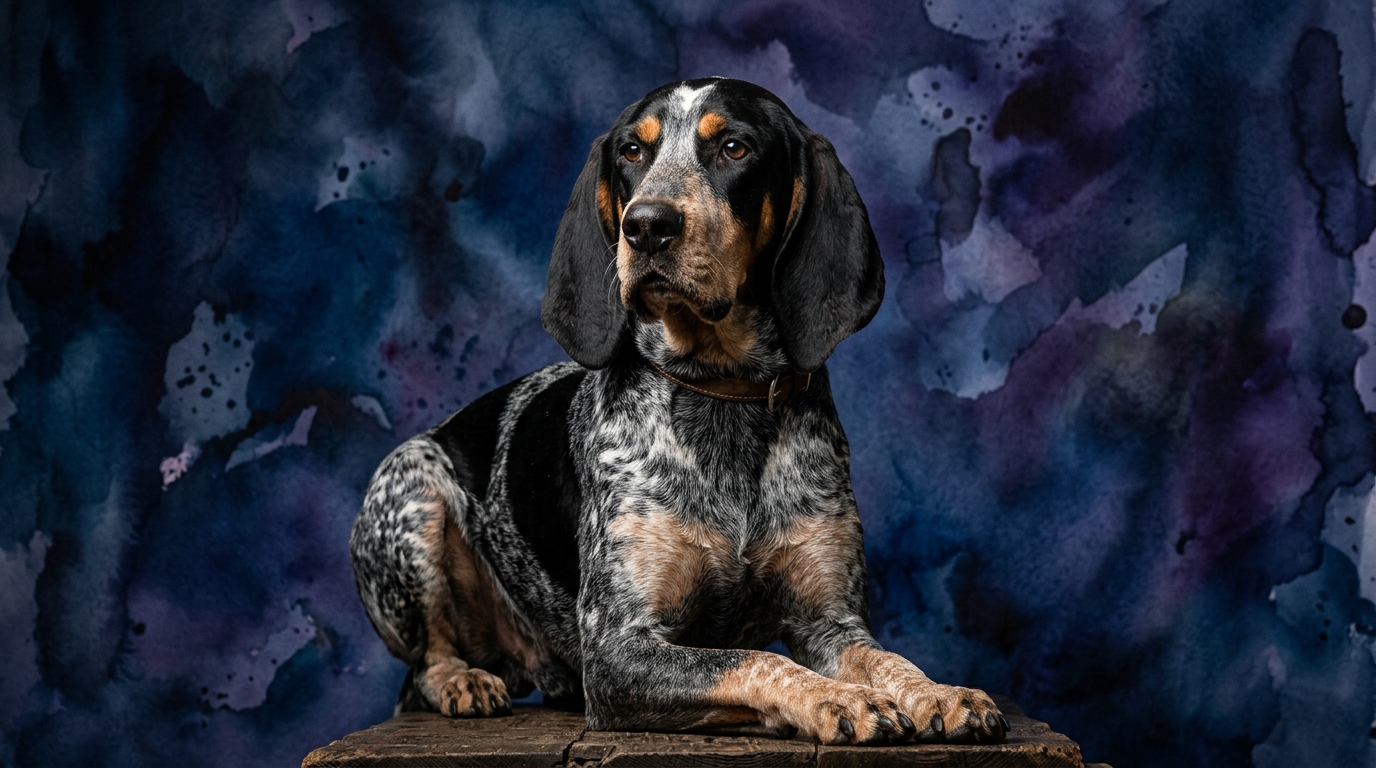
The Bluetick Coonhound, a dedicated Hound breed, presents a cognitive makeup designed for persistent, independent trailing. Their Problem Solving is rated 3/5, which manifests in their exceptional ability to unravel intricate scent puzzles, follow cold trails, and navigate challenging terrain using olfactory cues. Training Speed is 3/5; while capable of learning, their strong independent streak and overwhelming scent drive can sometimes make them less immediately biddable than breeds focused on handler interaction. Social Intelligence is 3/5, reflecting their sociable nature within a pack or family unit, though they retain a degree of independence in their work. Their Instinctive Drive is 3/5, underscored by an extraordinary, tenacious drive to scent and pursue game, often overriding other stimuli. Memory is also rated 3/5, primarily geared towards recalling scent patterns, familiar territories, and the specific nuances of a trail they are working.
Where the Chesapeake Bay Retriever Wins Cognitively
The Chesapeake Bay Retriever's cognitive strengths distinctly outshine the Bluetick Coonhound's in areas demanding structured learning, rapid task acquisition, and complex spatial recall. With a Problem Solving score of 4/5 compared to the Bluetick's 3/5, Chessies demonstrate a superior ability to process and resolve novel challenges within a human-directed framework. This translates into quickly understanding new commands for retrieving specific items, navigating an agility course, or adapting to changing conditions during a hunt by making on-the-spot decisions that align with their handler's goals. Their 4/5 Training Speed means they absorb and retain instructions more readily, making them highly responsive partners for advanced obedience, field trials, or service work where precision and promptness are paramount.
Furthermore, the Chesapeake Bay Retriever's 4/5 Memory score is a significant advantage. This cognitive strength allows them to recall precise locations of multiple downed birds, remember complex sequences of hand signals, or retain intricate patterns of behavior over time. For an owner seeking a dog that can master a broad repertoire of commands and perform intricate tasks with consistent accuracy, the Chessie's cognitive profile is more aligned. Their focus is often on the handler and the task at hand, enabling a more direct and efficient learning process compared to a breed whose primary cognitive drive is external and scent-focused.
Where the Bluetick Coonhound Wins Cognitively
While the Bluetick Coonhound may not surpass the Chesapeake Bay Retriever in raw scores, its cognitive strengths are profoundly specialized and represent a unique form of intelligence crucial to its breed purpose. The Bluetick's 'win' lies in the unparalleled depth and persistence of its instinctive drive and the sophisticated problem-solving it applies to scent work. Their 3/5 Instinctive Drive, when directed at a scent, becomes an all-consuming cognitive process that few breeds can match. This isn't just a simple urge; it involves complex scent discrimination, filtering out irrelevant odors, and maintaining focus on a specific trail over vast distances and varied terrains.
Their Problem Solving (3/5) is intrinsically linked to this scent drive, manifesting as an exceptional ability to interpret and follow intricate scent puzzles. A Bluetick can analyze a 'cold' trail, determining the age and direction of a scent, and adapt its tracking strategy based on environmental factors like wind and moisture. This independent, self-directed problem-solving, often without direct human guidance, is a hallmark of their intelligence. Their Social Intelligence (3/5), while not handler-centric like a retriever's, is geared towards cooperative pack work, demonstrating an understanding of canine social dynamics within a hunting context. For tasks requiring extreme persistence, independent decision-making based on sensory input, and an unwavering commitment to a specialized goal, the Bluetick Coonhound's cognitive architecture is uniquely suited and truly shines.
Which is Easier to Train and Why
When considering ease of training, the Chesapeake Bay Retriever generally presents a more straightforward experience due to its higher Training Speed (4/5) and inherent biddability. Chessies are typically eager to please their handlers and respond well to consistent, positive reinforcement. They quickly connect actions with consequences and are adept at generalizing learned behaviors to new situations. Their focus during training sessions is often directed towards the human, making them responsive to verbal commands and visual cues. This makes them excellent candidates for advanced obedience, competitive dog sports, and complex working roles where precise execution of commands is essential.
Conversely, the Bluetick Coonhound's Training Speed (3/5) and independent nature can pose more significant challenges for the average owner. Blueticks are deeply driven by their powerful sense of smell; once a captivating scent is detected, their cognitive focus shifts almost entirely to tracking it, often rendering human commands secondary. This isn't a lack of intelligence, but rather a prioritization of their primary instinctive drive. Training a Bluetick requires immense patience, consistency, and an understanding of their motivations. Owners must work to make training more rewarding than the allure of a scent, often by incorporating scent work into their training. While they can learn a wide array of commands, their execution may be less immediate or precise when their nose is engaged, requiring more dedicated effort to achieve reliable recall and off-leash control.
Which Suits Active Owners vs. Relaxed Owners
Neither the Chesapeake Bay Retriever nor the Bluetick Coonhound is suitable for a relaxed, sedentary owner; both breeds demand significant physical and mental engagement, though the nature of that engagement differs considerably. The Chesapeake Bay Retriever thrives with active owners who enjoy structured activities. Their need for mental stimulation and physical exercise is best met through consistent training sessions, retrieving games, swimming, and participation in dog sports like agility, obedience, or dock diving. Owners who can provide a 'job' for their Chessie, whether it's daily retrieving practice or competitive field work, will find a happy and fulfilled companion. They require an owner who appreciates a dog that wants to work alongside them and enjoys a partnership in activity.
The Bluetick Coonhound, while equally active, suits owners who appreciate a more independent, exploratory type of activity. These dogs need ample opportunities to engage their powerful scent drive, meaning long, investigative walks, hiking, and participation in scent work or tracking sports are ideal. Their endurance is formidable, and they can cover miles following a trail. Owners must be prepared for a dog that might become engrossed in a scent, potentially leading to a wandering tendency if not properly contained or managed. A Bluetick owner should enjoy spending time outdoors in a less structured manner, allowing their dog to follow its nose and explore, rather than demanding constant handler-focused interaction during exercise. They are perfect for those who want a companion for long, sniff-filled adventures.
The Verdict
For those seeking a highly biddable partner for structured tasks, complex retrieving, and sports, the Chesapeake Bay Retriever's superior problem-solving and training speed make it an excellent choice for a dedicated and active owner.
For owners who appreciate an independent, persistent companion dedicated to tracking and scent work, and are prepared for a more self-directed cognitive approach, the Bluetick Coonhound offers a uniquely rewarding partnership for an adventurous, patient individual.
🧠 Find Your Pet's IQ Score
Our Pet IQ Lab assessment covers 25+ tests across 5 cognitive dimensions — personalized to your breed.
Take the Full IQ Test →Frequently Asked Questions
Are Bluetick Coonhounds less intelligent than Chesapeake Bay Retrievers?
The data suggests Chesapeake Bay Retrievers generally excel in problem-solving, training speed, and memory within human-structured tasks. Bluetick Coonhounds possess a specialized intelligence focused on scent work and independent tracking, which is a different manifestation of cognitive skill rather than an overall deficit.
Do Chesapeake Bay Retrievers require more mental stimulation?
Both breeds require significant mental stimulation, but of different types. Chesapeake Bay Retrievers thrive on structured training, retrieving tasks, and dog sports. Bluetick Coonhounds need mental engagement through scent work, long exploratory walks, and opportunities to use their noses extensively.
Can a Bluetick Coonhound be trained for retrieving tasks?
While a Bluetick Coonhound can learn to retrieve, it typically won't display the same natural enthusiasm or proficiency as a Chesapeake Bay Retriever. Their primary instinctive drive is scenting and trailing, so retrieving would be a learned behavior often requiring more effort to instill compared to a breed specifically bred for it.