A Side-by-Side Look at Cognitive Profiles
The Cosmic Pet Pet IQ Lab employs a five-dimensional framework to assess canine cognition, offering a granular view of how different breeds perceive and interact with their world. While both the Chesapeake Bay Retriever and the Cairn Terrier achieve strong Coren ranks, #27 and #35 respectively, their underlying cognitive scores present a nuanced picture of their mental strengths.
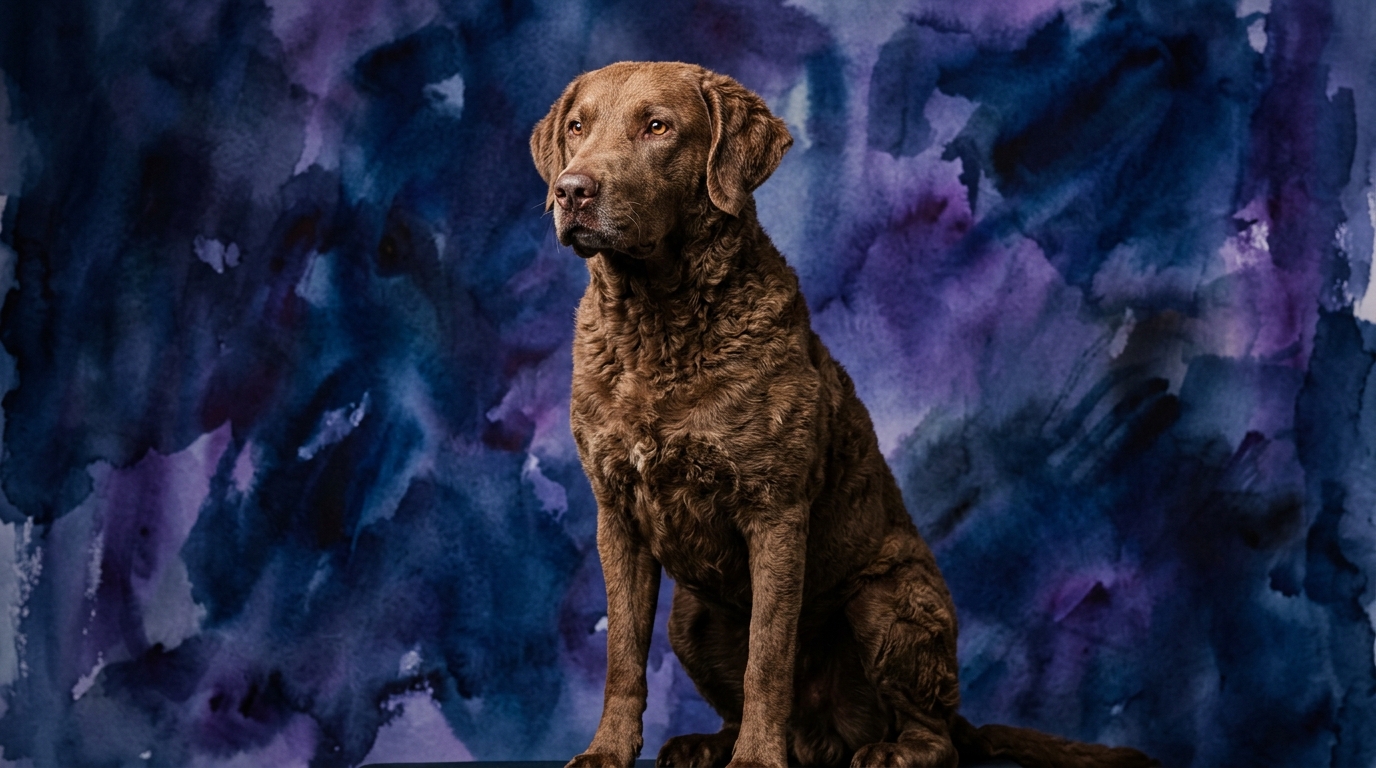
For the Chesapeake Bay Retriever, Problem Solving registers at 4/5, indicating a strong capacity to navigate complex environments, especially in pursuit of retrieving game or locating hidden objects. Training Speed also sits at 4/5, reflecting their aptitude for quickly grasping and executing new commands, particularly when task-motivated. Social Intelligence is 3/5, suggesting strong bonds with familiar people but reservation with strangers. Their Instinctive Drive, at 3/5, primarily manifests as a purposeful drive for retrieving and swimming. Memory, crucial for their working role, scores an impressive 4/5, allowing them to recall complex sequences and locations.
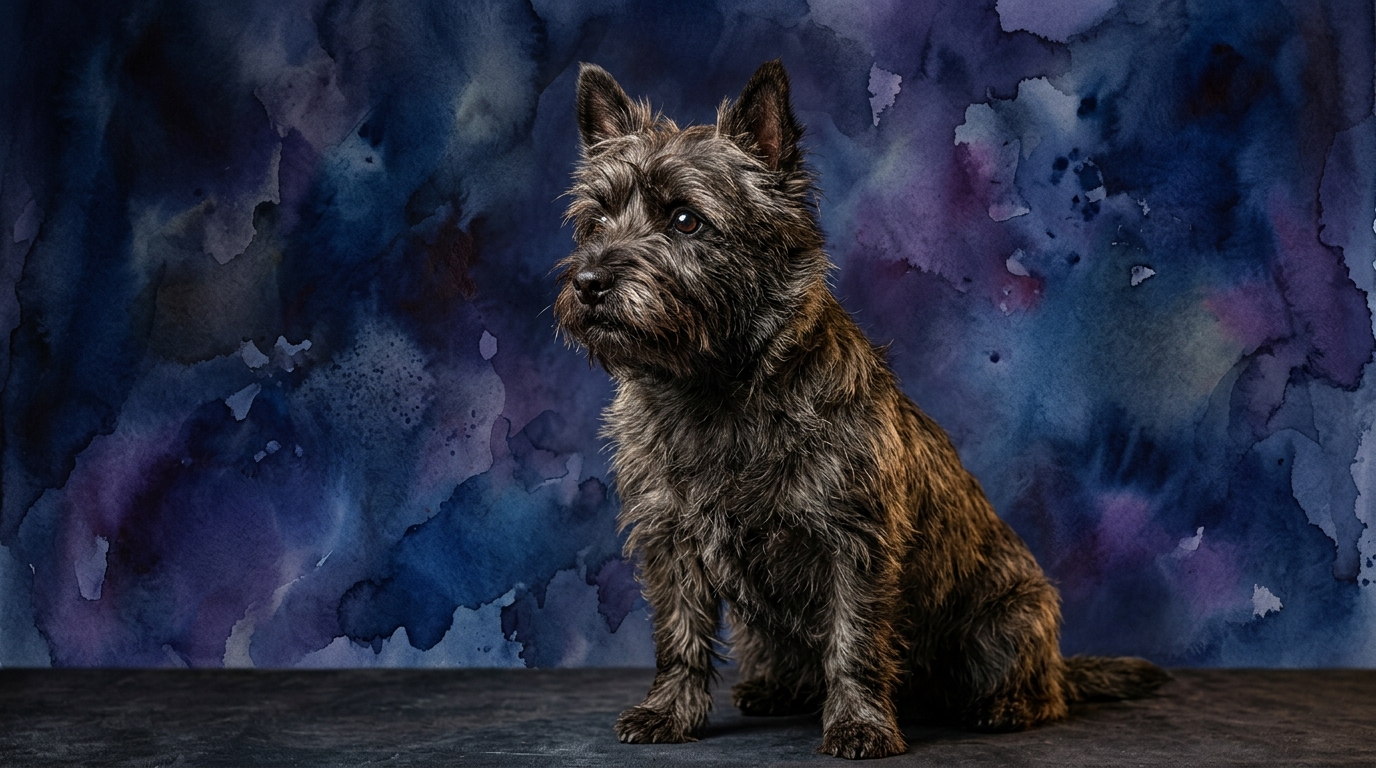
The Cairn Terrier, while smaller, mirrors many scores. Its Problem Solving ability also hits 4/5, often seen in resourcefulness for navigating tight spaces or outwitting small prey. Training Speed is 4/5, implying rapid learning, though their application of skills might be colored by independence. Social Intelligence is 3/5, indicating affection for family but wariness with unfamiliar individuals. Instinctive Drive is 3/5, manifesting strongly as a drive to dig, chase, and explore. Memory, at 4/5, supports their ability to remember routes, hiding spots, and routines.
Where the Chesapeake Bay Retriever Excels Cognitively
The Chesapeake Bay Retriever's cognitive strengths are deeply intertwined with its heritage. Its combination of 4/5 Problem Solving and 4/5 Memory shines in scenarios demanding sustained focus and recall over distance. A Chessie can remember the fall of multiple birds or navigate a challenging water retrieve, remembering exact locations even after obstacles. Their working intelligence allows them to process complex handler signals and execute multi-step tasks requiring interpretation of subtle cues from afar.
Their 3/5 Instinctive Drive, while not the highest, is highly specialized and goal-oriented. This drive, coupled with physical endurance, allows them to maintain mental engagement through repetitive, demanding tasks. They excel when a clear objective is presented, directing cognitive effort towards that specific outcome, such as scent tracking or intricate obedience. This capacity for directed, persistent mental effort for a defined purpose is a key cognitive advantage.
Where the Cairn Terrier Shines Cognitively
The Cairn Terrier's cognitive prowess, particularly its 4/5 Problem Solving and 4/5 Memory, is geared towards independent action and environmental mastery. Unlike the Chessie's broad-field focus, a Cairn's problem-solving often involves intricate spatial reasoning and tenacity in confined spaces. They can ingeniously figure out escapes, unearth buried toys, or maneuver objects to reach a treat, demonstrating clever, self-directed ingenuity. Their memory aids them in recalling territory layouts or hidden treasure locations.
Their 3/5 Instinctive Drive manifests as a persistent, autonomous drive to investigate and "work" their immediate surroundings. This fuels curiosity and extensive exploration, allowing them to quickly assess and react to environmental changes. While a Chessie might wait for a command, a Cairn's cognitive strength lies in proactive engagement with its world, demonstrating independent decision-making and tenacity when faced with a challenge.
Training Dynamics: Handler-Focused vs. Independent Learners
Both breeds score 4/5 in Training Speed, but the *application* differs due to temperament and historical roles. The Chesapeake Bay Retriever typically exhibits a strong desire to collaborate. Their 4/5 Training Speed is paired with an eagerness to please and partnership focus, making them responsive to traditional reward-based methods. They thrive on clear direction and consistent expectations, quickly internalizing commands as part of a shared objective. Motivation often stems from working alongside their human.
The Cairn Terrier possesses a distinct independent streak. While they learn commands quickly (4/5 Training Speed), their willingness to *execute* can be more conditional. Their historical role fostered self-reliance, meaning training a Cairn requires more creativity, patience, and understanding of terrier motivations. They might grasp a concept but choose to prioritize a distraction. Consistency, high-value rewards, and making training feel like a game are essential.
Matching Cognitive Profiles to Lifestyles
Choosing between these breeds requires assessing your lifestyle and desired canine cognitive engagement. For active owners enjoying structured outdoor activities, water sports, or field work, the Chesapeake Bay Retriever's cognitive profile aligns perfectly. Their ability to maintain sustained focus, remember complex sequences, and work collaboratively makes them ideal partners for long, task-oriented adventures. They thrive when physical stamina is matched by mental challenges engaging their retrieving instincts and requiring attentive participation.
For owners who appreciate a smaller, spirited companion with an independent mind, the Cairn Terrier offers a different cognitive partnership. While also active, their exercise involves bursts of exploration, scent work, and problem-solving within more contained environments. They suit owners who enjoy interactive games, puzzle toys, and frequent training sessions tapping into their cleverness and tenacity. Their cognitive curiosity makes them excellent for urban or suburban settings where varied mental stimulation is key.
The Verdict
Choose the Chesapeake Bay Retriever if you are an active, dedicated owner seeking a robust working partner for outdoor adventures, field sports, or extensive training that leverages their collaborative spirit and impressive memory for complex tasks.
Opt for the Cairn Terrier if you desire a tenacious, clever companion who thrives on independent problem-solving, interactive games, and varied mental stimulation, fitting well with active families who appreciate a dog with a distinct personality.
🧠 Find Your Pet's IQ Score
Our Pet IQ Lab assessment covers 25+ tests across 5 cognitive dimensions — personalized to your breed.
Take the Full IQ Test →Frequently Asked Questions
Do both breeds require significant mental stimulation despite their similar IQ scores?
Absolutely. While their scores are similar, the *type* of stimulation they need differs. Chesapeake Bay Retrievers benefit from tasks involving retrieving, scent work, and complex obedience, often alongside their handler. Cairn Terriers thrive on independent exploration, puzzle toys, and short, engaging training sessions that challenge their innate problem-solving and curiosity.
How does their social intelligence rating of 3/5 impact their interactions with people?
A 3/5 social intelligence score for both breeds typically means they form strong, affectionate bonds with their immediate family but may exhibit reserved or selective behavior towards strangers. Chesapeake Bay Retrievers might be aloof or watchful, while Cairn Terriers could be more vocal or assertive in their caution, requiring careful socialization from a young age.
Can a Cairn Terrier be as good at retrieving as a Chesapeake Bay Retriever, given their similar problem-solving and memory scores?
While a Cairn Terrier can certainly learn to retrieve and enjoys a good game of fetch, their natural instincts and physical build are not geared towards the sustained, long-distance, and often water-based retrieving tasks of a Chesapeake Bay Retriever. The Chessie's specific instinctive drive and physical attributes make them far more adept and content with traditional retrieving roles.